
Chef Lupita
Aceite de Chiltepin Bajacaliforniano
Baja California's wild chiltepin steeped in olive oil with garlic, orejon, and lime peel, until the oil turns ruby-amber and carries the slow, sneaky burn of the desert coast.
A cooking platform built around craft, culture, and the stories behind what we eat.
Created by
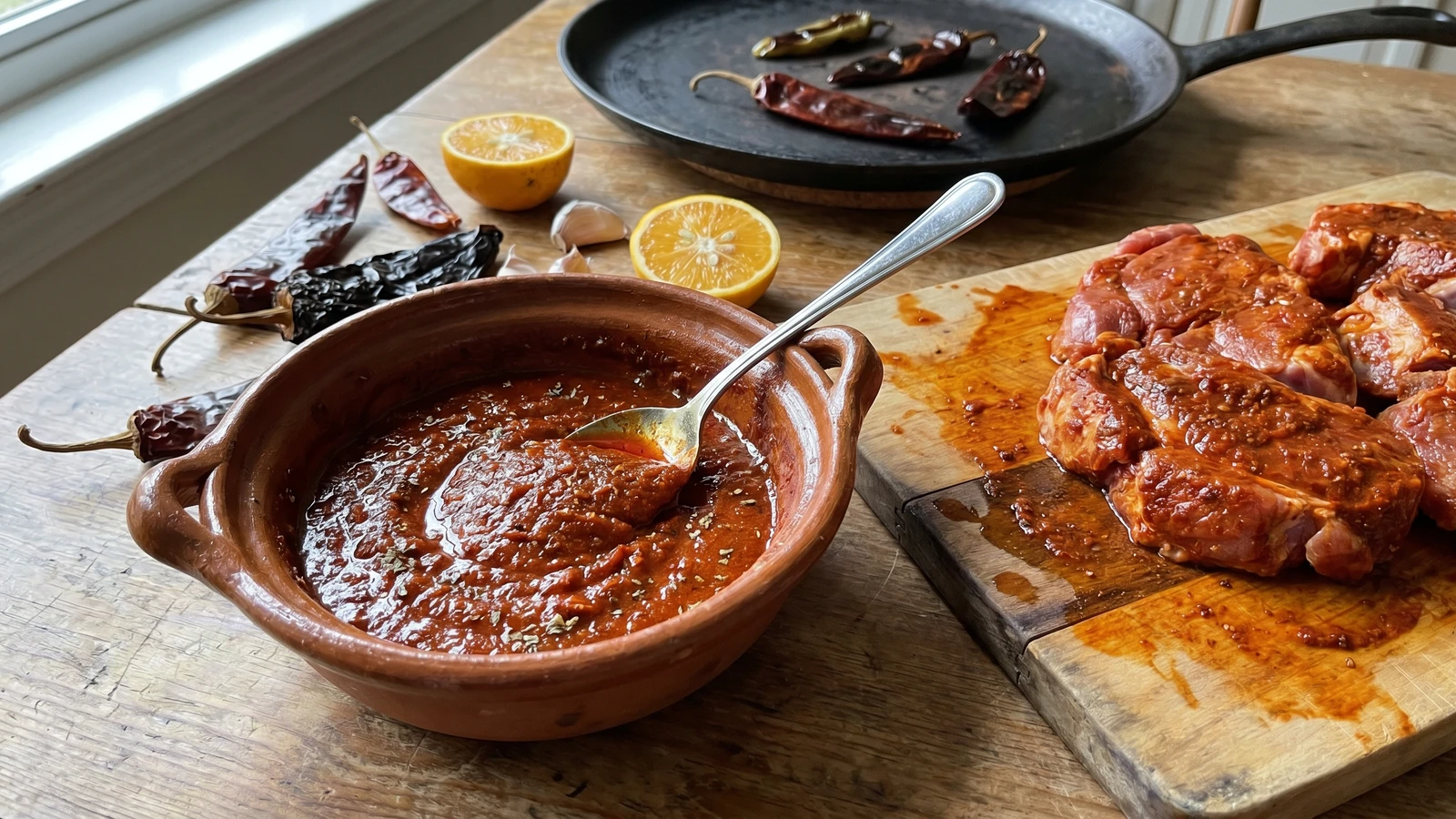
Guanajuato's Bajío adobo for carnitas, built with guajillo, ancho, naranja agria, laurel, and garlic before the pork goes into manteca de cerdo.
Guanajuato, in the Bajío, has its own way of speaking through pork. Apaseo el Grande sits close to Celaya and Querétaro, in that corridor of markets, ranch kitchens, and roadside carnitas stands where the smell of manteca tells you lunch is serious before you see the pot.
This adobo is not a Michoacán carnitas recipe wearing another hat. It belongs to the Guanajuato table: chile guajillo for red color, chile ancho for sweet depth, naranja agria for the citrus bite, laurel and garlic for the old market-stall perfume. The paste is rubbed onto pork before it rests and then confits slowly in manteca de cerdo. La manteca es el sabor. No me vengas con atajos.
I learned this style from a señora near the mercado in Apaseo who corrected me twice before breakfast. The adobo must be thick enough to cling to the meat, not watery like salsa. The chiles are toasted, softened, blended, strained, and fried. Then the pork waits. A rushed adobo tastes raw. A rested one enters the meat.
Use this for shoulder, rib meat, cueritos, or surtido if your butcher knows what that means. Serve the carnitas in a barro cazuela, with corn tortillas and salsa on the table. Cada estado, su propia cocina.
Apaseo el Grande sits in Guanajuato's Bajío, a region shaped by colonial ranching, wheat fields, and pork cookery that expanded after Spanish pigs arrived in central Mexico in the 16th century. While Michoacán made carnitas nationally famous through copper cazos and market towns like Quiroga, Guanajuato developed its own roadside and fiesta versions, often using red chile adobos with citrus before the pork cooks in lard. The use of chile guajillo and ancho reflects central Mexican dried-chile trade routes, where La Merced in Mexico City, Celaya, León, and Querétaro markets all helped standardize these chiles in household adobos.
Quantity
8
stemmed and seeded
Quantity
3
stemmed and seeded
Quantity
4
peeled
Quantity
1/2 medium
roughly chopped
Quantity
3/4 cup
Quantity
2 tablespoons
Quantity
1 teaspoon
Quantity
3
crumbled
Quantity
1 teaspoon
toasted
Quantity
5
Quantity
3
Quantity
1 1/2 teaspoons, plus more to taste
Quantity
2 tablespoons
Quantity
1/2 cup, as needed
| Ingredient | Quantity |
|---|---|
| dried chile guajillostemmed and seeded | 8 |
| dried chile anchostemmed and seeded | 3 |
| garlic clovespeeled | 4 |
| white onionroughly chopped | 1/2 medium |
| fresh naranja agria juice | 3/4 cup |
| apple cider vinegar | 2 tablespoons |
| dried Mexican oregano | 1 teaspoon |
| bay leavescrumbled | 3 |
| cumin seedstoasted | 1 teaspoon |
| whole black peppercorns | 5 |
| whole cloves | 3 |
| kosher salt | 1 1/2 teaspoons, plus more to taste |
| manteca de cerdo | 2 tablespoons |
| hot chile soaking liquid | 1/2 cup, as needed |
Heat a dry comal over medium. Toast the chile guajillo and chile ancho separately, about 20 to 30 seconds per side, pressing them flat with tongs. They should darken slightly, puff in places, and smell sweet, not burned. Burned chile makes bitter adobo. Throw it out if it blackens.
Place the toasted chiles in a bowl and cover with hot water. Hot, not boiling. Let them soften for 20 minutes, then drain, saving 1/2 cup of the soaking liquid. The chile flesh should bend easily between your fingers. If it still feels leathery, give it five more minutes.
On the same comal, toast the cumin seeds, black peppercorns, and cloves for 30 to 45 seconds, just until fragrant. Do not wander away. Clove turns bossy when burned, and then the whole adobo tastes like medicine.
Add the softened chiles, garlic, onion, naranja agria juice, vinegar, Mexican oregano, crumbled bay leaves, toasted spices, salt, and 1/4 cup of the soaking liquid to a blender. Blend until completely smooth, adding a little more soaking liquid only if the blades need help. The paste should be thick enough to coat a spoon. This is adobo, not soup.
Push the blended adobo through a fine-mesh strainer into a bowl, pressing hard with a spoon. Discard the chile skins and spice grit left behind. Straining is not decoration. It keeps the adobo clean so it clings to the pork instead of turning sandy in the manteca.
Melt the manteca de cerdo in a small cazuela or heavy skillet over medium heat. Add the strained adobo carefully. It will sputter. Stir for 8 to 10 minutes, until the color deepens to brick red, the raw garlic smell softens, and the fat begins to shine at the edges. This frying wakes up the chile. Así se hace y punto.
Let the adobo cool completely before rubbing it onto pork. For 4 to 5 pounds of pork shoulder, rib meat, cueritos, or surtido, use the full batch and massage it into every surface. Cover and refrigerate at least 8 hours, preferably overnight. The salt, citrus, and chile need time to enter the meat.
To make carnitas estilo Apaseo, bring the marinated pork back toward room temperature, then cook it slowly in enough manteca de cerdo to come halfway up the meat. Keep the lard at a lazy bubble until the pork is tender, then raise the heat at the end to brown the edges. If you use vegetable oil, you are making another dish.
1 serving (about 60g)
Culinary guides, cultural storytelling, and the editorial depth that makes cooking meaningful.
Discover Culinary ExplorerChef Lupita
Baja California's wild chiltepin steeped in olive oil with garlic, orejon, and lime peel, until the oil turns ruby-amber and carries the slow, sneaky burn of the desert coast.

Chef Lupita
Puebla's Lenten convent adobo, a brick-red vinegar chile paste of ancho, guajillo, garlic, oregano, and comino made to dress fish for the meatless calendar.
Chef Lupita
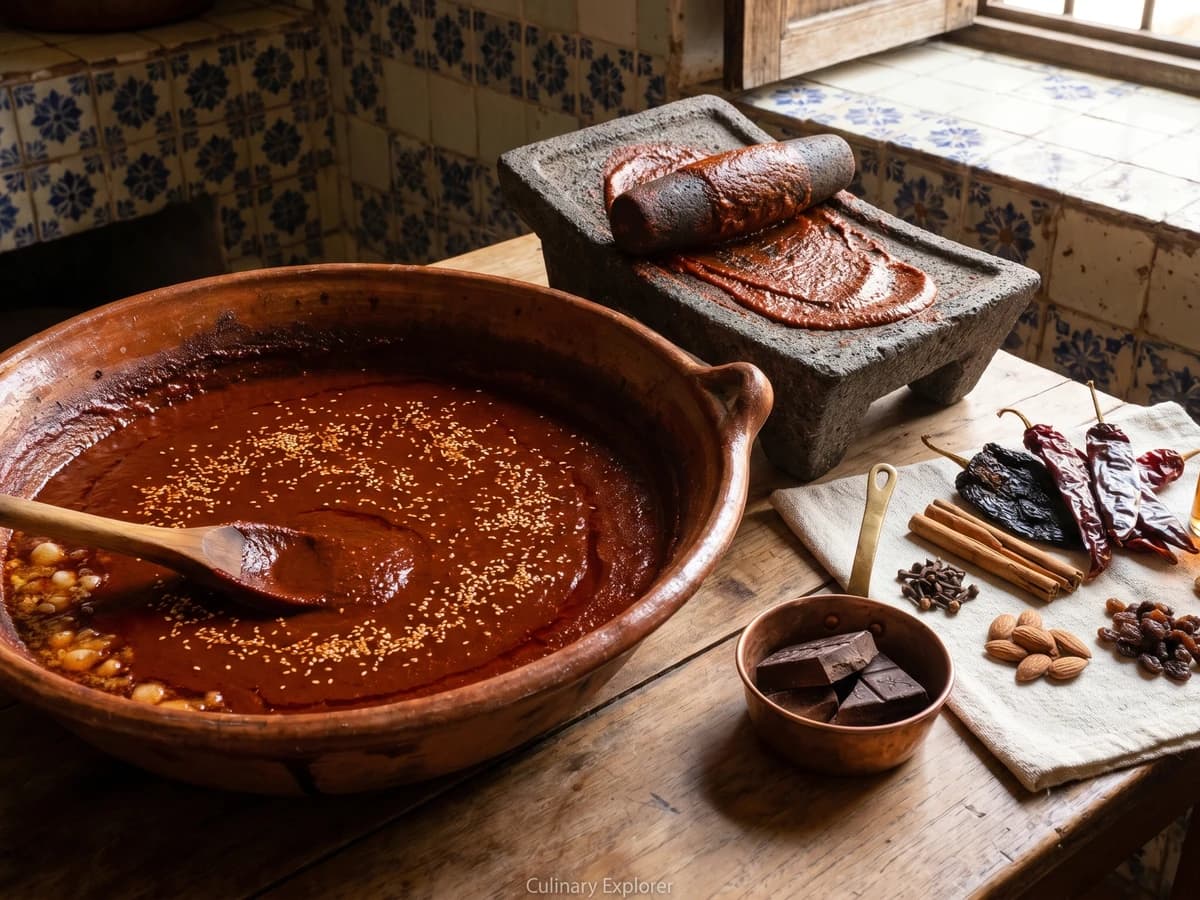
Zacatecas' wedding-table adobo, built from toasted guajillo and ancho, piloncillo, sour orange, chocolate, canela, clavo, almonds, sesame, and lard.

Chef Lupita
Puebla's convent kitchens built this adobo with ancho, guajillo, jerez, almonds, raisins, clove, and lard, a baroque marinade that stains pork loin and finishes as the sauce.