
Chef Lupita
Aceite de Chiltepin Bajacaliforniano
Baja California's wild chiltepin steeped in olive oil with garlic, orejon, and lime peel, until the oil turns ruby-amber and carries the slow, sneaky burn of the desert coast.
A cooking platform built around craft, culture, and the stories behind what we eat.

Created by
Aguascalientes' San Marcos escabeche is a sharp jar of whole jalapeños, carrot, onion, garlic, laurel, and thyme, built to crown pollo San Marcos, tortas, and any table that respects vinegar.
Aguascalientes, in the dry center of the Bajío, keeps this escabeche close to the Barrio de San Marcos. You see it at feria tables, next to pollo San Marcos, tortas, roasted meats, and beans that need acid to wake them up. This is not decoration. This is the bite that makes the plate work.
The chile is fresh chile jalapeño, what many señoras at the market call chile cuaresmeño when it is fat, smooth, and good for pickling. You leave it whole, cut one slit so the vinegar can enter, and cook it with carrot, white onion, garlic, laurel, and tomillo. The chiles go from dark green to olive. The carrot keeps a little bite. The onion turns sweet in the vinegar. That balance is the dish.
At Mercado Terán in Aguascalientes, I watched a woman press each jalapeño near the stem before buying. Too soft, she pushed it aside. Too skinny, she said it belonged in salsa, not escabeche. Pregúntale a las señoras del mercado. They know which chile survives the jar.
Do not rush the rest. Straight from the pot, this tastes like vinegar shouting. Tomorrow it tastes like escabeche. Cada estado, su propia cocina, and San Marcos knows exactly what it wants from a chile.
The Feria Nacional de San Marcos traces its public fair roots to 1828, and by the mid-19th century the celebration had become tied to the Barrio de San Marcos and the April feast of Saint Mark. Escabeche entered Mexican cooking through Spanish colonial vinegar preservation, itself descended from the Arabic al-sikbaj, a sour preparation carried through medieval Iberian kitchens. In Aguascalientes, chiles en vinagre became practical feria food: portable, sharp, inexpensive, and strong enough to cut through rich chicken, tortas, and market meats.
Quantity
1 pound
stems trimmed and each chile slit lengthwise
Quantity
3 medium
peeled and sliced into 1/4-inch diagonal coins
Quantity
1 large
sliced into thick half-moons
Quantity
8
peeled and lightly crushed
Quantity
1/4 cup
Quantity
2 cups
Quantity
1 cup
Quantity
1 tablespoon
Quantity
1 teaspoon
Quantity
3
Quantity
4 sprigs
or 1 teaspoon dried thyme
Quantity
1/2 teaspoon
| Ingredient | Quantity |
|---|---|
| fresh chile jalapeño or chile cuaresmeñostems trimmed and each chile slit lengthwise | 1 pound |
| carrotspeeled and sliced into 1/4-inch diagonal coins | 3 medium |
| white onionsliced into thick half-moons | 1 large |
| garlic clovespeeled and lightly crushed | 8 |
| aceite de maíz | 1/4 cup |
| vinagre blanco de caña or distilled white vinegar, 5% acidity | 2 cups |
| water | 1 cup |
| kosher salt | 1 tablespoon |
| whole black peppercorns | 1 teaspoon |
| bay leaves | 3 |
| fresh thymeor 1 teaspoon dried thyme | 4 sprigs |
| dried Mexican oregano | 1/2 teaspoon |
Wash the jalapeños and dry them well. Trim only the dry tip of the stem, leaving enough to hold the chile. Cut one shallow lengthwise slit in each chile, about 1/2 inch long. Do not split them open. The slit lets the vinegar enter and keeps the chile from bursting in the cazuela.
Set a lead-free glazed clay cazuela, stainless pot, or enameled Dutch oven over medium heat. Add the aceite de maíz. When it loosens and shines, add the crushed garlic and cook for 30 to 45 seconds, just until fragrant. Do not brown it hard. Burned garlic turns the whole jar bitter.
Add the carrots and onion. Stir for 3 minutes, until the onion starts to soften at the edges but still has structure. Add the whole jalapeños and cook, turning them with tongs, for 5 to 7 minutes. The skins should blister in spots and shift from dark green toward olive. That color tells you the chile is ready to take the brine.
Pour in the vinegar and water. Add the salt, black peppercorns, bay leaves, thyme, and dried Mexican oregano. Stir once and bring to a steady simmer. Cook 8 to 10 minutes, until the carrots bend slightly but still bite back. The brine should smell sharp, herbal, and garlicky. If it smells flat, it needs another pinch of salt.
Use tongs to pack the chiles, carrots, onion, and garlic into clean glass jars. Pour the hot brine over the vegetables until everything is fully covered. Tap the jars gently on a folded towel to release trapped air. If you need more liquid to cover, add a splash of hot vinegar. The vegetables must stay under the brine. Así se hace y punto.
Let the jars stand uncovered for 30 minutes, then lid them and refrigerate. Rest at least 24 hours before serving. Turn the jar once or twice if the chiles float. Serve cold or at room temperature with pollo San Marcos, feria tortas, beans, or roasted meats. Use a clean spoon every time. This is a refrigerator escabeche, not a pantry-canned preserve.
1 serving (about 50g)
Culinary guides, cultural storytelling, and the editorial depth that makes cooking meaningful.
Discover Culinary ExplorerChef Lupita
Baja California's wild chiltepin steeped in olive oil with garlic, orejon, and lime peel, until the oil turns ruby-amber and carries the slow, sneaky burn of the desert coast.

Chef Lupita
Puebla's Lenten convent adobo, a brick-red vinegar chile paste of ancho, guajillo, garlic, oregano, and comino made to dress fish for the meatless calendar.
Chef Lupita
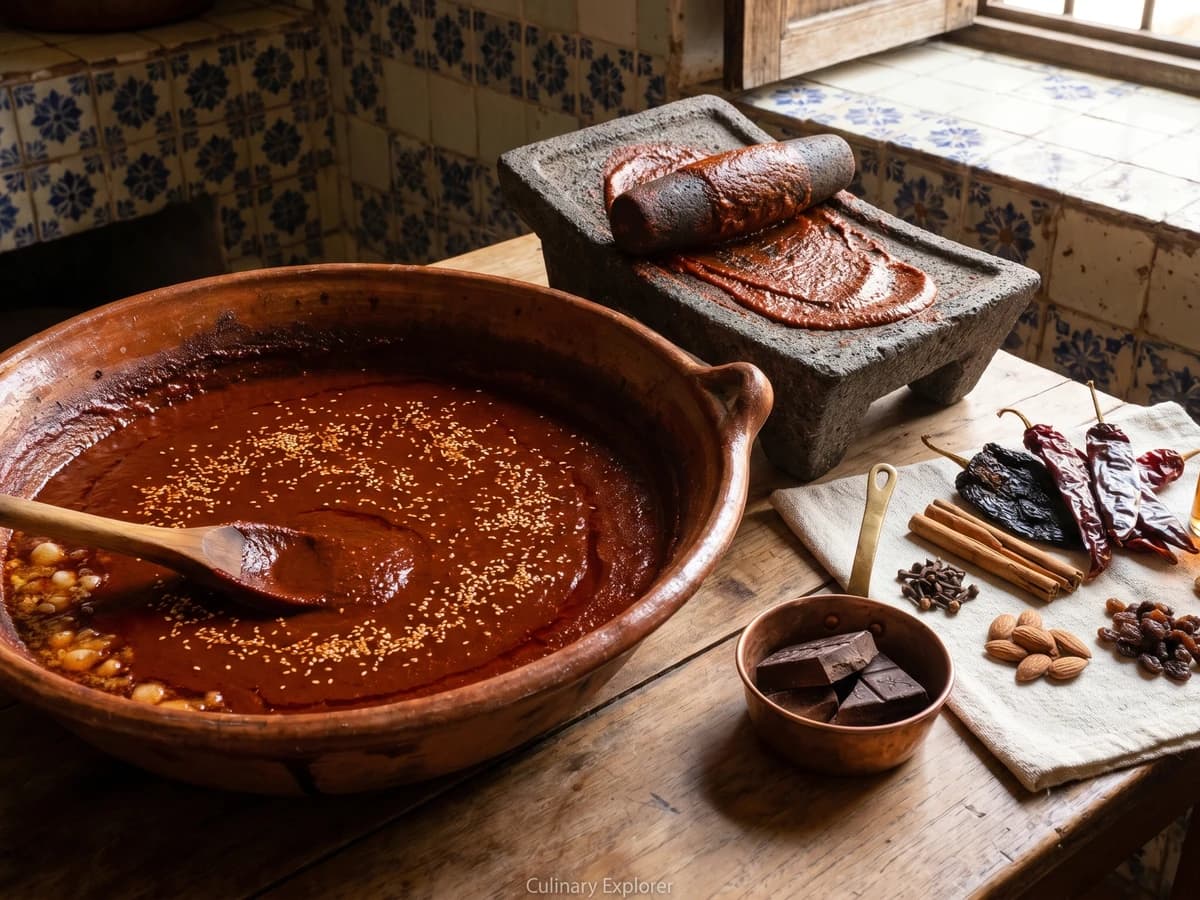
Zacatecas' wedding-table adobo, built from toasted guajillo and ancho, piloncillo, sour orange, chocolate, canela, clavo, almonds, sesame, and lard.

Chef Lupita
Puebla's convent kitchens built this adobo with ancho, guajillo, jerez, almonds, raisins, clove, and lard, a baroque marinade that stains pork loin and finishes as the sauce.