
Chef Lupita
Adobo de Carnitas estilo Apaseo el Grande
Guanajuato's Bajío adobo for carnitas, built with guajillo, ancho, naranja agria, laurel, and garlic before the pork goes into manteca de cerdo.
A cooking platform built around craft, culture, and the stories behind what we eat.
Created by
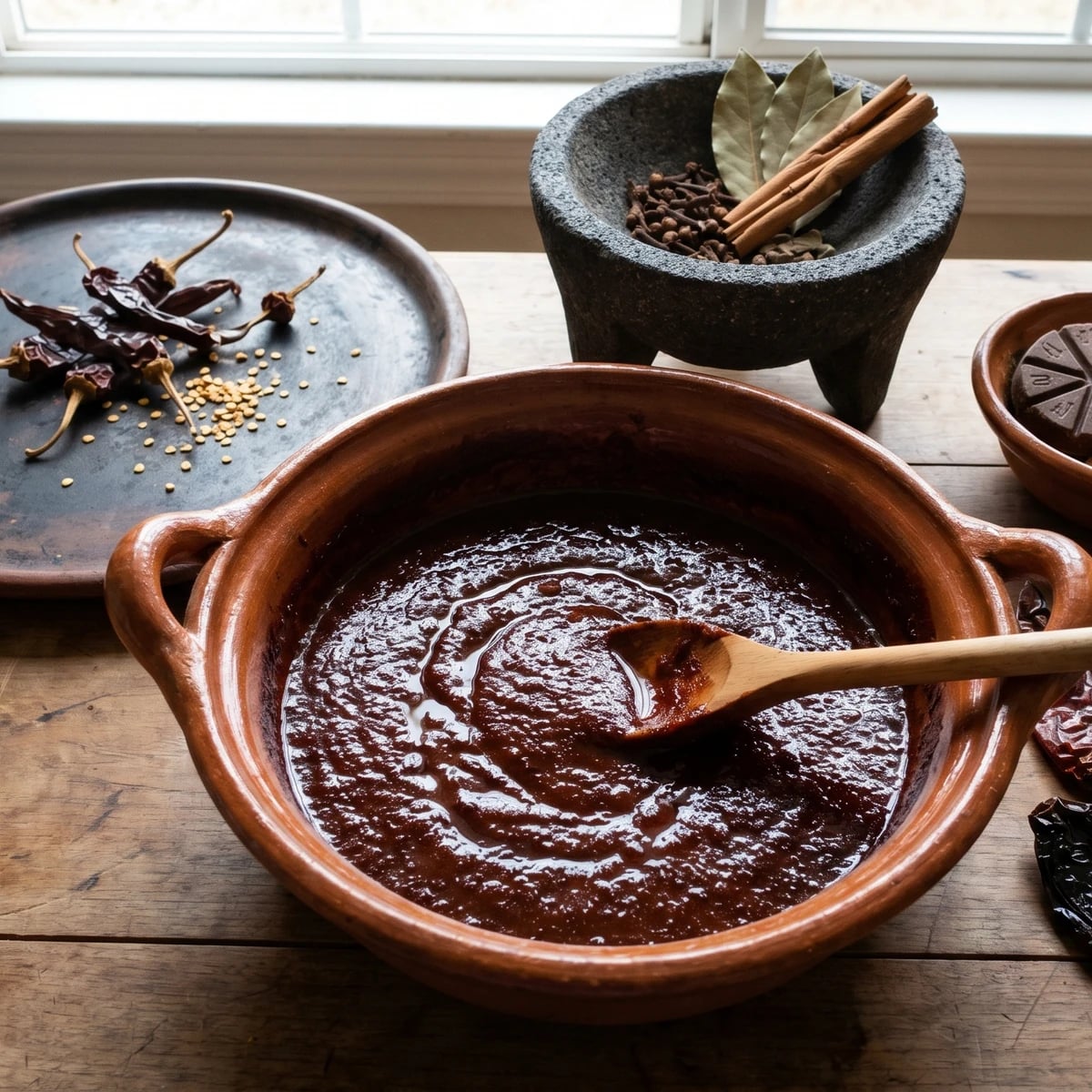
San Luis Potosí's hacienda wedding adobo, built from ancho, mulato, pasilla, clove, laurel, and a little chocolate, turns browned pork into the dark red asado served when a family means ceremony.
San Luis Potosí, especially the old hacienda belt around the capital, Villa de Reyes, and the road north toward the Altiplano, keeps this adobo for weddings and serious family tables. This is the base for asado de boda potosino, pork browned in manteca and finished in a dark red sauce that smells of ancho, mulato, pasilla, clove, laurel, and a little chocolate. Not a lot. A whisper. If you taste chocolate first, you used too much.
The chiles tell you where the dish lives. Chile ancho gives sweetness and body. Chile mulato gives that dark, almost fruit-like depth. Chile pasilla sharpens the back of the sauce. In Mercado República in San Luis Potosí, the señoras who know will bend the chiles in their hands before buying. If they crack like old paper, leave them there. You can have perfect technique and bad chiles and still end with a bad adobo.
This is hacienda cooking, scaled for a crowd, but it was perfected by women who had to feed that crowd without wasting anything: pork fat saved, stale bolillo used for body, spices toasted with discipline, sauce fried until the manteca separates at the edge of the cazuela. No me vengas con atajos. A raw blended chile sauce is not this. The frying is where the adobo becomes food.
My mother was from Jalisco, so this wasn't in her daily notebook. I learned this one in San Luis Potosí from a woman who stirred the cazuela with the patience of someone who had cooked for three weddings before she turned thirty. She told me, 'El asado no perdona prisa.' Asado does not forgive hurry. Cada estado, su propia cocina.
After the 1592 silver discovery at Cerro de San Pedro, San Luis Potosí's haciendas expanded to feed miners, muleteers, estate workers, and later large celebration tables, where pork cooked in dried-chile adobos could serve many people from one cazuela. Asado de boda is shared with Zacatecas through the old Camino Real de Tierra Adentro corridor, but the potosino hacienda version leans darker and more perfumed with chile mulato, chile pasilla, clove, laurel, and restrained chocolate. Chocolate entered savory chile sauces through colonial trade and convent-hacienda kitchens; here it rounds bitterness and gives body, it does not turn the dish into mole poblano or dessert.
Quantity
8
wiped clean, stemmed and seeded
Quantity
4
wiped clean, stemmed and seeded
Quantity
3
wiped clean, stemmed and seeded
Quantity
2 medium
Quantity
1/2 small
Quantity
6
unpeeled
Quantity
3 tablespoons
divided
Quantity
1/2 small
torn into chunks
Quantity
2
divided
Quantity
3
Quantity
8
Quantity
1/2-inch piece
Quantity
1/4 teaspoon
Quantity
1 teaspoon
Quantity
1/2 teaspoon
Quantity
3 tablespoons
Quantity
1 1/2 cups, plus more as needed
Quantity
20 grams
chopped
Quantity
1 tablespoon
Quantity
1 small strip
white pith removed
Quantity
1 1/2 teaspoons, plus more to taste
| Ingredient | Quantity |
|---|---|
| dried chile anchowiped clean, stemmed and seeded | 8 |
| dried chile mulatowiped clean, stemmed and seeded | 4 |
| dried chile pasilla mexicanowiped clean, stemmed and seeded | 3 |
| Roma tomatoes (jitomate guaje) | 2 medium |
| white onion | 1/2 small |
| garlic clovesunpeeled | 6 |
| manteca de cerdo (pork lard)divided | 3 tablespoons |
| stale bolillotorn into chunks | 1/2 small |
| dried bay leaves (hojas de laurel)divided | 2 |
| whole cloves | 3 |
| black peppercorns | 8 |
| Mexican cinnamon (canela) | 1/2-inch piece |
| cumin seeds | 1/4 teaspoon |
| dried Mexican oregano | 1 teaspoon |
| dried mejorana | 1/2 teaspoon |
| mild cane vinegar or apple cider vinegar | 3 tablespoons |
| warm pork broth | 1 1/2 cups, plus more as needed |
| Mexican table chocolate or chocolate de metatechopped | 20 grams |
| grated piloncillo | 1 tablespoon |
| orange peelwhite pith removed | 1 small strip |
| fine sea salt | 1 1/2 teaspoons, plus more to taste |
Wipe the ancho, mulato, and pasilla chiles with a barely damp cloth. Pull off the stems, open the chiles, and shake out the seeds. The ancho should smell like raisins and dry earth. The mulato should smell darker, almost like prunes. The pasilla should be long, wrinkled, and sharp in aroma. If the chiles smell dusty or dead, the adobo will taste dusty and dead. Si no conoces el mercado, no conoces la cocina.
Heat a dry comal over medium heat. Toast the chiles one type at a time, pressing them flat with tongs for a few seconds per side. The ancho takes about 20 to 25 seconds per side, the mulato a little less, and the pasilla is thin, so watch it closely. The skins should puff and turn fragrant, never blacken. Toasting wakes the oils in the chile. Skip it and your adobo tastes flat. Así se hace y punto.
Put the toasted chiles in a heatproof bowl and cover them with hot water, not boiling water. Set a small plate on top to keep them submerged. Let them soften for 20 minutes. Drain them well. Taste a spoonful of the soaking liquid. If it tastes clean and chile-rich, you can use a little later to loosen the blender. If it tastes bitter, discard it without drama.
On the same comal, roast the tomatoes, onion, and unpeeled garlic until the tomatoes blister, the onion browns at the edges, and the garlic softens inside its skin. Peel the garlic. In a small skillet, melt 1 tablespoon of the manteca de cerdo and fry the torn bolillo until golden. The bread gives body to the adobo. Hacienda kitchens had wheat, pork, chiles, and time. That is why this sauce has weight.
Toast 1 bay leaf, the cloves, black peppercorns, cinnamon, and cumin seeds in a dry skillet for 30 to 45 seconds, just until fragrant. Do not walk away. Clove takes over when it burns. Rub the Mexican oregano and mejorana between your palms so their oils open before they go into the blender.
Put the drained chiles, roasted tomatoes, onion, peeled garlic, fried bolillo, toasted spices, crumbled toasted bay leaf, oregano, mejorana, vinegar, and warm pork broth in a blender. Blend for at least 2 full minutes, until the mixture is as smooth as your machine can make it. Strain through a fine-mesh sieve into a bowl, pressing hard with a spoon. Straining is not decoration. It removes skins and gives the adobo the smooth body that coats pork properly.
Heat the remaining 2 tablespoons manteca de cerdo in a clay cazuela or heavy pot over medium heat. Pour in the strained chile puree carefully because it will sputter. Stir with a wooden spoon and fry for 8 to 10 minutes, until the color deepens from brick red to dark garnet and small beads of chile-stained fat appear at the edges. La manteca es el sabor. Vegetable oil will cook the sauce, but it will not give you this flavor.
Add the chopped Mexican chocolate, grated piloncillo, the second bay leaf, the orange peel, and the salt. Simmer gently for 10 to 12 minutes, stirring often, until the adobo coats the spoon and leaves a slow trail when you drag the spoon across the bottom of the cazuela. Remove the bay leaf and orange peel. Taste for salt. The chocolate should soften the bitterness and round the sauce. It should not announce itself. This is asado de boda, not chocolate sauce.
For asado de boda potosino, brown 4 pounds of pork shoulder in manteca de cerdo, then add about 3 cups of this adobo and enough pork broth to loosen it into a sauce. Simmer until the pork is tender and the sauce clings to the meat. If using the adobo as a marinade, cool it completely first, coat the pork, and refrigerate overnight. Do not pour hot adobo over raw pork and call that planning. La cocina no es decoración, es trabajo.
1 serving (about 135g)
Culinary guides, cultural storytelling, and the editorial depth that makes cooking meaningful.
Discover Culinary Explorer
Chef Lupita
Guanajuato's Bajío adobo for carnitas, built with guajillo, ancho, naranja agria, laurel, and garlic before the pork goes into manteca de cerdo.

Chef Lupita
Guanajuato's Bajío table pickle, thin red onion softened in hot vinegar with orégano mexicano, cumin, bay leaf, and serrano, the sharp pink bite beside carnitas from Apaseo.

Chef Lupita
Aguascalientes' San Marcos escabeche is a sharp jar of whole jalapeños, carrot, onion, garlic, laurel, and thyme, built to crown pollo San Marcos, tortas, and any table that respects vinegar.

Chef Lupita
Querétaro's Sierra Gorda preserve of wild garambullos, simmered slowly with piloncillo, orange peel, canela, and lime until the cactus berries shine like purple beads in thick syrup.