
Chef Lupita
Aceite de Chiltepin Bajacaliforniano
Baja California's wild chiltepin steeped in olive oil with garlic, orejon, and lime peel, until the oil turns ruby-amber and carries the slow, sneaky burn of the desert coast.
A cooking platform built around craft, culture, and the stories behind what we eat.
Created by
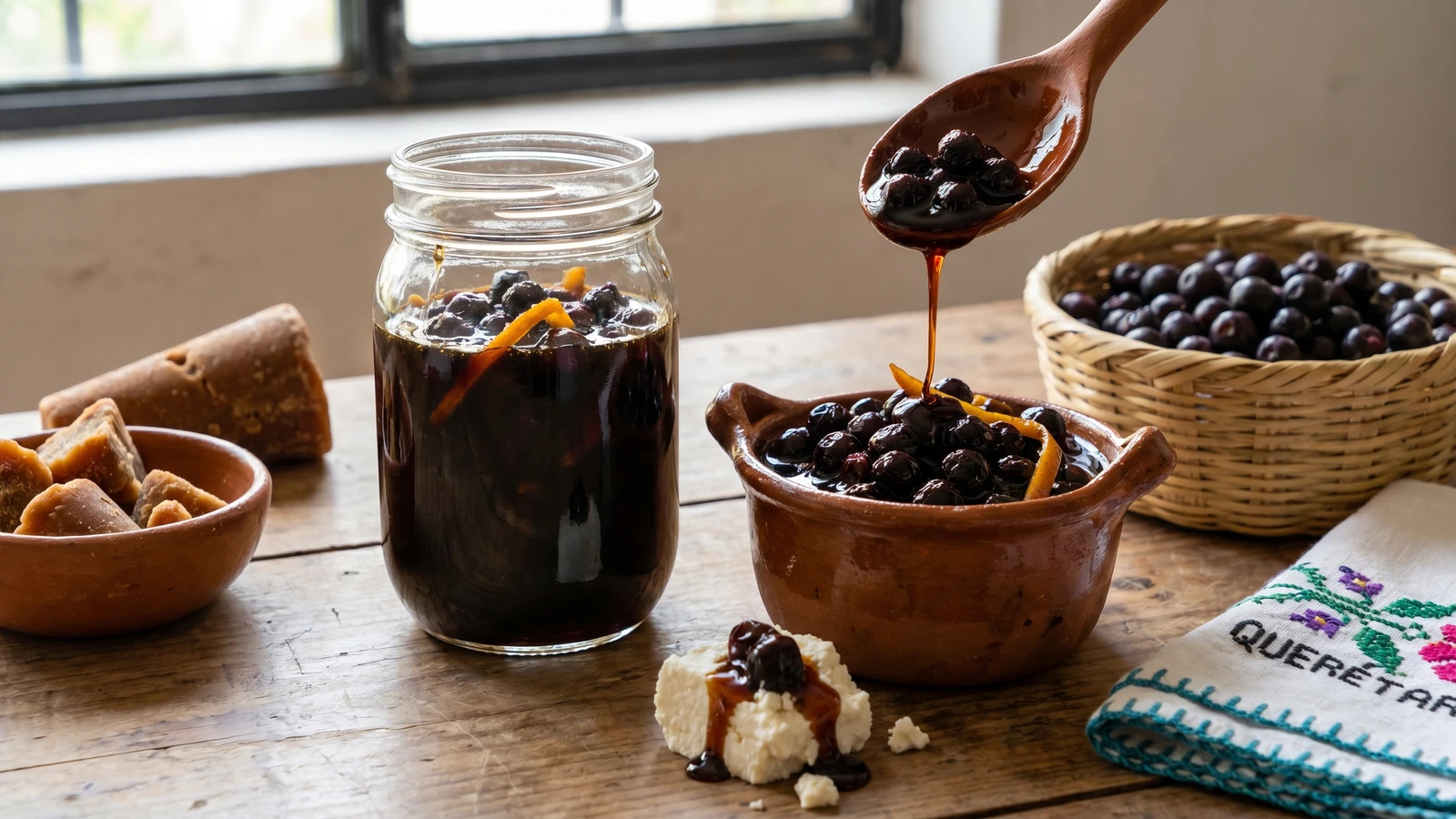
Querétaro's Sierra Gorda preserve of wild garambullos, simmered slowly with piloncillo, orange peel, canela, and lime until the cactus berries shine like purple beads in thick syrup.
Querétaro, Sierra Gorda, on the dry roads that climb from Cadereyta and Peñamiller toward Jalpan, this conserva belongs to the short season when the garambullo cactus gives its dark little berries. The women at the market know who picked them that morning and which bucket came from fruit that was fully ripe. Pregúntale a las señoras del mercado. They will save you from buying hard, sour berries.
This is not jam beaten smooth. It is conserva: whole garambullos held in piloncillo y naranja, cooked slowly until the syrup turns dark and the tiny seeds stay alive under your teeth. The flavor is cactus fruit, dark cane sugar, canela, orange peel, and lime. There is no chile in this jar. That bothers people who think Mexico is one flavor. Esto no es comida de un solo México.
I learned this style in Jalpan de Serra from a woman who kept jars lined along the back wall of her kitchen, each one labeled by hand. She made me watch the syrup, not the clock. It should move slowly off the spoon, she said, not harden like candy. Then she made me leave the lids alone for twelve hours. The pantry is not magic. It is discipline. Saber cocinar es saber vivir.
Garambullo, the fruit of Myrtillocactus geometrizans, is native to the arid and semi-arid belt of central Mexico, including Querétaro, Hidalgo, Guanajuato, and San Luis Potosí. Indigenous Otomí-Chichimeca communities gathered cactus fruits long before refined sugar; conserving them in piloncillo, citrus, and canela reflects the colonial-era arrival of sugarcane, citrus, and imported spices layered onto older foraging practices. In Querétaro, garambullo remains tied to the semidesert and Sierra Gorda pantry, where brief harvests are stretched into aguas frescas, nieves, liqueurs, jams, and preserves.
Quantity
1 kilogram
deep purple and ripe, picked over
Quantity
700 grams
chopped or grated
Quantity
1 cup
strained
Quantity
1/2 cup
Quantity
1/3 cup
use for shelf-stable canning; fresh Mexican lime juice is fine for refrigerator storage
Quantity
4 wide strips
white pith removed
Quantity
1 small stick
Quantity
2
Quantity
1/4 teaspoon
Quantity
for serving
| Ingredient | Quantity |
|---|---|
| fresh garambullosdeep purple and ripe, picked over | 1 kilogram |
| dark piloncillochopped or grated | 700 grams |
| fresh orange juicestrained | 1 cup |
| water | 1/2 cup |
| bottled lime juiceuse for shelf-stable canning; fresh Mexican lime juice is fine for refrigerator storage | 1/3 cup |
| orange peelwhite pith removed | 4 wide strips |
| canela | 1 small stick |
| whole cloves (optional) | 2 |
| fine sea salt | 1/4 teaspoon |
| requesón, queso de rancho, or pan de nata (optional) | for serving |
Pick through the garambullos one handful at a time. Keep the deep purple berries that give slightly under your fingers. Discard green, red, shriveled, split, or fermented fruit. Rinse them quickly in cool water and spread them on a clean cotton towel to dry. Do not soak them. You are making conserva, not washing gravel from a road.
Wash four half-pint glass canning jars, their rings, and new flat lids. Keep the jars hot in simmering water while the fruit cooks. Do not reuse old lids for shelf-stable jars. A señora's pantry is built on discipline, not wishful thinking. No me vengas con atajos when glass is being sealed.
Combine the piloncillo, orange juice, water, orange peel, canela, cloves if using, and salt in a heavy stainless steel or enamel pot. Cook over medium-low heat, stirring until the piloncillo dissolves completely. Let it bubble gently for 8 to 10 minutes, until it smells of dark cane sugar and orange. If the piloncillo leaves grit behind, strain the syrup through a fine-mesh sieve and return it to the pot.
Add the garambullos and the lime juice to the syrup. Lower the heat. The fruit should move lazily, not break apart in a hard boil. Cook 25 to 35 minutes, stirring with a wooden spoon and skimming any foam from the surface, until the berries wrinkle slightly and the syrup coats the spoon in a glossy purple-black layer. There is no chile here. Not every Mexican condiment needs chile. The cactus fruit is the point.
Put a small plate in the freezer for five minutes. Drop a spoonful of syrup onto the cold plate and tilt it. It should run slowly, not like water and not like hard candy. If it is thin, cook 5 minutes more and test again. Remove the canela and cloves. Leave the orange peel. One strip in each jar tells the truth about the naranja in the conserva.
Lift one hot jar from the water and set it on a folded towel. Spoon in the garambullos and syrup, leaving 1/4 inch headspace. Tuck one strip of orange peel against the glass. Run a clean skewer or thin spatula along the inside edge to release trapped air. Wipe the rim with a clean damp towel, set on the lid, and tighten the ring fingertip-tight. Repeat with the remaining jars.
Place the filled jars in a boiling-water canner with at least 1 inch of water over the lids. Process half-pint jars for 10 minutes at 0 to 1000 feet, 15 minutes at 1001 to 3000 feet, 20 minutes at 3001 to 6000 feet, and 25 minutes at 6001 to 8000 feet. Start timing only when the water returns to a full boil. Much of Querétaro sits high. Respect your altitude.
Lift the jars out and set them on a towel where they will not be moved for 12 hours. Do not tighten the rings. Do not poke the lids. When cool, check the seals. Any jar whose lid flexes goes into the refrigerator and is eaten within three weeks. Sealed jars keep in a cool, dark pantry for up to one year. Serve the conserva with requesón, queso de rancho, pan de nata, or spooned over plain yogurt if you live far from the Sierra and must improvise.
1 serving (about 75g)
Culinary guides, cultural storytelling, and the editorial depth that makes cooking meaningful.
Discover Culinary ExplorerChef Lupita
Baja California's wild chiltepin steeped in olive oil with garlic, orejon, and lime peel, until the oil turns ruby-amber and carries the slow, sneaky burn of the desert coast.

Chef Lupita
Puebla's Lenten convent adobo, a brick-red vinegar chile paste of ancho, guajillo, garlic, oregano, and comino made to dress fish for the meatless calendar.
Chef Lupita
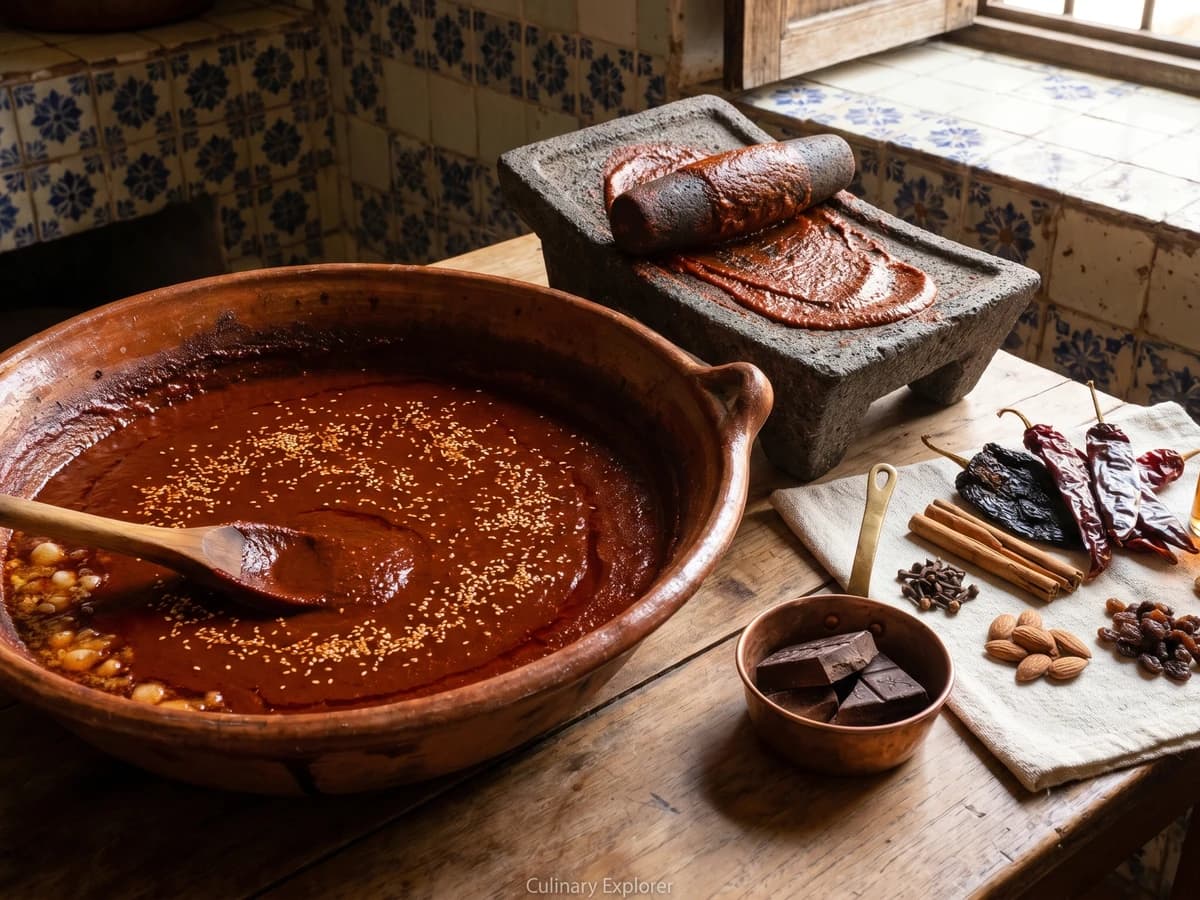
Zacatecas' wedding-table adobo, built from toasted guajillo and ancho, piloncillo, sour orange, chocolate, canela, clavo, almonds, sesame, and lard.

Chef Lupita
Puebla's convent kitchens built this adobo with ancho, guajillo, jerez, almonds, raisins, clove, and lard, a baroque marinade that stains pork loin and finishes as the sauce.