
Chef Lupita
Aceite de Chiltepin Bajacaliforniano
Baja California's wild chiltepin steeped in olive oil with garlic, orejon, and lime peel, until the oil turns ruby-amber and carries the slow, sneaky burn of the desert coast.
A cooking platform built around craft, culture, and the stories behind what we eat.
Created by
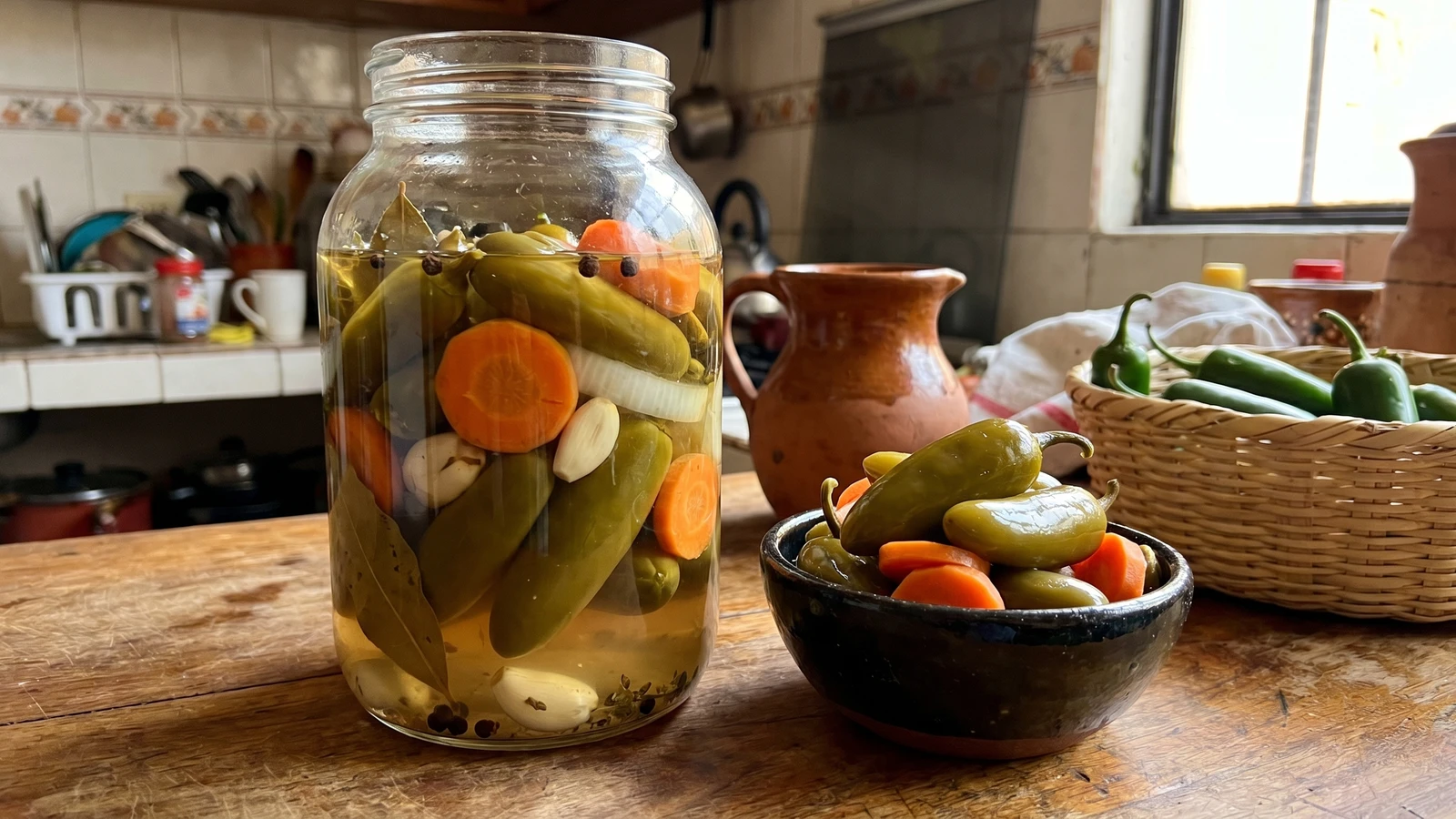
Veracruz's highland jalapeno, born around Xalapa, pickled with carrot, onion, garlic, vinegar, bay, thyme, and Mexican oregano for the jar every sensible kitchen keeps ready.
Veracruz, the Xalapa highlands. That is where this chile announces itself before you even cut it. The jalapeno is named for Xalapa, not for a supermarket shelf, and in the markets around the city you see why: firm green chiles, thick-skinned, glossy, with enough heat to wake up beans, tortas, eggs, seafood, and a plate of arroz a la tumbada without turning the meal into a dare.
Chiles jalapenos en escabeche are not a side thought in a Veracruzan kitchen. They are the jar in the refrigerator, the bowl on the table, the thing a mother sets beside lunch because a meal needs acid, chile, and crunch. Zanahoria, cebolla blanca, ajo, vinagre, laurel, tomillo, mejorana, oregano mexicano. The vegetables are first softened in oil so the chile skin relaxes and the onion sweetens. Then the vinegar does its work. No me vengas con atajos. If you dump raw chiles into vinegar, you made a harsh pickle, not this.
I learned a version like this from a woman near Mercado Jauregui in Xalapa who sold herbs wrapped in newspaper. She used a little aceite de oliva because Veracruz has always looked toward the Gulf and the port, and she was right. The oil carries the herbs, the vinegar preserves, and time finishes what the pot starts. Make it one day ahead if you have sense. Recetas probadas y garantizadas.
The jalapeno takes its name from Xalapa, historically spelled Jalapa, in Veracruz, where the chile was cultivated and traded from the surrounding highlands. Escabeche entered Mexico through Spanish colonial cooking, itself shaped by older Mediterranean vinegar-preservation methods, then Mexican cooks adapted it to native chiles, carrots, onions, and local herbs. By the 20th century, canned chiles jalapenos en escabeche had become a national pantry staple, but the home version from Veracruz still tastes different because the chiles are cooked just enough to stay firm.
Quantity
1 pound
stems trimmed, left whole or cut with a small slit
Quantity
3 large
peeled and sliced into 1/4-inch coins
Quantity
1 large
sliced into thick half-moons
Quantity
8
peeled and lightly crushed
Quantity
3 tablespoons
Quantity
2 cups
Quantity
1 cup
Quantity
1 tablespoon
Quantity
1 teaspoon
Quantity
3
Quantity
1 teaspoon
Quantity
1/2 teaspoon
Quantity
1/2 teaspoon
Quantity
1 teaspoon
Quantity
4
| Ingredient | Quantity |
|---|---|
| fresh chile jalapenostems trimmed, left whole or cut with a small slit | 1 pound |
| carrotspeeled and sliced into 1/4-inch coins | 3 large |
| white onionsliced into thick half-moons | 1 large |
| garlic clovespeeled and lightly crushed | 8 |
| mild olive oil | 3 tablespoons |
| white vinegar or apple cider vinegar | 2 cups |
| water | 1 cup |
| kosher salt | 1 tablespoon |
| sugar or grated piloncillo | 1 teaspoon |
| bay leaves | 3 |
| dried Mexican oregano | 1 teaspoon |
| dried thyme | 1/2 teaspoon |
| dried marjoram | 1/2 teaspoon |
| black peppercorns | 1 teaspoon |
| whole allspice berries | 4 |
Wash the jalapenos and trim only the dry stem tips. Leave the caps attached. Cut a small slit down one side of each chile if you want the vinegar to enter faster. Leave them whole if you want a firmer bite. Do not seed them. The chile is the point.
Heat the olive oil in a wide clay cazuela or heavy pot over medium heat. Add the carrots and cook for 3 minutes, stirring with a wooden spoon. Add the onion, garlic, and jalapenos. Cook for 5 to 6 minutes, turning everything often, until the jalapeno skins turn a deeper green and the onion begins to shine at the edges. You are not browning them. You are waking them up.
Pour in the vinegar and water. Add the salt, sugar or piloncillo, bay leaves, Mexican oregano, thyme, marjoram, black peppercorns, and allspice. Stir once and bring the pot just to a simmer. The smell should be sharp from vinegar, warm from herbs, and green from the chiles.
Simmer uncovered for 6 to 8 minutes, just until the carrots are barely tender and the jalapenos have dulled from bright green to olive green. Do not cook them until soft. Chiles jalapenos en escabeche should still have bite. A limp chile in the jar means someone got distracted.
Spoon the hot chiles, carrots, onion, and garlic into clean glass jars. Pour the hot escabeche liquid over the top, making sure the vegetables are fully covered. Tap the jars gently on the counter to release trapped air. Let them cool uncovered until no longer hot, then close the lids.
Refrigerate at least 24 hours before serving. The first day tastes like vinegar and chile standing in separate corners. The second day they begin to speak to each other. Serve in a small barro or Coatepec-glazed bowl beside beans, tortas, eggs, grilled fish, or anything that needs the clean cut of vinegar. Asi se hace y punto.
1 serving (about 60g)
Culinary guides, cultural storytelling, and the editorial depth that makes cooking meaningful.
Discover Culinary ExplorerChef Lupita
Baja California's wild chiltepin steeped in olive oil with garlic, orejon, and lime peel, until the oil turns ruby-amber and carries the slow, sneaky burn of the desert coast.

Chef Lupita
Puebla's Lenten convent adobo, a brick-red vinegar chile paste of ancho, guajillo, garlic, oregano, and comino made to dress fish for the meatless calendar.
Chef Lupita
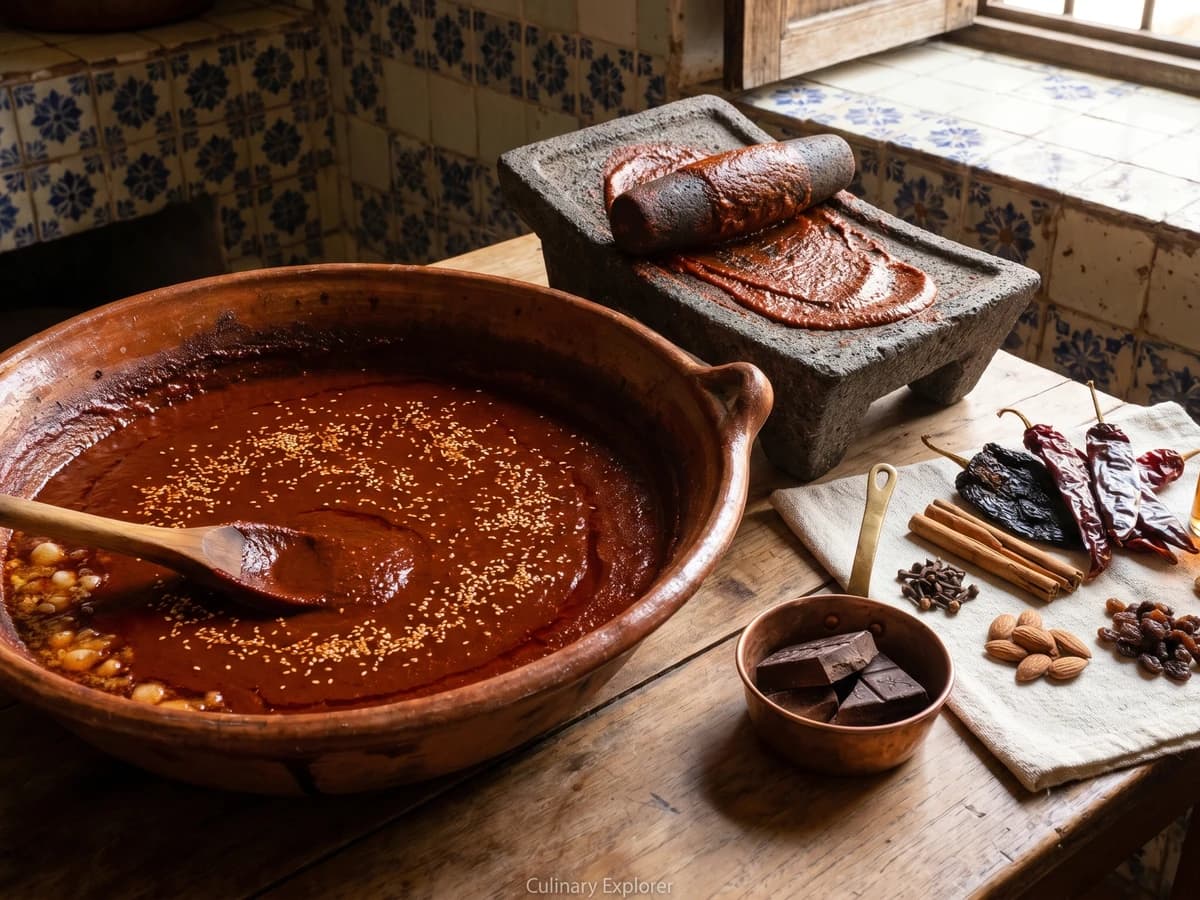
Zacatecas' wedding-table adobo, built from toasted guajillo and ancho, piloncillo, sour orange, chocolate, canela, clavo, almonds, sesame, and lard.

Chef Lupita
Puebla's convent kitchens built this adobo with ancho, guajillo, jerez, almonds, raisins, clove, and lard, a baroque marinade that stains pork loin and finishes as the sauce.