
Chef Lupita
Aceite de Chiltepin Bajacaliforniano
Baja California's wild chiltepin steeped in olive oil with garlic, orejon, and lime peel, until the oil turns ruby-amber and carries the slow, sneaky burn of the desert coast.
A cooking platform built around craft, culture, and the stories behind what we eat.

Created by
From the Huasteca Veracruzana, a chile ancho and chipotle seco paste fried in manteca, sharpened with vinegar, and built to stain the masa martajada and meat of zacahuil.
Veracruz, the Huasteca Veracruzana, from Tantoyuca through Chicontepec and Tempoal, is where this adobo has to begin. Zacahuil belongs to the whole Huasteca, yes, San Luis Potosi and Hidalgo will argue, and they have a right to. But this version is Veracruz: chile ancho for the brick-red body, chipotle seco for smoke, vinagre de pina for bite, ajonjoli for thickness, and manteca de cerdo because La manteca es el sabor.
At the Sunday market in Tantoyuca I watched women smear this paste over pork and into masa martajada, not fine tamal masa, before the zacahuil went into banana leaves and a hot brick oven. The adobo is not a table salsa. It is a working paste. It has to survive hours inside a giant tamal and still taste like chile after the corn and meat have taken their share.
The chiles are toasted, soaked, blended with garlic and comino, then fried in lard until the paste darkens and releases its fat. That frying is not decoration. It is the recipe. Cada estado, su propia cocina, and in the Veracruz Huasteca, this is how the zacahuil gets its color, its smell, and its authority.
Zacahuil is one of the great communal tamales of the Huasteca, a cultural region that crosses northern Veracruz, San Luis Potosi, Hidalgo, southern Tamaulipas, northern Puebla, and eastern Queretaro, with Teenek, Nahua, Otomi, and Totonac communities shaping its kitchens. The format of coarse nixtamalized corn wrapped in large leaves and cooked for a crowd is pre-Columbian; pork and manteca de cerdo entered the dish after Spanish pigs arrived in the 16th century. Veracruz versions commonly lean on banana leaf or papatla leaf, chile ancho, chipotle seco, and vinegar, while Huasteca Potosina cooks season their paste differently, which is why saying only 'Mexican tamal' tells you almost nothing.
Quantity
12
stemmed, seeded, and wiped clean
Quantity
5
stemmed and seeded if you want less heat
Quantity
1/3 cup
Quantity
1 teaspoon
Quantity
8
Quantity
2
Quantity
10
unpeeled
Quantity
1/2 medium
cut into thick slices
Quantity
1 teaspoon
Quantity
1/2 cup
Quantity
1 cup, plus more as needed
Quantity
1/2 cup
Quantity
2 teaspoons
| Ingredient | Quantity |
|---|---|
| dried chile anchostemmed, seeded, and wiped clean | 12 |
| dried chile chipotle secostemmed and seeded if you want less heat | 5 |
| ajonjoli blanco (white sesame seeds) | 1/3 cup |
| whole cumin seeds | 1 teaspoon |
| black peppercorns | 8 |
| whole cloves | 2 |
| garlic clovesunpeeled | 10 |
| white onioncut into thick slices | 1/2 medium |
| dried Mexican oregano | 1 teaspoon |
| vinagre de pina (pineapple vinegar) | 1/2 cup |
| warm pork broth or chile soaking liquid | 1 cup, plus more as needed |
| manteca de cerdo | 1/2 cup |
| sal de grano or kosher salt | 2 teaspoons |
Open the chile ancho and chipotle seco with your fingers or kitchen scissors. Remove stems and seeds. Wipe the skins with a dry cloth if they look dusty. Do not rinse them. Water steals fragrance before the comal has done its work.
Heat a dry comal over medium. Toast the chile ancho in batches, about 20 to 30 seconds per side, just until the skins soften, darken slightly, and smell like raisins and warm tobacco. Toast the chipotle seco separately for about 15 seconds per side. It is already smoked, so do not punish it. Burned chile turns the whole zacahuil bitter.
Put the toasted chiles in a heatproof bowl and cover with hot water, not boiling. Weigh them down with a small plate and let them soak for 20 minutes, until the flesh bends easily between your fingers. Save 1 cup of the soaking liquid if it tastes clean. If it tastes bitter, use warm pork broth instead.
On the same comal, toast the ajonjoli, stirring constantly, until pale gold and nutty, about 2 minutes. Remove it immediately. Toast the cumin seeds, peppercorns, and cloves for 30 seconds, just until fragrant. Spices are small and they burn fast. Watch them like a señora is watching you.
Place the unpeeled garlic cloves and onion slices on the comal. Turn them until the garlic skins spot black and the onion edges brown, 6 to 8 minutes. Peel the garlic. This gives the adobo depth without making it taste like raw garlic paste.
Drain the chiles and put them in a blender with the toasted ajonjoli, toasted spices, peeled garlic, onion, Mexican oregano, vinagre de pina, salt, and 1/2 cup of warm pork broth or chile soaking liquid. Blend until thick and very smooth, adding the remaining liquid little by little only as needed. The paste should move in the blender, but it should not become soup.
Melt the manteca de cerdo in a wide clay cazuela or heavy skillet over medium heat. Add the chile paste carefully. It will sputter. Stir with a wooden spoon for 10 to 12 minutes, until the color deepens to brick red, the raw vinegar smell calms down, and orange-red fat begins to show at the edges. La manteca es el sabor. This is where chile paste becomes adobo.
Let the adobo cool before rubbing it into pork, chicken, or turkey for zacahuil. For a home-scale zacahuil, use about two thirds of this paste to season 6 pounds of meat and the rest to stain the masa martajada. The adobo must taste slightly stronger than you think it should. The corn and the meat will take their share during the long cooking.
1 serving (about 35g)
Culinary guides, cultural storytelling, and the editorial depth that makes cooking meaningful.
Discover Culinary ExplorerChef Lupita
Baja California's wild chiltepin steeped in olive oil with garlic, orejon, and lime peel, until the oil turns ruby-amber and carries the slow, sneaky burn of the desert coast.

Chef Lupita
Puebla's Lenten convent adobo, a brick-red vinegar chile paste of ancho, guajillo, garlic, oregano, and comino made to dress fish for the meatless calendar.
Chef Lupita
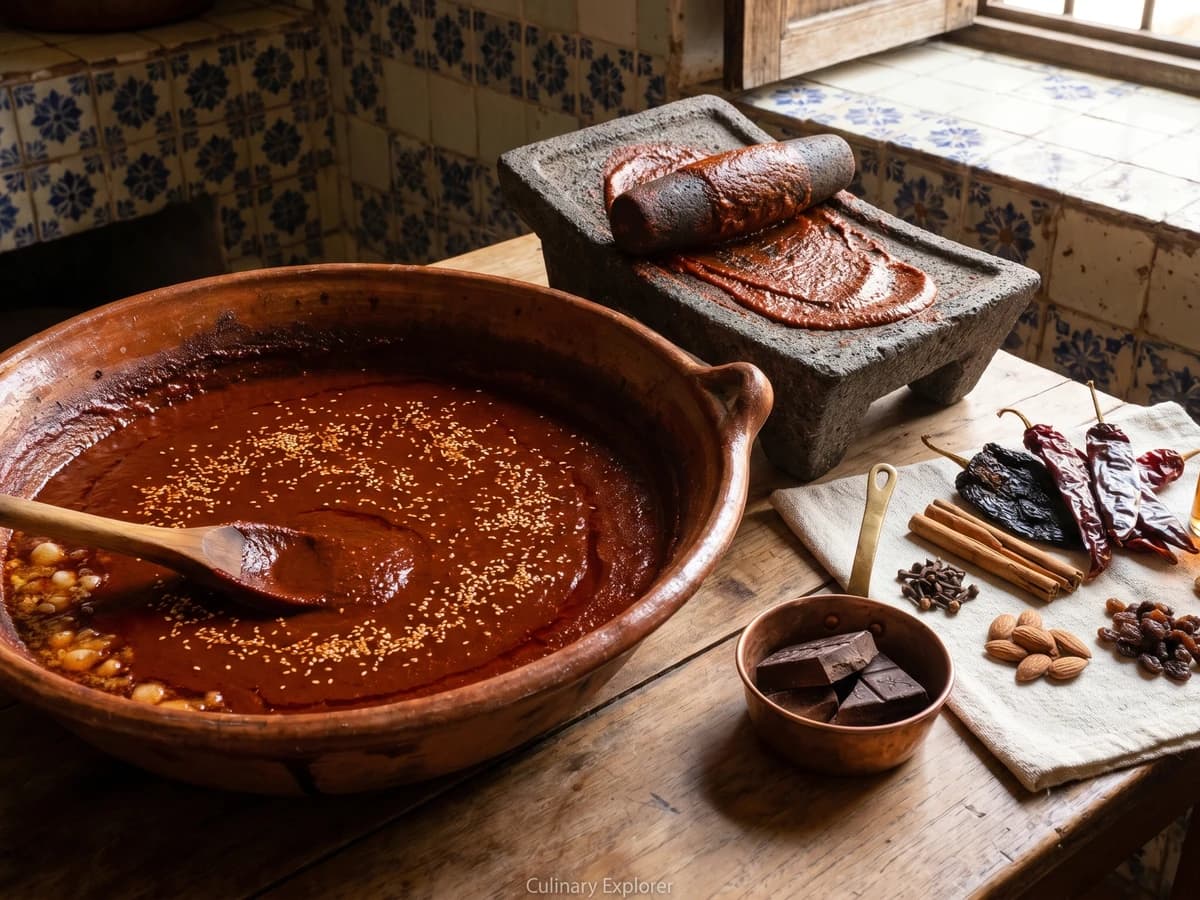
Zacatecas' wedding-table adobo, built from toasted guajillo and ancho, piloncillo, sour orange, chocolate, canela, clavo, almonds, sesame, and lard.

Chef Lupita
Puebla's convent kitchens built this adobo with ancho, guajillo, jerez, almonds, raisins, clove, and lard, a baroque marinade that stains pork loin and finishes as the sauce.