
Chef Lupita
Aceite de Chiltepin Bajacaliforniano
Baja California's wild chiltepin steeped in olive oil with garlic, orejon, and lime peel, until the oil turns ruby-amber and carries the slow, sneaky burn of the desert coast.
A cooking platform built around craft, culture, and the stories behind what we eat.
Created by
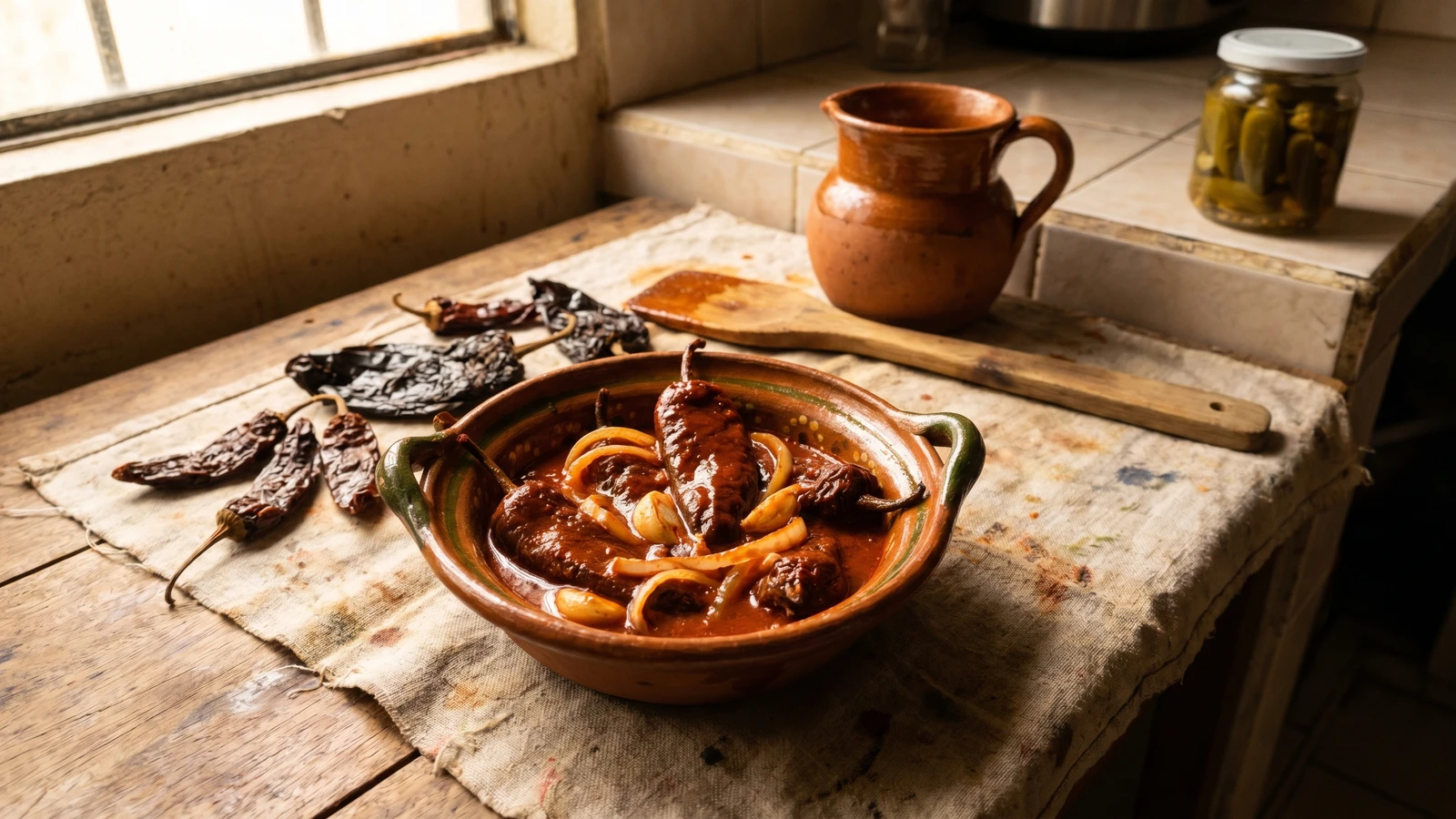
Veracruz's pantry chipotles, smoked jalapenos simmered whole in vinegar, piloncillo, garlic, chile ancho, and herbs until the adobo turns dark, glossy, sweet, sharp, and useful.
Veracruz, especially the coffee country around Xalapa and Coatepec, knows what to do with vinegar, herbs, smoke, and a jar that sits ready on the counter. These chipotles adobados are not a side thought. They are pantry authority. A spoonful goes into beans, tortas, eggs, fish, arroz a la tumbada, anything that needs smoke and discipline.
The chile is the point. Use chile chipotle meco when you can find it, the tan, stiff, deeply smoked jalapeno that smells like a wood fire and dried fruit. Chipotle mora or morita works too, darker and softer, with a sweeter heat. The adobo is Veracruz in its own way: vinegar, piloncillo, garlic, Mexican oregano, bay leaf, thyme, marjoram, and a little chile ancho for body. This is the Gulf hand, Spanish pantry meeting Mexican chile work.
I learned versions of this from women who kept jars beside the stove, not because they were preserving for display, but because tomorrow's meal was already being planned. Si no conoces el mercado, no conoces la cocina. Ask the chile vendor which chipotle is freshest, smell it, bend it, reject the dusty ones. Recetas probadas y garantizadas, but only if you start with chiles worth preserving.
Chipotle comes from the Nahuatl word 'chilpoctli,' meaning smoked chile, and the technique of smoking ripe jalapenos predates the Spanish conquest in central and eastern Mexico. Veracruz's adobo style reflects the colonial port's long exchange with Spain and the Caribbean, especially its use of vinegar, olive oil, piloncillo, bay, thyme, and marjoram in preserved foods. By the 19th century, bottled and jarred chile preserves were common in Mexican home pantries, long before the canned chipotle in adobo became an industrial supermarket product.
Quantity
3 ounces
stems removed
Quantity
2
stemmed and seeded
Quantity
2 cups
for soaking
Quantity
2 tablespoons
Quantity
1 medium
thinly sliced
Quantity
6
peeled and lightly crushed
Quantity
1 cup
Quantity
1 cup
Quantity
3 ounces
chopped
Quantity
1 teaspoon
Quantity
2
Quantity
2 sprigs
Quantity
1 small sprig
Quantity
1/2 teaspoon
Quantity
3
Quantity
1 small
Quantity
1 1/2 teaspoons, plus more to taste
| Ingredient | Quantity |
|---|---|
| dried chile chipotle meco or chipotle morastems removed | 3 ounces |
| dried chile anchostemmed and seeded | 2 |
| hot waterfor soaking | 2 cups |
| lard or olive oil | 2 tablespoons |
| white onionthinly sliced | 1 medium |
| garlic clovespeeled and lightly crushed | 6 |
| apple cider vinegar | 1 cup |
| reserved chile soaking liquid | 1 cup |
| piloncillochopped | 3 ounces |
| dried Mexican oregano | 1 teaspoon |
| bay leaves | 2 |
| fresh thyme | 2 sprigs |
| fresh marjoram | 1 small sprig |
| black peppercorns | 1/2 teaspoon |
| whole cloves | 3 |
| Mexican cinnamon stick | 1 small |
| kosher salt | 1 1/2 teaspoons, plus more to taste |
Wipe the chipotles with a damp cloth. Pull off the stems, but leave the seeds unless you want a softer heat. Shake out only the loose seeds. The chile chipotle is smoked jalapeno, and that smoke is the backbone of the jar. Do not rinse it away.
Heat a dry comal over medium. Toast the chile ancho for about 20 seconds per side, just until the skin darkens and smells sweet. Do not blacken it. The ancho gives body and a raisin-dark color to the adobo, while the chipotle gives smoke and bite.
Put the chipotles and toasted ancho in a bowl and cover with the hot water. Set a small plate on top to keep them submerged. Let them soften for 30 minutes. Hot water softens the flesh. Boiling water punishes the skin and can make the adobo bitter.
Lift out the chile ancho and put it in a blender with 1 cup of the soaking liquid. Blend until smooth, then strain through a fine-mesh sieve. Keep the whole chipotles separate. They go into the pot intact, because chipotles adobados should be spoonable chiles, not just sauce.
Heat the lard or olive oil in a clay cazuela or heavy saucepan over medium heat. Add the sliced onion and garlic. Cook for 6 to 8 minutes, stirring often, until the onion softens and the garlic smells round, not sharp. In Veracruz, olive oil appears often because the Gulf table carries Spanish influence. Lard gives a deeper pantry flavor. Both have a place here.
Pour in the strained ancho puree, vinegar, remaining soaking liquid, piloncillo, oregano, bay leaves, thyme, marjoram, peppercorns, cloves, cinnamon, and salt. Stir until the piloncillo dissolves. The sauce should taste sharp, sweet, smoky, and salted enough to preserve the chiles. If it tastes timid, it is not ready.
Add the whole softened chipotles to the adobo. Lower the heat and simmer uncovered for 35 to 45 minutes, stirring now and then with a wooden spoon, until the chiles are tender and the sauce clings to them in a glossy brick-red coat. The vinegar will calm down. The piloncillo will darken. This is patience, not decoration.
Taste for salt, then remove the cinnamon stick and herb stems. Spoon the chipotles, onions, garlic, and adobo into clean glass jars. Let cool, cover, and refrigerate at least overnight before eating. The first day they are good. The second day they taste like a Veracruz pantry. Así se hace y punto.
1 serving (about 30g)
Culinary guides, cultural storytelling, and the editorial depth that makes cooking meaningful.
Discover Culinary ExplorerChef Lupita
Baja California's wild chiltepin steeped in olive oil with garlic, orejon, and lime peel, until the oil turns ruby-amber and carries the slow, sneaky burn of the desert coast.

Chef Lupita
Puebla's Lenten convent adobo, a brick-red vinegar chile paste of ancho, guajillo, garlic, oregano, and comino made to dress fish for the meatless calendar.
Chef Lupita
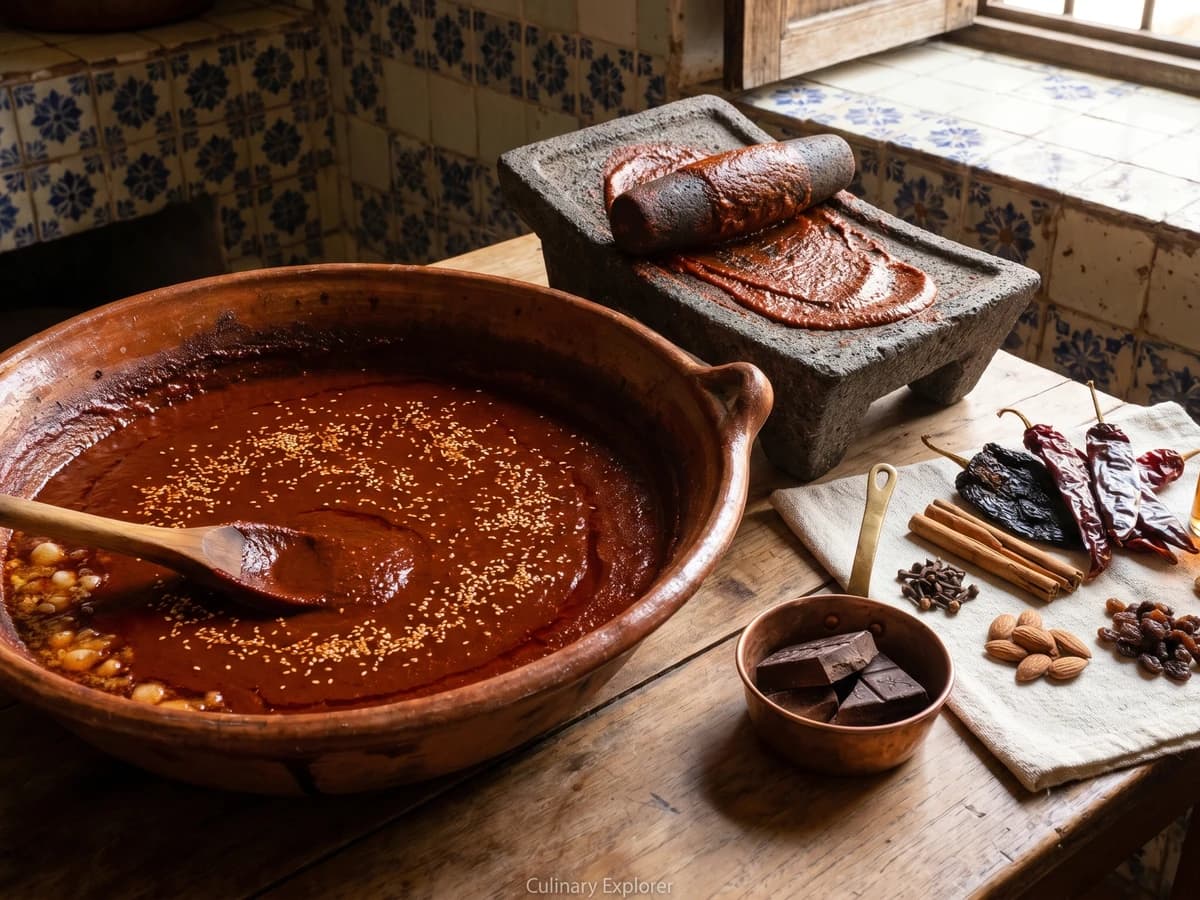
Zacatecas' wedding-table adobo, built from toasted guajillo and ancho, piloncillo, sour orange, chocolate, canela, clavo, almonds, sesame, and lard.

Chef Lupita
Puebla's convent kitchens built this adobo with ancho, guajillo, jerez, almonds, raisins, clove, and lard, a baroque marinade that stains pork loin and finishes as the sauce.