
Chef Lupita
Aceite de Chiltepin Bajacaliforniano
Baja California's wild chiltepin steeped in olive oil with garlic, orejon, and lime peel, until the oil turns ruby-amber and carries the slow, sneaky burn of the desert coast.
A cooking platform built around craft, culture, and the stories behind what we eat.

Created by
Veracruz's Gulf stock made from shrimp heads, garlic, chile guajillo, tomato, and epazote, the economical broth that gives seafood rice, fideo, and coastal moles their spine.
Veracruz, the Gulf coast from Tuxpan down through Alvarado and Tlacotalpan, knows what to do with shrimp heads. This caldo de cabezas de camarón is not a soup for showing off. It is a working stock, the pot behind the pot, the flavor that makes arroz a la tumbada taste like the coast instead of plain rice with seafood thrown on top.
The chile here is guajillo, toasted lightly, not burned, and used for depth more than heat. Veracruz cooking carries the Gulf hand: seafood, tomato, garlic, olives in other dishes, herbs, and a practical habit of wasting nothing. The heads are the treasure. The shells give body, but the heads give the broth its sweet, briny backbone. Ask the women at the fish stalls in the Mercado Hidalgo in Veracruz. They will tell you the same thing.
My mother was from Jalisco, so this was not her daily kitchen. I learned this from a señora near Alvarado who sold shrimp by the kilo and kept a blackened pot at the back of her stall. She pressed each head with her spoon like she was collecting rent. That is the technique. Press, simmer gently, strain well. Cada estado, su propia cocina.
Veracruz's seafood cookery reflects centuries of Gulf trade, with Spanish, Afro-Caribbean, and Indigenous Totonac and Huastec influences moving through the port after its founding by the Spanish in 1519. Shrimp-head stocks became household economy in coastal kitchens because fishermen's families used the parts buyers ignored, turning shells and heads into the base for rice, fideos, chilpacholes, and regional moles. In the Huasteca Veracruzana, dried seafood and chile-based broths remain important pantry tools, especially in inland towns where fresh catch had to be stretched farther from the coast.
Quantity
1 pound
rinsed briefly
Quantity
2
stemmed, seeded, and wiped clean
Quantity
1 tablespoon
Quantity
4
lightly crushed
Quantity
1/2 medium
sliced
Quantity
1 small
chopped
Quantity
1
Quantity
1 sprig
Quantity
8 cups
Quantity
1 1/2 teaspoons, plus more to taste
| Ingredient | Quantity |
|---|---|
| shrimp heads and shells, preferably from Gulf shrimprinsed briefly | 1 pound |
| dried chile guajillostemmed, seeded, and wiped clean | 2 |
| pork lard (manteca de cerdo) | 1 tablespoon |
| garlic cloveslightly crushed | 4 |
| white onionsliced | 1/2 medium |
| ripe Roma tomatochopped | 1 small |
| bay leaf | 1 |
| fresh epazote | 1 sprig |
| cold water | 8 cups |
| sea salt | 1 1/2 teaspoons, plus more to taste |
Heat a dry comal over medium. Press the chile guajillo flat against the surface for 10 to 15 seconds per side, just until it smells warm and fruity. Do not let it blacken. Burned guajillo makes bitter stock, and a bitter stock will ruin the rice, the fideo, and whatever mole you thought you were saving.
Put the toasted guajillo in a small bowl and cover with hot water for 10 minutes. Hot water, not boiling. Boiling water roughens the chile skin and pulls out bitterness. Drain it before adding to the pot.
Melt the lard in a heavy stockpot or clay cazuela over medium heat. Add the shrimp heads and shells and stir with a wooden spoon until they turn bright coral and smell deeply of the Gulf, about 5 minutes. Press the heads against the pot as they cook. That fat and juice inside the heads is the reason you are making this stock. No me vengas con atajos.
Add the garlic, white onion, tomato, softened guajillo, bay leaf, and salt. Cook for 5 minutes, stirring often, until the onion softens and the tomato collapses into the shells. The guajillo should stain the fat brick red. That color belongs to Veracruz kitchens, not to a packet of powdered seasoning.
Pour in the cold water and bring the pot to a gentle simmer. Lower the heat and cook uncovered for 30 minutes. Keep the bubbles lazy. A hard boil makes the stock cloudy and drags harsh shell flavor into the broth. Add the epazote for the last 8 minutes so it perfumes the pot without taking over.
Strain the stock through a fine-mesh sieve into a clean bowl or pot. Press firmly on the heads and shells with the back of a ladle. Do not be delicate. The best flavor is trapped there. Discard the solids only after they have given everything.
Taste for salt. The stock should taste savory and marine, with a clean chile depth, not hot. Use it the same day for arroz a la tumbada, sopa de fideo, seafood rice, or a mole huasteco, or chill it quickly and refrigerate. Saber cocinar es saber vivir.
1 serving (about 240g)
Culinary guides, cultural storytelling, and the editorial depth that makes cooking meaningful.
Discover Culinary ExplorerChef Lupita
Baja California's wild chiltepin steeped in olive oil with garlic, orejon, and lime peel, until the oil turns ruby-amber and carries the slow, sneaky burn of the desert coast.

Chef Lupita
Puebla's Lenten convent adobo, a brick-red vinegar chile paste of ancho, guajillo, garlic, oregano, and comino made to dress fish for the meatless calendar.
Chef Lupita
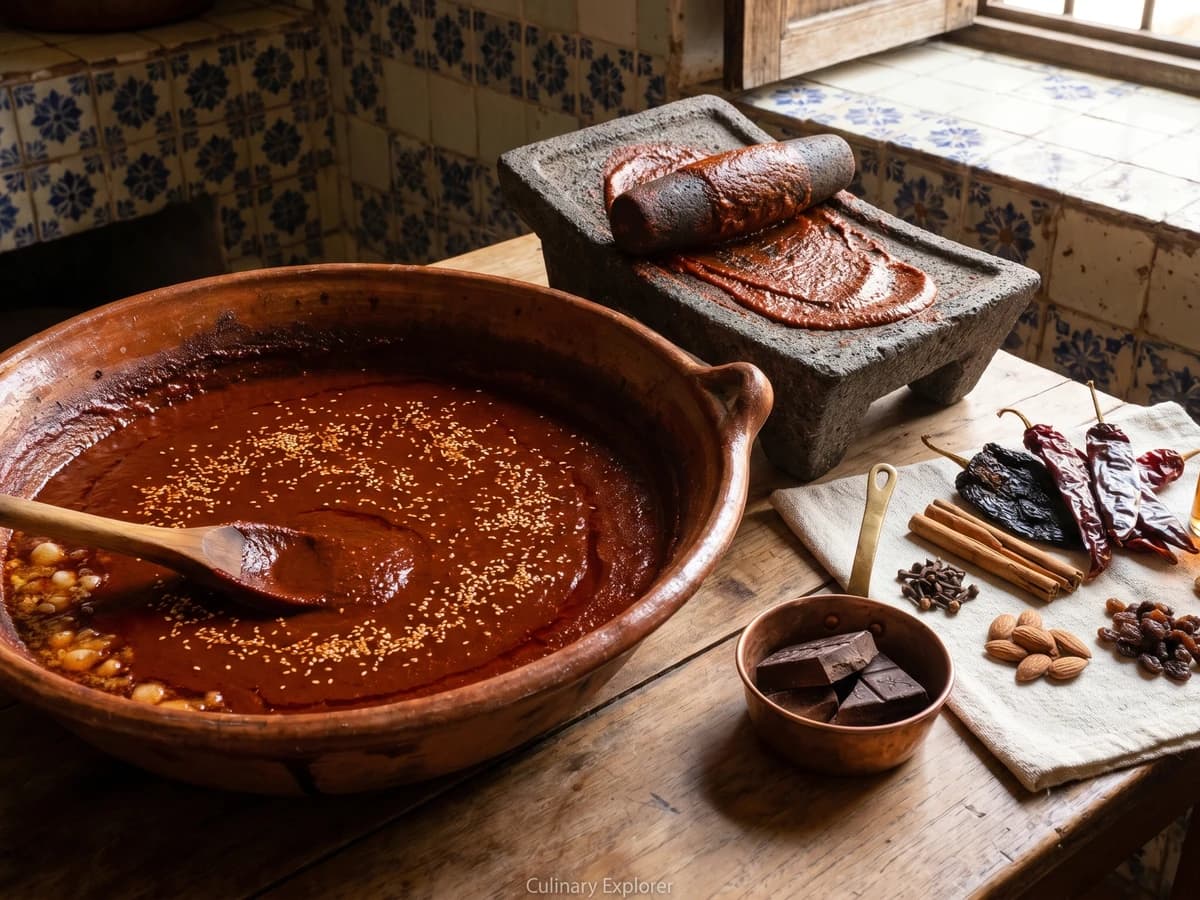
Zacatecas' wedding-table adobo, built from toasted guajillo and ancho, piloncillo, sour orange, chocolate, canela, clavo, almonds, sesame, and lard.

Chef Lupita
Puebla's convent kitchens built this adobo with ancho, guajillo, jerez, almonds, raisins, clove, and lard, a baroque marinade that stains pork loin and finishes as the sauce.