
Chef Lupita
Almendrados Conventuales Poblanos
Puebla's convent almond cookies, made from blanched almonds, sugar syrup, egg yolks, canela, and patient hands, the kind of sweet that belongs beside coffee in talavera, not in a plastic bakery box.
A cooking platform built around craft, culture, and the stories behind what we eat.
Created by
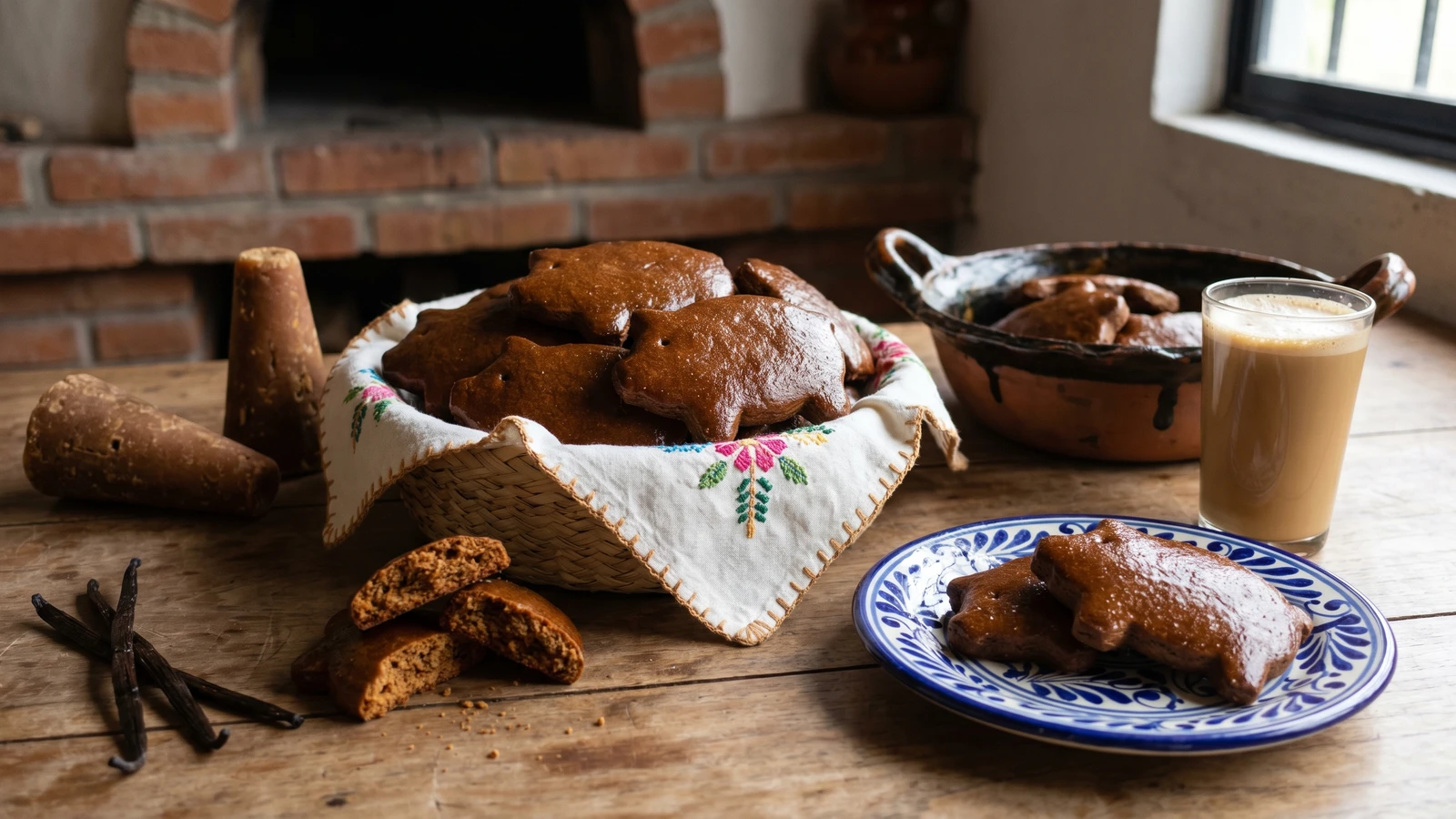
Western Veracruz's marranito jarocho is a soft pig-shaped pan dulce built from piloncillo syrup, cinnamon, egg, flour, and manteca, the kind of cookie that belongs beside café lechero.
Western Veracruz, from the coffee highlands around Xalapa and Coatepec down toward Córdoba and Orizaba, keeps a sweet panadería tradition that smells of piloncillo, canela, and café lechero. This marranito jarocho lives there, in palm-fiber baskets behind glass counters, dark brown and soft, shaped like a pig because the panadero knows children point first with their eyes.
The ingredient that defines it is piloncillo. Not brown sugar. Piloncillo. Veracruz is cane country, and that deep raw sugar taste is what gives the cookie its color, its chew, and that slight molasses bitterness under the sweetness. The cinnamon belongs there too, and if you have Papantla vanilla, use it. Vanilla from Veracruz has earned that respect.
Marranitos are not gingerbread, even if people outside Mexico keep trying to call them that. Some families add a pinch of clavo or anise. This western Veracruz version keeps the base direct: piloncillo syrup, manteca de cerdo, egg, flour, cinnamon. The dough must rest so the flour drinks the syrup and the pig holds its shape in the oven. No me vengas con atajos. Rest the dough.
I learned this style from a panadera near Coatepec who cut the pigs with a dented metal cutter and slapped each one onto the tray like she had done it since childhood. She brushed them with egg until they shone like dark clay after rain. That is the look you want. Cada estado, su propia cocina.
Marranitos, also called puerquitos or cochinitos in other parts of Mexico, developed from colonial wheat baking after Spanish ovens and cane sugar production became established in New Spain. Veracruz became one of Mexico's important sugar-producing regions, and piloncillo from cane mills gave everyday pan dulce its dark color and durable sweetness before refined sugar became common. The pig shape reflects the post-conquest importance of pork in Mexican foodways, but the sweetening method belongs to the cane economies of states like Veracruz, Puebla, Michoacán, and Jalisco.
Quantity
8 ounces
chopped
Quantity
3/4 cup
Quantity
1 stick, about 3 inches
Quantity
1
Quantity
1 teaspoon
Quantity
4 cups, plus more for rolling
Quantity
1 teaspoon
Quantity
1/2 teaspoon
Quantity
1/2 teaspoon
Quantity
1 teaspoon
Quantity
1/4 cup
softened
Quantity
1
room temperature
Quantity
1
Quantity
1 tablespoon
for egg wash
| Ingredient | Quantity |
|---|---|
| piloncillochopped | 8 ounces |
| water | 3/4 cup |
| Mexican cinnamon stick (canela) | 1 stick, about 3 inches |
| whole clove (optional) | 1 |
| Papantla vanilla extract or Mexican vanilla extract | 1 teaspoon |
| all-purpose flour | 4 cups, plus more for rolling |
| baking powder | 1 teaspoon |
| baking soda | 1/2 teaspoon |
| fine sea salt | 1/2 teaspoon |
| ground Mexican cinnamon | 1 teaspoon |
| manteca de cerdosoftened | 1/4 cup |
| large eggroom temperature | 1 |
| large egg yolk | 1 |
| milkfor egg wash | 1 tablespoon |
Put the chopped piloncillo, water, cinnamon stick, and clove if using into a small saucepan. Set it over medium heat and simmer gently, stirring now and then, until the piloncillo dissolves completely and the syrup smells dark, mineral, and sweet. This takes 8 to 10 minutes. Do not boil it hard. You want syrup, not candy.
Take the pan off the heat. Remove the cinnamon stick and clove. Stir in the vanilla and let the syrup cool until warm, not hot, about 20 minutes. If you add hot syrup to egg, the egg cooks. Then you have sweet scrambled egg in flour, and nobody in Veracruz is asking for that.
Whisk the flour, baking powder, baking soda, salt, and ground cinnamon in a wide bowl. Break up any lumps with your fingers. Marranito dough is not delicate, but it does need even leavening so the pigs puff softly instead of cracking in strange places.
Add the softened manteca de cerdo to the flour mixture. Rub it in with your fingertips until the flour looks slightly sandy and holds together when you squeeze a handful. La manteca es el sabor. It gives the marranito tenderness and that panadería softness you do not get from oil.
Beat the whole egg into the cooled piloncillo syrup. Pour the syrup mixture into the flour and stir with a wooden spoon until a dark, sticky dough forms. It will look too soft at first. Keep folding from the bottom of the bowl until no dry flour remains. If the dough is wet enough to pour, add flour one tablespoon at a time. If it crumbles, add water one teaspoon at a time.
Pat the dough into a thick disk, wrap it, and let it rest at room temperature for 30 minutes. The flour needs time to absorb the piloncillo syrup. Skip the rest and the cutter drags, the pigs spread, and you blame the recipe when the fault is impatience.
Heat the oven to 350F. Line two baking sheets with parchment. Lightly flour the table and roll the dough 1/4 inch thick for softer marranitos or 3/16 inch thick for firmer ones. Cut with a pig-shaped cutter and transfer to the baking sheets, leaving 1 inch between each piece. Gather scraps, reroll once, and cut again. After that, the dough gets tough.
Beat the egg yolk with the milk. Brush a thin layer over each marranito, reaching the ears, snout, and legs. Bake 14 to 18 minutes, rotating the pans halfway through, until the tops are glossy dark brown, the edges feel set, and the center springs back when touched. Do not wait for them to get crisp. A Veracruz marranito should be soft under the teeth.
Let the marranitos rest on the pan for 5 minutes, then move them to a rack. They firm as they cool and soften again by the next day. Serve with café lechero in a tall glass or black coffee from the Veracruz highlands. Recetas probadas y garantizadas.
1 serving (about 45g)
Culinary guides, cultural storytelling, and the editorial depth that makes cooking meaningful.
Discover Culinary ExplorerChef Lupita
Puebla's convent almond cookies, made from blanched almonds, sugar syrup, egg yolks, canela, and patient hands, the kind of sweet that belongs beside coffee in talavera, not in a plastic bakery box.

Chef Lupita
Ciudad de Mexico's panaderia banderillas are long sticks of hojaldre pressed with sugar, baked until amber, and finished with a hard glaze for coffee at the kitchen table.

Chef Lupita
Mérida's pale egg-yolk-and-vanilla kisses, tiny cookies built on eight yolks and a perfume of orange blossom, sandwiched with guava paste and dusted heavy with powdered sugar.

Chef Lupita
Hidalgo's bisquet de nata carries Pachuca's mining history into the breakfast table: a Cornish-style bread softened by Mexican nata, split warm and eaten with café de olla.