
Chef Lupita
Almendrados Conventuales Poblanos
Puebla's convent almond cookies, made from blanched almonds, sugar syrup, egg yolks, canela, and patient hands, the kind of sweet that belongs beside coffee in talavera, not in a plastic bakery box.
A cooking platform built around craft, culture, and the stories behind what we eat.
Created by
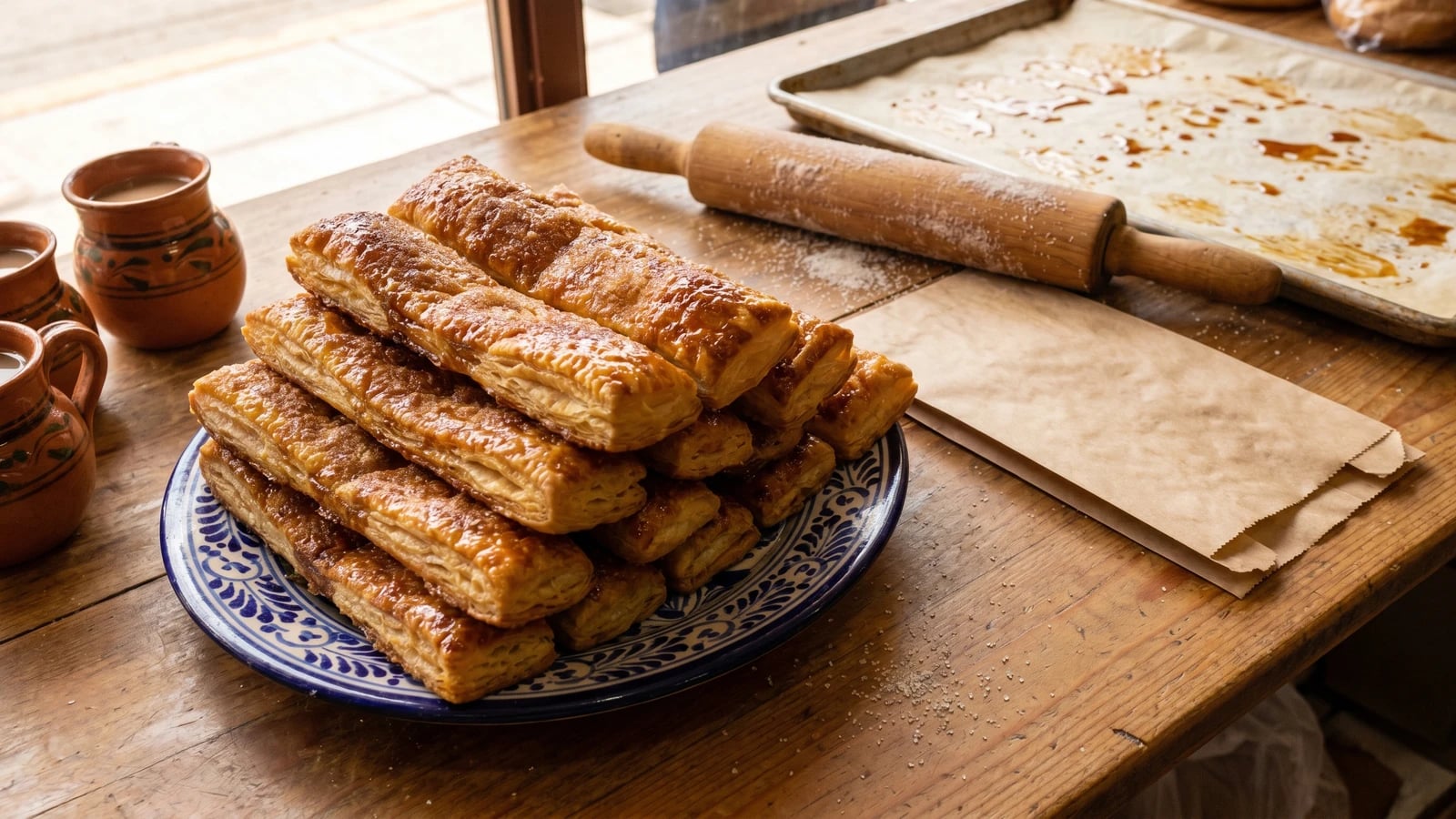
Ciudad de Mexico's panaderia banderillas are long sticks of hojaldre pressed with sugar, baked until amber, and finished with a hard glaze for coffee at the kitchen table.
Ciudad de Mexico owns this panaderia table. Not because banderillas are ancient, but because the capital made them everyday food: trays of long sugared hojaldre behind glass counters from La Merced to Tacubaya, bought by the piece and carried home in thin paper bags.
The defining ingredient is hojaldre, laminated dough, folded so butter sits in layers between dough. In the city bakeries, the women at the counter know which tray came out crisp and which one sat too long. They sell the good ones first. A banderilla should be long, amber at the edges, sugared hard on top, and light enough that flakes fall on your blouse when you bite it. That is not a defect. That is the work showing.
My mother did not make banderillas from scratch in Colonia Roma. She bought them when money was tight and coffee needed company. But in her notebook she wrote one line: 'hojaldre frio, horno fuerte.' Cold pastry, strong oven. She was right. The oven lifts the layers before the butter escapes, and the sugar makes the shell. Saber cocinar es saber vivir, even when the lesson comes from a pan dulce that costs less than a taxi ride.
Banderillas belong to the family of Mexican pan dulce shaped by Spanish colonial bakery technique, especially puff pastry and sugar glazing introduced through convent and urban bakery traditions from the 16th century onward. Their name refers to the decorated barbed sticks used in bullfighting, a visual reference that entered Mexican bakery language through Spanish cultural influence. By the 20th century, banderillas had become a common Mexico City panaderia item, less ceremonial than rosca or pan de muerto, but deeply tied to the capital's daily coffee and merienda culture.
Quantity
1 pound
kept cold
Quantity
1/2 cup, plus more for rolling
Quantity
1/4 teaspoon
Quantity
2 tablespoons
melted and cooled
Quantity
1
Quantity
1 tablespoon
Quantity
1/2 teaspoon
Quantity
1/3 cup
warmed and strained
| Ingredient | Quantity |
|---|---|
| all-butter puff pastrykept cold | 1 pound |
| granulated sugar | 1/2 cup, plus more for rolling |
| fine sea salt | 1/4 teaspoon |
| unsalted buttermelted and cooled | 2 tablespoons |
| egg white | 1 |
| water | 1 tablespoon |
| fresh lime juice | 1/2 teaspoon |
| apricot jam (optional)warmed and strained | 1/3 cup |
Keep the puff pastry cold until the last moment. If it feels soft or greasy, put it back in the refrigerator for 15 minutes. Hojaldre only lifts when the butter stays in thin layers. Warm butter melts into the dough and then you have a flat cookie. No me vengas con atajos.
Heat the oven to 400F. Line two sheet pans with parchment. Mix the 1/2 cup sugar with the salt in a small bowl. The salt is not modern decoration. It keeps the sugar from tasting dull.
Dust the counter with a thin layer of sugar, not flour. Lay the cold pastry on top and dust the surface with more sugar. Roll it into a rectangle about 16 by 10 inches and 1/8 inch thick. Roll firmly but do not crush the layers. The sugar presses into the dough and caramelizes against the heat of the pan.
Brush the surface lightly with melted butter, then sprinkle with the salted sugar. Cut the pastry into strips about 1 inch wide and 8 inches long. Move them to the prepared pans, leaving space between them because they spread as the butter lifts the layers.
Whisk the egg white, water, and lime juice until loose and foamy, not stiff. Brush a thin layer over each strip. Too much glaze makes puddles. A thin layer gives the banderilla its hard sugar shell, the part that snaps under your teeth before the pastry flakes apart.
Bake for 18 to 25 minutes, rotating the pans halfway through. The banderillas are ready when the pastry is deeply golden, the edges are amber, and the sugar glaze looks dry and glassy. Pale hojaldre is underbaked hojaldre. Give it the time it needs.
If you want the panaderia finish, brush the hot banderillas with a very thin coat of warm strained apricot jam. Let them cool completely on the pan for 10 minutes, then move them to a rack. Do not stack them while warm. Sugar traps moisture and softens what you worked to crisp.
1 serving (about 40g)
Culinary guides, cultural storytelling, and the editorial depth that makes cooking meaningful.
Discover Culinary ExplorerChef Lupita
Puebla's convent almond cookies, made from blanched almonds, sugar syrup, egg yolks, canela, and patient hands, the kind of sweet that belongs beside coffee in talavera, not in a plastic bakery box.

Chef Lupita
Mérida's pale egg-yolk-and-vanilla kisses, tiny cookies built on eight yolks and a perfume of orange blossom, sandwiched with guava paste and dusted heavy with powdered sugar.

Chef Lupita
Hidalgo's bisquet de nata carries Pachuca's mining history into the breakfast table: a Cornish-style bread softened by Mexican nata, split warm and eaten with café de olla.

Chef Lupita
Nayarit's bizcochitos de maíz are tender little corn biscuits sweetened with piloncillo, scented with canela, and baked until the edges turn pale gold and the crumb stays tight.