
Chef Lupita
Banderillas de Hojaldre Capitalinas
Ciudad de Mexico's panaderia banderillas are long sticks of hojaldre pressed with sugar, baked until amber, and finished with a hard glaze for coffee at the kitchen table.
A cooking platform built around craft, culture, and the stories behind what we eat.
Created by
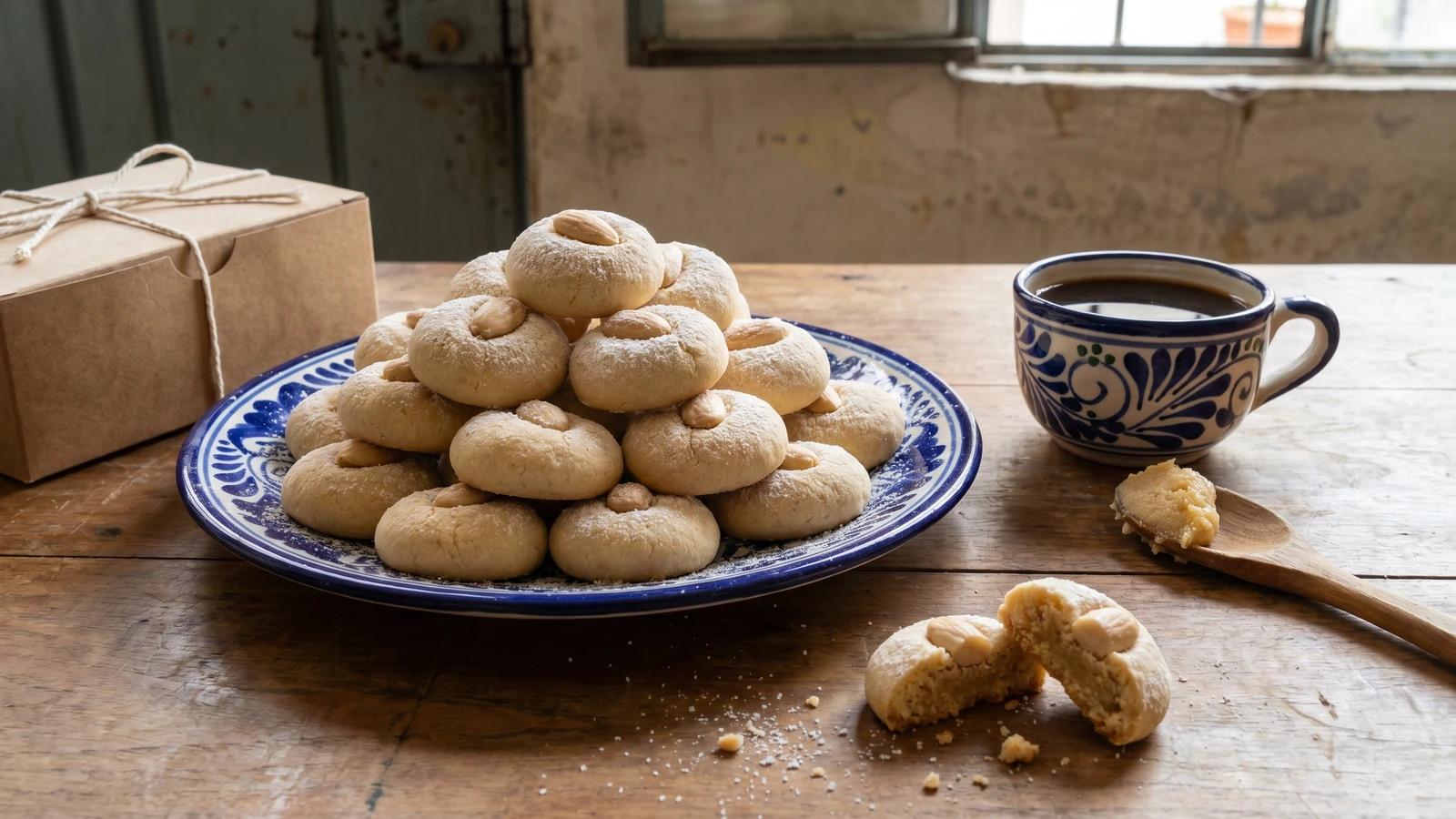
Puebla's convent almond cookies, made from blanched almonds, sugar syrup, egg yolks, canela, and patient hands, the kind of sweet that belongs beside coffee in talavera, not in a plastic bakery box.
Puebla de los Angeles, the convent corridor of central Mexico, is where these almendrados live most clearly. The kitchens of Santa Clara, Santa Rosa, and Santa Monica shaped a whole language of sweets: egg yolks, almonds, sugar, canela, patience. This is not candy pretending to be a cookie. It is almond paste cooked until it obeys the spoon, then molded by hand.
The defining ingredient is the almond, an Old World nut that settled into Puebla because convent kitchens had sugar, eggs, and the discipline to turn both into architecture. The yolks matter. They make the paste richer and more tender than the dry Spanish almond cookies people confuse with this. Not all Mexican food has chile. Some of it has sugar syrup and nuns with better technique than half the pastry schools in the world.
I learned a version like this from a woman near the Mercado del Carmen who sold convent sweets in small paper boxes tied with string. She told me the paste should pull from the pan cleanly, but still feel alive under the fingers. That is the lesson. You cook until the dough tells you it is ready. Saber cocinar es saber vivir.
Convent sweets entered New Spain in the 16th and 17th centuries through Spanish religious orders, especially in cities such as Puebla and Oaxaca where enclosed convents became centers of sugar, egg-yolk, and almond work. Almonds and cane sugar arrived through colonial trade, while Mexican convent cooks adapted Iberian mazapan techniques to local kitchens, adding canela, citrus peel, and the molding traditions that made each convent's sweets recognizable. Puebla's reputation for dulces conventuales became so strong by the 18th century that sweets from its convent kitchens were sold and gifted as markers of status, devotion, and regional identity.
Quantity
1 1/2 cups
Quantity
1 cup
Quantity
1/4 cup
Quantity
6
Quantity
1/2 teaspoon
finely ground
Quantity
1/4 teaspoon
Quantity
1 teaspoon
finely grated
Quantity
1 teaspoon
Quantity
1/2 cup
for dusting the work surface and finished cookies
Quantity
for decorating
| Ingredient | Quantity |
|---|---|
| whole blanched almonds | 1 1/2 cups |
| granulated sugar | 1 cup |
| water | 1/4 cup |
| large egg yolks | 6 |
| Ceylon cinnamon, preferably Mexican canelafinely ground | 1/2 teaspoon |
| kosher salt | 1/4 teaspoon |
| lime zestfinely grated | 1 teaspoon |
| orange blossom water (optional) | 1 teaspoon |
| powdered sugarfor dusting the work surface and finished cookies | 1/2 cup |
| whole blanched almonds (optional) | for decorating |
Pulse the blanched almonds in a food processor until they look like fine meal. Stop before they turn oily. Almond paste begins with texture, not speed. If you grind until the almonds release their fat, the cookies bake heavy and greasy.
Combine the granulated sugar and water in a heavy saucepan. Cook over medium heat, swirling the pan only if needed, until the syrup reaches 235F to 238F, the soft-ball stage. It should look clear and thick, not caramel-colored. These are pale convent sweets, not burnt sugar candy.
Lower the heat. Stir the almond meal into the hot syrup with a wooden spoon. Add the canela, salt, lime zest, and orange blossom water if using. Cook for 3 to 4 minutes, stirring constantly, until the mixture gathers into a thick paste and pulls away from the sides of the pan. This is the Spanish mazapan grammar made Mexican by the convent kitchens of Puebla.
Beat the egg yolks in a small bowl. Spoon a little hot almond paste into the yolks and whisk hard, then scrape the warmed yolks back into the pan. Cook over low heat for 2 minutes, stirring without stopping. Do not scramble them. The yolks give body and a tender bite. Rush this and you get sweet almond eggs. Nobody asked for that.
Scrape the paste onto a plate dusted with powdered sugar. Let it cool until you can handle it, about 20 minutes. It should be firm, smooth, and slightly tacky. If it sticks badly to your fingers, dust your hands lightly with powdered sugar. Lightly. No me vengas con atajos.
Heat the oven to 325F. Line a baking sheet with parchment. Pinch off walnut-sized pieces of paste and roll them into small ovals or rounds. Press one whole blanched almond into the top of each cookie. Set them one inch apart. They do not spread much when the paste is cooked properly.
Bake for 14 to 18 minutes, rotating the pan once, until the bottoms are light gold and the tops look dry but not brown. The center should stay tender. If they darken hard around the edges, the oven is too hot. Convent sweets require discipline, not drama.
Let the cookies cool on the pan for 10 minutes, then move them to a rack. Dust lightly with powdered sugar once cool. They taste better after several hours, when the almond, yolk, and canela settle into one flavor. Recetas probadas y garantizadas.
1 serving (about 19g)
Culinary guides, cultural storytelling, and the editorial depth that makes cooking meaningful.
Discover Culinary ExplorerChef Lupita
Ciudad de Mexico's panaderia banderillas are long sticks of hojaldre pressed with sugar, baked until amber, and finished with a hard glaze for coffee at the kitchen table.

Chef Lupita
Mérida's pale egg-yolk-and-vanilla kisses, tiny cookies built on eight yolks and a perfume of orange blossom, sandwiched with guava paste and dusted heavy with powdered sugar.

Chef Lupita
Hidalgo's bisquet de nata carries Pachuca's mining history into the breakfast table: a Cornish-style bread softened by Mexican nata, split warm and eaten with café de olla.

Chef Lupita
Nayarit's bizcochitos de maíz are tender little corn biscuits sweetened with piloncillo, scented with canela, and baked until the edges turn pale gold and the crumb stays tight.