
Chef Takumi
Agar Jelly with Anko and Fruit (あんみつ, Anmitsu)
Anmitsu looks like a tray of small tasks, but the work is calm: dissolve the kanten fully, chill the pieces clean, then let fruit, anko, and kuromitsu do the speaking.
A cooking platform built around craft, culture, and the stories behind what we eat.
Created by
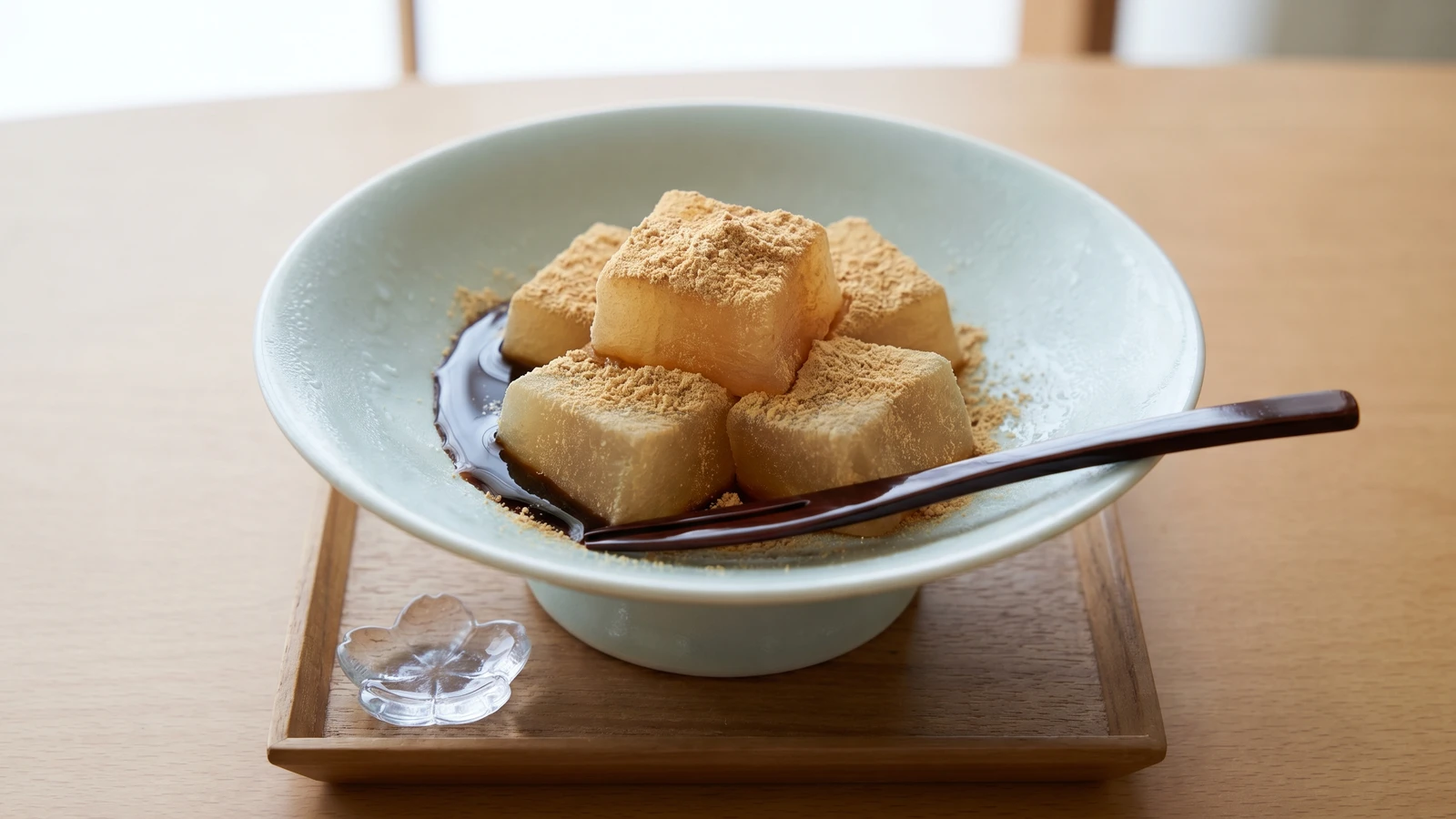
Real warabi-mochi is not bouncy candy. It is cool, translucent, and barely held together, with toasted kinako clinging to the surface and kuromitsu running dark at the edge.
Warabi-mochi asks one honest question: did you use real warabi-ko? The starch from bracken root is rare and expensive, which is why most shop versions lean on sweet potato or tapioca starch. Those can make a pleasant sweet. They are not quite this one. Honmono warabi-mochi has a softer courage, clear at the edges and trembling as if it would rather not be moved.
The method looks severe because the change happens all at once. For several minutes you stir cloudy water and wonder if anything is happening. Then the starch thickens, turns glossy, and begins to pull from the pan. Keep cooking past that first thickening. Not long, just enough for the raw starch taste to leave and the texture to become elastic and clean. Stop too early and it tastes chalky. Push too hard and the tenderness goes.
This is summer wagashi, the kind of sweet we serve chilled when the air is heavy and a large dessert would feel like an argument. Kinako, toasted soybean flour, gives fragrance and dryness; kuromitsu, black sugar syrup, brings a deep mineral sweetness. Nothing is hidden. The whole dish is starch, water, sugar, and the nerve to stir until the wobble tells you it is ready.
Warabi-mochi takes its name from warabi, the bracken fern, whose root was historically processed into a fine starch in mountainous parts of Japan. Because true warabi-ko is laborious to produce and yields little, it became scarce and costly; many modern versions are made with sweet potato starch, tapioca starch, or blends sold as warabi-mochi-ko. The sweet is especially associated with the Kansai region and with summer wagashi, when its chilled, translucent texture is prized.
Quantity
50g
Quantity
60g
Quantity
350ml
Quantity
1/2 cup
Quantity
1 tablespoon
for mixing with kinako
Quantity
1 pinch
Quantity
1/2 cup
| Ingredient | Quantity |
|---|---|
| real warabi-ko (bracken starch) | 50g |
| granulated sugar | 60g |
| cold water | 350ml |
| kinako (toasted soybean flour) | 1/2 cup |
| granulated sugarfor mixing with kinako | 1 tablespoon |
| sea salt | 1 pinch |
| kuromitsu (Japanese black sugar syrup) (optional) | 1/2 cup |
Dust a small tray or shallow dish generously with kinako. Mix the remaining kinako with 1 tablespoon sugar and a pinch of salt, then set it nearby. Warabi-mochi is sticky the moment it sets, so the flour is not decoration. It keeps each piece separate and gives the sweet its roasted, nutty edge.
Put the warabi-ko, 60g sugar, and cold water in a saucepan and stir until smooth before heat touches it. Cold water matters because starch clumps when it meets heat too quickly. Break up every lump now, while the mixture is thin and cooperative.
Set the pan over medium-low heat and stir constantly with a wooden spatula, scraping the bottom and corners. At first it looks like cloudy milk, then it thickens suddenly into a paste, then turns glossy and partly translucent. Keep stirring another two or three minutes after it thickens. That extra cooking finishes the starch and gives the warabi-mochi its clean wobble instead of a chalky bite.
Scrape the hot mixture onto the kinako-dusted tray and spread it gently into an even layer, about 2cm thick. Dust the top with more kinako. Do not press it flat like dough. You only want to guide it into shape, because the pleasure here is softness, not neat geometry.
Let it cool at room temperature until no longer hot, then chill for 1 to 2 hours until softly set. Cut with a wet knife or tear with two wet spoons into bite-size pieces. Water keeps the starch from clinging to the blade, and irregular pieces look right here, like small clear stones rolled in earth.
Roll each piece in the sweetened kinako, set them in a shallow bowl with room around them, and drizzle kuromitsu just before serving. Add the syrup too early and the kinako darkens and melts into paste. At the table, you want powder, gloss, and wobble all still distinct.
1 serving (about 170g)
Culinary guides, cultural storytelling, and the editorial depth that makes cooking meaningful.
Discover Culinary ExplorerChef Takumi
Anmitsu looks like a tray of small tasks, but the work is calm: dissolve the kanten fully, chill the pieces clean, then let fruit, anko, and kuromitsu do the speaking.

Chef Takumi
A cool square of almond-scented milk, set softly and served with mikan in thin syrup, is dinner-party food without theater. The only stern demand is restraint with the fragrance.

Chef Takumi
Azuki bar asks for patience twice: once while the beans soften, and once while the frozen bar yields. That hardness is not a flaw. It is the character of the thing.
Chef Takumi
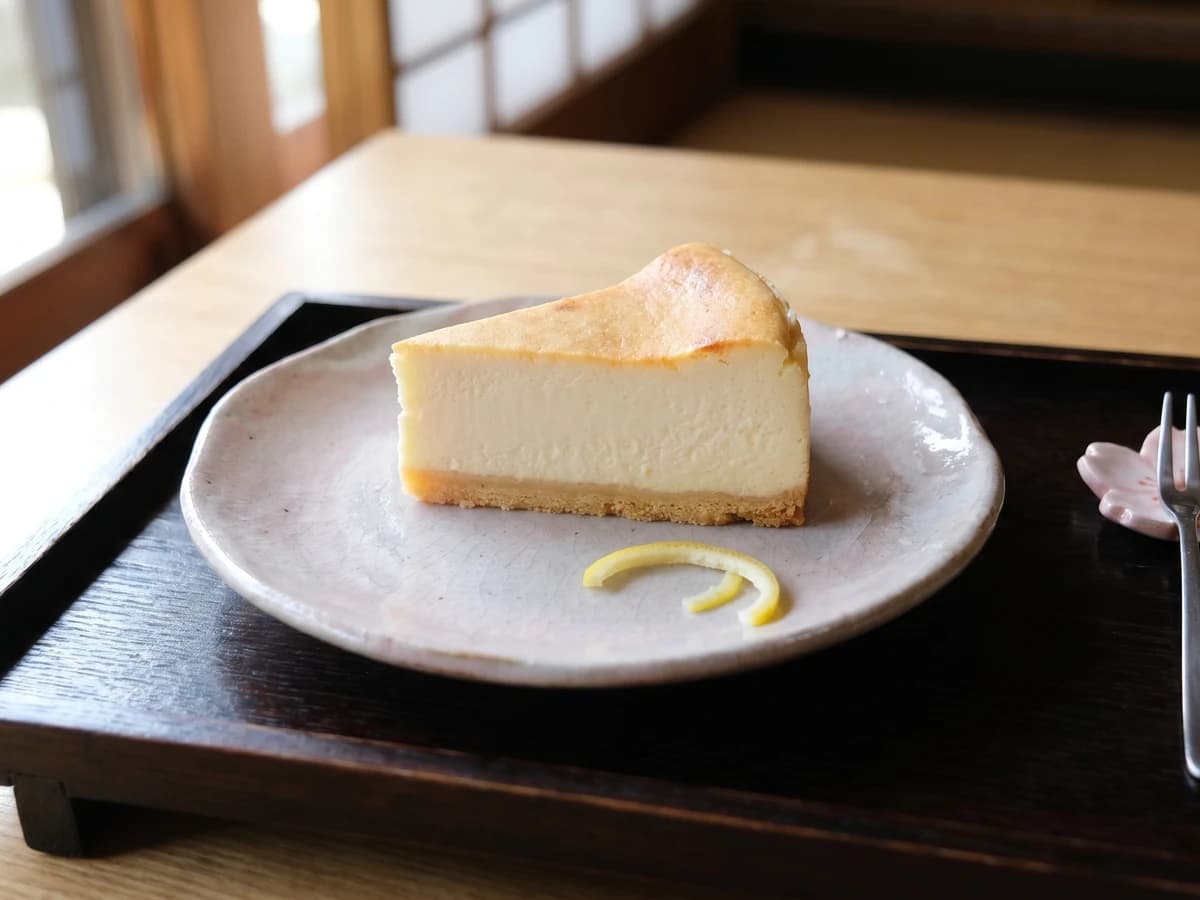
A Japanese baked cheesecake is not trying to float away. It is dense, smooth, and quietly tart, with a clean slice doing the work of decoration.