
Chef Takumi
Agedashi Tofu (揚げ出し豆腐)
Agedashi tofu looks like a fryer test. It is only drained tofu, potato starch, clean oil, and a hot dashi broth waiting nearby.
A cooking platform built around craft, culture, and the stories behind what we eat.
Created by
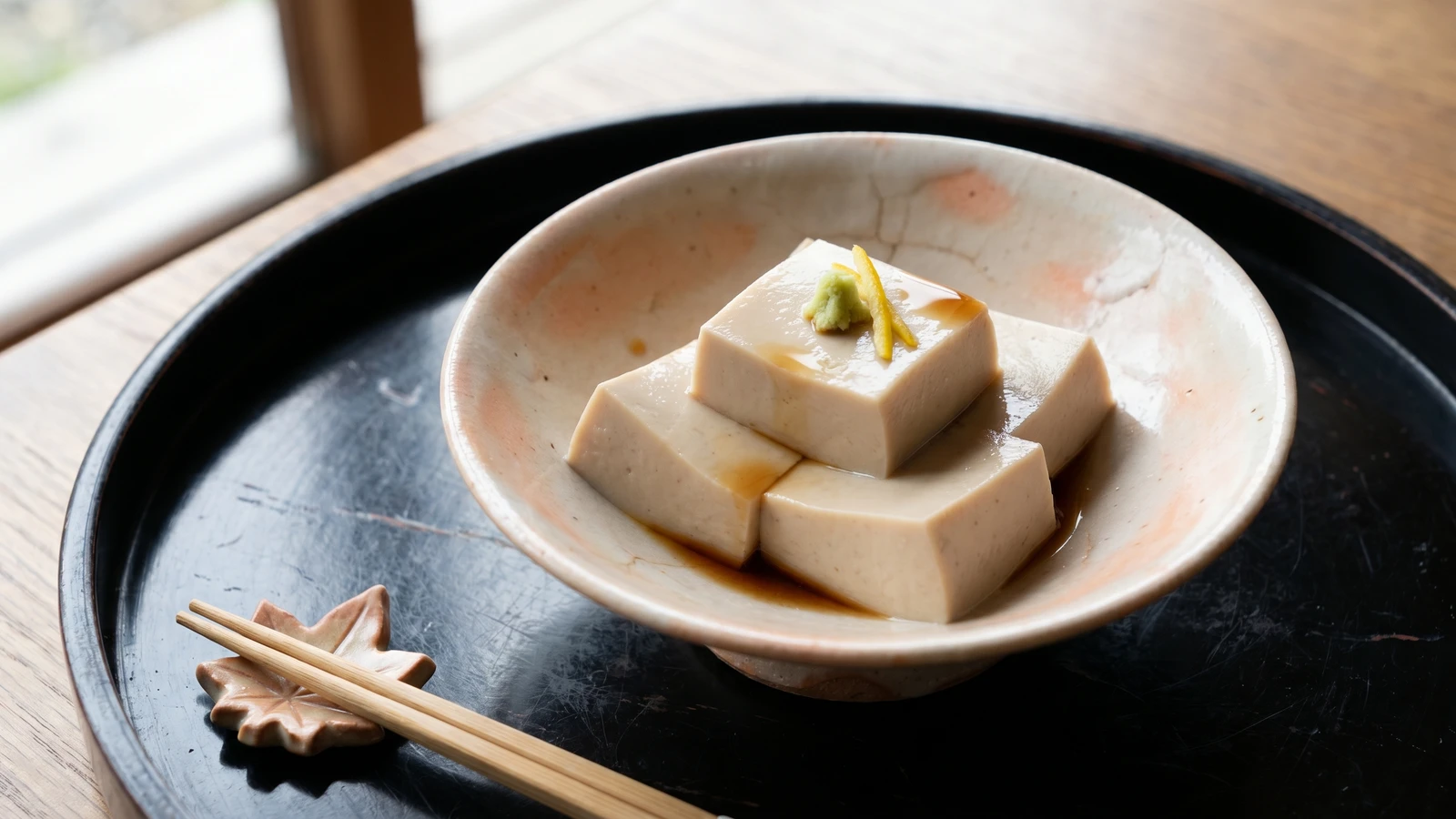
Walnuts and kuzu make a cool, silken tofu without soybeans: autumn richness held in a quiet square, set patiently over the flame and served with wasabi, soy, and restraint.
Walnuts are autumn into winter food, richer after the first cold and sweet in the quiet way nuts are sweet. Kurumi-dofu isn't tofu in the soybean sense. The name points to its shape and softness: walnut paste set with kuzu until it can be cut into a clean, trembling block.
This is the same family as goma-dofu, the sesame tofu of the temple kitchen, and it frightens cooks for the wrong reason. It looks delicate, so people assume it needs delicate tricks. It doesn't. It needs good walnuts, real hon-kuzu, and a patient arm at the stove. We are not hiding a poor nut under sauce here. If the walnuts smell sharp, bitter, or like old oil, change the dish.
The one detail that decides it is cooking the kuzu long enough after it thickens. Stop as soon as it turns heavy and the set will taste raw and chalky. Keep stirring over a gentle flame until the paste turns glossy, elastic, and begins to pull cleanly from the pan. That is kuzu doing its work, not ceremony.
For this temple-style dish, the dashi is konbu and dried shiitake. Honmono, not a compromise. Serve the tofu cool with a little wasabi and diluted soy, spooned beside it rather than drowning it. Leave the pale surface visible. Its restraint is half the pleasure.
Kōyasan, founded by Kūkai in 816 in present-day Wakayama, became one of the places most closely associated with Buddhist shōjin ryōri, and goma-dofu is among its best-known temple foods. Kurumi-dofu follows that kuzu-set method with walnuts in place of sesame, fitting mountain regions and the cold months when nuts were gathered and stored. Kuzu starch from the kudzu root was especially prized from Yoshino in Nara, where winter washing produced a clear, strong-setting starch.
Quantity
1 piece (about 8g)
Quantity
2
Quantity
2 3/4 cups
Quantity
100g
preferably fresh-crop halves
Quantity
60g
crushed finely
Quantity
1 tablespoon
Quantity
1/2 teaspoon
Quantity
2 tablespoons
Quantity
1 teaspoon
for the sauce
Quantity
1 teaspoon
grated
Quantity
a few thin strips
| Ingredient | Quantity |
|---|---|
| konbu (dried kelp) | 1 piece (about 8g) |
| dried shiitake mushrooms | 2 |
| cold water | 2 3/4 cups |
| shelled walnutspreferably fresh-crop halves | 100g |
| hon-kuzu (pure kuzu starch)crushed finely | 60g |
| mirin | 1 tablespoon |
| sea salt | 1/2 teaspoon |
| usukuchi shōyu (light soy sauce) | 2 tablespoons |
| mirinfor the sauce | 1 teaspoon |
| fresh wasabi (optional)grated | 1 teaspoon |
| yuzu peel (optional) | a few thin strips |
Wipe the konbu with a damp cloth, but don't wash it. Put the konbu, dried shiitake, and cold water in a pot and soak for at least 30 minutes, or overnight in the refrigerator if you have the time. Cold soaking draws out sweetness from the shiitake and lets the konbu give itself up gently.
Set the pot over low heat and bring it slowly to the point where the water trembles and small bubbles climb the sides. Lift out the konbu before the water boils, then keep the shiitake in the hot liquid for 10 minutes off the heat. Strain. You need 2 cups dashi for the tofu and 2 tablespoons for the sauce; add a little cold water if you are short.
Pour boiling water over the walnuts and leave them for 2 minutes. Drain, rub off any loose skins with a towel, then warm the walnuts in a dry pan over low heat for 3 to 4 minutes, just until fragrant. The skins carry bitterness, and a brief warming wakes the oil without turning the dish into roasted-nut paste.
Grind the walnuts in a suribachi with a surikogi until they become a smooth paste, adding spoonfuls of the measured 2 cups dashi as needed to loosen them. A blender works too: blend the walnuts with about 1 cup of the dashi until very smooth. Pass the mixture through a fine sieve if you want a silkier set. Large bits interrupt the kuzu gel, and the finished block will tell on you politely.
Crush the hon-kuzu into a fine powder, then whisk it with the remaining cold dashi until no hard specks remain. Add the walnut paste, 1 tablespoon mirin, and salt, and whisk again. Kuzu must meet cold liquid first; hot liquid seals the outside of each lump and leaves dry starch trapped inside.
Pour the mixture into a heavy saucepan and set it over medium-low heat. Stir constantly with a wooden spatula, scraping the bottom and corners. It will look thin, then thicken suddenly, then become heavy and glossy. Keep stirring 8 to 10 minutes after it thickens, lowering the heat if it threatens to scorch. It is ready when it gathers as one mass and pulls cleanly from the pan.
Rinse a nagashikan, small loaf pan, or four small cups with water and leave them wet. Scrape in the hot walnut mixture, smooth the top with a wet spatula, and tap the mold once or twice to settle it. Press a piece of wrap or parchment directly on the surface and let it cool, then chill for at least 3 hours. The wet mold helps release the tofu, and covering the surface keeps a skin from forming.
Warm the reserved 2 tablespoons dashi with the usukuchi shōyu and 1 teaspoon mirin just until the mirin's raw edge softens, then cool it. Unmold the kurumi-dofu and cut it with a wet knife into four squares or eight small blocks. Set one portion in each dish, spoon a little sauce beside it, and finish with wasabi and, in winter, a fine strip of yuzu peel. Sauce beside, not over. Nothing hidden.
1 serving (about 210g)
Culinary guides, cultural storytelling, and the editorial depth that makes cooking meaningful.
Discover Culinary ExplorerChef Takumi
Agedashi tofu looks like a fryer test. It is only drained tofu, potato starch, clean oil, and a hot dashi broth waiting nearby.

Chef Takumi
Aspara-bacon is late-spring asparagus treated with common sense: thin bacon, hot grill, and a last brush of shōyu and mirin so the spear stays sweet while the wrap crisps.

Chef Takumi
This is Osaka street food at its plainest and best: good beef cut small, a thin batter, fine panko, hot beef tallow, and one clean dip in sauce.

Chef Takumi
Buta-bara is not a trick of the grill. Good pork belly, even cutting, steady heat, and the patience to let the fat turn glossy do most of the work.