
Chef Takumi
Aji Fry (アジフライ, panko-fried horse mackerel)
Aji fry is weeknight fish with no mystery: fresh horse mackerel opened cleanly, breaded lightly, and fried until the panko crackles while the flesh stays sweet.
A cooking platform built around craft, culture, and the stories behind what we eat.

Created by
Shunkan looks formal because it arrives as one generous mound, but the method is plain: good spring bamboo, temple dashi, patient simmering, and a light kuzu gloss that lets every piece keep its own face.
Bamboo shoot is spring with teeth. When it is at shun, the cut face is pale, moist, and faintly sweet, and it needs less persuasion than people imagine. Shunkan looks like a ceremonial platter because fucha-ryōri sets it in the middle of the table for everyone to share, but the cooking itself is ordinary work: clean stock, careful cutting, quiet simmering.
The thing that decides it is order. Bamboo and lotus need time to drink the broth; shiitake gives back what it took from the dashi; yuba goes in late because it is tender and tears if you bully it. We thicken the broth with a little kuzu only at the end, not to hide anything, but to make a clear glaze that clings to each piece.
Use konbu and dried shiitake dashi for this table. That is not the poor cousin of bonito dashi. In temple cooking it is honmono, the real thing, and it gives the bamboo a quiet depth without breaking the meatless rule. Mound the pieces high enough to feel shared, then leave the platter room. A fucha dish is communal, yes, but it is not a vegetable landslide.
Fucha-ryōri is the Chinese-style vegetarian banquet cooking of the Ōbaku Zen school, brought to Japan when the monk Ingen Ryūki arrived from Ming China in 1654 and later settled at Manpuku-ji in Uji. Its name, 普茶, means a communal tea or meal, and unlike most formal Japanese service it places shared platters on the table for several diners. Shunkan, written 笋羹, uses the old character for bamboo shoot and the character for a thickened broth, a reminder that the dish began as a Chinese-style temple simmer rather than an individual Japanese side dish.
Quantity
1 piece (about 10g)
Quantity
5 (about 25g)
Quantity
5 cups
Quantity
1 fresh (800g to 1kg), or 450g boiled
parboiled, peeled, and cut into wedges
Quantity
1 cup
for parboiling fresh bamboo shoot
Quantity
1
for parboiling fresh bamboo shoot
Quantity
180g
peeled and sliced into half-moons
Quantity
1 small (about 100g)
cut into small rangiri angled pieces
Quantity
8 knots or 100g sheets
soaked if dried
Quantity
1 tablespoon
Quantity
3 tablespoons
Quantity
2 tablespoons
Quantity
1 tablespoon
Quantity
1 teaspoon
Quantity
1/2 teaspoon, plus more to taste
Quantity
1 tablespoon
Quantity
2 tablespoons
for slurry
Quantity
6 to 9
for garnish
| Ingredient | Quantity |
|---|---|
| konbu (dried kelp) | 1 piece (about 10g) |
| dried shiitake mushrooms | 5 (about 25g) |
| cold water | 5 cups |
| fresh bamboo shoot, or prepared boiled bamboo shootparboiled, peeled, and cut into wedges | 1 fresh (800g to 1kg), or 450g boiled |
| rice bran (nuka) (optional)for parboiling fresh bamboo shoot | 1 cup |
| dried red chile (optional)for parboiling fresh bamboo shoot | 1 |
| lotus rootpeeled and sliced into half-moons | 180g |
| carrotcut into small rangiri angled pieces | 1 small (about 100g) |
| dried yuba knots or fresh yuba sheetssoaked if dried | 8 knots or 100g sheets |
| pale sesame oil (taihaku goma abura) or neutral oil | 1 tablespoon |
| usukuchi shōyu (light soy sauce) | 3 tablespoons |
| mirin | 2 tablespoons |
| sake or extra dashi | 1 tablespoon |
| sugar | 1 teaspoon |
| sea salt | 1/2 teaspoon, plus more to taste |
| kuzu starch or potato starch | 1 tablespoon |
| cold waterfor slurry | 2 tablespoons |
| kinome leaves or small mitsuba sprigs (optional)for garnish | 6 to 9 |
Put the konbu and dried shiitake in 5 cups cold water for at least 30 minutes, or overnight if your schedule is kinder than your ambition. Wipe the konbu first with a damp cloth, but don't wash it; the pale bloom on the surface is flavor. Warm the pot slowly over low heat and lift out the konbu just before the water boils, when small bubbles climb the sides. Let the shiitake sit in the hot water off the heat for 10 minutes, then strain and reserve the caps. For this fucha dish, the konbu and shiitake stock is the proper dashi. Add no katsuobushi.
If you're using a fresh bamboo shoot, cut a slanting inch from the tip, make one lengthwise slit through the husk, and simmer it in plenty of water with the rice bran and dried chile for 60 to 75 minutes, until a skewer slips into the thick base. Cool it in that liquid, then peel, rinse, and trim the hard root end. The rice bran helps draw out aku, the harshness that makes young bamboo taste metallic, and cooling it slowly keeps the flesh moist. If you're using prepared boiled bamboo shoot, rinse it well and blanch it for 2 minutes if it smells sour from the packet.
Cut the bamboo into wedges about 1/2 inch thick, keeping the pieces broad enough to show the layered grain. Peel the lotus root, slice it into 1/4-inch half-moons, soak it in cool water for 5 minutes, and drain. Soak dried yuba knots in warm water for 10 minutes until pliable, or tear fresh yuba into broad folds. Trim the stems from the reserved shiitake caps and halve any large caps. Keep the sizes close; equal pieces season evenly and make the shared platter look calm.
Warm the pale sesame oil in a wide pot over medium-low heat. Add the bamboo, lotus, carrot, and shiitake, and turn them gently for 2 minutes, just until the surfaces glisten. This is fucha-ryōri showing its Chinese inheritance: a little oil gives the later broth a rounder cling. Brown the vegetables and the bamboo loses its spring quiet.
Add 3 cups of the shiitake-konbu dashi, the usukuchi shōyu, mirin, sake, sugar, and salt. Taste the broth before the drop-lid goes on. It should be slightly stronger than a soup, because bamboo and lotus drink seasoning slowly. Bring it to a quiet simmer, set a wooden drop-lid (otoshibuta) directly on the food, and cook for 18 to 22 minutes, until the bamboo is seasoned and the lotus is tender but still clean under the tooth.
Lay the softened yuba on top and simmer for 5 minutes more. Yuba is soy milk skin, tender and eager to drink, so it goes in late. Put it in at the beginning and it turns limp before the bamboo has learned anything from the broth. Turn off the heat and let the pot rest for 10 minutes.
Lift the vegetables and yuba to a bowl with a slotted spoon. Mix the kuzu starch with 2 tablespoons cold water until smooth, then stir it into the simmering broth. Cook for 1 to 2 minutes, until the broth turns clear and lightly coats a spoon. Return the ingredients and turn them gently through the glaze. Kuzu is not here to hide poor cooking; it only gives the clear broth enough body to cling.
Set the bamboo, lotus, shiitake, carrot, and yuba on a broad platter in odd clusters, building a little height rather than spreading everything flat. Spoon over just enough glaze to shine on the surfaces, then finish with kinome leaves or mitsuba. Serve warm or at room temperature with rice and a clear soup. A fucha dish is communal, yes, but communal doesn't mean crowded. Leave the platter room.
1 serving (about 300g)
Culinary guides, cultural storytelling, and the editorial depth that makes cooking meaningful.
Discover Culinary ExplorerChef Takumi
Aji fry is weeknight fish with no mystery: fresh horse mackerel opened cleanly, breaded lightly, and fried until the panko crackles while the flesh stays sweet.
Chef Takumi
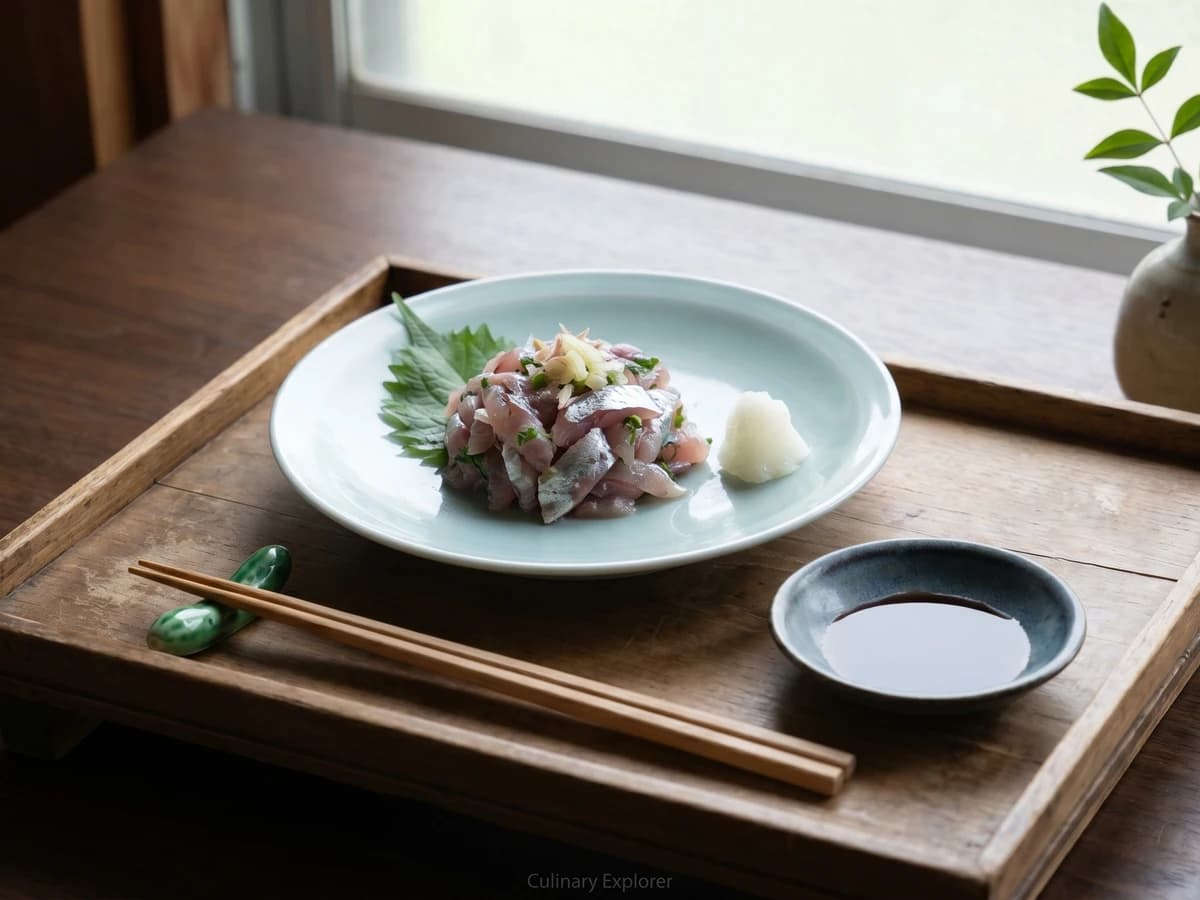
Summer horse mackerel, chopped just enough to catch ginger and scallion, becomes a cool, clean main dish with rice. The secret is fresh fish and a knife that does not bruise it.
Chef Takumi
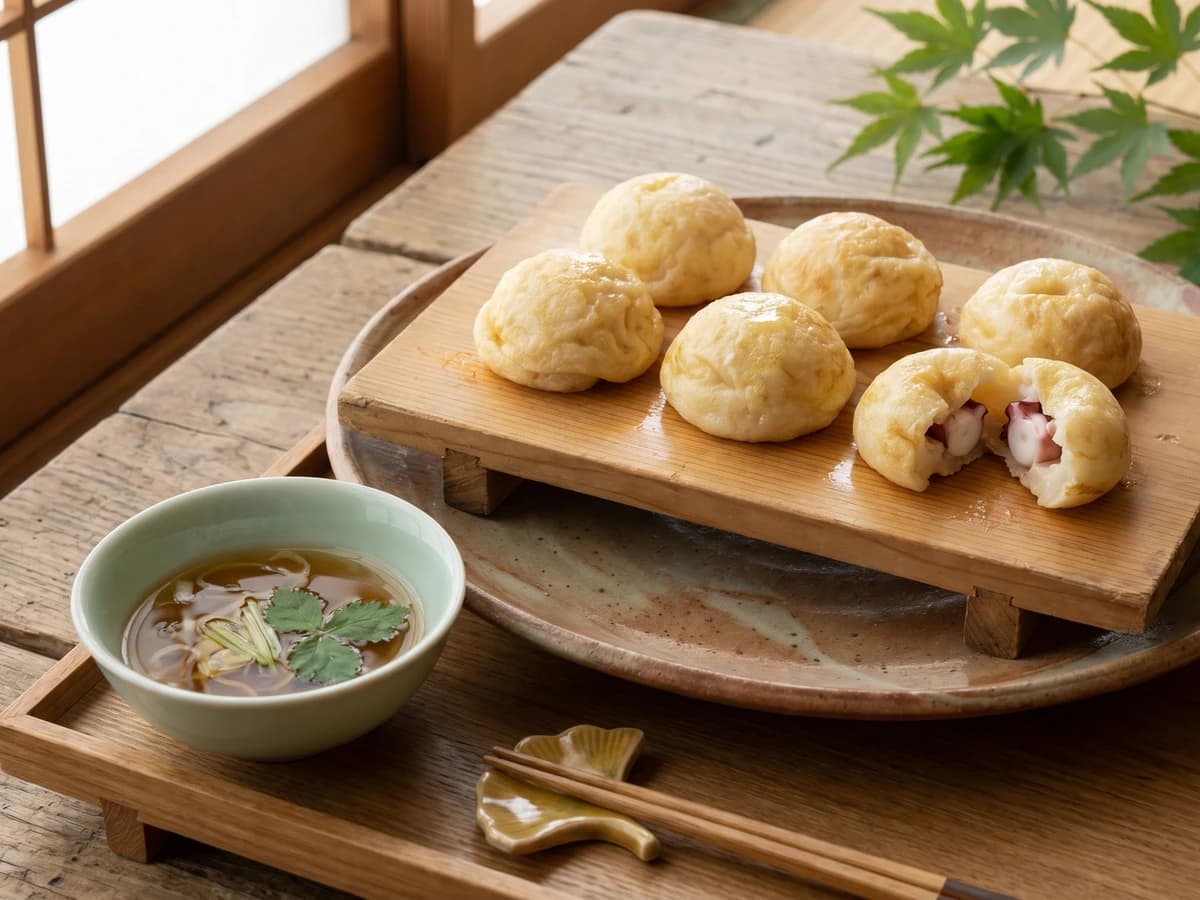
Akashi-yaki is not sauced takoyaki. It is egg-rich batter, tender octopus, and clear dashi, cooked pale and soft so each ball can be dipped like a small custard dumpling.

Chef Takumi
A whole anago looks like a test of nerve. It is mostly good sourcing, a dry skin, cold batter, and oil hot enough to leave the eel sweet under its lace.