
Chef Takumi
Aji Fry (アジフライ, panko-fried horse mackerel)
Aji fry is weeknight fish with no mystery: fresh horse mackerel opened cleanly, breaded lightly, and fried until the panko crackles while the flesh stays sweet.
A cooking platform built around craft, culture, and the stories behind what we eat.

Created by
Ganmodoki is tofu made brave: pressed dry, kneaded with roots and seaweed, fried until bronzed, then given a quiet bath in konbu-shiitake dashi for a weeknight main that keeps.
Tofu becomes interesting when you make it give up its water. That sounds severe, but it isn't. Press it, crumble it, knead it with a little grated yam, and the soft block turns into something you can shape with your hands.
People see ganmodoki and think the difficult part must be the frying. It isn't. The first secret is dryness: momen-dōfu (firm cotton tofu) should feel like damp clay, not custard, before it ever meets the oil. Too wet, and the rounds slump and spit. Properly pressed, they brown gently and hold the tiny pieces of carrot, gobō (burdock root), hijiki, and ginkgo as if they had always belonged there.
The vegetables are cut small because this is a tofu dish, not a treasure hunt. Big pieces tear the surface and make the center heavy. A little yamaimo or nagaimo gives the paste its quiet stickiness, so we don't need egg; then the oil sets the outside, and the simmering broth finishes the work. For a meatless table, the dashi comes from konbu and dried shiitake, the way temple kitchens do it. That is 本物 (honmono, the real thing), not a compromise.
Serve ganmodoki beside rice, pickles, and one clear soup, or make it ahead and let it drink its broth overnight. It belongs to comfort food, but not the sort that hides anything. The tofu should taste like tofu, the roots like roots, and the broth should be clear enough to keep everyone honest.
Ganmodoki means mock wild goose: gan is wild goose and modoki is imitation, and the dish is often cited as an early model for modoki cooking in shōjin ryōri, Buddhist vegetarian cookery. Edo-period sources show the name moving among imitation preparations, including konnyaku versions, before the fried tofu cake filled with roots and seaweed became the standard form. In Kansai, the same food is commonly called hiryōzu (飛竜頭 or 飛龍頭), a name many scholars connect to Portuguese filhós, fried cakes brought by Nanban trade in the sixteenth century.
Quantity
1 piece (about 10g)
Quantity
4 mushrooms (about 20g)
Quantity
4 cups
Quantity
1 block (400 to 450g)
pressed
Quantity
5g
soaked, rinsed, and squeezed dry
Quantity
40g
cut into very fine matchsticks
Quantity
40g
scrubbed and cut into very fine matchsticks
Quantity
8
peeled and halved
Quantity
2 mushrooms
stems removed and minced
Quantity
2 tablespoons
Quantity
2 tablespoons, plus more if needed
Quantity
1 teaspoon
for the tofu paste
Quantity
1/2 teaspoon, plus a pinch if needed
Quantity
1 teaspoon
for the tofu paste
Quantity
enough for 2 inches in the pot
Quantity
2 1/2 cups
from above
Quantity
2 tablespoons
for the simmering broth
Quantity
1 tablespoon
Quantity
1 teaspoon
for the simmering broth
Quantity
1 tablespoon
for serving
Quantity
4 thin strips or 4 small sprigs
| Ingredient | Quantity |
|---|---|
| konbu (dried kelp) | 1 piece (about 10g) |
| dried shiitake mushrooms | 4 mushrooms (about 20g) |
| cold water | 4 cups |
| momen-dōfu (firm cotton tofu)pressed | 1 block (400 to 450g) |
| dried hijikisoaked, rinsed, and squeezed dry | 5g |
| carrotcut into very fine matchsticks | 40g |
| gobō (burdock root)scrubbed and cut into very fine matchsticks | 40g |
| cooked ginkgo nutspeeled and halved | 8 |
| soaked shiitake from the dashistems removed and minced | 2 mushrooms |
| grated yamaimo or nagaimo | 2 tablespoons |
| katakuriko (potato starch) | 2 tablespoons, plus more if needed |
| usukuchi (light soy sauce)for the tofu paste | 1 teaspoon |
| sea salt | 1/2 teaspoon, plus a pinch if needed |
| sugarfor the tofu paste | 1 teaspoon |
| neutral frying oil | enough for 2 inches in the pot |
| konbu-shiitake dashifrom above | 2 1/2 cups |
| usukuchi (light soy sauce)for the simmering broth | 2 tablespoons |
| mirin | 1 tablespoon |
| sugarfor the simmering broth | 1 teaspoon |
| grated gingerfor serving | 1 tablespoon |
| yuzu peel or mitsuba (optional) | 4 thin strips or 4 small sprigs |
Wipe the konbu with a damp cloth, but don't wash it. Put the konbu, dried shiitake, and cold water in a pot and let them stand for at least 30 minutes, or overnight in the refrigerator if you planned ahead. Set the pot over low heat and bring it up slowly. When the water trembles and small bubbles climb the sides, lift out the konbu. Let the shiitake steep off the heat for 10 minutes more, then strain the dashi. Reserve 2 mushrooms for the filling.
Wrap the tofu in a clean cloth, set it on a tray, and put a small plate with a light weight on top. Leave it for 25 to 30 minutes. It should lose a good spoonful of water and crumble like damp clay when pressed between your fingers. Wet tofu makes a loose paste and an angry pot of oil. Pressed tofu behaves.
Soak the hijiki in cold water for 10 minutes until plump, then rinse and squeeze it dry. Swish the cut gobō in water for 2 minutes and drain it. Do not leave it until it tastes of nothing. Mince the reserved shiitake, and halve the ginkgo nuts. Keep every cut small, because the tofu is the body of the dish and the vegetables should season it, not break it apart.
Bring a small pot of water to a boil. Add the gobō and carrot and cook for 1 minute, then add the hijiki for just 10 seconds. Drain well and spread everything on a towel to cool and dry. This takes away the raw edge and removes extra water, so the center of each ganmodoki stays tender instead of soggy.
Crumble the pressed tofu into a suribachi or a sturdy bowl and mash until no large lumps remain. Add the grated yamaimo or nagaimo, katakuriko, 1 teaspoon usukuchi, 1/2 teaspoon salt, and 1 teaspoon sugar. Knead until the paste turns tacky and holds a soft mound. The yam does the binding work without egg, and the starch catches the last bit of water.
Fold in the carrot, gobō, hijiki, minced shiitake, and ginkgo. Divide the mixture into 8 portions. Oil your hands lightly and shape each one into a thick flattened round, about 2 1/2 inches wide. Smooth the cracks with your fingertips. A smooth surface fries evenly, while cracks drink oil before they ever meet the broth.
Heat 2 inches of oil in a heavy pot to 165 C / 330 F, and do not fill the pot more than halfway. Lower in 3 or 4 rounds at a time and fry for 5 to 6 minutes, turning once or twice, until evenly chestnut-gold and slightly lighter when lifted. Keep the oil between 160 and 170 C. Too hot, and the outside darkens before the center sets. Too cool, and the ganmodoki drinks oil.
In a wide pot, combine 2 1/2 cups konbu-shiitake dashi, 2 tablespoons usukuchi, mirin, 1 teaspoon sugar, and a pinch of salt if needed. Bring it to a quiet simmer and taste it. It should be a little stronger than soup, because the fried tofu will drink and soften it.
Lay the fried ganmodoki in the broth in a single layer. Set an otoshibuta, a wooden drop-lid, directly on top, or use a circle of parchment with a small hole in the center. Simmer gently for 8 to 10 minutes, then take the pot off the heat and rest for 10 minutes if you can. The lid keeps broth moving over the tops without stirring, and the rest lets the tofu drink. Serve two rounds per person with a little broth, grated ginger, and either yuzu peel or mitsuba.
1 serving (about 290g)
Culinary guides, cultural storytelling, and the editorial depth that makes cooking meaningful.
Discover Culinary ExplorerChef Takumi
Aji fry is weeknight fish with no mystery: fresh horse mackerel opened cleanly, breaded lightly, and fried until the panko crackles while the flesh stays sweet.
Chef Takumi
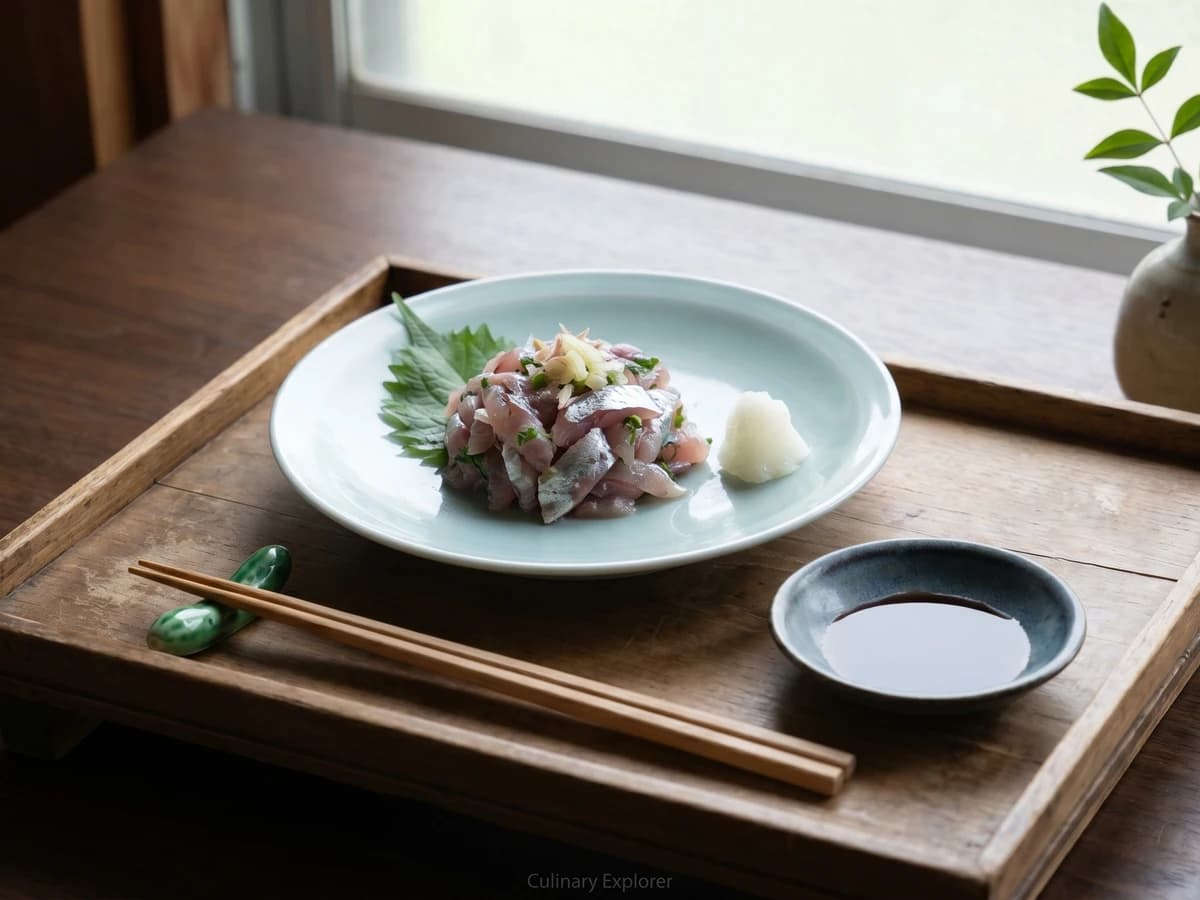
Summer horse mackerel, chopped just enough to catch ginger and scallion, becomes a cool, clean main dish with rice. The secret is fresh fish and a knife that does not bruise it.
Chef Takumi
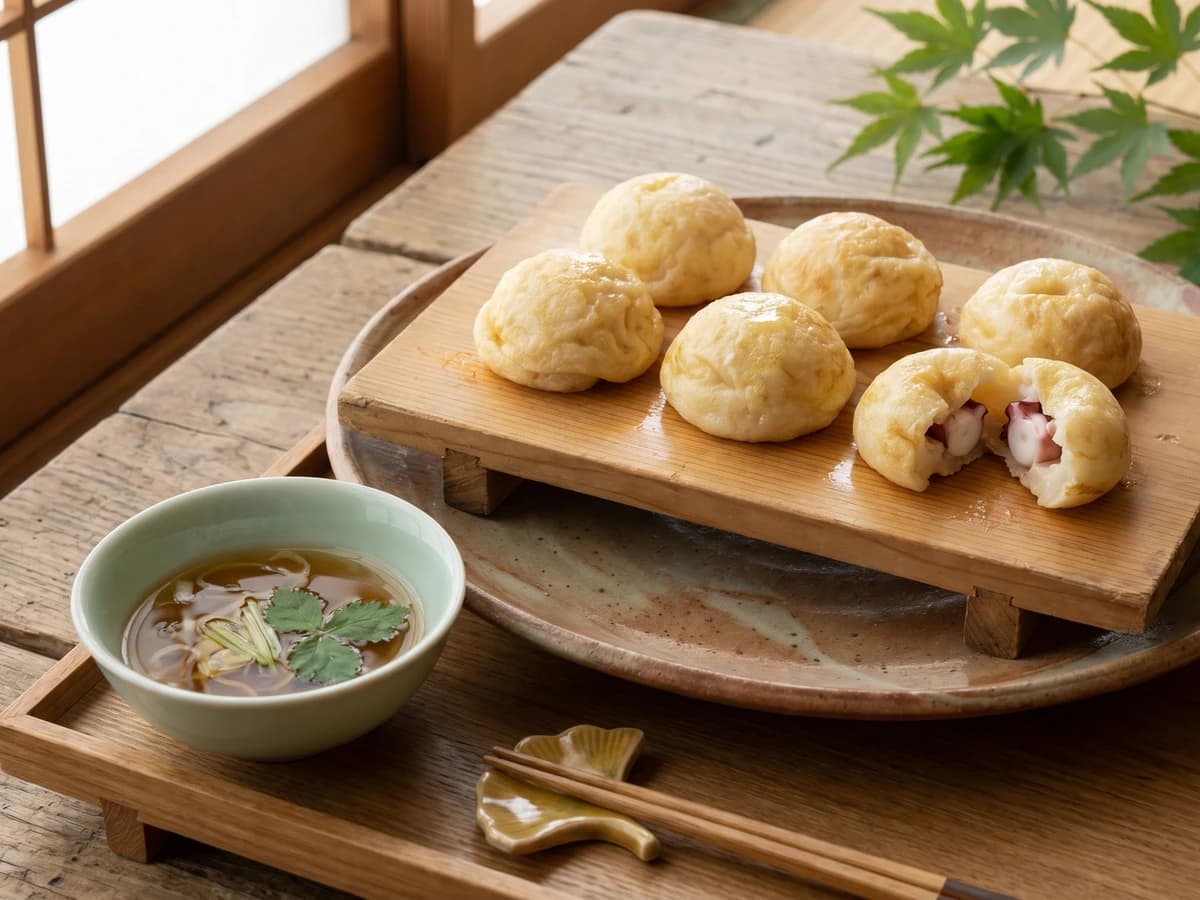
Akashi-yaki is not sauced takoyaki. It is egg-rich batter, tender octopus, and clear dashi, cooked pale and soft so each ball can be dipped like a small custard dumpling.

Chef Takumi
A whole anago looks like a test of nerve. It is mostly good sourcing, a dry skin, cold batter, and oil hot enough to leave the eel sweet under its lace.