
Chef Takumi
Ago Dashi (あごだし, grilled flying fish stock)
Ago dashi is quiet luxury: roasted flying fish, konbu, and patient water. Steep it slowly and you get a clear stock that tastes sweet, clean, and full without heaviness.
A cooking platform built around craft, culture, and the stories behind what we eat.
Created by
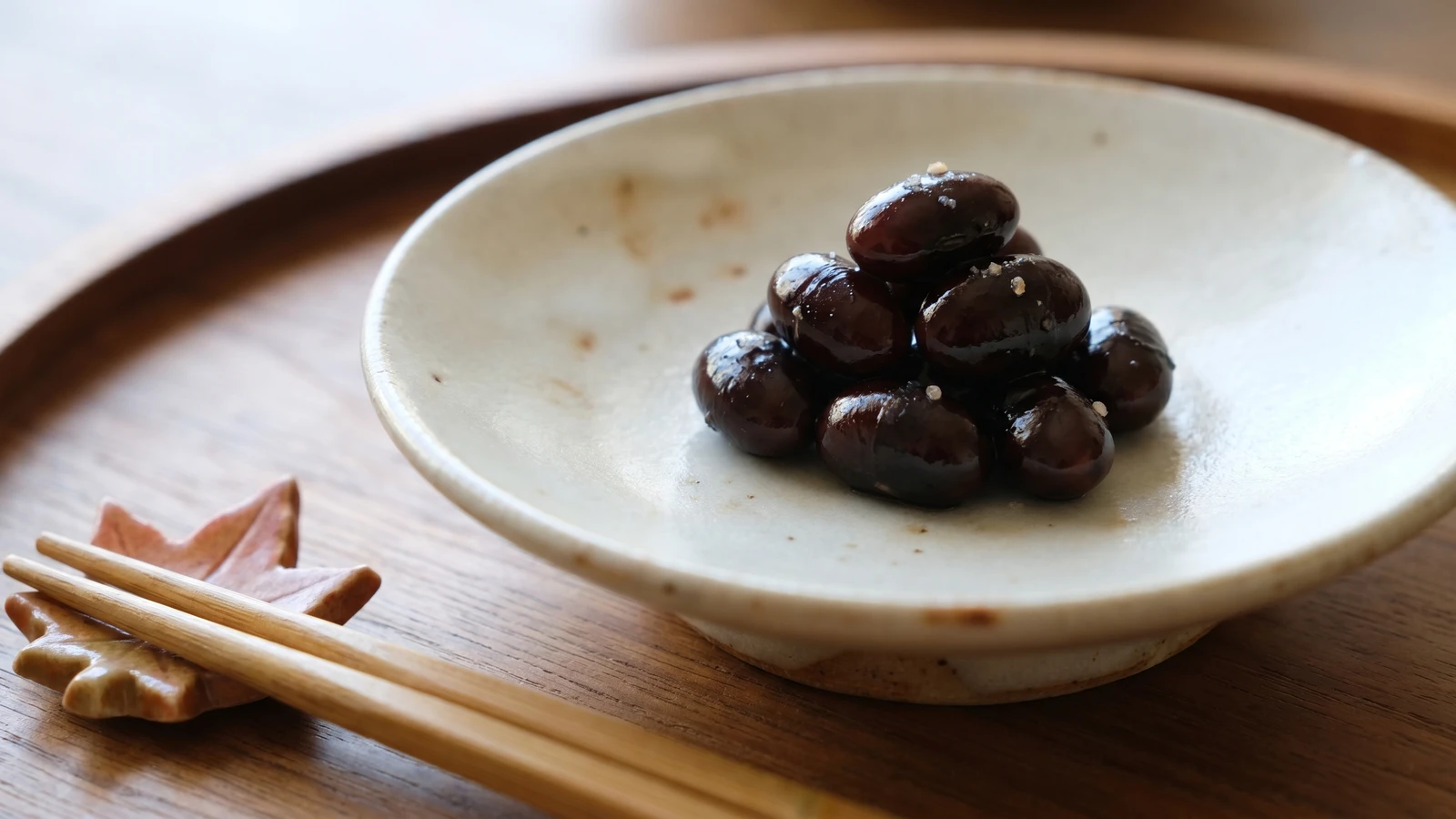
This is nattō without the strings: soybeans turned by kōji, salt, and time into black glossy beads, so strong that three beans can season a bowl of rice.
Daitokuji nattō looks like a warning: black, wrinkled beans, salty enough that you eat them by twos and threes. Then you taste one with rice and understand the old trick. It is miso's stern cousin, not sticky nattō, and it does its work in a whisper because salt and time have concentrated everything.
The work is long, not clever. First make mame-kōji, soybean kōji, by letting Aspergillus oryzae bloom cleanly over cooked soybeans. Then salt it so the wrong life cannot take hold, and dry it slowly until each bean turns dark and glossy. The detail that decides it is the kōji stage: a clean white bloom and a warm nutty smell before salt ever touches the beans. Miss that, and months of patience won't repair the foundation.
This belongs to the side of the Japanese meal that teaches restraint. A few beans beside rice, ochazuke, tea, or sake are enough; chop one into a dressing and it seasons like old miso. Leave it room on the plate. A condiment this severe looks foolish in a heap, and it will tell you so with the first bite.
Daitokuji nattō belongs to shiokara-nattō, the older salt-fermented soybean family that is unrelated in texture to sticky itohiki-nattō. The Kyoto preserve takes its name from Daitoku-ji, the Rinzai Zen temple founded in 1315 by Shūhō Myōchō in northern Kyoto, and it became tied to Zen monastic cooking and the tea meal as a tiny, salty relish. Similar preparations, especially hama-nattō in Hamamatsu, show how Chinese-style salted fermented beans entered Japanese temple and port-town kitchens.
Quantity
500g
sorted and rinsed
Quantity
as needed
for soaking and cooking
Quantity
2g, or maker's directed amount
Quantity
2 tablespoons
for carrying the starter, if needed
Quantity
180g
Quantity
720g
boiled and cooled, for the brine
| Ingredient | Quantity |
|---|---|
| dried whole soybeanssorted and rinsed | 500g |
| waterfor soaking and cooking | as needed |
| mame-kōji tanekōji (soybean kōji starter) | 2g, or maker's directed amount |
| roasted barley flour or roasted rice flour (optional)for carrying the starter, if needed | 2 tablespoons |
| fine sea salt | 180g |
| waterboiled and cooled, for the brine | 720g |
Pick over the soybeans and rinse them until the water runs clear. Soak them in plenty of cool water for 12 to 18 hours, until they have swollen fully and split cleanly when pressed. A dry center will not cook evenly, and kōji cannot do good work in a hard bean.
Drain the beans and cook them in a seiro or lidded steamer for 3 to 4 hours, adding water below as needed, until a bean crushes easily between your fingers but the skins mostly hold. Steaming keeps the soybean flavor concentrated and leaves the surface drier than boiling. Wet beans invite trouble later, and this preserve gives you no sauce to hide it.
Spread the hot beans on a clean tray and cool them to about 35 C. Mix the tanekōji with the roasted flour if your starter needs a carrier, then dust it evenly over the beans and turn them gently with clean hands. If the beans are hotter than 40 C, you weaken the kōji; if they are cold, the bloom starts slowly and the wrong organisms get a head start.
Pile the beans 3 to 4 cm deep in a shallow tray, cover with a clean damp cloth, and keep them at 30 to 32 C for 36 to 44 hours. Turn them once after about 18 hours to release heat and give the mold air. They are ready when the beans are webbed with a clean white bloom and smell nutty, sweet, and a little like fresh miso.
Dissolve the sea salt in the boiled and cooled water to make a strong brine. Pack the mame-kōji into a clean crock or glass jar, pour in enough brine to cover it completely, and set a small clean weight on top. No bean should sit above the liquid. The salt is not decoration here; it protects the ferment while the flavor deepens.
Cover the vessel and keep it at cool room temperature, about 15 to 22 C, for 4 to 6 weeks. Once a week, open it with clean hands and press the beans back below the brine. The liquid will darken and the smell should move toward miso, soy sauce, and roasted nuts. Pink, orange, or fuzzy black growth is not part of the dish; discard the batch if you see it.
Drain the beans well and spread them in a single layer on a bamboo zaru or fine drying rack. Set them in clear sun during dry weather, covered with fine mesh, and bring them inside at night. Turn them once a day. Continue until they are black-brown, wrinkled, glossy, and firm but not brittle, usually 10 to 20 sunny days spread over several weeks. If the weather is damp, use a dehydrator at 35 to 40 C until the same texture appears.
Pack the dried beans into a clean jar and cure them in a cool dark place for 4 to 8 more weeks, shaking the jar once a week. Time rounds the salt and brings the miso-like depth forward. Serve two or three beans beside rice, drop a few into ochazuke, or mince one into a dressing for tofu or greens. Use a dry spoon and store the finished nattō refrigerated.
1 serving (about 10g)
Culinary guides, cultural storytelling, and the editorial depth that makes cooking meaningful.
Discover Culinary ExplorerChef Takumi
Ago dashi is quiet luxury: roasted flying fish, konbu, and patient water. Steep it slowly and you get a clear stock that tastes sweet, clean, and full without heaviness.
Chef Takumi
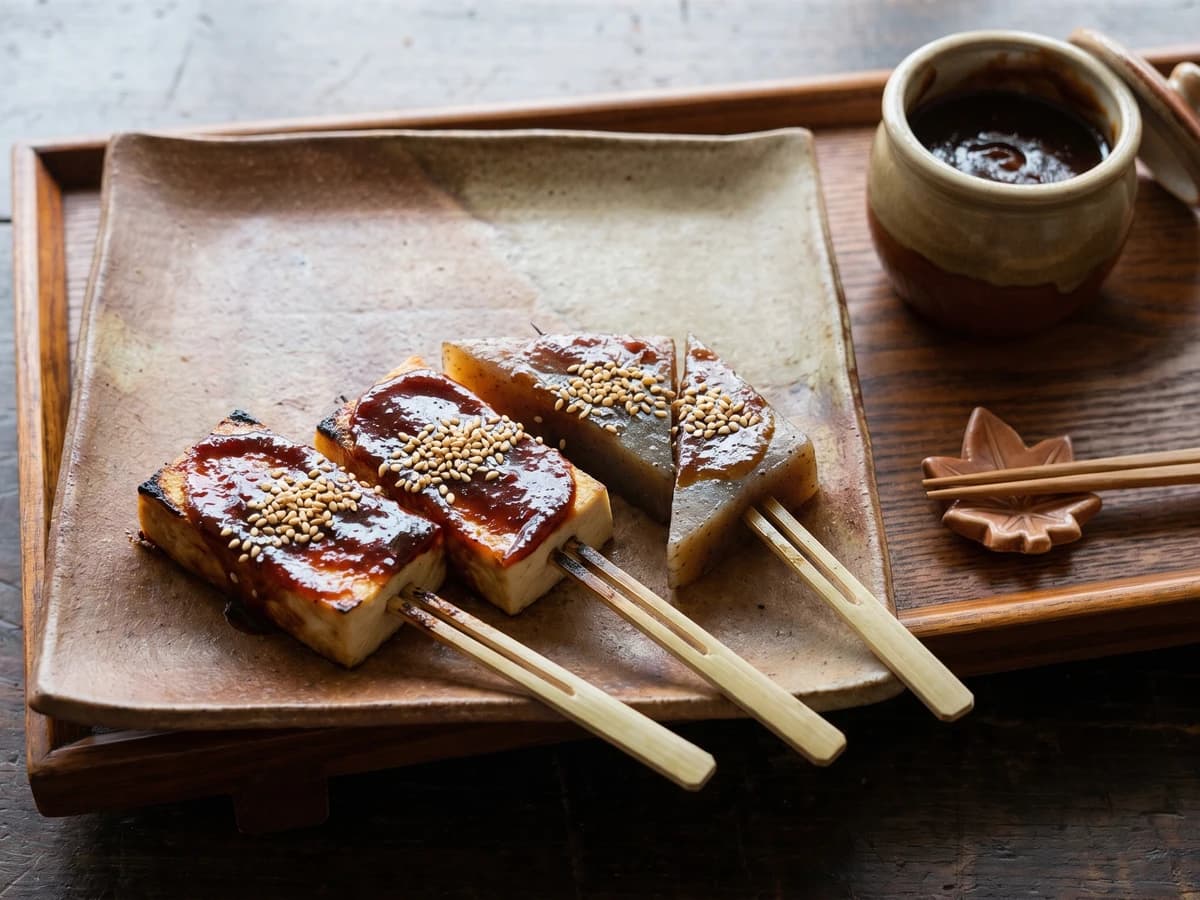
Akamiso dengaku-miso is plain work: bean miso, sweetness, sake, and patient stirring until the glaze turns dark, glossy, and thick enough to cling to the grill.
Chef Takumi
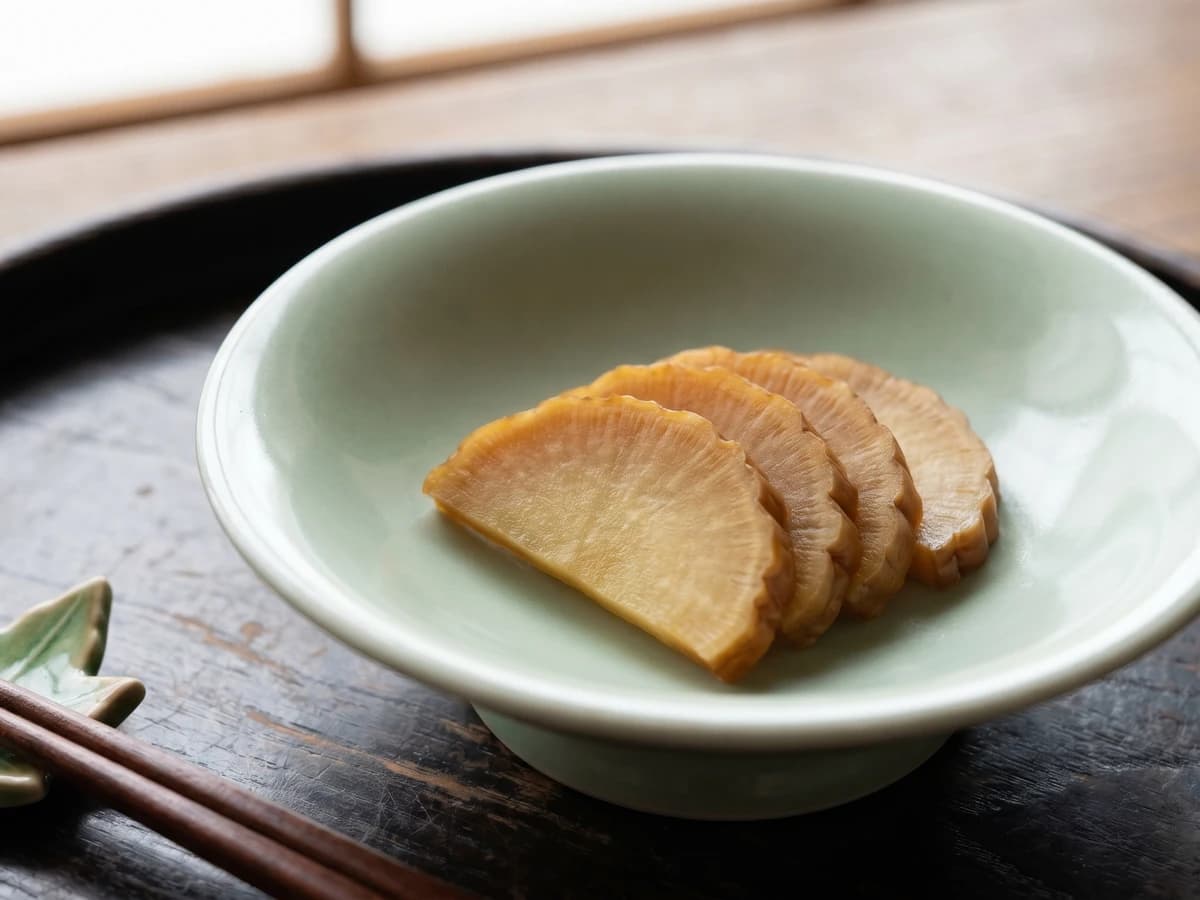
Snow-country takuan begins with smoke. Hang the daikon, dry it gently, then let rice bran, salt, and time turn it into Akita's amber pickle.

Chef Takumi
Aso takanazuke is spring caught in salt: sharp mustard greens pressed until they soften, fermented until their edge turns round, then fried briefly with sesame for rice.