
Chef Takumi
Aji Fry (アジフライ, panko-fried horse mackerel)
Aji fry is weeknight fish with no mystery: fresh horse mackerel opened cleanly, breaded lightly, and fried until the panko crackles while the flesh stays sweet.
A cooking platform built around craft, culture, and the stories behind what we eat.

Created by
A clean sear, a small pan sauce, and daikon oroshi make steak speak Japanese: rich beef, soy-dark gloss, crisp garlic chips, and nothing heavier than the ingredient can carry.
Steak makes people formal. A good piece of beef sits on the board looking expensive, and suddenly the pan feels like an examination. Wafū sutēki is kinder than that: salt the beef, sear it cleanly, reduce soy, mirin, and sake in the same pan, then let grated daikon cut through the butter and richness.
One detail decides it: the surface of the steak must be dry before it meets the pan. Moisture steals the heat you need for browning, and browning is where the beef's sweetness and the soy's sharpness will later meet. Butter comes in after the first hard sear, because butter has aroma but less patience with high heat than iron does. A little oil carries the heat; the butter gives the dish its round edge.
We call this wafū, Japanese style, because it uses our seasoning grammar. Soy gives salt and depth, mirin gives gloss and mild sweetness, and sake loosens the browned bits from the pan while carrying away the raw edge of alcohol. Daikon oroshi, grated daikon, is not decoration. It is the quiet referee. In winter, when daikon is at its prime, it is sweet and clean enough to make rich beef taste lighter without pretending the beef is anything but beef.
Serve it sliced, not as a slab. Five or seven pieces, garlic chips on top, daikon mounded where the diner can draw it through the sauce. This is honmono made reachable: no theater, no heavy curtain of sauce, nothing hidden. Leave the plate room; the beef has already made its argument.
Public beef eating gained official force in the Meiji period; in 1872 newspapers reported that the emperor had eaten beef and mutton, a symbolic break with older prohibitions and taboos. The word sutēki came from English steak and spread through hotel dining, yōshoku restaurants, and urban home cooking in the twentieth century. Wafū sutēki marks the Japanese grammar placed on that imported cut: soy sauce, sake, mirin, grated daikon, and garlic, kept restrained enough that the beef remains visible.
Quantity
2 (250 to 300g each)
ribeye, strip, or sirloin, 2.5 to 3cm thick
Quantity
1 teaspoon
Quantity
1/4 teaspoon
Quantity
4
very thinly sliced
Quantity
1 tablespoon
rice bran or canola
Quantity
1 tablespoon
Quantity
3 tablespoons
Quantity
2 tablespoons
Quantity
2 tablespoons
Quantity
1 teaspoon
Quantity
120g
peeled and grated
Quantity
2
cut into fine threads
Quantity
1
thinly sliced
Quantity
1
| Ingredient | Quantity |
|---|---|
| boneless beef steaksribeye, strip, or sirloin, 2.5 to 3cm thick | 2 (250 to 300g each) |
| fine sea salt | 1 teaspoon |
| freshly ground black pepper | 1/4 teaspoon |
| garlic clovesvery thinly sliced | 4 |
| neutral oilrice bran or canola | 1 tablespoon |
| unsalted butter | 1 tablespoon |
| soy sauce (shōyu) | 3 tablespoons |
| sake | 2 tablespoons |
| mirin | 2 tablespoons |
| sugar (optional) | 1 teaspoon |
| daikonpeeled and grated | 120g |
| shiso leaves (optional)cut into fine threads | 2 |
| scallion (optional)thinly sliced | 1 |
| sudachi, kabosu, or lemon wedge (optional) | 1 |
Pat the steaks dry, salt both sides, and leave them on a small rack at cool room temperature for 20 minutes. Salt needs a little time to move inward; if you season at the last second, most of it stays on the surface and the pan sauce has to do too much work. Pat them dry again just before cooking and add the pepper. A dry face on the beef is what lets it brown instead of leaking water into the pan.
Put the sliced garlic and neutral oil in a cold heavy skillet, then set it over medium-low heat. Cook slowly, turning the slices, until they are pale gold at the edges, 3 to 5 minutes. Lift them to a paper towel and keep the garlic oil in the pan. The garlic will darken as it sits, so don't wait for brown. Starting cold gives it time to crisp before the sugars scorch; burnt garlic is bitter and very hard to ignore.
Stir together the soy sauce, sake, mirin, and sugar if using. Grate the daikon on an oroshigane, a Japanese grater, or on the fine face of a box grater. Squeeze it only until it stops dripping heavily. You want a soft mound, not a dry clump, because the clean juice is what cuts the beef's richness.
Return the skillet with the garlic oil to medium-high heat. When the oil shimmers, lay in the steaks, cooking one at a time if the pan is crowded. Sear the first side until deeply browned, about 3 minutes. Turn the steaks, add the butter, lower the heat one notch, and spoon the foaming butter over the top for 2 to 3 minutes more, until the center reaches 50 to 52 C / 122 to 126 F for medium-rare, or 57 C / 135 F for medium. The oil gives heat, the butter gives aroma; butter alone from the beginning burns before the beef is ready.
Move the steaks to a board or rack and rest them for 6 to 8 minutes. Resting is not politeness. Heat is still moving through the meat, and the juices need a moment to settle instead of running across the board. Keep any resting juices for the sauce.
Pour off all but a thin film of fat from the skillet. Add the soy mixture and scrape up the browned bits with a wooden spatula. Simmer for 1 to 2 minutes, just until glossy and lightly thickened, and the raw alcohol smell is gone. Take it off the heat before it becomes salty and heavy, then stir in the resting juices. The sauce should coat a spoon lightly; if it tastes too strong, loosen it with a spoonful of water.
Slice the steaks across the grain into 5 to 7 pieces per steak, about 1cm thick. Cutting across the grain shortens the fibers, so each bite feels tender without asking the sauce to rescue it. Spoon a little sauce onto the plate and over the slices. Set the daikon oroshi beside or partly over the beef, scatter the garlic chips, and finish with shiso, scallion, and a small citrus wedge if using. The daikon belongs fresh, not reduced in the pan, because its clean bite is what keeps the richness honest. Leave the plate room.
1 serving (about 340g)
Culinary guides, cultural storytelling, and the editorial depth that makes cooking meaningful.
Discover Culinary ExplorerChef Takumi
Aji fry is weeknight fish with no mystery: fresh horse mackerel opened cleanly, breaded lightly, and fried until the panko crackles while the flesh stays sweet.
Chef Takumi
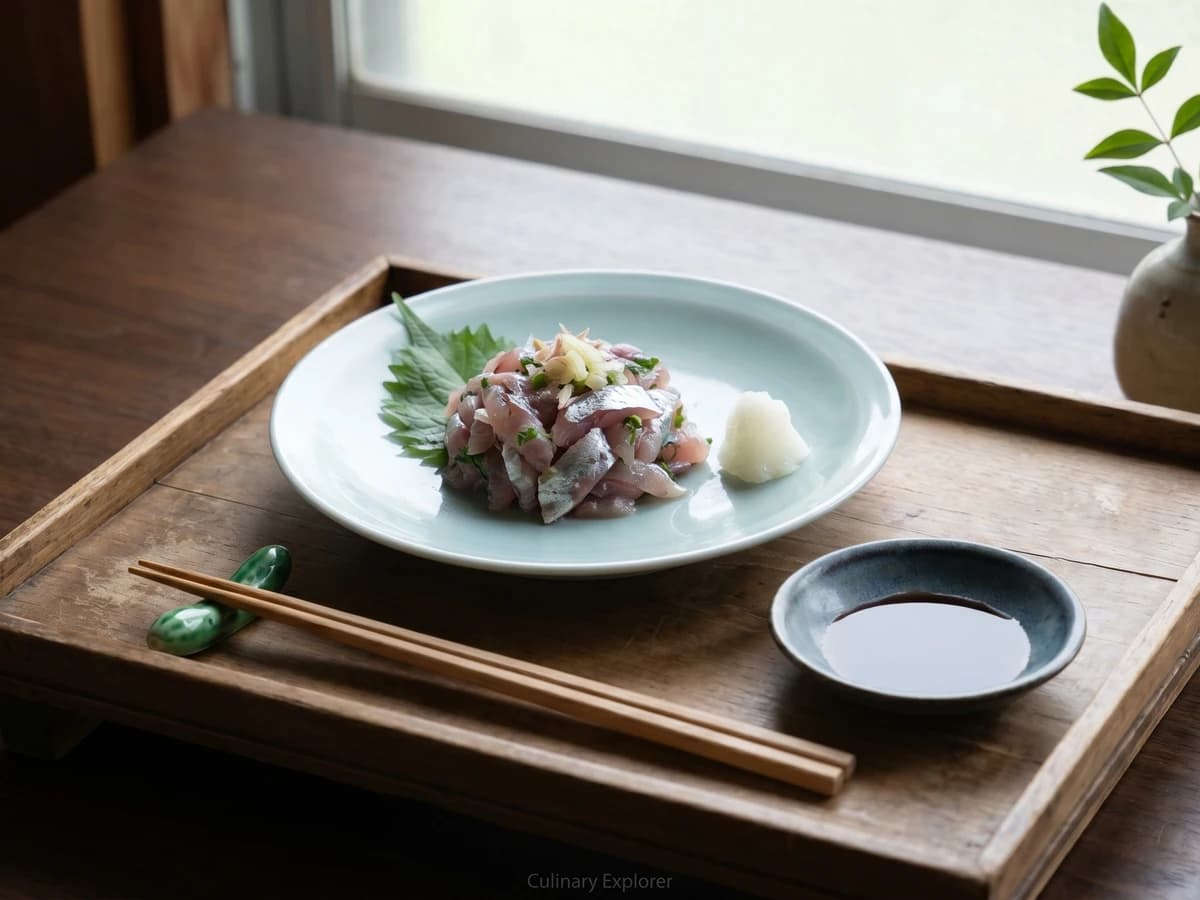
Summer horse mackerel, chopped just enough to catch ginger and scallion, becomes a cool, clean main dish with rice. The secret is fresh fish and a knife that does not bruise it.
Chef Takumi
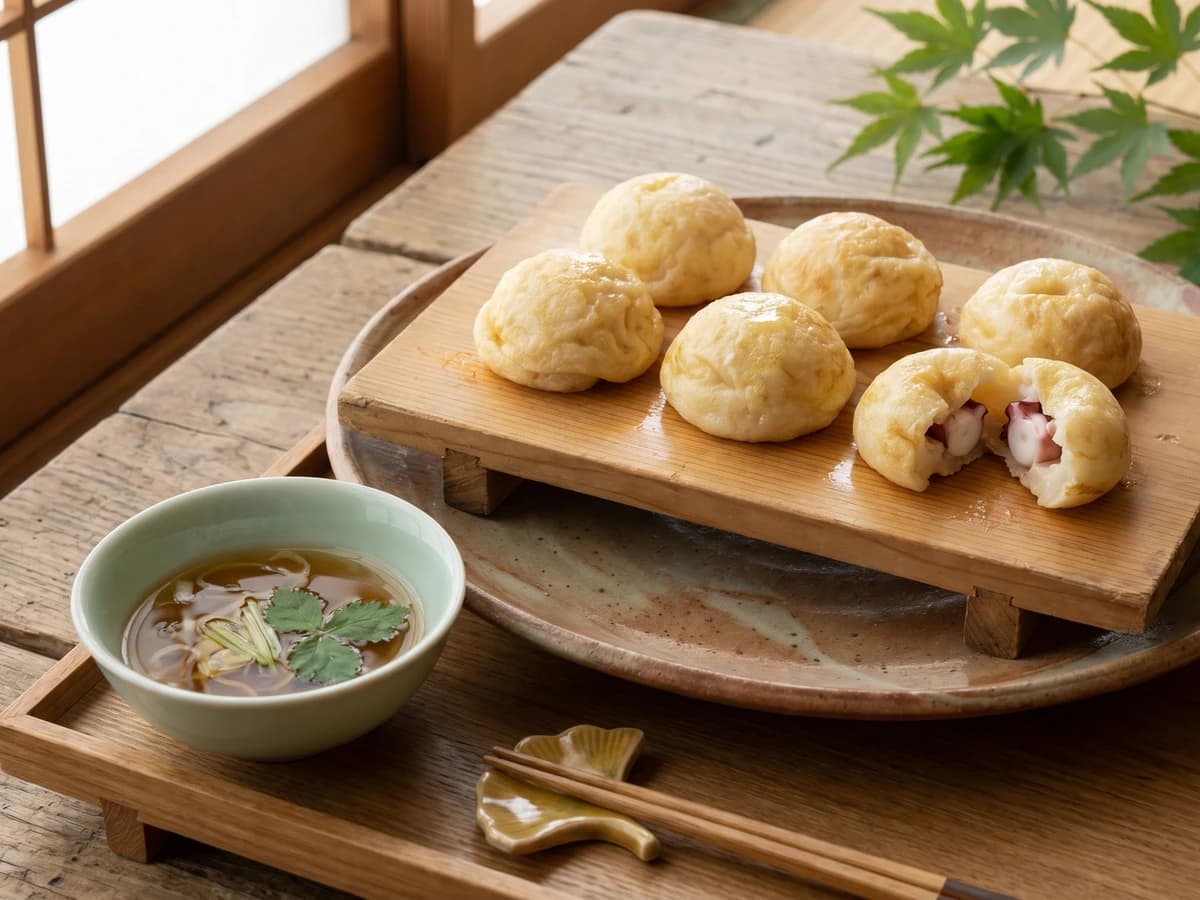
Akashi-yaki is not sauced takoyaki. It is egg-rich batter, tender octopus, and clear dashi, cooked pale and soft so each ball can be dipped like a small custard dumpling.

Chef Takumi
A whole anago looks like a test of nerve. It is mostly good sourcing, a dry skin, cold batter, and oil hot enough to leave the eel sweet under its lace.