
Chef Takumi
Aji Fry (アジフライ, panko-fried horse mackerel)
Aji fry is weeknight fish with no mystery: fresh horse mackerel opened cleanly, breaded lightly, and fried until the panko crackles while the flesh stays sweet.
A cooking platform built around craft, culture, and the stories behind what we eat.
Created by
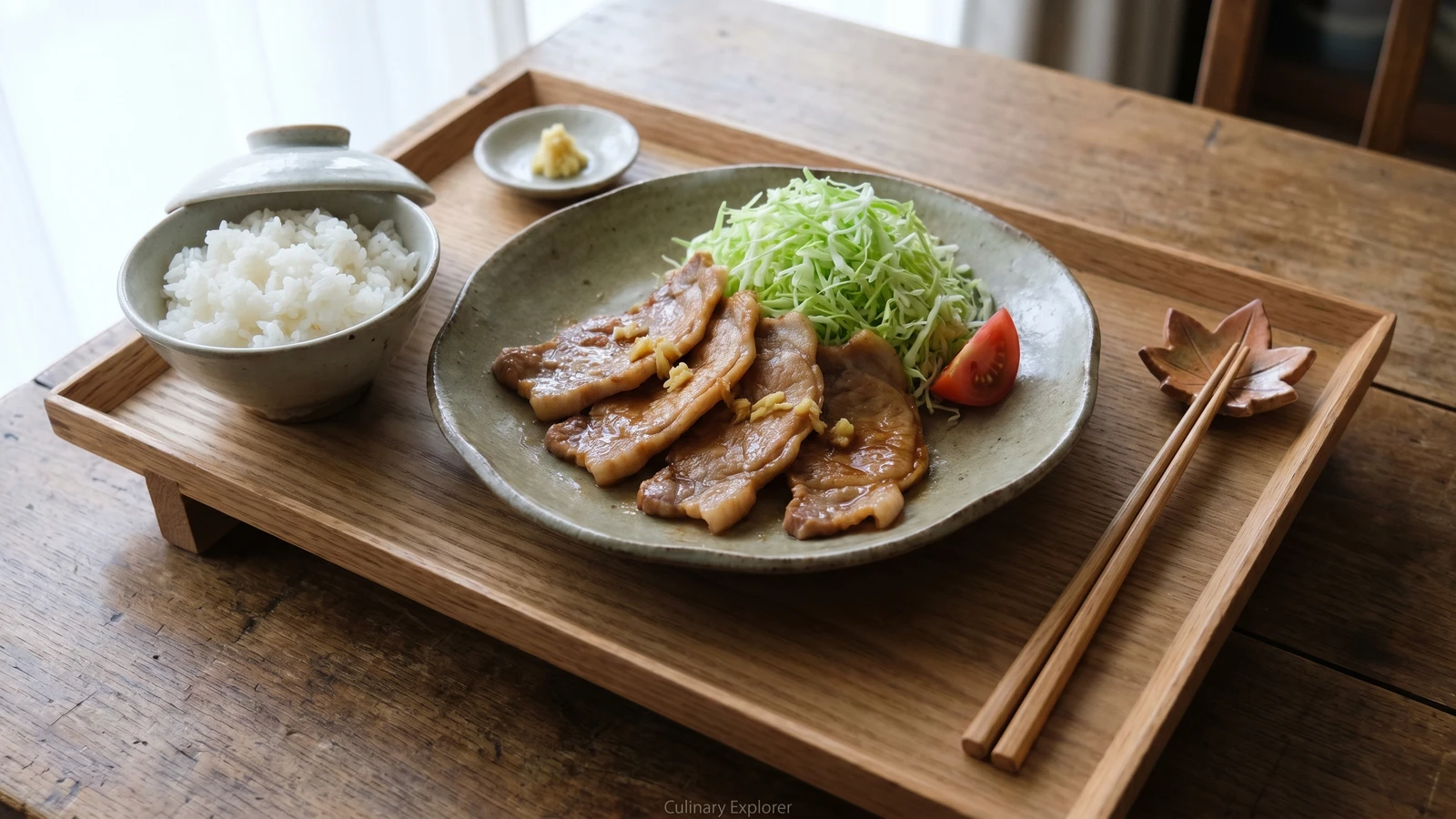
Thin pork, fresh ginger, and a small pan are enough. Sear the meat before the sauce touches it, then glaze quickly so the ginger stays clean and the pork stays tender.
Shōgayaki looks like a sauce dish, but it is really a slicing dish. Thin pork, two or three millimeters thick, cooks before it has time to toughen, and the ginger-soy glaze only needs to shine on the surface. Buy meat sliced for shōgayaki if your market carries it. If not, ask for pork loin or shoulder sliced thin enough to bend over your finger. That cut is the first secret.
The mistake is to marinate and wait, as if patience were always a virtue. Here it isn't. Soy firms lean pork when it sits, and ginger loses its high, fresh nose if you cook it too long. Sear first, glaze last. The pan gives the pork color, then the sauce reduces around it in less than a minute, just enough to turn glossy and smell bright.
This is the weeknight side of washoku, served with rice and a small mound of shredded cabbage that is not decoration. The cabbage catches the tare, the soy-mirin glaze, and gives you crunch against the soft pork. Leave the plate a little open. Even comfort food needs ma, the space that lets the food breathe. That's honmono, the real thing, in its everyday clothes.
Buta no shōgayaki is a modern home and lunch-counter dish, not an Edo-period form; its shape follows the spread of pork in everyday Japanese cooking after the Meiji period. In 1872 Emperor Meiji publicly ate beef, a symbolic break with older restrictions, and by the twentieth century pork had become common enough for thin-sliced cuts to appear in shops and shokudō set meals. The name is literal: buta is pork, shōga is ginger, and yaki means grilled or pan-seared, so the dish promises exactly what should be clear on the plate.
Quantity
250g
2-3mm thick
Quantity
25g (about 2 tablespoons grated)
peeled and finely grated
Quantity
2 tablespoons
Quantity
1 1/2 tablespoons
Quantity
1 1/2 tablespoons
Quantity
1 teaspoon
Quantity
1 teaspoon
Quantity
1 teaspoon
Quantity
2 cups
finely shredded
Quantity
1
cut into wedges
Quantity
for serving
| Ingredient | Quantity |
|---|---|
| thinly sliced pork loin or shoulder2-3mm thick | 250g |
| fresh gingerpeeled and finely grated | 25g (about 2 tablespoons grated) |
| soy sauce (shōyu) | 2 tablespoons |
| sake | 1 1/2 tablespoons |
| mirin | 1 1/2 tablespoons |
| sugar | 1 teaspoon |
| katakuriko (potato starch) (optional) | 1 teaspoon |
| neutral oil | 1 teaspoon |
| cabbagefinely shredded | 2 cups |
| small tomato (optional)cut into wedges | 1 |
| steamed short-grain rice | for serving |
Set the shredded cabbage in cold water for five minutes, then drain and shake it very dry. The water crisps the cut edges, and draining matters because wet cabbage thins the glaze when the pork touches it. Grate the ginger on an oroshigane or fine rasp, reserve 1 teaspoon for the finish, and stir the rest with the soy sauce, sake, mirin, and sugar.
Pat the pork slices dry. If a slice has a firm band of fat along one edge, snip two or three shallow cuts through that fat so the meat lies flat in the pan. Dust with katakuriko only if the pork is very lean, and make the coating almost invisible. A little starch helps the tare cling; too much turns the glaze pasty.
Heat the oil in a wide frying pan over medium-high heat. Lay in the pork in a single layer and cook 45-60 seconds per side, just until no pink remains and the edges take on a little color. Work in batches if needed. Crowding the pan makes the pork simmer in its own juices, and then the glaze has nothing good to hold onto.
Lower the heat to medium and return all the pork to the pan. Pour in the ginger sauce around the meat and turn the slices quickly until the sauce bubbles in small fast beads and coats them with a soy-dark gloss, about 45 seconds. Take the pan off the heat and fold in the reserved ginger. The short cooking keeps the pork tender and the ginger bright.
Set a compact mound of shredded cabbage on one side of the plate, with a tomato wedge if using. Lay the pork in overlapping folds beside it and spoon over any tare left in the pan. Serve with hot short-grain rice. The cabbage catches the sauce and keeps the plate fresh, which is why we put it there in the first place.
1 serving (about 415g)
Culinary guides, cultural storytelling, and the editorial depth that makes cooking meaningful.
Discover Culinary ExplorerChef Takumi
Aji fry is weeknight fish with no mystery: fresh horse mackerel opened cleanly, breaded lightly, and fried until the panko crackles while the flesh stays sweet.
Chef Takumi
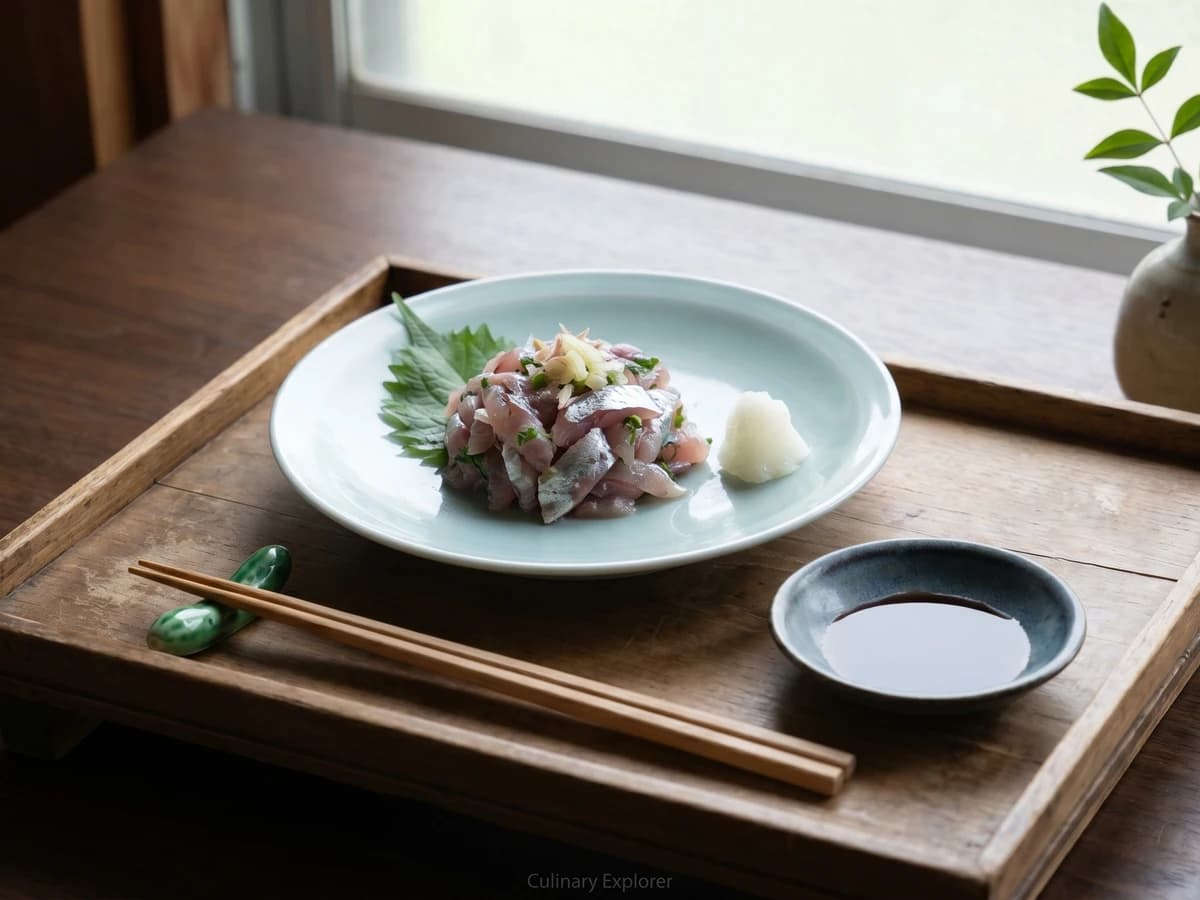
Summer horse mackerel, chopped just enough to catch ginger and scallion, becomes a cool, clean main dish with rice. The secret is fresh fish and a knife that does not bruise it.
Chef Takumi
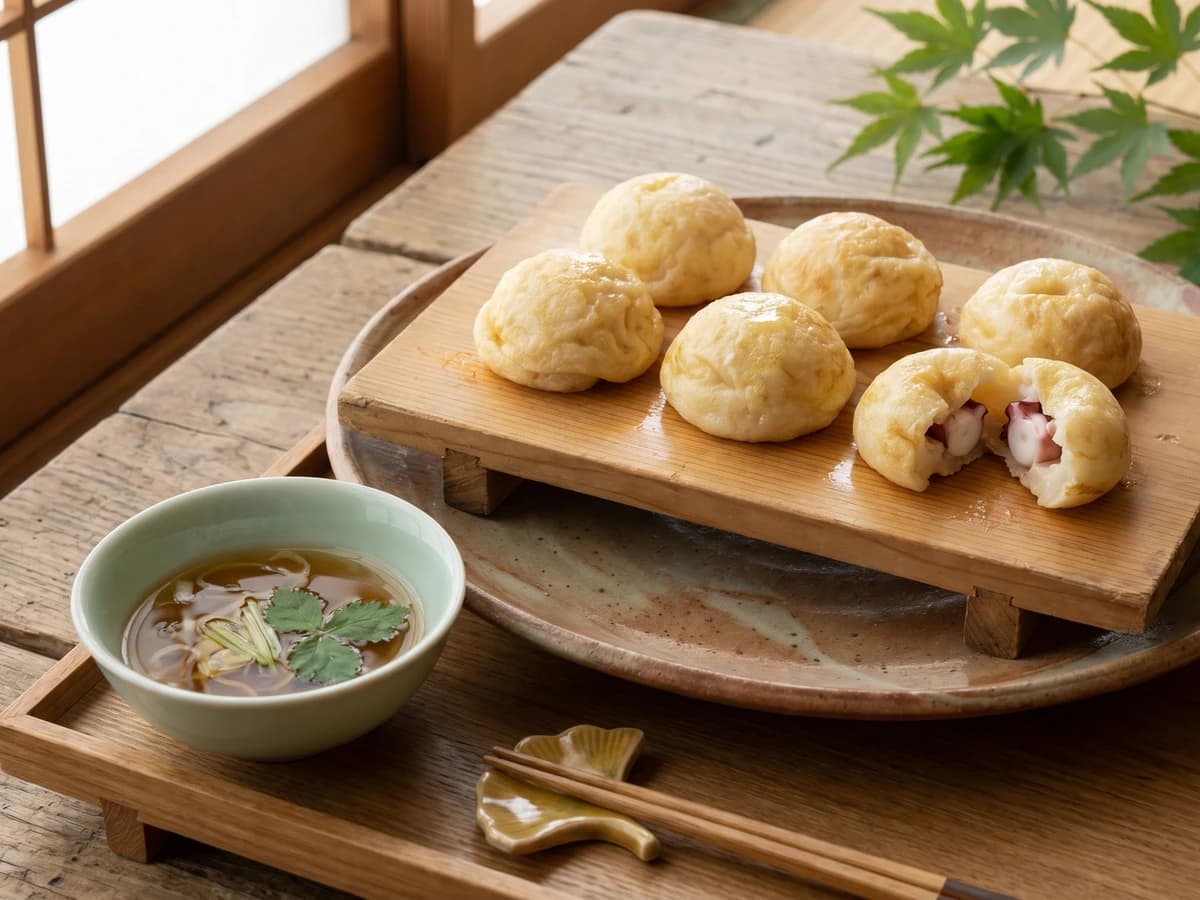
Akashi-yaki is not sauced takoyaki. It is egg-rich batter, tender octopus, and clear dashi, cooked pale and soft so each ball can be dipped like a small custard dumpling.

Chef Takumi
A whole anago looks like a test of nerve. It is mostly good sourcing, a dry skin, cold batter, and oil hot enough to leave the eel sweet under its lace.