
Chef Takumi
Aji Fry (アジフライ, panko-fried horse mackerel)
Aji fry is weeknight fish with no mystery: fresh horse mackerel opened cleanly, breaded lightly, and fried until the panko crackles while the flesh stays sweet.
A cooking platform built around craft, culture, and the stories behind what we eat.
Created by
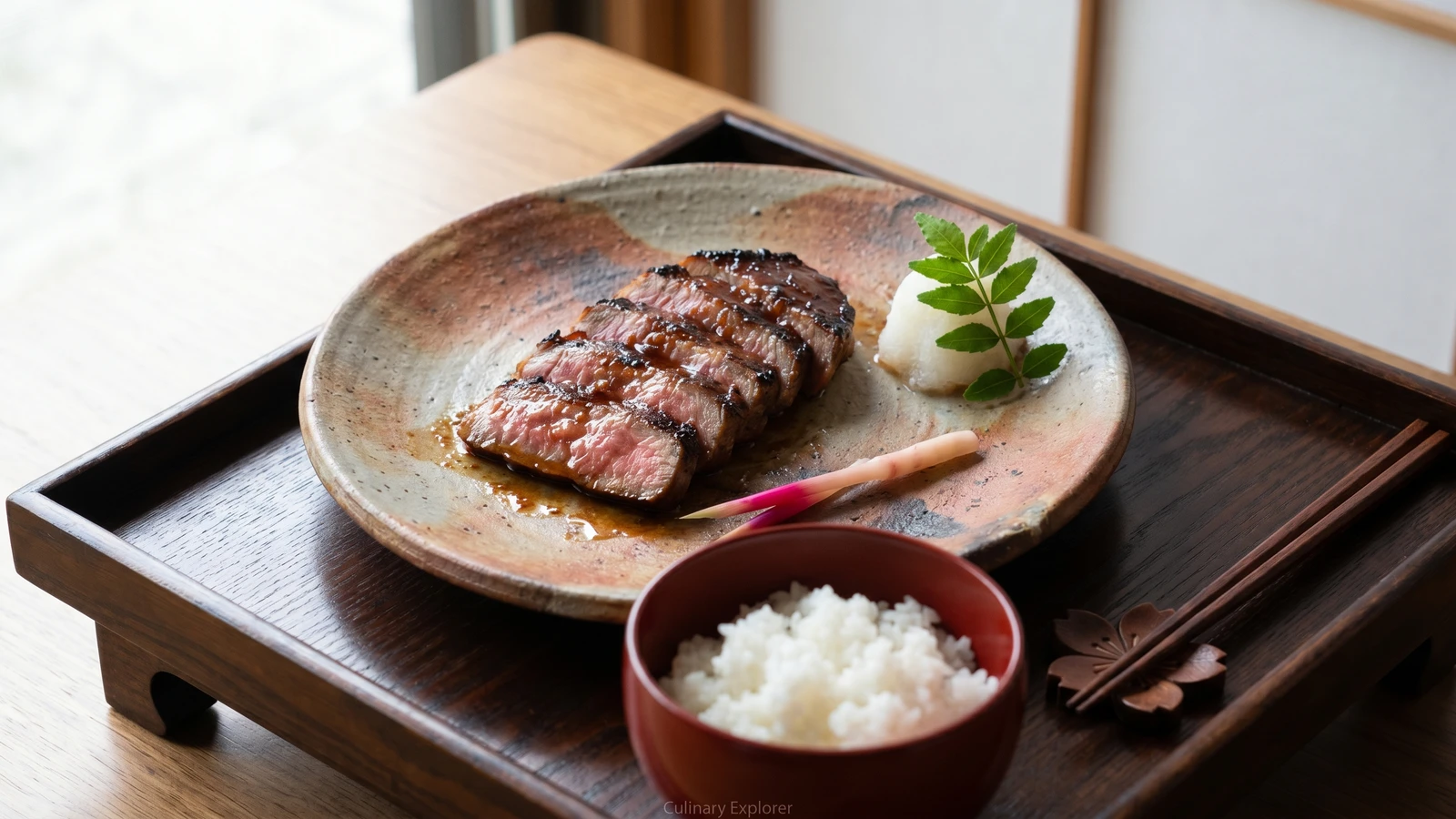
Red miso does the quiet work overnight, drawing moisture from well-marbled beef and seasoning it through. Wipe it clean, grill it hot, and the surface turns glossy and deep before the center tightens.
Beef in miso sounds like a rich man's trick. It isn't. The miso does the patient work while you sleep, pulling a little water from the meat, pressing salt and grain-sweetness into the surface, and leaving you with a slice that grills as if it has already learned some manners.
This one is not ruled by shun, 旬, the way bamboo shoots or kabocha are. It is ruled by condition. Choose well-marbled, glistening fresh beef, because the miso is there to concentrate what is good, not to hide what is tired. Nothing hidden. That is the bargain.
The one detail that decides the dish is wiping. Leave thick miso on the beef and the grill burns the paste before the heat reaches the center. Wipe until only a thin stain remains. It feels wrong the first time, wiping away what you just buried the meat in, but the flavor has already gone where it needs to go.
On the washoku table this is yakimono, the grilled dish, small and direct. Serve a few slices with rice, clear soup, and pickles, not a heroic slab taking over the plate. Leave it room, and the richness behaves itself.
Long before beef became common in Japan, misozuke, preserving food in miso, was used for vegetables, tofu, and fish because the salty paste drew out water while lending flavor. Beef entered the public diet on a new scale in the Meiji period; in 1872, newspapers reported Emperor Meiji eating beef, a symbolic break with older Buddhist restraints on meat. Gyū no misozuke-yaki belongs to that meeting of older preservation and modern beef cookery, with red miso providing enough salt and depth for a rich cut.
Quantity
600g
cut into 4 slices about 1/2 inch thick
Quantity
360g (about 1 1/2 cups)
Quantity
3 tablespoons
Quantity
2 tablespoons
Quantity
1 tablespoon
Quantity
1 teaspoon
for the grill or pan
Quantity
1/2 cup
lightly squeezed
Quantity
6 leaves or 1 scallion
very thinly sliced if using scallion
Quantity
1 pinch
Quantity
4
Quantity
for serving
| Ingredient | Quantity |
|---|---|
| well-marbled whole-muscle beef ribeye, strip, or sirloincut into 4 slices about 1/2 inch thick | 600g |
| aka miso (red miso) | 360g (about 1 1/2 cups) |
| mirin | 3 tablespoons |
| sake | 2 tablespoons |
| sugar | 1 tablespoon |
| neutral oilfor the grill or pan | 1 teaspoon |
| grated daikonlightly squeezed | 1/2 cup |
| kinome leaves or scallion (optional)very thinly sliced if using scallion | 6 leaves or 1 scallion |
| powdered sanshō (optional) | 1 pinch |
| hajikami shōga (pickled ginger shoots) (optional) | 4 |
| cooked Japanese short-grain rice (optional) | for serving |
Use well-marbled whole-muscle beef, cut about 1/2 inch thick. Ribeye, strip, and sirloin all work if the meat looks fresh and the fat is fine, not coarse and heavy. Pat the slices dry. Miso will concentrate the beef's flavor, so start with beef worth concentrating.
Warm the mirin, sake, and sugar in a small pan just until the sugar dissolves and the sharp alcohol smell softens, about 1 minute. Let it cool until just warm, then stir it into the red miso. The paste should spread like soft clay. If it runs, it will slide off the beef and season unevenly.
Spread half the miso paste in a shallow nonreactive tray. Lay the beef slices on top without overlapping, then cover them completely with the remaining paste. Press it close to the meat, cover the tray, and refrigerate for 12 to 24 hours. The miso draws a little moisture from the surface while seasoning it, which is why the beef grills with a deeper crust.
Lift the beef from the miso and scrape off the paste with a spatula. Wipe each slice well with a damp cloth or paper towel until only a thin reddish stain remains. Don't leave clumps. Miso contains sugar and grain solids, and those burn quickly. Wiping is not tidying up; it is the technique.
Let the wiped beef stand for 15 minutes while you heat a charcoal grill with a yakiami, a grilling net. An oven broiler or a heavy grill pan is a sensible stand-in. Oil the grate or pan lightly. You want strong, direct heat so the surface browns before the salty-sweet cure has time to scorch.
Grill the beef 1 1/2 to 2 minutes per side for 1/2-inch slices, moving it to a cooler spot if the edges darken too fast. The surface should turn glossy mahogany with a few charred specks, not black. For medium-rare, pull it at 125 to 130°F, 52 to 54°C; for medium, pull it around 135°F, 57°C. The cure firms the meat slightly, so overcooking shows sooner than you expect.
Rest the beef for 5 minutes, then slice it against the grain. Resting keeps the juices from running across the board, and slicing against the grain shortens the fibers so each piece eats tender. Arrange three or five slices on each plate with grated daikon, kinome or scallion, a small pinch of sanshō if you like, and rice beside it.
1 serving (about 310g)
Culinary guides, cultural storytelling, and the editorial depth that makes cooking meaningful.
Discover Culinary ExplorerChef Takumi
Aji fry is weeknight fish with no mystery: fresh horse mackerel opened cleanly, breaded lightly, and fried until the panko crackles while the flesh stays sweet.
Chef Takumi
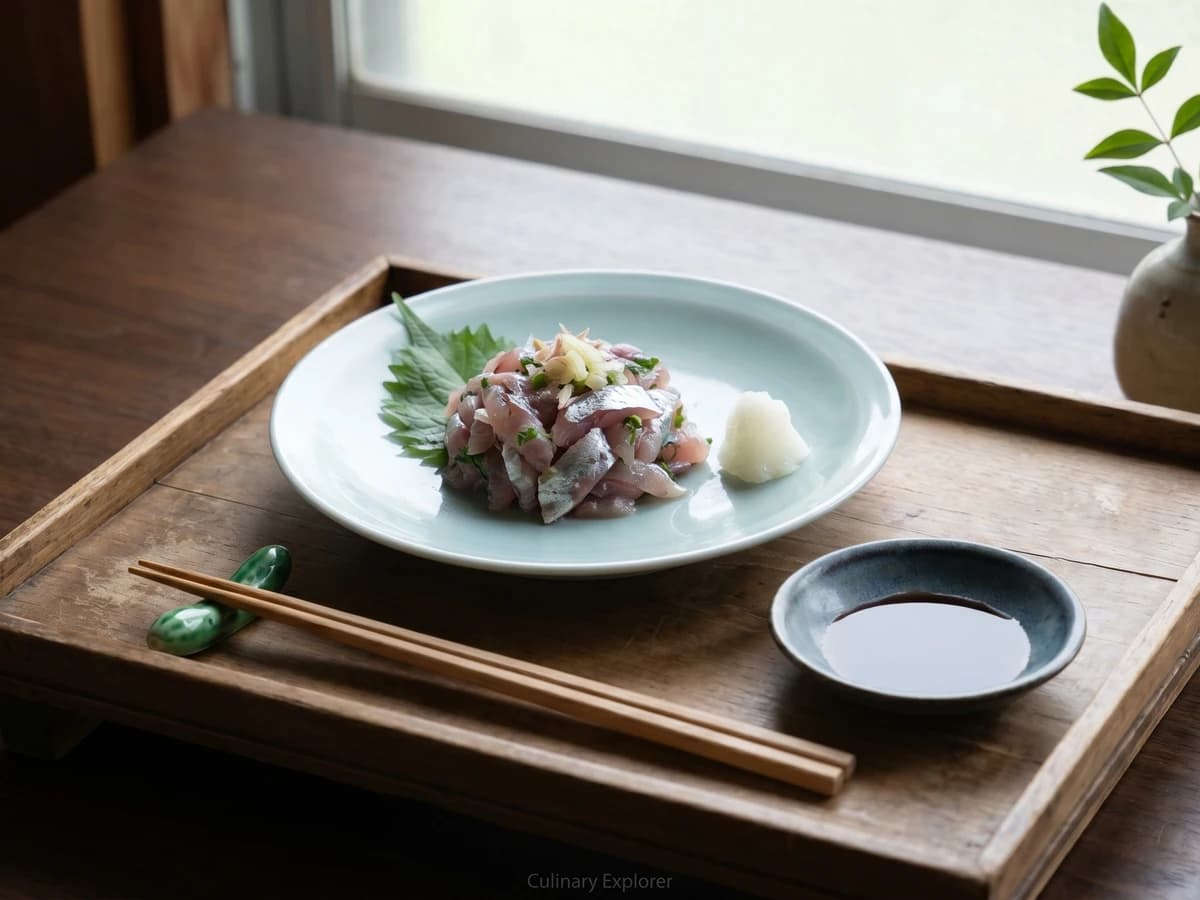
Summer horse mackerel, chopped just enough to catch ginger and scallion, becomes a cool, clean main dish with rice. The secret is fresh fish and a knife that does not bruise it.
Chef Takumi
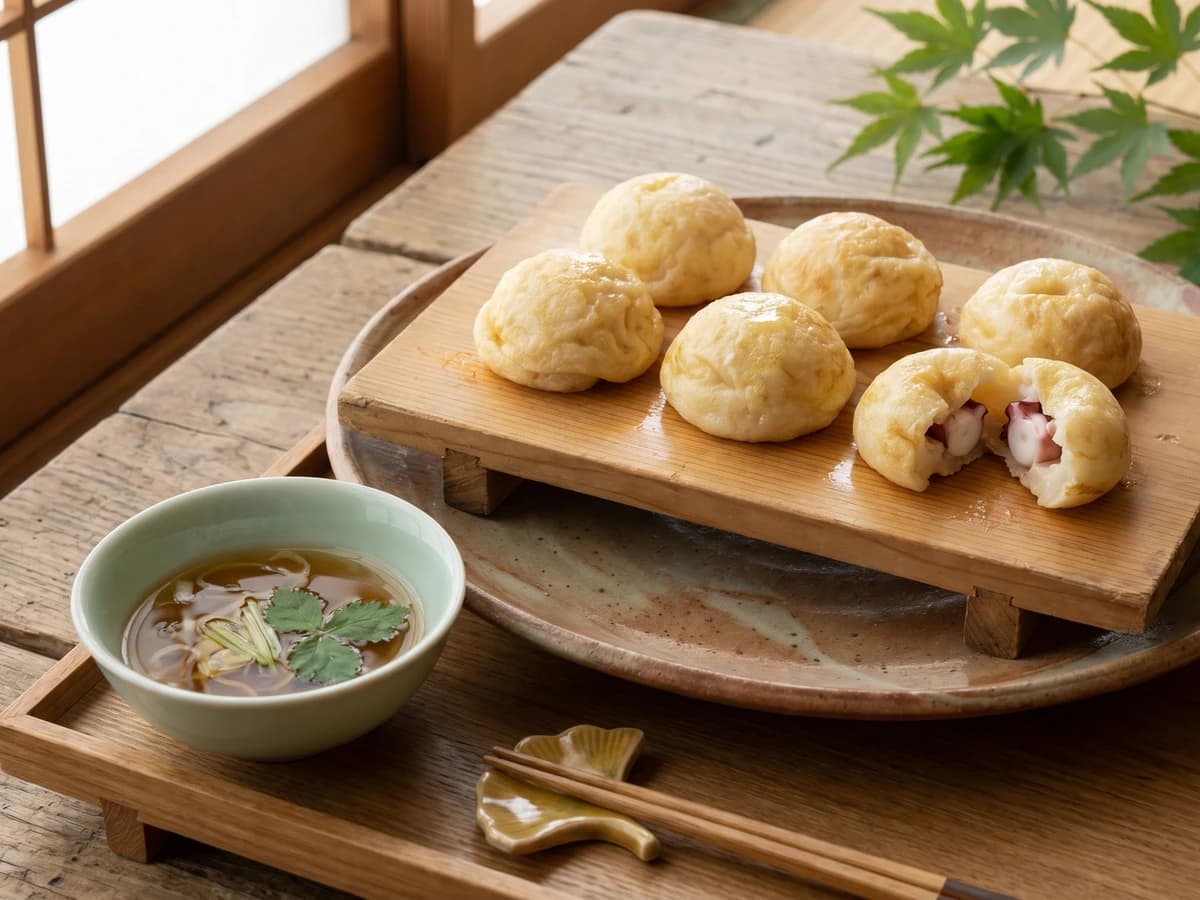
Akashi-yaki is not sauced takoyaki. It is egg-rich batter, tender octopus, and clear dashi, cooked pale and soft so each ball can be dipped like a small custard dumpling.

Chef Takumi
A whole anago looks like a test of nerve. It is mostly good sourcing, a dry skin, cold batter, and oil hot enough to leave the eel sweet under its lace.