
Chef Takumi
Aji Fry (アジフライ, panko-fried horse mackerel)
Aji fry is weeknight fish with no mystery: fresh horse mackerel opened cleanly, breaded lightly, and fried until the panko crackles while the flesh stays sweet.
A cooking platform built around craft, culture, and the stories behind what we eat.

Created by
A foil packet does quiet work: it holds the scallop liquor, mushroom scent, butter, and soy together until the scallops set gently and the broth at the bottom becomes the reason for rice.
Scallops do not ask for much. The good ones are sweet before you season them, especially cold-water hotate from Hokkaido when they're at their prime, shun. If they smell sharp or sit in a milky puddle, don't make this dish. Nothing hidden: choose something fresher and sleep better.
Hoiru-yaki means cooking in foil, which sounds like a weeknight convenience and, in truth, is one. But it is a good convenience. The foil becomes a small lidded pot: mushrooms lift the scallops, a spoonful of dashi and sake loosens their juices, and butter with shōyu gathers into a broth you must not waste.
The deciding detail is time. Scallops turn from tender to rubbery while the cook is still admiring the neat folds, so open one packet early and look. You want ivory flesh, just opaque through the center, still springing when touched. Serve the pouch in the bowl and let each person spoon the broth over rice. This is washoku in a practical mood: the method, not the menu, and every drop accounted for.
Hotate is the Japanese name for the scallop Mizuhopecten yessoensis, a cold-water species strongly tied to Hokkaido, especially the Okhotsk coast, Saroma Lake, and Funka Bay. Hokkaido's scallop fisheries expanded sharply after seed-release and sea-ranching methods spread in the late 1960s and 1970s, making hotate one of the island's representative foods. Hoiru-yaki belongs to modern Shōwa-period home cooking, when aluminum foil became common enough for households to seal fish, shellfish, mushrooms, and seasonings into small packets for the fish grill or toaster oven.
Quantity
12 large
side muscles removed
Quantity
1/4 teaspoon
Quantity
120g
trimmed and separated
Quantity
4
stems removed and caps thinly sliced
Quantity
1 small negi or 4 scallions
sliced on the diagonal
Quantity
4 small squares, about 5cm each
wiped with a damp cloth
Quantity
1/4 cup
Quantity
2 tablespoons
Quantity
1 tablespoon
Quantity
1 teaspoon
Quantity
2 tablespoons
cut into 4 pieces
Quantity
4 thin strips
Quantity
small handful
| Ingredient | Quantity |
|---|---|
| dry-packed sea scallops, preferably Hokkaido hotateside muscles removed | 12 large |
| sea salt | 1/4 teaspoon |
| shimeji mushroomstrimmed and separated | 120g |
| fresh shiitake mushroomsstems removed and caps thinly sliced | 4 |
| negi or scallionssliced on the diagonal | 1 small negi or 4 scallions |
| konbu squareswiped with a damp cloth | 4 small squares, about 5cm each |
| fresh dashi | 1/4 cup |
| sake | 2 tablespoons |
| shōyu (Japanese soy sauce) | 1 tablespoon |
| mirin | 1 teaspoon |
| unsalted buttercut into 4 pieces | 2 tablespoons |
| yuzu peel (optional) | 4 thin strips |
| mitsuba leaves (optional) | small handful |
Remove the small side muscle from each scallop if your fishmonger has not done it. Pat the scallops dry, sprinkle lightly with the salt, and let them stand for 10 minutes in the refrigerator. Pat them dry again. The salt firms the surface and draws out loose water, so the broth tastes of scallop, not packing liquid. They should smell clean and sweet. If the smell is sharp or sour, don't hide it under butter.
Stir together the dashi, sake, shōyu, and mirin. Taste it. It should be gently seasoned, not salty, because the scallops, mushrooms, and butter will all add their own weight inside the packet.
Heat a fish grill, toaster oven, or oven to 425°F, 220°C. Tear four large sheets of foil, about 30cm long. Set one square of konbu in the center of each sheet, then add the mushrooms and negi. Place 3 scallops on each bed, spoon over a little of the seasoning, and set one piece of butter on top. The konbu and mushrooms lift the scallops away from direct metal heat and lend their flavor to the broth below.
Bring the long edges of each foil sheet together above the food and fold them down twice. Crimp the ends tightly, but leave a little headroom over the scallops. A tight seal keeps the precious juices inside; the space above the food lets the heat move gently around the scallops instead of pressing everything flat.
Cook the packets in the fish grill, toaster oven, or oven for 8 to 10 minutes. In a covered frying pan, cook them over medium-low heat for 10 to 12 minutes. Open one packet away from your face at the early mark and look. The scallops should be opaque through the center, glossy on the surface, and springy when touched. If the center is still translucent, reseal and cook 1 to 2 minutes more.
Rest the packets for 2 minutes, then set each opened packet into a shallow bowl. Spoon the butter-soy dashi broth over the scallops and finish with yuzu peel and mitsuba if using. Serve at once with rice, and tell everyone to drink or spoon the broth. That is not extra sauce. It is the dish keeping its promise.
1 serving (about 195g)
Culinary guides, cultural storytelling, and the editorial depth that makes cooking meaningful.
Discover Culinary ExplorerChef Takumi
Aji fry is weeknight fish with no mystery: fresh horse mackerel opened cleanly, breaded lightly, and fried until the panko crackles while the flesh stays sweet.
Chef Takumi
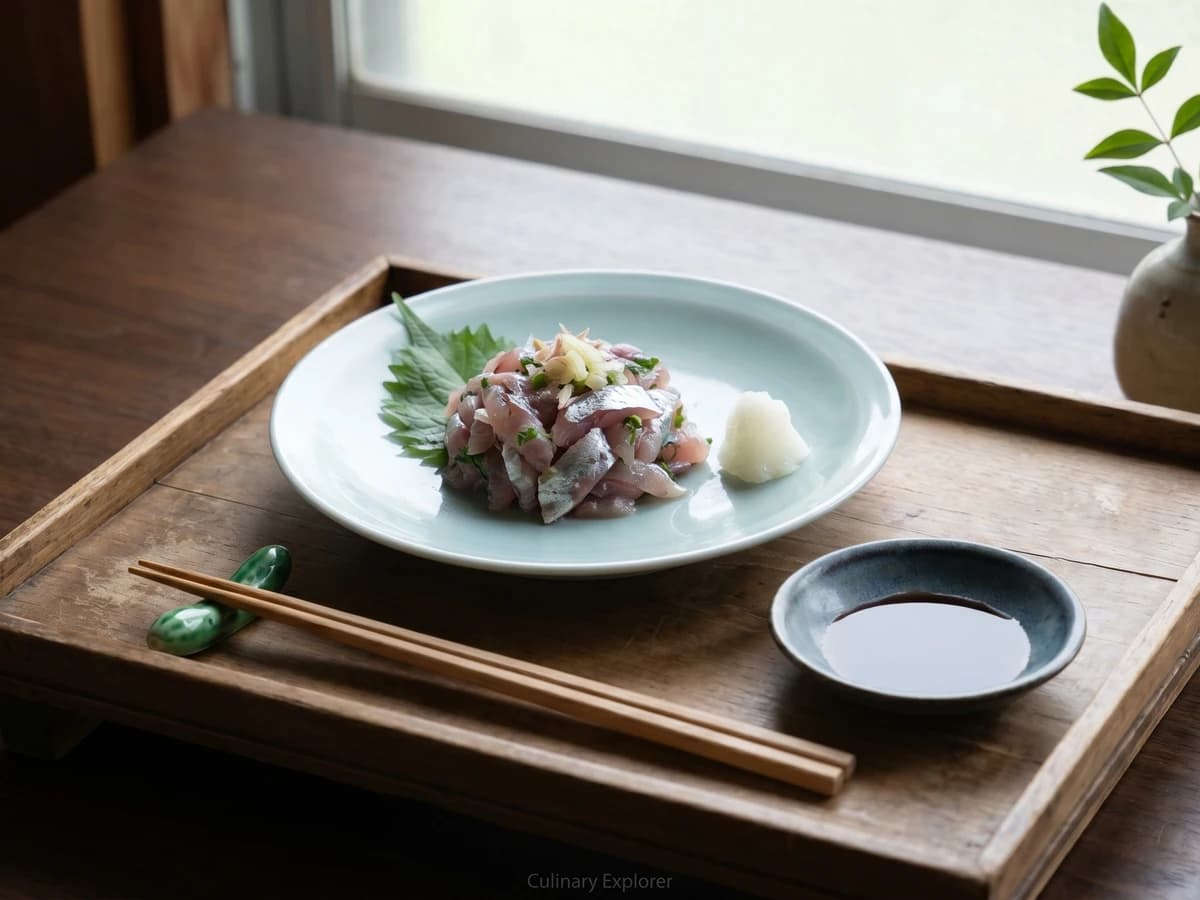
Summer horse mackerel, chopped just enough to catch ginger and scallion, becomes a cool, clean main dish with rice. The secret is fresh fish and a knife that does not bruise it.
Chef Takumi
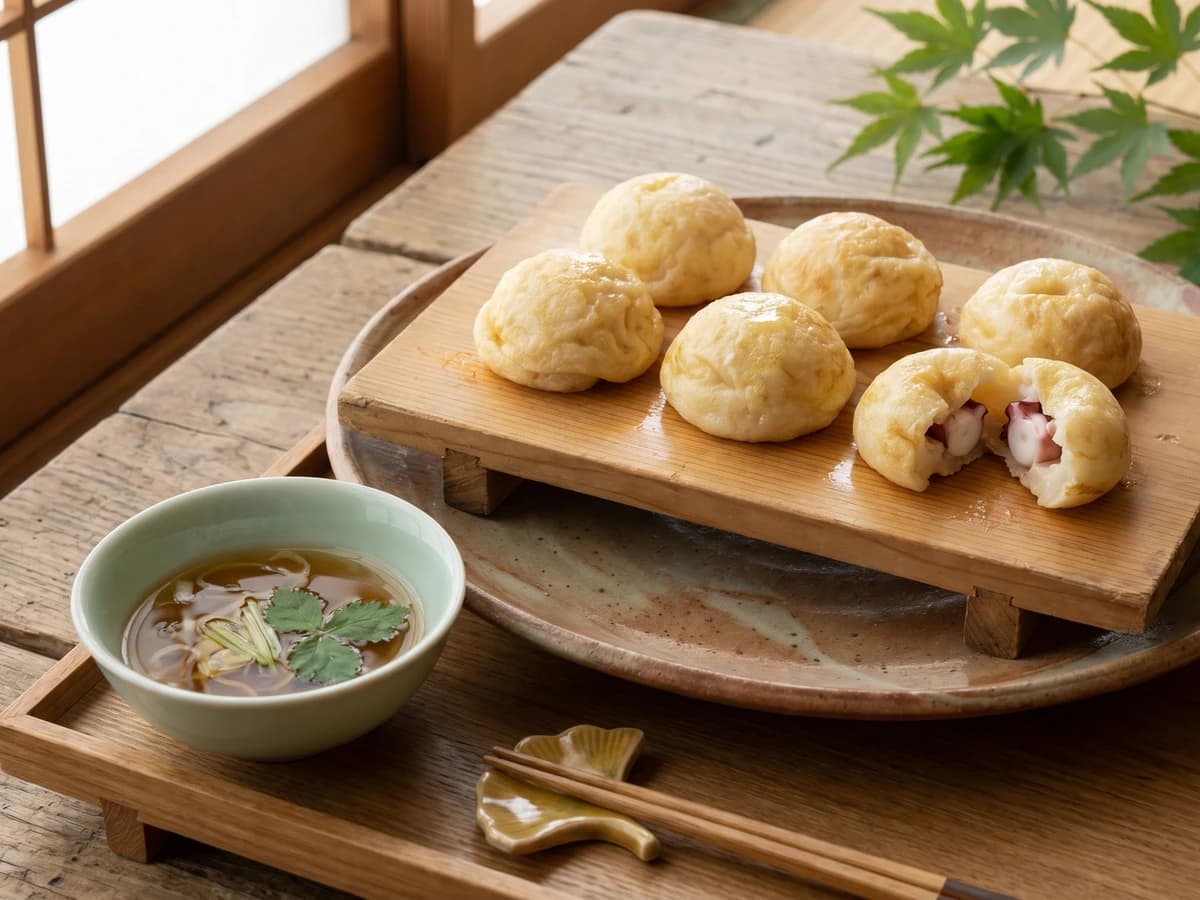
Akashi-yaki is not sauced takoyaki. It is egg-rich batter, tender octopus, and clear dashi, cooked pale and soft so each ball can be dipped like a small custard dumpling.

Chef Takumi
A whole anago looks like a test of nerve. It is mostly good sourcing, a dry skin, cold batter, and oil hot enough to leave the eel sweet under its lace.