Chef Joost
Amsterdamse Ossenworst
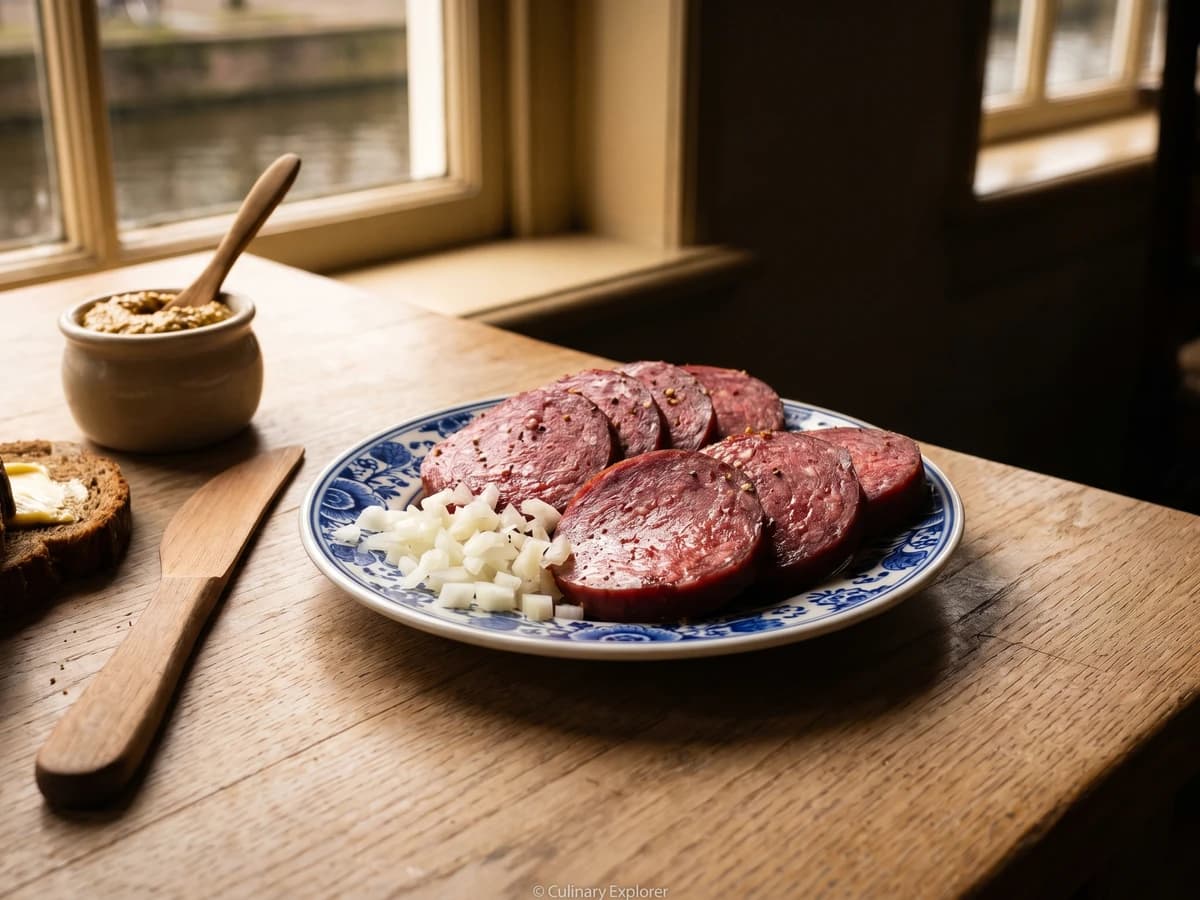
The name means ox sausage, but the real story is Amsterdam itself: cattle trade, Jewish butchers, VOC spices, and raw beef sliced thin with onion.
A cooking platform built around craft, culture, and the stories behind what we eat.

Created by
The Dutch took a French croquette, filled it with thrifty beef ragout, and built a whole snackbar culture around the little crisp cylinder eaten with mustard.
The name already tells you this snack arrived with a foreign passport. Kroket comes from the French croquette, from croquer, to crunch, and yes, the French may keep the spelling if they like. We kept the habit. A vleeskroket, meat croquette, is what happens when a frugal Dutch kitchen looks at leftover beef, makes a ragout, chills it firm, and gives it a coat that crackles under the teeth before the inside turns molten.
But let me tell you a secret. The kroket is not merely snackbar food, though the automatiek wall has made it famous: a little hot treasure waiting behind a glass door for a coin and a hungry hand. It began higher up the table, as French-style cookery did in the nineteenth-century Netherlands, then walked steadily downward into railway stations, football afternoons, and Friday evenings when nobody wanted another sensible slice of bread.
The method is honest and exacting in one place only: the ragout must be cold and stiff before you shape it. Warm ragout is a liar. It promises obedience and collapses in the breadcrumbs. Make the filling thick with roux and gelatin, let it rest overnight, then bread it twice so the crust can hold its nerve in hot oil. Hou het altijd simpel: good beef, patient chilling, mustard on the side.
The croquette entered Dutch cookery through French influence in the nineteenth century, when croquetten appeared in bourgeois recipe books as a refined way to serve minced meat, poultry, or game bound in sauce. In the twentieth century the vleeskroket moved from dining room to street food, helped by Amsterdam snack institutions such as Kwekkeboom, Van Dobben, and FEBO, whose automatiek walls made the hot croquette part of everyday Dutch eating. Its journey from leftover ragout to national snack is a neat Dutch lesson: thrift first, pleasure very close behind.
Quantity
700g
Quantity
1 liter
Quantity
1
halved
Quantity
1
Quantity
2
Quantity
60g
Quantity
75g
for the roux
Quantity
6
soaked in cold water
Quantity
1 tablespoon
Quantity
1/4 teaspoon
Quantity
to taste
Quantity
2 tablespoons
finely chopped
Quantity
150g
for coating
Quantity
3
beaten
Quantity
250g
Quantity
as needed
for deep-frying
Quantity
to serve
| Ingredient | Quantity |
|---|---|
| beef chuck or brisket | 700g |
| beef stock | 1 liter |
| onionhalved | 1 |
| bay leaf | 1 |
| cloves | 2 |
| butter | 60g |
| plain flourfor the roux | 75g |
| gelatin sheetssoaked in cold water | 6 |
| Dijon or Dutch mustard | 1 tablespoon |
| freshly grated nutmeg | 1/4 teaspoon |
| salt and black pepper | to taste |
| flat-leaf parsleyfinely chopped | 2 tablespoons |
| plain flourfor coating | 150g |
| eggsbeaten | 3 |
| fine dry breadcrumbs | 250g |
| neutral oilfor deep-frying | as needed |
| mustard | to serve |
Put the beef, stock, onion, bay leaf, and cloves in a heavy pan. Bring it just to a boil, then lower the heat and let it barely murmur for 2 1/2 to 3 hours, until the meat pulls apart with a fork. Lift out the beef and strain the stock. Keep 600ml of that stock for the ragout; it has done the hard work and should not be wasted.
Pull the beef into fine threads while it is still warm enough to handle. Chop any long strands once or twice so the filling eats cleanly inside the kroket. A good vleeskroket should be rich with meat, but it should not fight you when you bite it.
Melt the butter in a saucepan, stir in the 75g flour, and cook the roux for 3 minutes until it smells nutty but has not browned. Add the reserved stock gradually, whisking hard after each addition, until you have a very thick sauce. Squeeze the soaked gelatin sheets dry and stir them in until dissolved, then add the mustard, nutmeg, pepper, and enough salt to make the beef taste awake.
Fold the shredded beef and parsley through the ragout. Spread it in a shallow dish, press parchment directly on the surface, and refrigerate until completely firm, at least 8 hours and preferably overnight. This is the slow step that buys you clean shaping and a molten centre later.
Divide the cold ragout into 12 portions. With lightly floured hands, roll each portion into a cylinder about 10cm long and 3cm wide. Keep them tidy but not precious; this is snackbar geometry, not sculpture.
Set out three bowls: flour, beaten eggs, and breadcrumbs. Roll each kroket in flour, then egg, then breadcrumbs. For a stronger crust, pass it again through egg and breadcrumbs. Check the ends carefully, because a thin end is where the filling will try to make its escape.
Heat the oil to 180C in a deep pan. Fry the kroketten in small batches for 4 to 5 minutes, turning gently, until deep golden and crisp all over. Do not crowd the pan; the oil temperature drops, the crust drinks oil, and the kroket loses its dignity.
Drain on a rack or paper towels and let them stand for 2 minutes before serving. The inside will be very hot and loose, exactly as it should be. Serve with mustard, soft white bread if you want a broodje kroket, and no unnecessary garnish.
1 serving (about 160g)
Culinary guides, cultural storytelling, and the editorial depth that makes cooking meaningful.
Discover Culinary ExplorerChef Joost
The name means ox sausage, but the real story is Amsterdam itself: cattle trade, Jewish butchers, VOC spices, and raw beef sliced thin with onion.

Chef Joost
The little yellow onion on the Amsterdam borrel board looks modest, until vinegar, turmeric, and patience turn it into the sharp bite that wakes cheese, herring, and sausage.

Chef Joost
The bear's claw of the northern snackbar: a seasoned gehaktbal, Dutch meatball, cut into thick discs, skewered with onion, fried until the edges catch, then dragged through peanut sauce.

Chef Joost
The name points to the drink, not the mood: bitterballen are crisp little balls of beef ragout made for the borrel table, mustard beside them, fingers slightly burned by impatience.