Culinary Explorer

A cooking platform built around craft, culture, and the stories behind what we eat.
Discover Culinary Explorer
Amsterdamse Uien

Amsterdamse Uien

Created by

The little yellow onion on the Amsterdam borrel board looks modest, until vinegar, turmeric, and patience turn it into the sharp bite that wakes cheese, herring, and sausage.

Appetizers & Snacks
Dutch
Make Ahead
Potluck
Budget Friendly
30 min
Active Time
10 min cook72 hr 40 min total
Yield2 medium jars

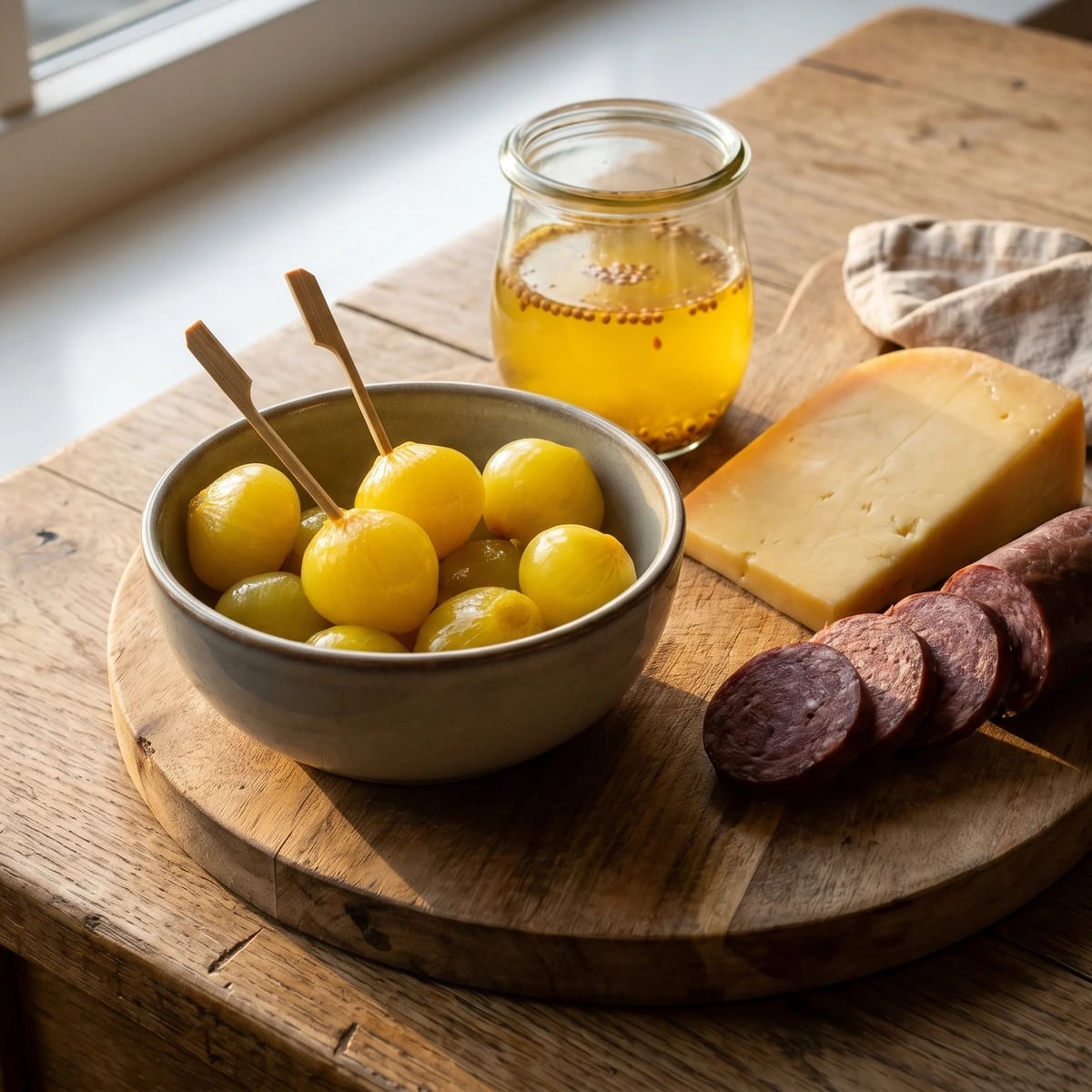
Amsterdam has always understood the value of a sharp little thing beside a rich one. A slice of ossenworst, the city's old raw beef sausage, wants mustard and onion. A piece of jonge kaas, young Gouda, wants something bright enough to cut its milkiness. Herring, for obvious reasons, wants a companion that can stand near the sea without fainting. That is where Amsterdamse uien, Amsterdam onions, earn their place.

The name doesn't hide a secret etymology. It tells you the city. But let me tell you a secret: the onion itself is not grand, and that is the point. Zilveruitjes, little silver onions, are peeled, briefly softened, and put under a sweet-sour vinegar brine stained yellow with kurkuma, turmeric. Not saffron, despite what some romantic jar labels might like you to imagine. Amsterdam was a port of spices, yes, but Dutch kitchens have always known the difference between luxury and sense.

What matters here is balance and waiting. The onions must lose their raw shout without becoming soft, the vinegar must bite without turning cruel, and the sugar must round the edge without making candy. Hou het altijd simpel, always keep it simple: a clean jar, a hot brine, three quiet days in the refrigerator. Then put them beside cheese, sausage, bitterballen, or herring, and watch the board come alive.

Amsterdamse uien belong to the Dutch tafelzuur tradition, the table pickles served with fatty fish, sausage, cheese, and fried snacks to sharpen the meal. Amsterdam's twentieth-century pickle trade made the yellow silver onion especially recognizable; Kesbeke, founded in Amsterdam in 1948, became one of the best-known makers of tafelzuur in the city. The colour usually comes from turmeric, a practical spice-route legacy that gives the onions their sunny look without the expense of saffron.

The technique, the tradition, and the story behind every dish.

Discover Culinary Explorer

Ingredients

small silver onions or pearl onions

Quantity

500g

peeled

white wine vinegar or mild natural vinegar

Quantity

500ml

water

Quantity

250ml

sugar

Quantity

100g

fine sea salt

Quantity

18g

mustard seeds

Quantity

2 teaspoons

ground turmeric

Quantity

1 teaspoon

black peppercorns

Quantity

8

bay leaves

Quantity

2

whole cloves

Quantity

2

Equipment Needed

  • Medium saucepan
  • 2 clean heatproof jars of about 500ml each
  • Small sharp knife

Instructions

  1. 1

    Peel the onions

    Trim the root ends lightly, then cover the onions with boiling water for one minute. Drain, rinse under cold water, and slip off the skins. Leave the root end just intact where you can; it helps each little onion hold together in the jar.

  2. 2

    Heat the brine

    Put the vinegar, water, sugar, salt, mustard seeds, turmeric, peppercorns, bay leaves, and cloves into a saucepan. Bring it to a gentle boil, stirring until the sugar and salt dissolve. The brine should smell sharp first, then warm from the turmeric and clove.

  3. 3

    Soften the onions

    Add the peeled onions to the simmering brine and cook for three to four minutes only. You are not making them tender for dinner; you are waking them up for pickling. They should look glossy and slightly translucent at the edges but still feel firm.

  4. 4

    Jar them hot

    Lift the onions into clean heatproof jars, then pour over the hot brine until they are fully covered. Divide the spices between the jars, tap gently to release trapped air, and close the lids. Let them cool on the counter before refrigerating.

  5. 5

    Let them wait

    Refrigerate for at least three days before eating. The onions turn a deeper yellow as they rest, and the vinegar moves from the surface into the heart. Taste one after three days; after a week they are better still. Patience is the cheapest ingredient in the jar.

    For longer shelf storage, use proper tested water-bath preserving times for your jar size and local guidance. This version is a refrigerator pickle, clean, simple, and meant to be eaten within a month.

Chef Tips

  • Choose the smallest onions you can bear to peel. Large pearl onions become heavy and lunch-like; the Amsterdam onion should be one bright bite on a prikker, a little cocktail stick.
  • Do not overcook them in the brine. A soft pickled onion is a sad little surrender. Keep the centre crisp so it snaps gently under your teeth.
  • Serve with jonge kaas, ossenworst, bitterballen, or herring. The onion is not decoration; it is the acid that keeps the rich things honest.

Advance Preparation

  • Make at least three days ahead; one week gives the best balance of colour, sweetness, and vinegar bite.
  • Keeps refrigerated for up to one month if the onions stay fully submerged and you use a clean fork each time.

Frequently Asked Questions

Nutrition Information

1 serving (about 40g)

Calories
35 calories
Total Fat
0 g
Saturated Fat
0 g
Trans Fat
0 g
Unsaturated Fat
0 g
Cholesterol
0 mg
Sodium
300 mg
Total Carbohydrates
8 g
Dietary Fiber
1 g
Sugars
6 g
Protein
0 g

Note: Chef personas and recipes are created with AI assistance. Cook with care: follow safe food-handling practices, check doneness with a thermometer when needed, and adapt for allergies and your kitchen.

Where cooking meets culture.

Culinary guides, cultural storytelling, and the editorial depth that makes cooking meaningful.

Discover Culinary Explorer

More from De Borrel: Bar Snacks & Borrelplank

Browse the full collection