Chef Joost
Amsterdamse Ossenworst
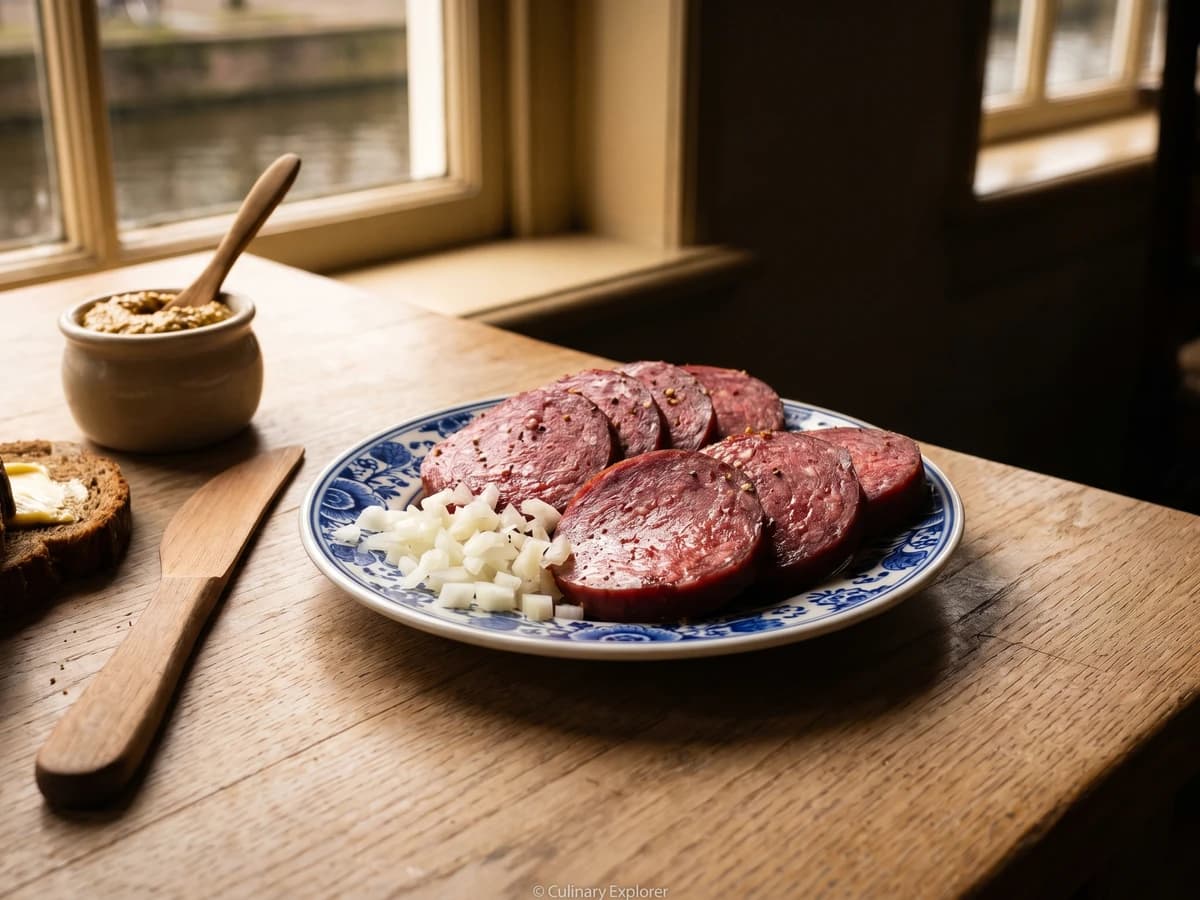
The name means ox sausage, but the real story is Amsterdam itself: cattle trade, Jewish butchers, VOC spices, and raw beef sliced thin with onion.
A cooking platform built around craft, culture, and the stories behind what we eat.
Created by
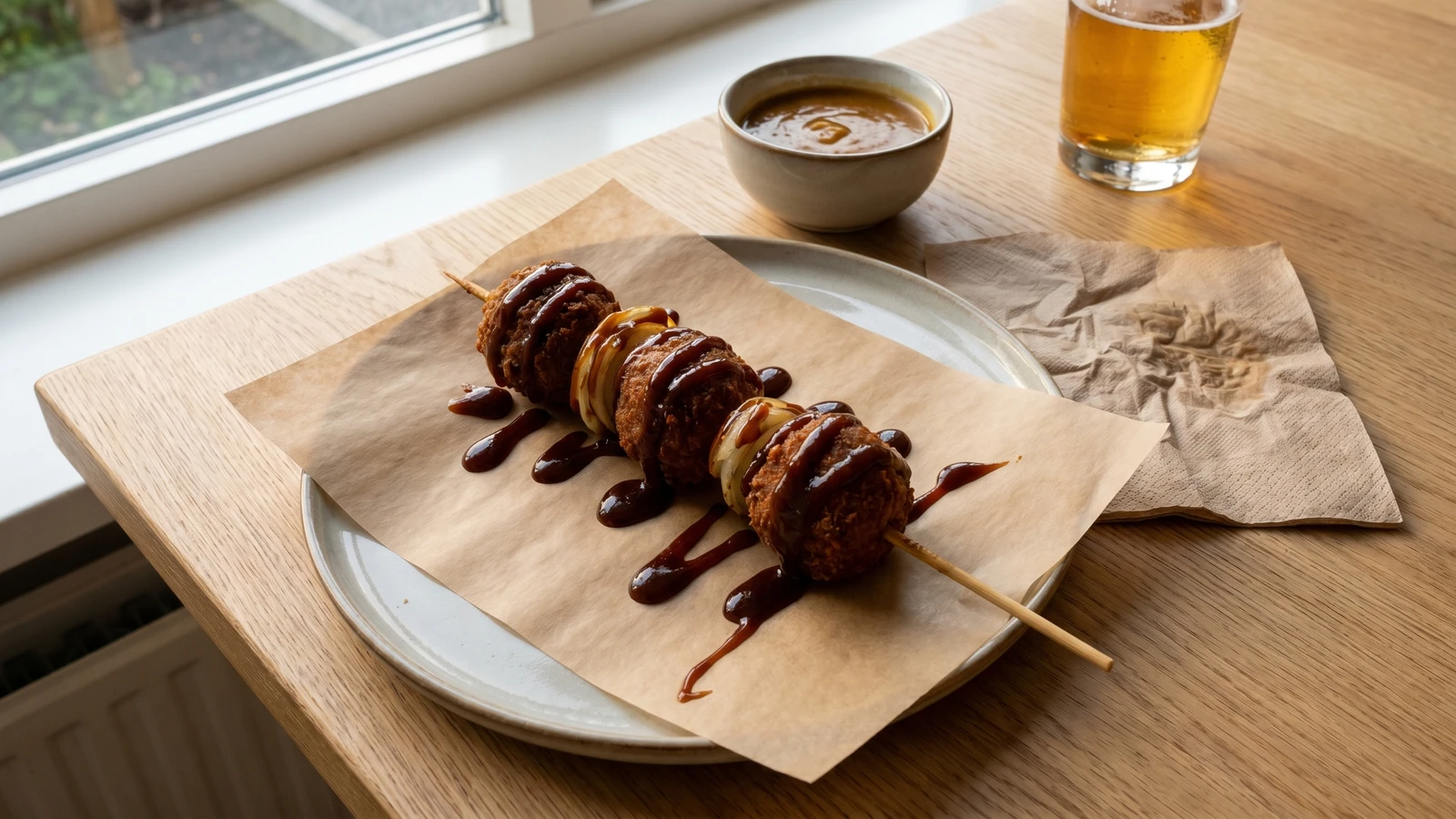
The bear's claw of the northern snackbar: a seasoned gehaktbal, Dutch meatball, cut into thick discs, skewered with onion, fried until the edges catch, then dragged through peanut sauce.
Not every Dutch food memory arrives from a grandmother's notebook with flour on the page. Some come wrapped in paper from a fluorescent snackbar after a cold Saturday match, when the rain has got into your sleeves and the fryer is doing the work of a hearth. The berenklauw belongs there: democratic, cheap, slightly absurd, and much more clever than it looks.
The name already tells you the joke. Berenklauw means bear's claw, and here it is not the plant by the ditch but a gehaktbal, a Dutch meatball, sliced open and skewered with thick onion rings until it fans out like a paw. No medieval manuscript hides behind this one, for obvious reasons. Its history is late, loud, local, and northern, the Groningen snackbar of the 1970s turning the familiar meatball into something you could eat standing up with sauce on your thumb.
But let me tell you a secret: the good version depends on restraint. Make a solid, well-seasoned meatball first, let it cool so it slices cleanly, then fry the assembled skewer only long enough for the onion to sweeten and the meat's edges to brown. Satay sauce brings the Indo-Dutch pantry to the snack counter; curry sauce tells the same period in another accent. History and cookery, they cannot be separated, even when the history is wearing a paper napkin.
Hou het altijd simpel, always keep it simple. A proper berenklauw is not delicate. It is meatball, onion, fryer, sauce, and the kind of appetite that doesn't want a lecture before eating. I give you the lecture anyway, but gently, because a dish without its story is half a meal.
The berenklauw is a postwar Dutch snackbar snack, associated especially with Groningen, where it became widely known in the 1970s as a cheap way to turn the familiar gehaktbal into a hand-held fried item. Related names such as berehap and spoetnik appear around the Netherlands for the same family of meatball-and-onion skewers, showing how regional snackbars named their own variations before the freezer supplier made everything uniform. Its common sauces, peanut satay from the Indo-Dutch pantry and curry ketchup from the frituur, the Dutch frying shop, place it firmly in late twentieth-century Dutch eating.
Quantity
500g
preferably half-and-half
Quantity
50g
Quantity
60ml
Quantity
1
Quantity
1 tablespoon
Quantity
1 teaspoon
Quantity
1/2 teaspoon
freshly ground
Quantity
1/4 teaspoon
Quantity
2
sliced into 1cm thick rings
Quantity
for frying
Quantity
150g
Quantity
200ml
Quantity
2 tablespoons
Quantity
1 teaspoon
Quantity
1 tablespoon
Quantity
4 tablespoons
| Ingredient | Quantity |
|---|---|
| mixed ground beef and porkpreferably half-and-half | 500g |
| fine breadcrumbs or crushed beschuit | 50g |
| milk | 60ml |
| egg | 1 |
| Dutch mustard | 1 tablespoon |
| fine salt | 1 teaspoon |
| black pepperfreshly ground | 1/2 teaspoon |
| ground nutmeg | 1/4 teaspoon |
| large onionssliced into 1cm thick rings | 2 |
| neutral oil | for frying |
| smooth peanut butter | 150g |
| water | 200ml |
| ketjap manis | 2 tablespoons |
| sambal oelek | 1 teaspoon |
| vinegar or lemon juice | 1 tablespoon |
| curry sauce or curry ketchup (optional) | 4 tablespoons |
Stir the breadcrumbs and milk together in a bowl and let them sit for five minutes, until the crumbs have softened. Add the ground meat, egg, mustard, salt, pepper, and nutmeg, then mix with your hands until the mixture holds together firmly. Do not knead it into paste; a gehaktbal should have body, not bounce.
Shape the mixture into 4 large, firm meatballs, each roughly 125g. Brown them in a little oil in a skillet over medium heat, turning until coloured all over, then lower the heat, cover, and cook for 10 to 12 minutes, until cooked through. Let them cool for at least 30 minutes. Warm meatballs crumble under the knife; cooled ones slice like they know their purpose.
Put the peanut butter, water, ketjap manis, sambal, and vinegar or lemon juice into a small pan. Warm gently, stirring, until smooth and pourable. If it thickens too much, add a spoonful of water. Taste it: it should be salty-sweet, lightly sharp, and just hot enough to remind you that the Dutch snack counter has always borrowed honestly from the Indo-Dutch table.
Slice each cooled meatball into 3 thick discs, keeping the pieces in order. Thread a sturdy skewer through meatball disc, onion ring, meatball disc, onion ring, and final meatball disc, pressing gently so the onion sits between the slices. Use the broad outer rings of the onion for the best shape; the small centres can go into tomorrow's soup, because wasting an onion is a character flaw.
Heat 5cm of neutral oil in a heavy pot to 175C. Fry the berenklauwen one or two at a time for 3 to 4 minutes, turning carefully, until the onion edges are golden and the meatball surfaces are darkened and crisp at the edges. The meat is already cooked; you are finishing the onion and giving the whole thing its snackbar crust.
Drain the skewers on a rack or paper, then spoon warm satay sauce over them, or serve with curry sauce if that is the side of the counter you grew up on. Eat at once, with napkins nearby and no illusion that a fork improves the matter.
1 serving (about 300g)
Culinary guides, cultural storytelling, and the editorial depth that makes cooking meaningful.
Discover Culinary ExplorerChef Joost
The name means ox sausage, but the real story is Amsterdam itself: cattle trade, Jewish butchers, VOC spices, and raw beef sliced thin with onion.

Chef Joost
The little yellow onion on the Amsterdam borrel board looks modest, until vinegar, turmeric, and patience turn it into the sharp bite that wakes cheese, herring, and sausage.

Chef Joost
The name points to the drink, not the mood: bitterballen are crisp little balls of beef ragout made for the borrel table, mustard beside them, fingers slightly burned by impatience.

Chef Joost
A lean farmhouse cheese from the Leiden pastures, freckled with cumin, stamped with city keys, and built for ships, cellars, and the Dutch genius for making thrift taste deliberate.