Chef Joost
Amsterdamse Ossenworst
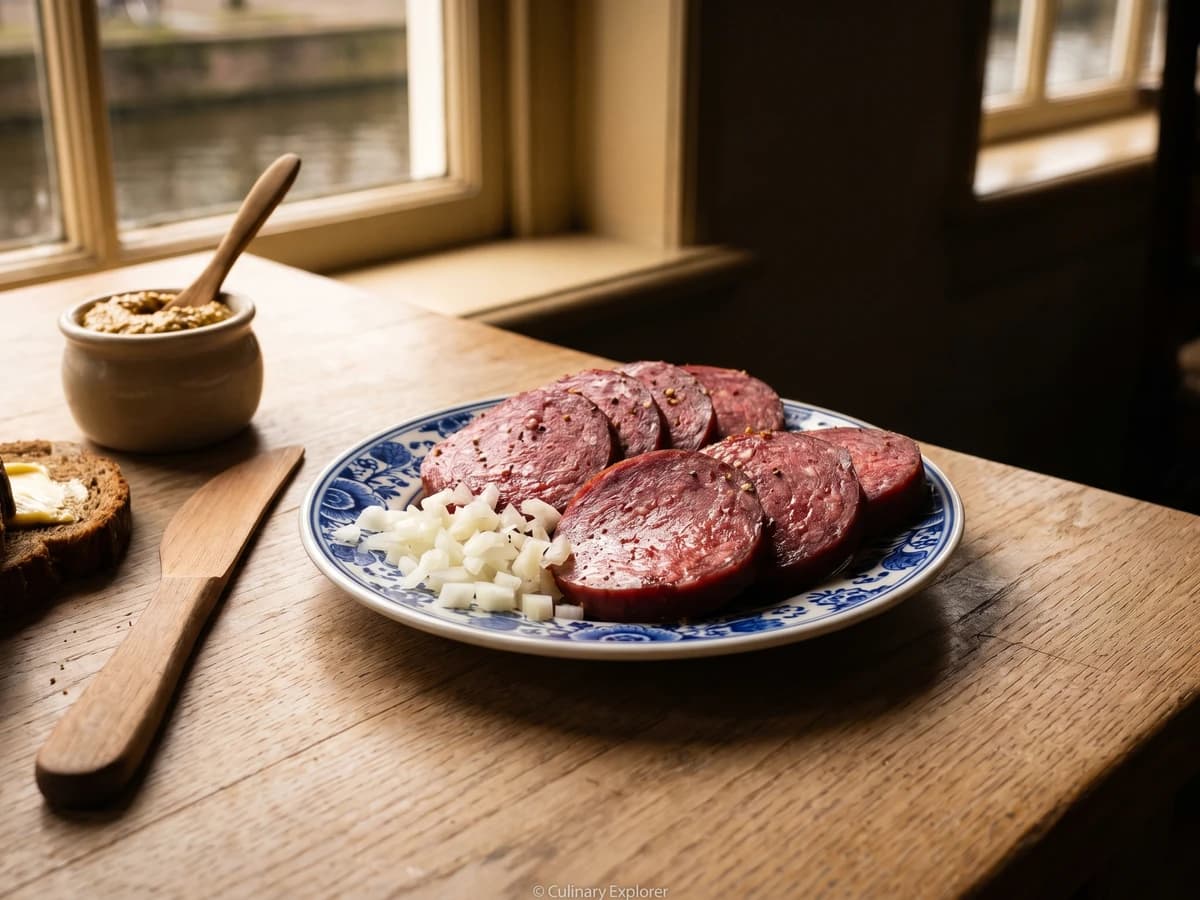
The name means ox sausage, but the real story is Amsterdam itself: cattle trade, Jewish butchers, VOC spices, and raw beef sliced thin with onion.
A cooking platform built around craft, culture, and the stories behind what we eat.

Created by
The name points to the drink, not the mood: bitterballen are crisp little balls of beef ragout made for the borrel table, mustard beside them, fingers slightly burned by impatience.
The first lesson of bitterballen is that the name is a little joke hiding in plain sight. Bitter does not mean the snack is bitter. It points to the bittertje, the small glass of jenever or herbal bitter that once went round with salty, sturdy things to eat beside it. Ballen are balls. The name already tells you where you are: not at dinner, not quite at lunch, but at the borrel, that Dutch hour when conversation loosens and the table fills with small fried arguments for staying longer.
But let me tell you a secret. The bitterbal is not a poor man's croquette made round by accident. It is the kroket's pub cousin, built from the same careful salpicon, a stiff cooled ragout, then breaded and fried until the crust is crisp and the inside turns almost molten. That contrast is the whole point, and it depends on patience before it depends on frying. Rush the chilling and you will not have bitterballen. You will have hot ragout looking for a floor.
There is a spice story here too, quietly Dutch. A little nutmeg, sometimes mace, sits in the beef ragout like an old VOC receipt folded into a kitchen drawer. Exuberant cookery in a frugal country. Hou het altijd simpel: make a proper thick ragout, chill it until it can stand up for itself, bread it twice, and serve with mustard. Then let the first person burn their tongue. This is also tradition.
Bitterballen grew out of the Dutch kroket tradition, itself shaped by French croquette cookery that entered Dutch kitchens through nineteenth-century cookbooks, hotel dining rooms, and later city snack bars. Their name comes from the bittergarnituur, the savoury snacks served with a bittertje, a small glass of jenever or herbal bitter, especially at the borrel. By the twentieth century they had become fixed café food across the Netherlands: round beef or veal ragout, crisp crumbs, sharp mustard, and no patience at all from the person eating the first one.
Quantity
400g
cut into large pieces
Quantity
750ml
Quantity
1 small
halved
Quantity
1
Quantity
2
Quantity
60g
Quantity
70g
Quantity
1 small
very finely minced
Quantity
1 teaspoon
Quantity
1/4 teaspoon
Quantity
pinch
Quantity
1 tablespoon
finely chopped
Quantity
to taste
Quantity
2
softened in cold water
Quantity
2
beaten
Quantity
120g
Quantity
180g
Quantity
as needed
for deep-frying
Quantity
to serve
| Ingredient | Quantity |
|---|---|
| beef shin or chuckcut into large pieces | 400g |
| beef stock or water | 750ml |
| onionhalved | 1 small |
| bay leaf | 1 |
| cloves | 2 |
| butter | 60g |
| plain flour | 70g |
| shallotvery finely minced | 1 small |
| Dijon mustard | 1 teaspoon |
| freshly grated nutmeg | 1/4 teaspoon |
| ground mace | pinch |
| flat-leaf parsleyfinely chopped | 1 tablespoon |
| salt and black pepper | to taste |
| gelatine sheets (optional)softened in cold water | 2 |
| eggsbeaten | 2 |
| plain flour for coating | 120g |
| fine dry breadcrumbs | 180g |
| neutral oilfor deep-frying | as needed |
| Dutch mustard | to serve |
Put the beef, stock or water, onion, bay leaf, and cloves in a saucepan. Bring just to a boil, then lower the heat and let it murmur gently for about two hours, until the beef pulls apart with a fork. Lift out the meat, strain and reserve 500ml of the cooking liquid, and shred the beef very finely. Big chunks make clumsy bitterballen; the ragout should hold together like a secret.
Melt the butter in a heavy pan and cook the minced shallot for two minutes without browning. Stir in the 70g flour and cook for three to four minutes, until it smells nutty and looks sandy. This is where the raw flour taste leaves the house, for obvious reasons.
Add the reserved hot cooking liquid in small splashes, stirring hard after each addition until smooth. When all the liquid is in, cook the sauce for another few minutes until very thick. Stir in the shredded beef, mustard, nutmeg, mace, parsley, salt, and pepper. If using gelatine, squeeze it dry and stir it into the hot ragout until dissolved; it helps the chilled filling behave, especially in a warm kitchen.
Spread the ragout in a shallow dish, press parchment directly onto the surface, and refrigerate for at least three hours, preferably overnight. This rest is not decorative. Cold ragout rolls cleanly, stays round, and does not try to escape the crumbs in the fryer.
Scoop the chilled ragout into portions of about 25g each and roll them into balls with lightly damp hands. Set them on a tray. If the mixture softens while you work, return it to the refrigerator for fifteen minutes and let cold do what impatience cannot.
Set out three bowls: flour, beaten egg, and breadcrumbs. Roll each ball in flour, then egg, then breadcrumbs. For a proper café crust, pass each one through egg and breadcrumbs a second time. The double coat is not fussiness; it is the wall that keeps the ragout inside until your teeth arrive.
Heat the oil to 180C in a deep pan. Fry the bitterballen in small batches for three to four minutes, until deep golden brown and crisp all over. Do not crowd the pan, because the oil temperature will fall and the crust will drink oil instead of sealing. Drain on kitchen paper and let them stand for two minutes before serving.
Serve the bitterballen hot with Dutch mustard beside them and napkins within reach. Warn your guests once, then leave them to history. The centre will be hotter than anyone believes, and this lesson has been repeated in Dutch cafés for generations.
1 serving (about 43g)
Culinary guides, cultural storytelling, and the editorial depth that makes cooking meaningful.
Discover Culinary ExplorerChef Joost
The name means ox sausage, but the real story is Amsterdam itself: cattle trade, Jewish butchers, VOC spices, and raw beef sliced thin with onion.

Chef Joost
The little yellow onion on the Amsterdam borrel board looks modest, until vinegar, turmeric, and patience turn it into the sharp bite that wakes cheese, herring, and sausage.

Chef Joost
The bear's claw of the northern snackbar: a seasoned gehaktbal, Dutch meatball, cut into thick discs, skewered with onion, fried until the edges catch, then dragged through peanut sauce.

Chef Joost
A lean farmhouse cheese from the Leiden pastures, freckled with cumin, stamped with city keys, and built for ships, cellars, and the Dutch genius for making thrift taste deliberate.