
Chef Joost
Amsterdamse Uien
The little yellow onion on the Amsterdam borrel board looks modest, until vinegar, turmeric, and patience turn it into the sharp bite that wakes cheese, herring, and sausage.
A cooking platform built around craft, culture, and the stories behind what we eat.
Created by
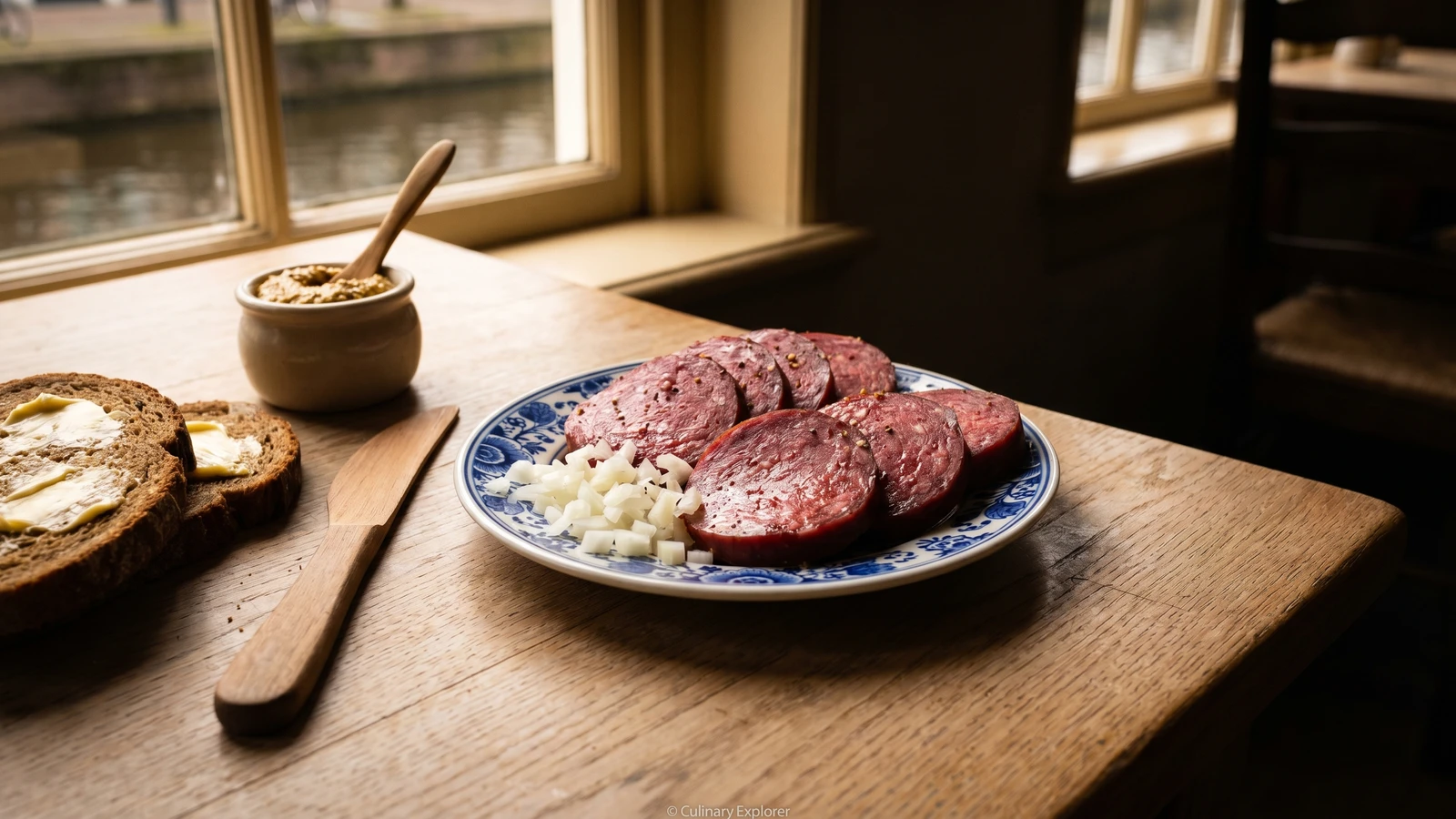
The name means ox sausage, but the real story is Amsterdam itself: cattle trade, Jewish butchers, VOC spices, and raw beef sliced thin with onion.
The name already tells you the old animal standing behind this sausage: os, ox, the working beast whose meat was lean, dark, and serious. Ossenworst belongs to Amsterdam, not to a farm postcard version of the Netherlands, but to the city of warehouses, spice merchants, butchers, and narrow houses where trade came in through the front door and dinner followed it to the table.
But let me tell you a secret. This little raw sausage, often eaten now on a borrelplank, a drinks table, carries the VOC spice chest more plainly than many grander dishes. Mace and nutmeg, clove and white pepper, all those cargoes people like to keep in museums, were ground into ordinary meat and served with rye bread and onion. Exuberant cookery in a frugal country. For obvious reasons, Amsterdam found a way to make even a snack read like a shipping ledger.
The work here is restraint. You don't cook ossenworst; you keep it cold, clean, well seasoned, and briefly kissed by cold smoke if your equipment can do that safely. Hou het altijd simpel, but simple is not the same as careless. Buy whole, very fresh lean beef from a butcher you trust, grind it cold, cure it properly, and slice it the day you serve it. The onion is not decoration. Its sharpness is the little bell that wakes the beef.
Ossenworst is documented as an Amsterdam specialty from the seventeenth century, when the city imported large numbers of oxen and had ready access to expensive spices through Dutch trade networks. Traditional versions used raw ox meat seasoned with mace, nutmeg, clove, and pepper, then lightly smoked; modern versions are usually made from lean beef. Amsterdamse ossenworst is now protected in the Netherlands as a regional traditional product, tied specifically to the city's butcher culture and its spice-rich Golden Age kitchen.
Quantity
750g
whole muscle, trimmed
Quantity
12g
Quantity
2g
Quantity
1 teaspoon
freshly ground
Quantity
1/2 teaspoon
Quantity
1/4 teaspoon
freshly grated
Quantity
1/8 teaspoon
Quantity
1/2 teaspoon
finely crushed
Quantity
1 tablespoon
Quantity
1 small
soaked if natural
Quantity
1 small
finely diced
Quantity
to serve
Quantity
to serve
Quantity
to serve
| Ingredient | Quantity |
|---|---|
| very fresh lean beef eye of round or top roundwhole muscle, trimmed | 750g |
| fine sea salt | 12g |
| curing salt Prague Powder #1 | 2g |
| white pepperfreshly ground | 1 teaspoon |
| ground mace | 1/2 teaspoon |
| nutmegfreshly grated | 1/4 teaspoon |
| ground clove | 1/8 teaspoon |
| mustard seedfinely crushed | 1/2 teaspoon |
| ice-cold water | 1 tablespoon |
| beef middle casing or collagen casingsoaked if natural | 1 small |
| sharp onionfinely diced | 1 small |
| dark rye bread | to serve |
| good butter | to serve |
| Dutch mustard (optional) | to serve |
Trim away sinew and any soft surface fat, then cut the beef into small cubes. Spread them on a tray and chill in the freezer for 20 to 30 minutes, until firm at the edges but not frozen solid. Raw sausage rewards cold hands and cold metal; warmth smears the meat and invites trouble.
Grind the chilled beef through a fine plate into a cold bowl. If your kitchen is warm, set the bowl over ice. Keep the meat below 4C as much as you can. This is not fussiness, it's the bargain you make when serving beef raw.
Mix the salt, curing salt, white pepper, mace, nutmeg, clove, and crushed mustard seed, then scatter the mixture over the ground beef. Add the ice-cold water and knead briefly with clean cold hands until the meat turns slightly tacky and holds together. The spices should smell warm but not sweet; ossenworst is beef first, spice chest second.
Stuff the seasoned beef into the casing firmly but without bursting it, then tie into one or two short sausages. Prick any trapped air with a clean needle. If you have no stuffer, shape the mixture into a tight log in parchment and wrap it very firmly; it won't be quite the butcher's version, but the table will forgive you.
Refrigerate the sausage on a rack, uncovered or loosely covered, for 12 to 18 hours. The cure distributes, the surface dries slightly, and the spices settle into the beef instead of shouting from the doorway.
Cold-smoke the sausage for 1 to 2 hours, keeping the chamber below 25C at all times, then return it to the refrigerator for at least 4 hours before slicing. If you cannot hold a true cold-smoke temperature, skip this step. A badly controlled smoke box is not tradition, it's a warm cupboard with ambition.
Slice the ossenworst thinly with a sharp knife and serve cold with finely diced onion, dark rye bread, butter, and a little mustard if you like. Eat it the Amsterdam way, quietly and without ceremony, because ceremony would only get between you and the next slice.
1 serving (about 150g)
Culinary guides, cultural storytelling, and the editorial depth that makes cooking meaningful.
Discover Culinary ExplorerChef Joost
The little yellow onion on the Amsterdam borrel board looks modest, until vinegar, turmeric, and patience turn it into the sharp bite that wakes cheese, herring, and sausage.

Chef Joost
The bear's claw of the northern snackbar: a seasoned gehaktbal, Dutch meatball, cut into thick discs, skewered with onion, fried until the edges catch, then dragged through peanut sauce.

Chef Joost
The name points to the drink, not the mood: bitterballen are crisp little balls of beef ragout made for the borrel table, mustard beside them, fingers slightly burned by impatience.

Chef Joost
A lean farmhouse cheese from the Leiden pastures, freckled with cumin, stamped with city keys, and built for ships, cellars, and the Dutch genius for making thrift taste deliberate.