
Chef Joost
Amsterdamse Ossenworst
The name means ox sausage, but the real story is Amsterdam itself: cattle trade, Jewish butchers, VOC spices, and raw beef sliced thin with onion.
A cooking platform built around craft, culture, and the stories behind what we eat.
Created by
A lean farmhouse cheese from the Leiden pastures, freckled with cumin, stamped with city keys, and built for ships, cellars, and the Dutch genius for making thrift taste deliberate.
When I arrived in Leiden to study Greek, Hebrew, and the other languages that make sensible people cross the street, I thought the city would feed me on books. It did. But it also fed me on cheese: pale, firm, dry in the hand, carrying the warm little crackle of cumin seed. In a student room with bad curtains and good beer, Boeren-Leidse taught me that a cheese can be a document if you know how to read it.
The name already tells you. Boeren means farmer's, Leidse means of Leiden, and komijnekaas is cumin cheese. Even komijn has travelled: through Latin cuminum and Greek kyminon, with cousins in Hebrew kammon and Arabic kammun. But let me tell you a secret: this is not spice as decoration. This is exuberant cookery in a frugal country. Around Leiden, farmers skimmed cream for butter and made a lean hard cheese from what remained. The cumin gave perfume to thrift, and the dry body kept better than richer cheeses on long journeys.
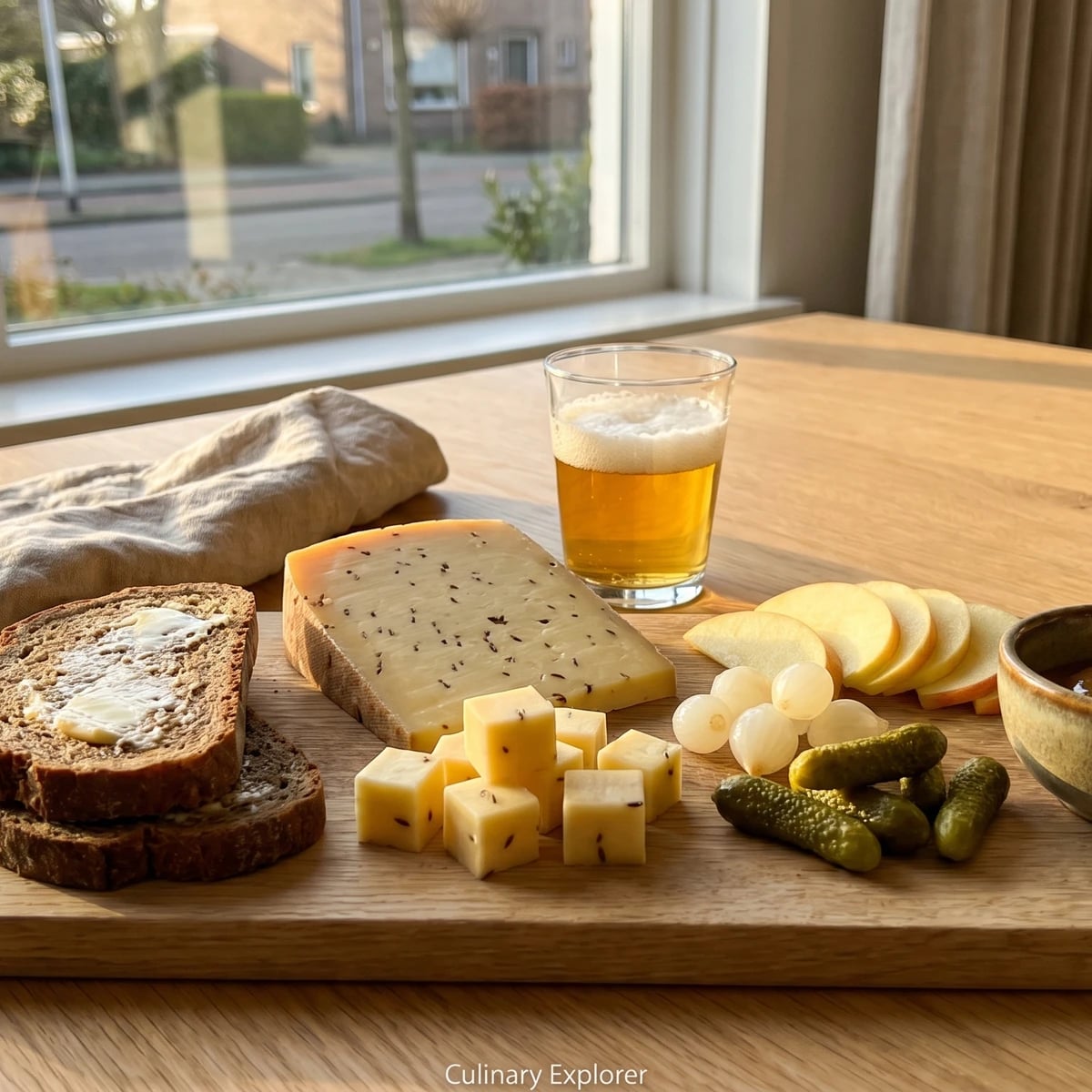
So don't bury this cheese under grapes and little flags, for obvious reasons. Treat it like the serious thing it is. Let it come to cool room temperature, cut it thin enough that the cumin opens under your teeth, and serve it with roggebrood, dark rye bread, mustard, appelstroop, Dutch apple syrup, and something sour. Hou het altijd simpel, always keep it simple. A board, a knife, a glass of beer, and the keys of Leiden doing their quiet work at the table.
Boeren-Leidse met sleutels, farmhouse Leiden cheese with the keys, received European protected status in 1997 and must be made by traditional farmhouse methods in the defined South Holland region. The crossed keys stamped into the cheese come from Leiden's city arms, while the low-fat body reflects an older butter economy: cream went to the churn, and the remaining skimmed milk became a firm cheese that matured well. Cumin, long familiar in Dutch spice cupboards through Mediterranean and overseas trade, gave this lean cheese its unmistakable warmth and helped make it one of the Netherlands' great regional cheeses rather than a pale cousin of Gouda.
Quantity
350g
Quantity
6 slices
Quantity
40g
softened
Quantity
2 tablespoons
Quantity
2 tablespoons
Quantity
1 teaspoon
Quantity
1
cored and thinly sliced
Quantity
8
halved
Quantity
8
| Ingredient | Quantity |
|---|---|
| Boeren-Leidse Komijnekaas or Boeren-Leidse met sleutels | 350g |
| dark rye bread (roggebrood) | 6 slices |
| unsalted buttersoftened | 40g |
| coarse Dutch mustard | 2 tablespoons |
| appelstroop (Dutch apple syrup) | 2 tablespoons |
| cider vinegar | 1 teaspoon |
| crisp tart applecored and thinly sliced | 1 |
| small pickles (augurken)halved | 8 |
| pickled pearl onions (Amsterdamse uitjes) | 8 |
Take the Boeren-Leidse from the refrigerator 30 minutes before serving. Lean cheese tastes tight and chalky when it is too cold; give it time and the cumin wakes up. Trim away any waxed or dry rind just before cutting.
Stir the coarse mustard, appelstroop, and cider vinegar together in a small bowl until glossy and loose enough to spoon. The mustard brings bite, the apple syrup brings the dark orchard sweetness Dutch cheese likes, and the vinegar keeps it from becoming polite.
Cut half the cheese into thin slices and half into small blokjes, cubes, so the table can eat both ways. Butter the rye bread thinly and cut it into fingers. Slice the apple at the last moment so it stays crisp and pale.
Arrange the cheese on a board with the rye bread, apple slices, pickles, and pickled onions around it, then set the mustard-appelstroop alongside. Serve at once, not from the refrigerator and not warmed. This is borrel food, the Dutch drink-and-nibble table, and it should feel passed around, not posed.
1 serving (about 165g)
Culinary guides, cultural storytelling, and the editorial depth that makes cooking meaningful.
Discover Culinary Explorer
Chef Joost
The name means ox sausage, but the real story is Amsterdam itself: cattle trade, Jewish butchers, VOC spices, and raw beef sliced thin with onion.

Chef Joost
The little yellow onion on the Amsterdam borrel board looks modest, until vinegar, turmeric, and patience turn it into the sharp bite that wakes cheese, herring, and sausage.

Chef Joost
The bear's claw of the northern snackbar: a seasoned gehaktbal, Dutch meatball, cut into thick discs, skewered with onion, fried until the edges catch, then dragged through peanut sauce.

Chef Joost
The name points to the drink, not the mood: bitterballen are crisp little balls of beef ragout made for the borrel table, mustard beside them, fingers slightly burned by impatience.