
Chef Graziella
Agnolotti del Plin
The pinched pasta of Piedmont, each tiny parcel sealed with thumb and forefinger, filled with braised meat that has surrendered to hours of slow cooking. Butter or broth. Nothing more.
A cooking platform built around craft, culture, and the stories behind what we eat.
Created by
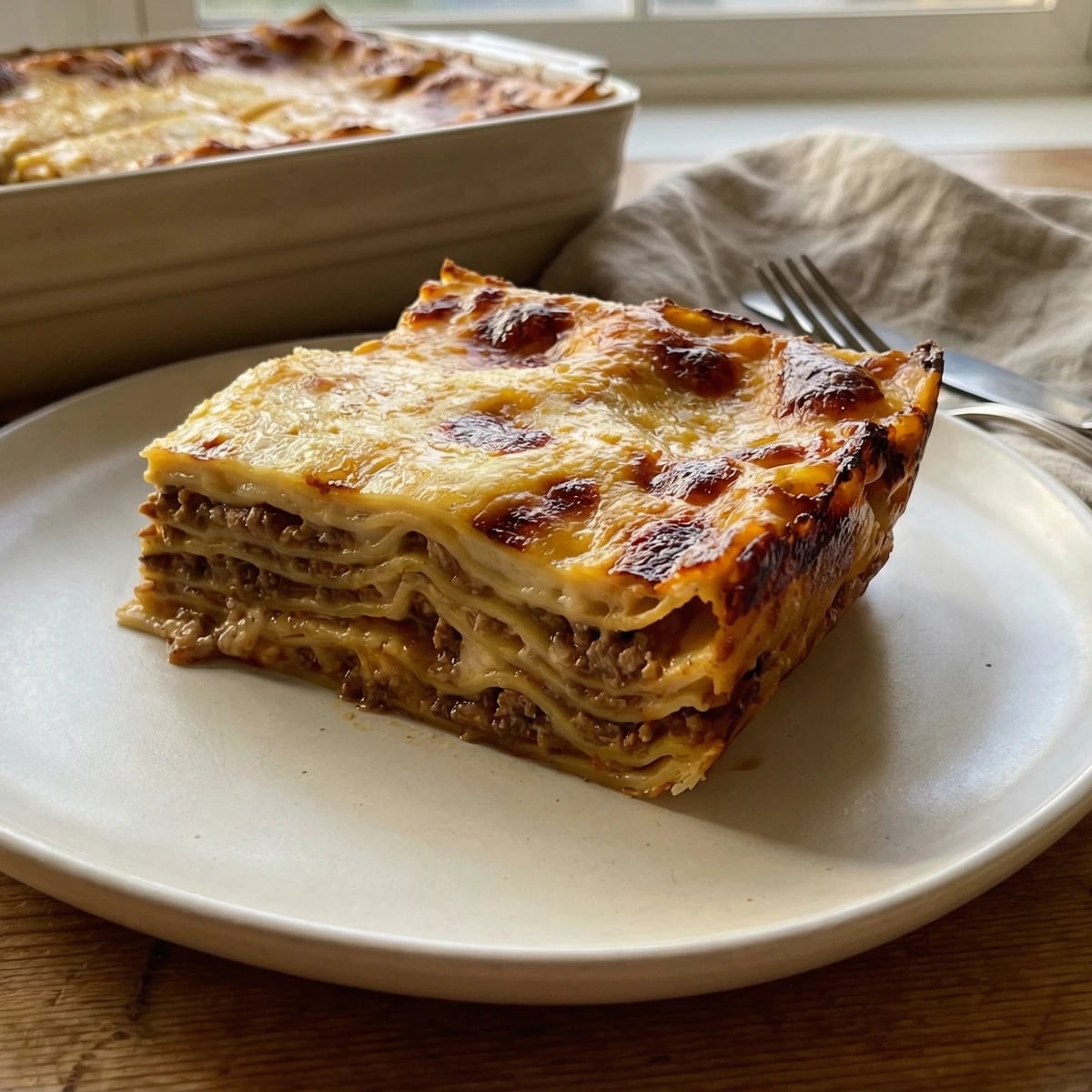
The great baked pasta of Le Marche, layered thin as paper with a ragù of chicken giblets and veal that proves this region owes nothing to Bologna and its famous lasagna.
Vincisgrassi is not lasagna. I must say this immediately because Americans, and even many Italians from other regions, assume any layered pasta baked with meat sauce and béchamel must be lasagna Bolognese by another name. They are wrong. Vincisgrassi belongs to Le Marche, a region that sits between Emilia-Romagna and Abruzzo along the Adriatic coast, and it has its own character, its own ingredients, its own soul.
The ragù of Le Marche includes chicken giblets: the livers, the hearts, sometimes the gizzards. This gives the sauce a depth and richness that pure ground meat cannot achieve. There is veal as well, and the two together create something iron-rich and intense. The pasta sheets must be rolled thin, thinner than you think possible, because the dish should be about the layers, not about chewing through thick noodles.
Some families add a splash of vin cotto, the cooked wine of the region, to the dough or the sauce. Others include sweetbreads when budget and occasion allow. These variations prove what I always teach: Italian cooking is regional, and within regions, it is familial. Each kitchen holds its own truth.
This is a dish for Christmas, for Easter, for the Sunday when the whole family gathers and you want to show what you know. It cannot be rushed. If you are not prepared to spend an afternoon in the kitchen, if you are not willing to simmer the ragù until it surrenders completely, choose a simpler dish.
Legend attributes Vincisgrassi to an Austrian general, Alfred von Windisch-Graetz, stationed in Ancona during the Napoleonic wars, for whom a local cook supposedly created the dish. The etymology is romantic nonsense. Recipes for 'princisgrass' appear in manuscripts from Le Marche decades before the general arrived, suggesting the name derives from older dialect. What we know with certainty is that this dish has been the pride of Marchigiani tables since at least the 18th century.
Quantity
400g
Quantity
4
Quantity
2 tablespoons
Quantity
1/2 teaspoon
Quantity
4 tablespoons
Quantity
3 tablespoons
Quantity
1 medium
diced fine
Quantity
1 medium
peeled and diced fine
Quantity
1
diced fine
Quantity
250g
cleaned and diced
Quantity
150g
trimmed and halved
Quantity
100g
cleaned and diced small
Quantity
300g
Quantity
200g
Quantity
1 cup
Quantity
1 can (400g)
passed through food mill
Quantity
1 cup, plus more as needed
Quantity
1
Quantity
to taste
Quantity
to taste
freshly ground
Quantity
100g
Quantity
100g
Quantity
1 liter
warmed
Quantity
1/4 teaspoon
freshly grated
Quantity
1/2 teaspoon
Quantity
150g
freshly grated
Quantity
2 tablespoons
cold, for dotting
| Ingredient | Quantity |
|---|---|
| tipo 00 flour | 400g |
| large eggs | 4 |
| dry Marsala or vin cotto | 2 tablespoons |
| fine salt | 1/2 teaspoon |
| unsalted butter | 4 tablespoons |
| extra virgin olive oil | 3 tablespoons |
| yellow oniondiced fine | 1 medium |
| carrotpeeled and diced fine | 1 medium |
| celery stalkdiced fine | 1 |
| chicken liverscleaned and diced | 250g |
| chicken heartstrimmed and halved | 150g |
| chicken gizzardscleaned and diced small | 100g |
| ground veal | 300g |
| ground pork | 200g |
| dry white wine | 1 cup |
| San Marzano tomatoespassed through food mill | 1 can (400g) |
| chicken or veal stock | 1 cup, plus more as needed |
| bay leaf | 1 |
| kosher salt | to taste |
| black pepperfreshly ground | to taste |
| unsalted butter | 100g |
| all-purpose flour | 100g |
| whole milkwarmed | 1 liter |
| nutmegfreshly grated | 1/4 teaspoon |
| fine salt | 1/2 teaspoon |
| Parmigiano-Reggianofreshly grated | 150g |
| unsalted buttercold, for dotting | 2 tablespoons |
Mound the flour on a wooden board and make a well in the center. Crack the eggs into the well. Add the Marsala and salt. With a fork, beat the eggs and gradually draw in flour from the inner walls of the well. When the dough becomes too stiff to work with a fork, use your hands. Knead vigorously for 10 minutes until the dough is smooth and springs back when pressed. Wrap tightly in plastic and rest for 30 minutes at room temperature.
In a heavy Dutch oven, heat the butter and olive oil over medium heat until the butter foam subsides. Add the onion, carrot, and celery. Cook slowly, stirring occasionally, until the vegetables are completely soft and the onion is pale gold, about 20 minutes. This foundation supports everything. Do not rush it.
Push the soffritto to the sides of the pot. Increase heat to medium-high and add the chicken livers, hearts, and gizzards. Cook, stirring frequently, until the livers are browned outside but still slightly pink within, about 5 minutes. The livers will finish cooking in the sauce. Remove the giblets with a slotted spoon and set aside.
Add the ground veal and pork to the pot. Break apart with a wooden spoon and cook over medium-high heat, stirring frequently, until the meat has lost its raw color and begun to brown. The meat should crumble into small pieces. This takes 15 minutes. Patience here builds flavor.
Pour in the white wine and stir thoroughly, scraping up any browned bits from the bottom of the pot. Let it simmer until the wine has evaporated completely. You should no longer smell alcohol. The pot will be nearly dry.
Return the giblets to the pot. Add the passed tomatoes, stock, and bay leaf. Stir to combine. When the sauce begins to bubble, reduce heat to the lowest setting. The sauce should cook at the laziest simmer. Partially cover and cook for 2 hours, stirring occasionally. Add more stock if the sauce becomes too thick. Season with salt and pepper. Remove bay leaf.
In a heavy saucepan, melt the butter over medium heat. Add the flour all at once and whisk constantly for 2 minutes. The mixture should bubble but not brown. Begin adding the warm milk in a thin stream, whisking constantly. Add only a little at first, whisking until smooth before adding more. Once all milk is incorporated, cook over medium-low heat, stirring often, until the sauce thickens enough to coat a spoon, about 10 minutes. Add the nutmeg and salt. Remove from heat.
Divide the rested dough into 8 pieces. Working with one piece at a time and keeping the rest covered, roll each through a pasta machine, starting at the widest setting and progressively thinning to the second-thinnest setting. The sheets should be nearly translucent. Cut into rectangles roughly the size of your baking dish. You will need 6 to 7 layers.
Bring a large pot of well-salted water to a boil. Prepare a bowl of ice water. Cook the pasta sheets 2 or 3 at a time for 30 seconds only. Transfer immediately to ice water. Lay the blanched sheets flat on clean kitchen towels, not touching. This step sets the pasta and prevents sticking.
Heat oven to 180°C (350°F). Butter a 33cm x 23cm (13x9 inch) baking dish. Spread a thin layer of béchamel on the bottom. Lay down a pasta sheet, trimming to fit. Spread a thin layer of ragù, then béchamel, then a generous handful of Parmigiano. Repeat, building 6 to 7 layers. The final layer should be béchamel topped with the remaining cheese and dots of cold butter.
Bake uncovered for 40 to 45 minutes, until the top is deeply golden with brown spots and the edges bubble. The pasta should be just tender when pierced with a knife, not soft, not chewy. Let rest 15 minutes before cutting. This rest is essential. Cut into squares and serve on warmed plates.
1 serving (about 300g)
Culinary guides, cultural storytelling, and the editorial depth that makes cooking meaningful.
Discover Culinary Explorer
Chef Graziella
The pinched pasta of Piedmont, each tiny parcel sealed with thumb and forefinger, filled with braised meat that has surrendered to hours of slow cooking. Butter or broth. Nothing more.

Chef Graziella
The Sunday pasta of Palermo, where tiny rings of dried pasta bake with meat ragù, sweet peas, and melting cheese until a burnished crust forms that families fight over at the table.

Chef Graziella
The thick, rough pasta of the Veneto dressed with slow-braised duck, a dish that proves why this region's cooking stands apart from everything else called Italian.

Chef Graziella
A Venetian Lenten dish of startling depth: fat whole-wheat noodles tangled with onions cooked to silk and anchovies dissolved to nothing. Three ingredients. One hour. Umami before we had the word.