
Chef Graziella
Agnolotti del Plin
The pinched pasta of Piedmont, each tiny parcel sealed with thumb and forefinger, filled with braised meat that has surrendered to hours of slow cooking. Butter or broth. Nothing more.
A cooking platform built around craft, culture, and the stories behind what we eat.
Created by
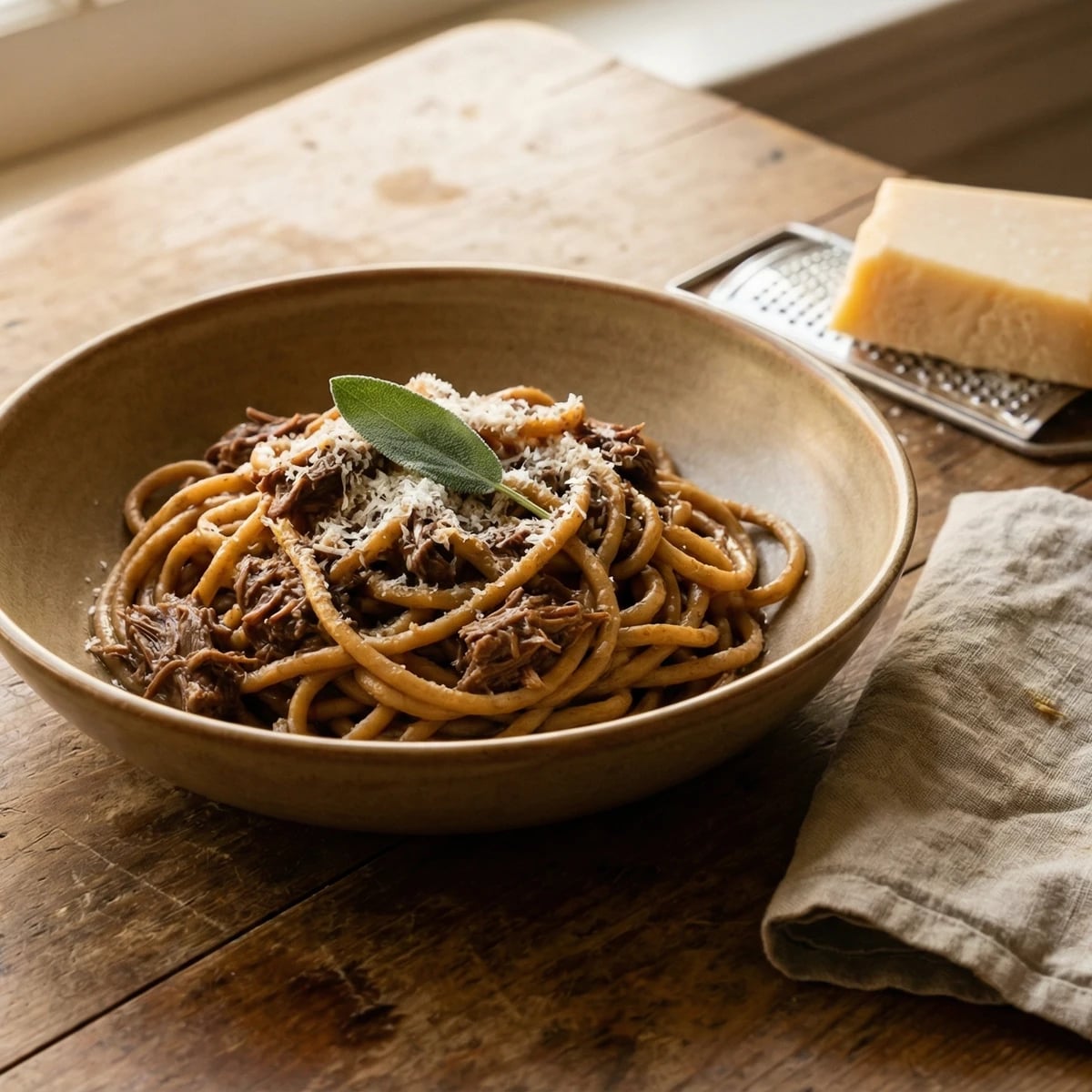
The thick, rough pasta of the Veneto dressed with slow-braised duck, a dish that proves why this region's cooking stands apart from everything else called Italian.
Bigoli is pasta that fights back. Thick, rough, made from whole wheat flour and pressed through bronze dies that score the surface with tiny ridges. These ridges exist for one purpose: to grip sauce. And no sauce grips better than anatra, the slow-braised duck that Venetian families have served at celebrations for centuries.
This is not restaurant food. This is what a grandmother in the Veneto countryside makes when her grandchildren come home. The duck simmers for hours, the meat falling from the bone, the fat rendering into the soffritto until you cannot tell where one ends and the other begins. The liver goes into the sauce too. This is traditional. The liver adds depth that nothing else can replicate.
Venetian cooking is not Bolognese cooking, not Roman cooking, not Neapolitan cooking. The lagoon and the mainland each have their own traditions. Bigoli con l'anatra belongs to the farms and villages of the Veneto interior, where ducks waddle in courtyards and feast days demand something more substantial than fish. The pasta is chewy, the sauce is rich, and together they prove what I have always said: the first useful thing to know about Italian cooking is that, as such, it actually doesn't exist. There is only this cooking, from this place, made this way.
Bigoli appeared in the Veneto by the 17th century, made with a hand-cranked bronze press called a torchio that only wealthy families could afford. Duck ragù became the traditional pairing because the Veneto countryside raised more ducks than any other region, and feast days demanded the richest sauce the farm could produce. The dish remains obligatory at celebrations in Padua, Vicenza, and the villages between.
Quantity
1 (about 5 pounds)
cut into pieces, liver reserved
Quantity
1/4 cup
Quantity
4 tablespoons
Quantity
1 medium
diced fine
Quantity
1 medium
peeled and diced fine
Quantity
2
diced fine
Quantity
4
Quantity
1 sprig
Quantity
2
Quantity
1 cup
Quantity
2 tablespoons
Quantity
4 cups
warmed
Quantity
to taste
Quantity
to taste
freshly ground
Quantity
1 1/2 pounds
Quantity
for serving
freshly grated
| Ingredient | Quantity |
|---|---|
| whole duckcut into pieces, liver reserved | 1 (about 5 pounds) |
| extra virgin olive oil | 1/4 cup |
| unsalted butter | 4 tablespoons |
| yellow oniondiced fine | 1 medium |
| carrotpeeled and diced fine | 1 medium |
| celery stalksdiced fine | 2 |
| fresh sage leaves | 4 |
| fresh rosemary | 1 sprig |
| bay leaves | 2 |
| dry white wine | 1 cup |
| tomato paste | 2 tablespoons |
| chicken or duck brothwarmed | 4 cups |
| kosher salt | to taste |
| black pepperfreshly ground | to taste |
| dried or fresh bigoli | 1 1/2 pounds |
| Grana Padano or Parmigiano-Reggianofreshly grated | for serving |
Pat the duck pieces thoroughly dry with paper towels. Season generously with salt and pepper. In a heavy Dutch oven or braising pan, heat the olive oil and 2 tablespoons of butter over medium-high heat. Working in batches to avoid crowding, brown the duck pieces on all sides until the skin is deeply golden and has rendered much of its fat. This takes 8 to 10 minutes per batch. Remove the browned pieces to a plate. Do not rush this step. The color you build now becomes the color of your sauce.
Pour off all but 3 tablespoons of the duck fat from the pot. Reserve the excess for another use. Add the onion, carrot, and celery to the pot. Cook over medium heat, stirring occasionally, until the vegetables are completely soft and the onion has turned golden, about 15 minutes. Add the sage, rosemary, and bay leaves. Cook one minute more until the herbs become fragrant. One can often trace the unsatisfying taste of dishes purporting to be Italian to the reluctance of cooks to execute this step thoroughly.
Pour in the white wine. It will sizzle and steam. Scrape the bottom of the pot with a wooden spoon to release the browned bits. Let the wine simmer until it has reduced by half and you no longer smell raw alcohol. Stir in the tomato paste and cook for 2 minutes, allowing it to darken slightly and lose its raw edge.
Return all the duck pieces to the pot, nestling them into the vegetables. Add enough warm broth to come halfway up the sides of the duck. Bring to a gentle simmer, then reduce heat to the lowest setting. Cover the pot with the lid slightly ajar. Let the duck braise until the meat falls easily from the bone, about 2 to 2 1/2 hours. Check occasionally and add more broth if the liquid reduces below the vegetables.
Remove the duck pieces to a cutting board. When cool enough to handle, pull the meat from the bones, discarding skin and bones. Shred the meat into rough pieces. Chop the reserved liver fine. Remove and discard the rosemary stem and bay leaves from the pot.
Return the shredded duck meat to the pot. Add the chopped liver and the remaining 2 tablespoons of butter. Stir well and let the sauce simmer uncovered for 15 minutes, allowing the liver to cook through and the flavors to concentrate. The sauce should be thick enough to coat a spoon. Taste and adjust salt. The ragù is now ready, though it improves if left to rest for an hour or more.
Bring abundant salted water to a vigorous boil. Add the bigoli and cook according to package directions for dried pasta, usually 10 to 12 minutes. Fresh bigoli cooks in 4 to 5 minutes. The pasta should be tender but with pleasant resistance at the center. Reserve one cup of the cooking water before draining.
Add the drained bigoli directly to the pot with the ragù. Toss vigorously over low heat for one minute, allowing the pasta to absorb the sauce. Add splashes of pasta water as needed to help the sauce cling to the rough strands. The bigoli should be coated, not swimming. Once the pasta is sauced, serve it promptly, inviting your guests and family to put off talking and start eating. Pass the grated cheese at the table.
1 serving (about 480g)
Culinary guides, cultural storytelling, and the editorial depth that makes cooking meaningful.
Discover Culinary Explorer
Chef Graziella
The pinched pasta of Piedmont, each tiny parcel sealed with thumb and forefinger, filled with braised meat that has surrendered to hours of slow cooking. Butter or broth. Nothing more.

Chef Graziella
The Sunday pasta of Palermo, where tiny rings of dried pasta bake with meat ragù, sweet peas, and melting cheese until a burnished crust forms that families fight over at the table.

Chef Graziella
A Venetian Lenten dish of startling depth: fat whole-wheat noodles tangled with onions cooked to silk and anchovies dissolved to nothing. Three ingredients. One hour. Umami before we had the word.

Chef Graziella
The true sauce of Amatrice: guanciale rendered to gold, tomatoes barely simmered, pecorino melted into silk. Three ingredients that tolerate no substitution and no addition.