
Chef Graziella
Arancini di Riso alla Siciliana
Golden fried rice balls from Sicily, where Arab cooks first wrapped saffron-scented rice around meat and cheese. The exterior shatters; the interior yields. This is street food elevated to art.
A cooking platform built around craft, culture, and the stories behind what we eat.
Created by
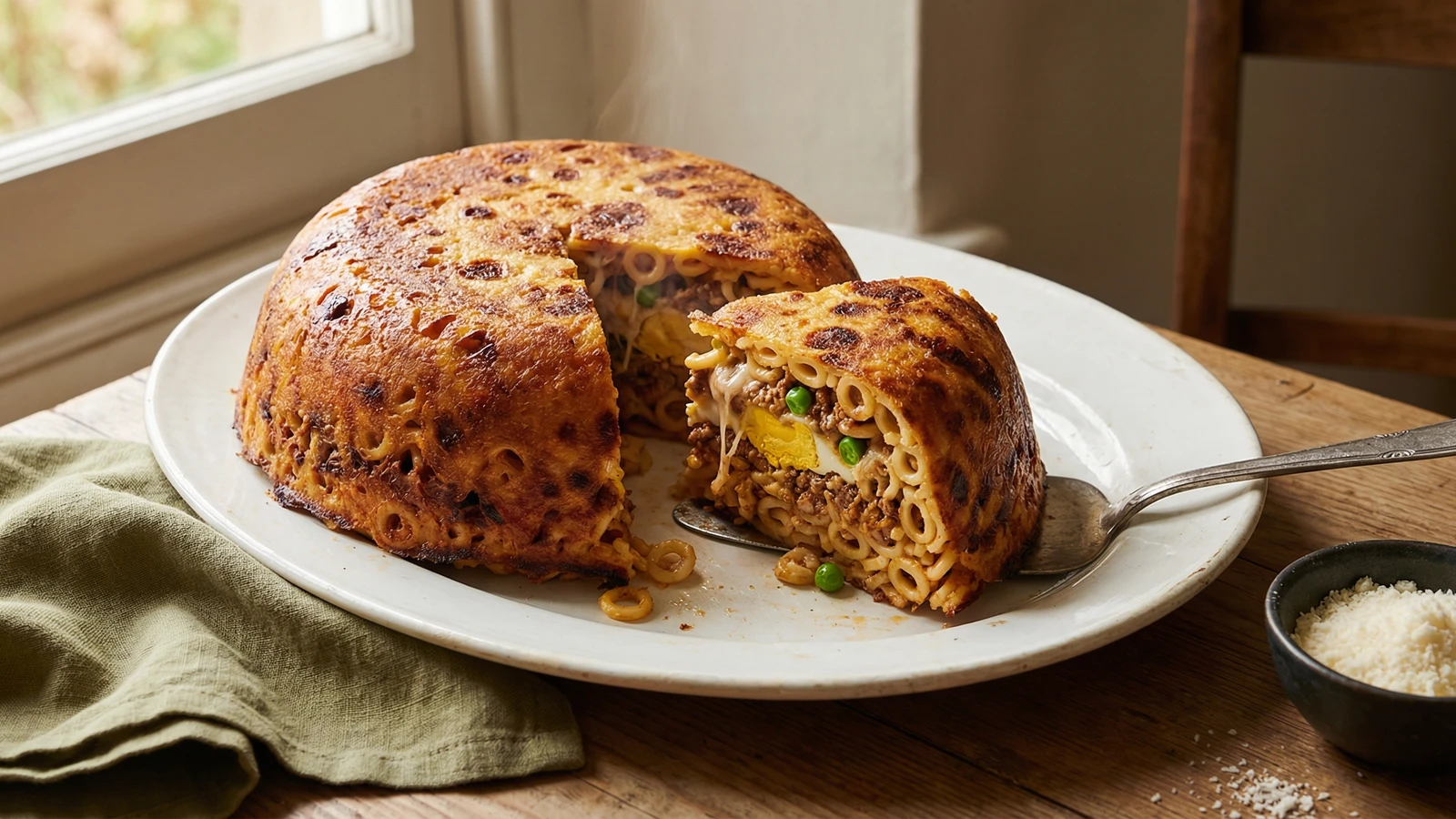
The Sunday pasta of Palermo, where tiny rings of dried pasta bake with meat ragù, sweet peas, and melting cheese until a burnished crust forms that families fight over at the table.
In Sicily, this is the pasta of celebrations. Baptisms, first communions, Sunday lunch when the entire family gathers. The timballo, as they also call it, arrives at the table unmolded from its pan, a golden dome that everyone reaches for the crust of first. The children get the crusty edges. This is how it has always been.
The first useful thing to know about Italian cooking is that, as such, it actually doesn't exist. There is Sicilian cooking, and within Sicily there is the cooking of Palermo, which claims this dish as its own. The anelletti themselves, those small rings of dried pasta, are Sicilian. You will not find them easily elsewhere. This tells you something about how regional Italian cooking truly is.
What makes this dish succeed is restraint in the ragù and patience in the oven. The meat sauce should coat, not drown. The pasta must be undercooked before baking, or it turns to mush. The cheese must melt into threads, not pools of grease. Simple does not mean easy. A properly executed anelletti al forno requires you to understand what each component needs and when it needs it.
Anelletti al forno emerged from the Arab-influenced kitchens of medieval Sicily, where baked pasta dishes called timballi became elaborate celebrations of abundance. The ring-shaped pasta itself appeared in Palermo by the 19th century, and the dish became so embedded in Sicilian identity that emigrants carried the tradition to wherever they settled, from Buenos Aires to Brooklyn.
Quantity
1 pound
Quantity
3 tablespoons
Quantity
1 medium
diced fine
Quantity
1
diced fine
Quantity
1 small
peeled and diced fine
Quantity
12 ounces
Quantity
8 ounces
Quantity
1/2 cup
Quantity
1 can (28 ounces)
Quantity
1 cup
Quantity
to taste
Quantity
to taste
freshly ground
Quantity
1 cup
thawed
Quantity
8 ounces
cut into small cubes
Quantity
4 ounces
grated
Quantity
3
hard-boiled, peeled, and quartered
Quantity
4 tablespoons
softened
Quantity
1/2 cup
Quantity
3 tablespoons
freshly grated
| Ingredient | Quantity |
|---|---|
| anelletti pasta | 1 pound |
| extra virgin olive oil | 3 tablespoons |
| yellow oniondiced fine | 1 medium |
| celery stalkdiced fine | 1 |
| carrotpeeled and diced fine | 1 small |
| ground beef | 12 ounces |
| ground pork | 8 ounces |
| dry white wine | 1/2 cup |
| tomato passata | 1 can (28 ounces) |
| water | 1 cup |
| kosher salt | to taste |
| black pepperfreshly ground | to taste |
| frozen peasthawed | 1 cup |
| caciocavallo cheesecut into small cubes | 8 ounces |
| primo sale or young pecorinograted | 4 ounces |
| large eggshard-boiled, peeled, and quartered | 3 |
| unsalted buttersoftened | 4 tablespoons |
| fine dry breadcrumbs | 1/2 cup |
| Parmigiano-Reggianofreshly grated | 3 tablespoons |
In a heavy pot or Dutch oven, warm the olive oil over medium heat. Add the onion, celery, and carrot. Cook slowly, stirring occasionally, until the vegetables are completely soft and the onion is translucent with gold edges, about 15 minutes. FLAVOR, IN ITALIAN DISHES, builds up from the bottom. One can often trace the unsatisfying taste of would-be Italian dishes to the reluctance of cooks to execute this step thoroughly.
Add the ground beef and pork to the soffritto. Break it apart with a wooden spoon and cook over medium-high heat until the meat loses its raw color and begins to brown in spots. The meat should crumble into small, uniform pieces. This takes 10 to 12 minutes. Stir frequently to prevent large clumps from forming.
Pour in the white wine. Let it bubble until the alcohol smell disappears and the pan is nearly dry, about 3 minutes. Add the tomato passata and water. Stir well, scraping any browned bits from the bottom. Season with salt and pepper. When the sauce begins to simmer, reduce heat to low. Cook uncovered for 1 hour and 30 minutes, stirring occasionally. The ragù should reduce and thicken but remain loose enough to coat pasta.
While the ragù simmers, prepare a 10-inch springform pan or a deep 9x13-inch baking dish. Use 2 tablespoons of the softened butter to coat the bottom and sides thoroughly. Mix the breadcrumbs with the Parmigiano-Reggiano and coat the buttered surfaces completely, tilting and turning the pan so the crumbs adhere everywhere. This creates the golden crust that makes the dish.
Bring abundant salted water to a vigorous boil. Cook the anelletti for exactly 2 minutes less than the package directs. The pasta must be quite firm, almost unpleasantly so. It will finish cooking in the oven. If you cook it fully now, it will turn to mush. Drain the pasta, reserving one cup of pasta water. Do not rinse.
Transfer the drained pasta to the pot with the ragù. Add the thawed peas. Toss everything together, adding splashes of pasta water if needed to help the sauce coat every ring. The mixture should be moist but not soupy. Fold in half of the cubed caciocavallo and half of the grated primo sale. The cheese will begin to soften from the heat.
Preheat the oven to 375°F. Spoon half of the dressed pasta into the prepared pan, pressing gently to eliminate air pockets. Arrange the quartered eggs in a single layer over the pasta. Scatter the remaining caciocavallo cubes over the eggs. Add the rest of the pasta, pressing down firmly and smoothing the top. Sprinkle the remaining grated cheese over the surface. Dot with the remaining 2 tablespoons butter, broken into small pieces.
Bake uncovered for 40 to 45 minutes. The top should be deeply golden, the edges pulling away slightly from the pan, the cheese bubbling and beginning to brown in spots. The crust around the edges will be the most prized part. Resist checking constantly; opening the oven releases heat and prevents proper browning.
Remove from the oven and let rest for 15 minutes. This is not optional. The pasta needs time to set, or it will collapse when unmolded. If using a springform pan, release the sides and transfer to a serving plate. If using a baking dish, serve directly from the pan, cutting into squares. Bring the entire timballo to the table. Let everyone see it before you cut into it.
1 serving (about 350g)
Culinary guides, cultural storytelling, and the editorial depth that makes cooking meaningful.
Discover Culinary ExplorerChef Graziella
Golden fried rice balls from Sicily, where Arab cooks first wrapped saffron-scented rice around meat and cheese. The exterior shatters; the interior yields. This is street food elevated to art.
Chef Graziella
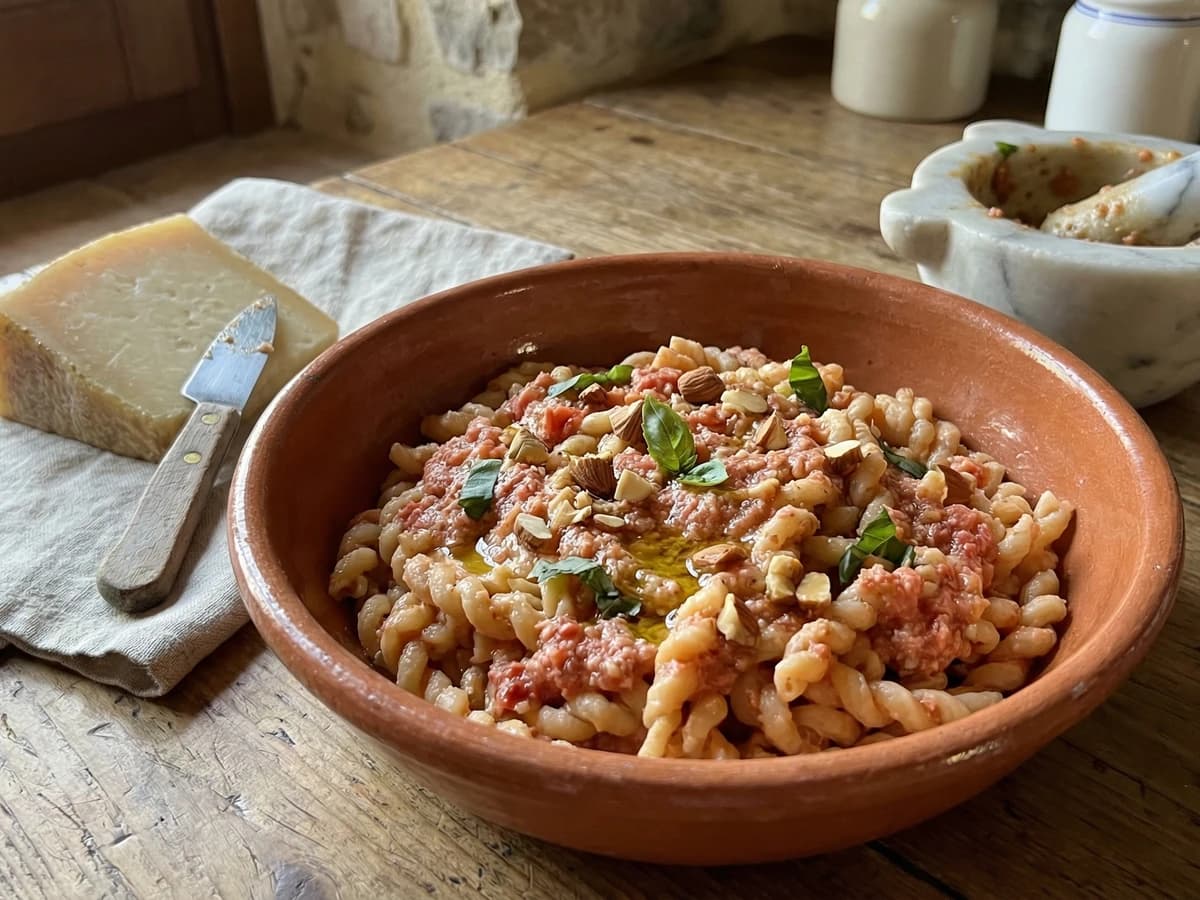
Sicily's raw tomato and almond pesto, pounded in a mortar as it has been for centuries, tossed with hand-twisted pasta that traps the sauce in every spiral. Trapani's gift to the world.

Chef Graziella
The great sweet-sour eggplant dish of Sicily, where each vegetable is fried separately then united in a tomato sauce sharpened with vinegar and softened with a little sugar. This is not a recipe to rush.
Chef Graziella
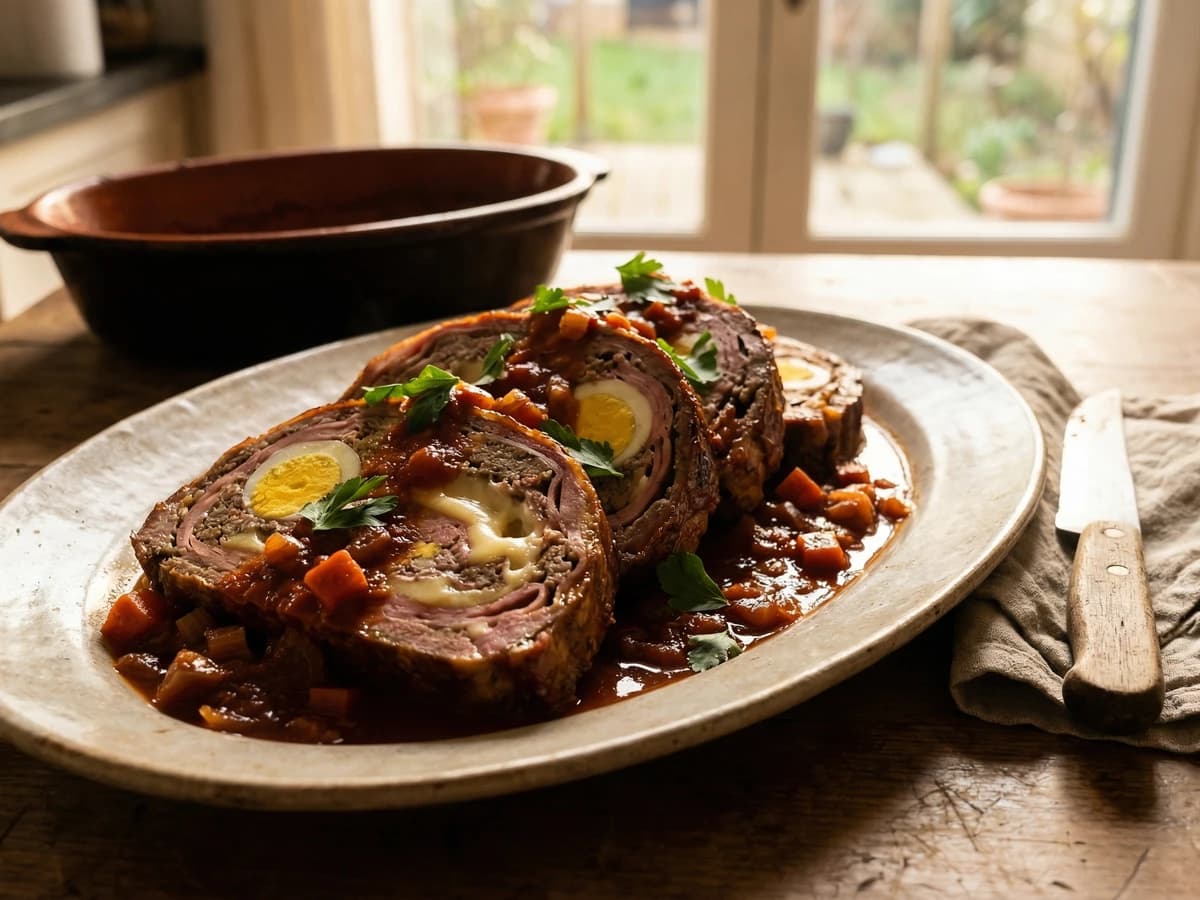
The great stuffed beef roll of Palermo, braised until tender and sliced to reveal the mosaic of mortadella, eggs, and cheese hidden within. This is what Sicilian grandmothers make when the occasion demands something extraordinary.