
Chef Graziella
Baccalà alla Vicentina
The patient, milk-braised salt cod of the Veneto, where hours of gentle heat transform preserved fish into something silken and profound. Vicenza guards this recipe jealously, and with good reason.
A cooking platform built around craft, culture, and the stories behind what we eat.

Created by
A Venetian Lenten dish of startling depth: fat whole-wheat noodles tangled with onions cooked to silk and anchovies dissolved to nothing. Three ingredients. One hour. Umami before we had the word.
The cooking of Venice is so distant from that of Naples, although they are both Italian cities, that not a single authentic dish from one is to be found on the other's table. Bigoli in salsa belongs to Venice and the Veneto. It is a dish of the lagoon, eaten on lean days when the Church forbade meat: Fridays, Lent, vigils of feast days. The anchovies provided what the faithful could not get from beef or pork.
Three ingredients. Onions, anchovies, olive oil. And time. The onions must cook for nearly an hour until they surrender completely, becoming sweet and jammy and pale. The anchovies dissolve into them until you cannot see where one ends and the other begins. What emerges is a sauce of remarkable depth, savory and sweet and faintly briny, coating thick strands of whole-wheat pasta.
Americans hear 'anchovies' and imagine something aggressive and fishy. They are thinking of the wrong anchovies, poorly handled. Proper salt-packed anchovies, rinsed and filleted, taste of the sea in the best way. When they dissolve into sweet onions, they create umami. We did not have that word when Venetian fishermen's wives first made this dish. They simply knew it tasted right.
Bigoli in salsa emerged from Venice's strict observance of Catholic fasting laws, which forbade meat on nearly 150 days per year. The dish traditionally appeared on Christmas Eve and Good Friday, when even the wealthiest Venetians ate this humble preparation. The pasta itself, bigoli, was made with a hand-cranked bronze press called a bigolaro, which gave the thick strands their rough, sauce-gripping texture.
Quantity
1 pound
Quantity
4 large (about 2 pounds)
sliced very thin
Quantity
12
rinsed and filleted
Quantity
1/2 cup
Quantity
to taste
freshly ground
Quantity
for pasta water
Quantity
2 tablespoons
finely chopped
| Ingredient | Quantity |
|---|---|
| bigoli pasta | 1 pound |
| yellow onionssliced very thin | 4 large (about 2 pounds) |
| salt-packed anchoviesrinsed and filleted | 12 |
| extra virgin olive oil | 1/2 cup |
| black pepperfreshly ground | to taste |
| kosher salt | for pasta water |
| flat-leaf parsleyfinely chopped | 2 tablespoons |
If using salt-packed anchovies, rinse them under cold running water and carefully separate each fillet from the bone. Pat dry. Salt-packed anchovies have superior flavor and meatier texture than those swimming in oil. This step takes five minutes and makes all the difference. If you must use oil-packed, drain them well and expect a softer result.
Pour the olive oil into a large, heavy skillet and set it over medium-low heat. Add the sliced onions and a pinch of salt. Stir to coat every strand with oil. Now cook them. Slowly. Stir occasionally. The onions should never brown, never caramelize, never take on color. They should soften and sweeten and eventually collapse into something like a pale golden jam. This takes 45 minutes to one hour. There is no shortcut.
When the onions are completely soft and melting, add the anchovy fillets. Press them into the onions with a wooden spoon. Stir constantly over low heat until the anchovies dissolve completely into the onion mass. You should see no distinct pieces of fish, only a unified sauce with depth and savor. This transformation takes about five minutes. Season generously with black pepper. Do not add salt until you taste; the anchovies bring their own.
Bring abundant salted water to a vigorous boil. Cook the bigoli according to the package instructions, but begin tasting two minutes before the suggested time. The pasta should be tender with a pleasant resistance at the center. Bigoli are thick; they take longer than regular spaghetti. Reserve one cup of the pasta cooking water before draining.
Add the drained bigoli directly to the skillet with the anchovy and onion sauce. Toss vigorously over medium heat for one full minute. Add splashes of pasta water as needed to help the sauce coat every strand. The starchy water binds everything together. The pasta should glisten, not swim. When you lift a forkful, the sauce should cling.
Transfer to warm bowls. Scatter the chopped parsley over each portion and finish with another grinding of black pepper. Serve at once. Once the pasta is sauced, invite your guests to put off talking and start eating. Do not, under any circumstances, offer cheese. This is a seafood pasta. Cheese on seafood pasta is a violation of everything Venice stands for.
1 serving (about 420g)
Culinary guides, cultural storytelling, and the editorial depth that makes cooking meaningful.
Discover Culinary ExplorerChef Graziella
The patient, milk-braised salt cod of the Veneto, where hours of gentle heat transform preserved fish into something silken and profound. Vicenza guards this recipe jealously, and with good reason.

Chef Graziella
The thick, rough pasta of the Veneto dressed with slow-braised duck, a dish that proves why this region's cooking stands apart from everything else called Italian.

Chef Graziella
The great liver dish of Venice, where onions melt into silk over an hour of patient stirring, and the liver cooks in barely two minutes. Timing is everything. Restraint is love.
Chef Graziella
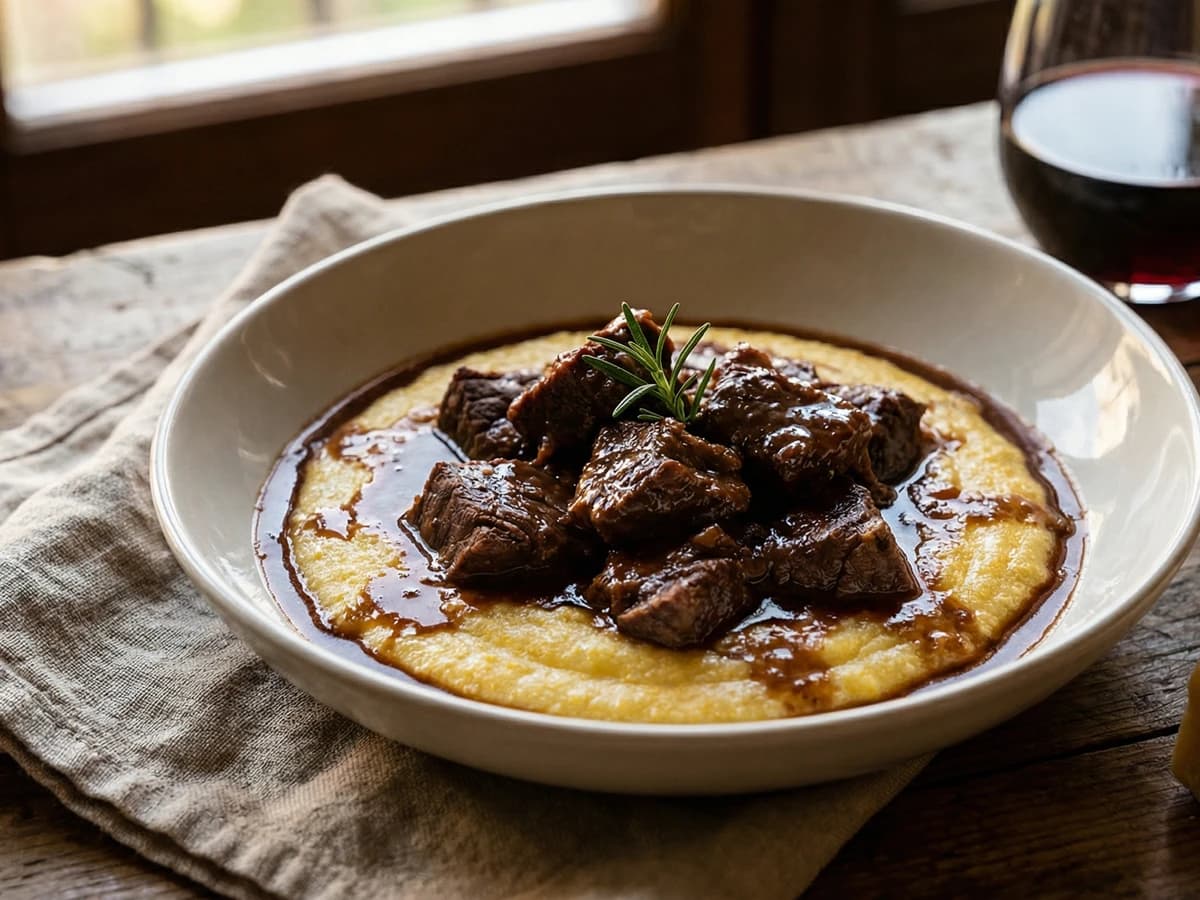
Verona's ancient braise, older than Italy itself, where beef surrenders to Amarone over hours of patient simmering until wine and meat become inseparable. Served always with soft polenta, as the Veronese have done for generations beyond counting.