
Chef Lupita
Aceite de Chiltepin Bajacaliforniano
Baja California's wild chiltepin steeped in olive oil with garlic, orejon, and lime peel, until the oil turns ruby-amber and carries the slow, sneaky burn of the desert coast.
A cooking platform built around craft, culture, and the stories behind what we eat.
Created by
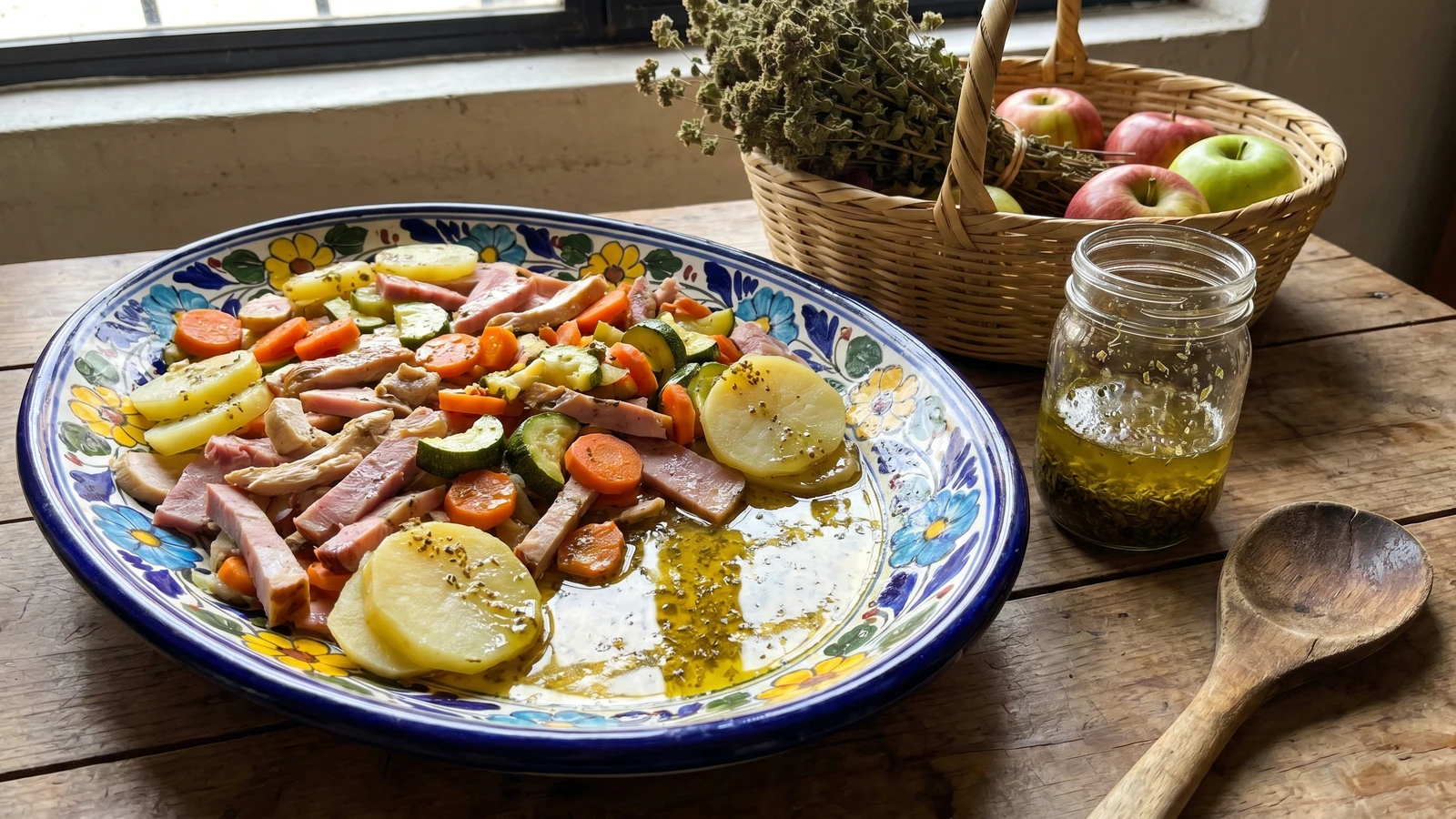
San Luis Potosí's sharp mustard and herb vinagreta, built with apple vinegar and dried mountain herbs, made to soak fiambre potosino overnight until every vegetable and meat tastes seasoned through.
San Luis Potosí, in the high central plateau, owns this vinagreta because the fiambre potosino owns the table at family celebrations there. This is not a flashy salsa. It is the quiet liquid that does the work overnight: vinegar, oil, mostaza, tomillo, mejorana, orégano, salt, and patience.
The geography matters. Potosí sits between the Bajío, the Altiplano, and the Huasteca, and its cooking reflects that crossing of roads. Fiambre potosino is a cold composed dish, meat, vegetables, sometimes cheese, all dressed ahead so the vinegar can enter instead of just shining on the surface. The señoras who make it well know restraint. Too much mustard and it tastes foreign. Too much oil and it goes heavy. Too little salt and the vegetables taste asleep.
I learned a version from a woman near the Mercado Hidalgo in San Luis Potosí capital, and she corrected me before I even opened the vinegar. 'No lo bañes al final,' she said. Don't pour it at the end. The fiambre must rest. That is the technique. La cocina no es decoración, es trabajo.
Use apple vinegar, not white vinegar. Use dried Mexican oregano, not Italian oregano pretending to understand the job. Crush the herbs between your fingers before they go in. The aroma should wake up immediately. Recetas probadas y garantizadas, but only if you give the vinagreta the night it needs.
Fiambre potosino belongs to the cold festive dishes of central Mexico, where cooked meats and vegetables were preserved and sharpened with vinegar before refrigeration was reliable in ordinary homes. The use of mustard in the vinagreta reflects 19th-century European influence that entered Mexican urban cooking through convent kitchens, hotels, and middle-class holiday tables, but San Luis Potosí adapted it to local herbs and apple vinegar. Unlike Guatemalan fiambre, which is tied strongly to Día de Muertos, the potosino version is used more broadly for holidays, family gatherings, and make-ahead celebration meals.
Quantity
3/4 cup
Quantity
1/2 cup
preferably mild sunflower or safflower oil
Quantity
2 tablespoons
Quantity
1 teaspoon
crushed
Quantity
1/2 teaspoon
crushed
Quantity
1/2 teaspoon
crushed
Quantity
1 small
finely grated
Quantity
1 teaspoon, plus more to taste
Quantity
1/2 teaspoon
Quantity
1/4 teaspoon
only if the vinegar is harsh
| Ingredient | Quantity |
|---|---|
| apple cider vinegar | 3/4 cup |
| neutral oilpreferably mild sunflower or safflower oil | 1/2 cup |
| yellow mustard | 2 tablespoons |
| dried Mexican oreganocrushed | 1 teaspoon |
| dried thymecrushed | 1/2 teaspoon |
| dried marjoramcrushed | 1/2 teaspoon |
| garlic clovefinely grated | 1 small |
| kosher salt | 1 teaspoon, plus more to taste |
| freshly ground black pepper | 1/2 teaspoon |
| sugar (optional)only if the vinegar is harsh | 1/4 teaspoon |
Place the Mexican oregano, thyme, and marjoram in your palm and crush them with your fingers before they touch the bowl. They should smell green, dry, and sharp. If they smell like dust, they are old. Pregúntale a las señoras del mercado. They know which herb vendor moves product.
In a medium clay or glass bowl, whisk the apple cider vinegar with the mustard, grated garlic, salt, black pepper, and sugar if using. Whisk until the mustard disappears into the vinegar and the liquid turns cloudy gold. The mustard is not decoration. It helps hold the oil and vinegar together long enough to coat the fiambre properly.
Stir in the crushed oregano, thyme, and marjoram. Let the mixture sit for five minutes so the dried herbs soften in the vinegar. This small pause matters. Dry herbs thrown straight into oil stay flat. Vinegar opens them first.
Pour in the oil in a thin stream while whisking constantly. The vinagreta should look lightly thickened, not creamy like mayonnaise. Taste it on a piece of cooked potato or carrot, not from a spoon. A spoon lies. The fiambre ingredients will tell you if the salt is right.
Pour the vinagreta over the cooked and cooled fiambre ingredients while they sit in a wide ceramic dish. Turn everything gently with clean hands or two spoons so the dressing reaches every surface. Cover and refrigerate at least 12 hours. Overnight is correct. No me vengas con atajos.
Before serving, bring the fiambre out of the refrigerator for 20 to 30 minutes and turn it again. The oil may firm up slightly when cold, and that is normal. Taste for salt and vinegar after it loosens. Serve the fiambre in the same dish, family-style, with the vinagreta shining on the vegetables.
1 serving (about 42g)
Culinary guides, cultural storytelling, and the editorial depth that makes cooking meaningful.
Discover Culinary ExplorerChef Lupita
Baja California's wild chiltepin steeped in olive oil with garlic, orejon, and lime peel, until the oil turns ruby-amber and carries the slow, sneaky burn of the desert coast.

Chef Lupita
Puebla's Lenten convent adobo, a brick-red vinegar chile paste of ancho, guajillo, garlic, oregano, and comino made to dress fish for the meatless calendar.
Chef Lupita
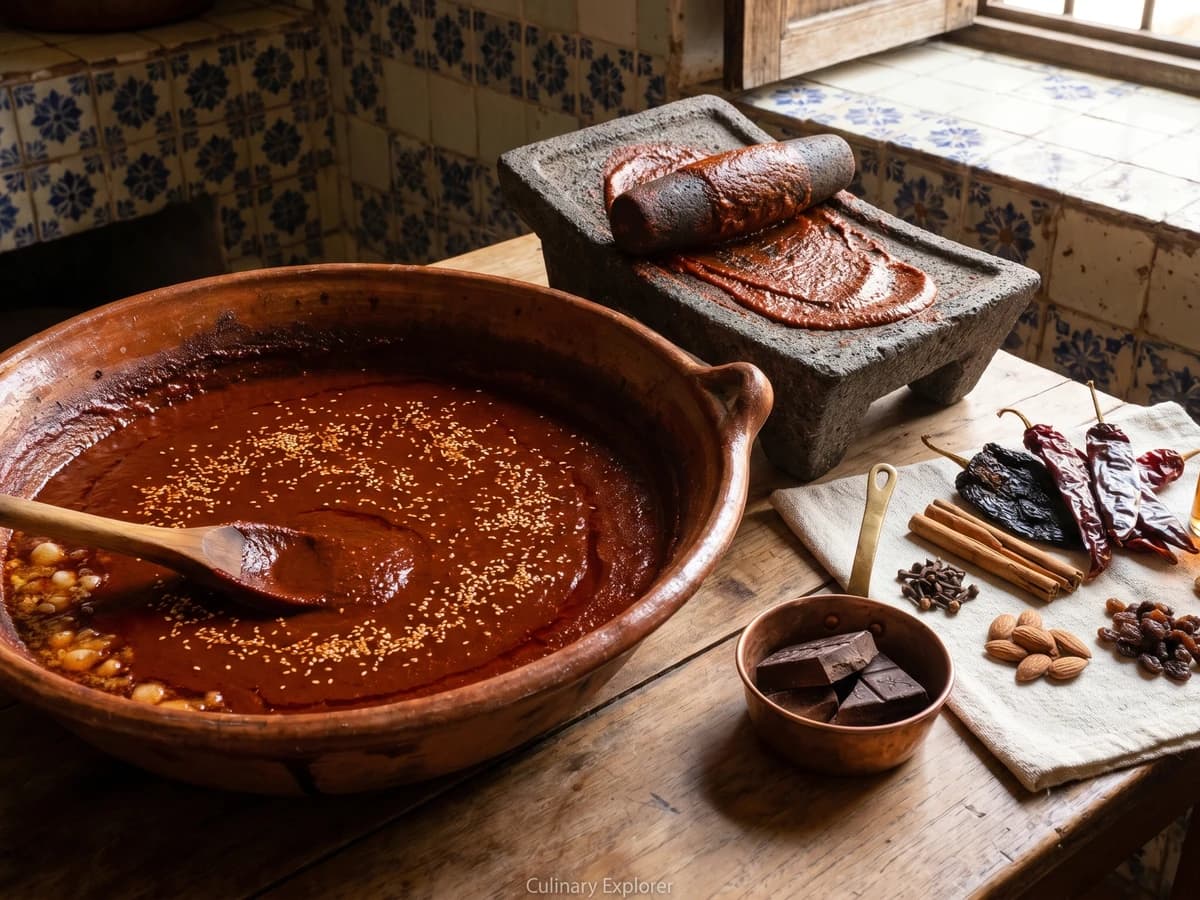
Zacatecas' wedding-table adobo, built from toasted guajillo and ancho, piloncillo, sour orange, chocolate, canela, clavo, almonds, sesame, and lard.

Chef Lupita
Puebla's convent kitchens built this adobo with ancho, guajillo, jerez, almonds, raisins, clove, and lard, a baroque marinade that stains pork loin and finishes as the sauce.