
Chef Klaus
Bauernfrühstück
Yesterday's boiled potatoes, a little ham, onion, and egg. The whole dish works only if the potatoes brown before the egg goes in.
A cooking platform built around craft, culture, and the stories behind what we eat.

Created by
The Saxon mountain version of lost eggs: not boiled first, not hidden under mustard sauce, but slipped straight into a sharp tomato sauce until the yolk stays soft.
Verlorene Eier belong to the cheap, clever egg dishes of the German table, and this Erzgebirge version sits in Saxony's mountain kitchen. It is weeknight food, meatless when the larder is thin, good enough for Sunday breakfast if the potatoes are right and the sauce has bite.
The regions argue, as they should. In Berlin and Brandenburg you meet Senfeier, boiled eggs under mustard sauce. In parts of Saxony and Thuringia the egg is poached, lost without its shell, in a sour sauce. Here in the Erzgebirge I cook the egg straight in tomato sauce sharpened with vinegar, because the sauce seasons the white as it sets and leaves the yolk soft. Boil the egg first and you've made another dish.
The deciding technique is the tremble. The sauce must barely move when the eggs go in, because a hard boil tears the whites into rags and cooks the yolks before the whites have gathered. Make hollows, slide the eggs in low, cover the pan, and wait. Das braucht seine Zeit, but not much of it.
Serve with boiled potatoes or dark bread to catch the sauce. Weggeworfen wird nichts, not one spoon of it.
Verlorene Eier, literally lost eggs, is the old German name for eggs poached out of the shell, a technique recorded in bourgeois and regional cookbooks by the nineteenth century. The Erzgebirge, the mining region along the Saxon-Bohemian border, built much of its everyday cooking on potatoes, eggs, sour sauces, and stored pantry goods, because meat was not the daily answer. The regional split is clear: northern and central cooks often serve eggs with mustard sauce, while Saxon mountain versions lean sharper and sometimes tomato-red, a small dish that shows how far one egg can travel across Germany.
Quantity
8
very fresh
Quantity
2 tablespoons
Quantity
1 medium
finely diced
Quantity
1 tablespoon
Quantity
500ml
Quantity
150ml
Quantity
2 tablespoons
Quantity
1 tablespoon
plus more to taste
Quantity
1 teaspoon
Quantity
1
Quantity
1 pinch
Quantity
to taste
Quantity
800g
boiled, to serve
Quantity
2 tablespoons
chopped
| Ingredient | Quantity |
|---|---|
| large eggsvery fresh | 8 |
| butter or lard | 2 tablespoons |
| onionfinely diced | 1 medium |
| plain flour | 1 tablespoon |
| passata or finely crushed tomatoes | 500ml |
| vegetable stock or light meat stock | 150ml |
| tomato paste | 2 tablespoons |
| apple cider vinegarplus more to taste | 1 tablespoon |
| sugar | 1 teaspoon |
| bay leaf | 1 |
| ground allspice | 1 pinch |
| salt and black pepper | to taste |
| floury potatoesboiled, to serve | 800g |
| chives or parsley (optional)chopped | 2 tablespoons |
Peel the potatoes, cut them into even pieces, and simmer them in salted water until they yield to a knife. Use floury potatoes, not waxy ones, because they break softly under the fork and take up the sharp tomato sauce instead of sliding away from it.
Melt the butter or lard in a wide lidded pan and cook the onion with a pinch of salt until soft and pale gold. Keep the heat moderate, because browned onion makes the sauce sweet and heavy when this dish wants clean sourness.
Stir in the flour and cook it for one minute, then add the tomato paste and stir until it darkens a shade. The flour needs its raw taste cooked out before the liquid goes in, and the tomato paste needs fat and heat to lose its tinny edge. Nicht aus dem Glas, build the sauce in the pan.
Whisk in the tomatoes and stock, add the bay leaf, sugar, vinegar, allspice, salt, and pepper, then simmer uncovered for 12 to 15 minutes until the sauce thickens enough to hold shallow hollows. Taste it now. It should be tomato-red, lightly sweet, and clearly sour, because the eggs will soften everything once they go in.
Lower the sauce until it just trembles, then make eight hollows with a spoon. Crack each egg into a cup and slide it low into its hollow, one at a time, because dropping from height breaks the yolk and scatters the white. Cover the pan and cook 5 to 7 minutes, until the whites are set and the yolks still give when you touch them.
Remove the bay leaf, taste the sauce around the eggs, and adjust with salt or a few drops of vinegar. Würzen, Fett, Salz zum Schluss, the final balance comes after the eggs have mellowed the pan. Spoon potatoes onto warm plates, lift two eggs onto each, and ladle the sauce around them. Scatter chives or parsley if you're using them. Schön ist, was schmeckt.
1 serving (about 430g)
Culinary guides, cultural storytelling, and the editorial depth that makes cooking meaningful.
Discover Culinary ExplorerChef Klaus
Yesterday's boiled potatoes, a little ham, onion, and egg. The whole dish works only if the potatoes brown before the egg goes in.

Chef Klaus
Brown North Sea shrimp on buttered dark rye, a soft fried egg over the top, and the whole plate decided by one thing: keep the shrimp cool and the yolk running.
Chef Klaus
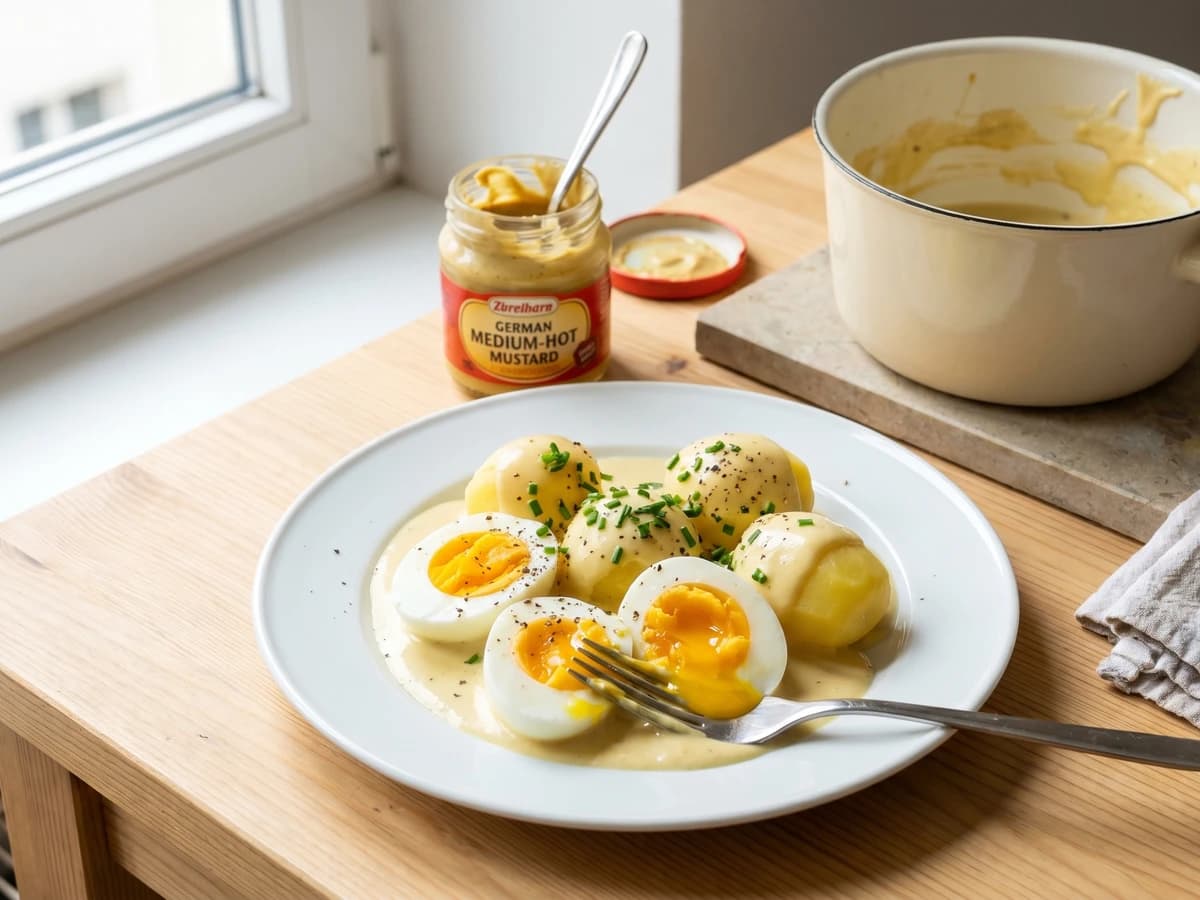
Hard eggs, boiled potatoes, and a mustard sauce made from a proper roux: the quick eastern supper that works because the mustard goes in last.
Chef Klaus
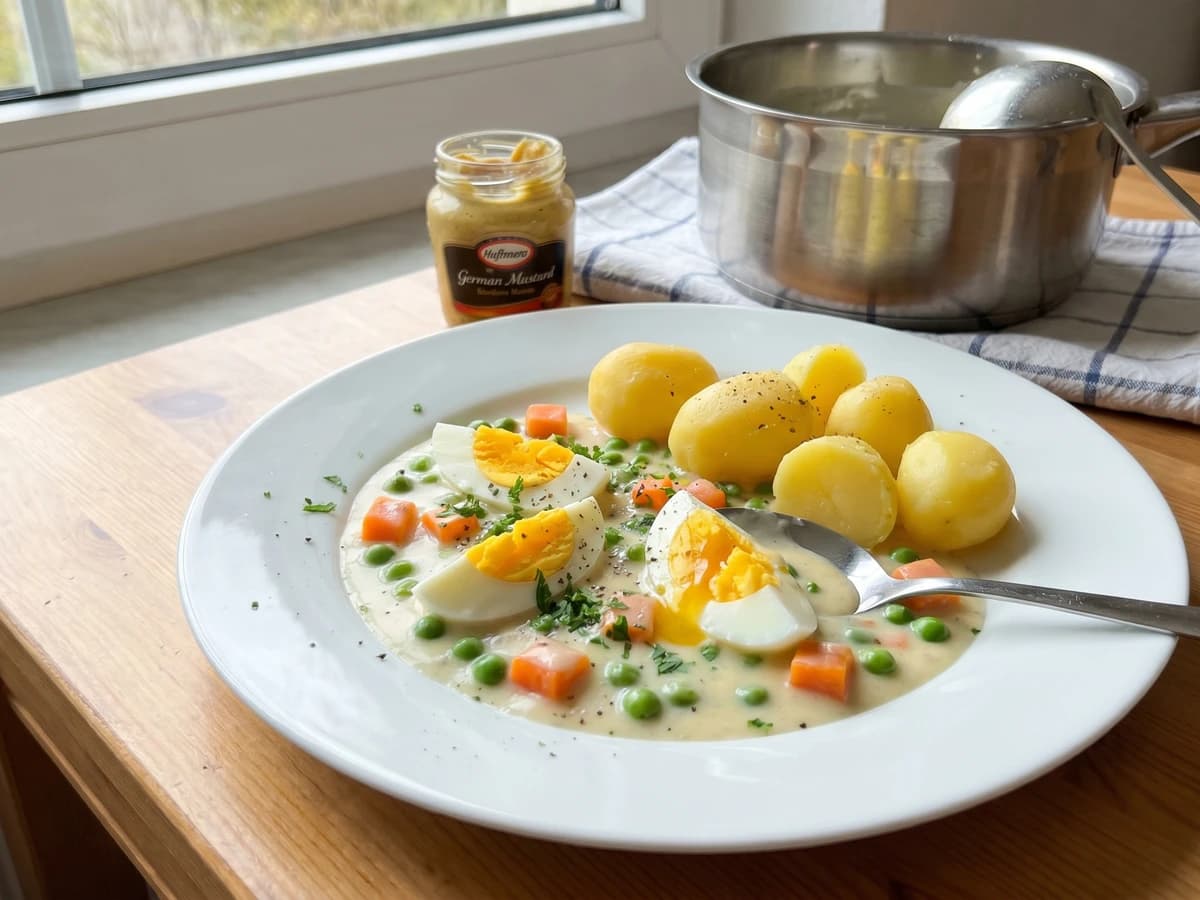
An East German weekday egg dish: hard-boiled eggs warmed gently in a pale sauce with peas, carrots, and lemon, cheap enough for Tuesday and proper enough for the table.