
Chef Lupita
Aceite de Chiltepin Bajacaliforniano
Baja California's wild chiltepin steeped in olive oil with garlic, orejon, and lime peel, until the oil turns ruby-amber and carries the slow, sneaky burn of the desert coast.
A cooking platform built around craft, culture, and the stories behind what we eat.

Created by
Veracruz's Gulf coast ajillo, built with olive oil, slow-gold garlic, chile guajillo strips, vinegar, and fish fumet, made to wake up huachinango without burying it.
Veracruz, the Gulf coast, the port, the Sotavento table. This ajillo jarocho belongs to fish cooked close to the water, where Spanish olive oil and garlic met Mexican dried chiles and the cooks of Veracruz made the sauce their own.
The chile is guajillo. Not ancho, not arbol, not whatever dried chile is hiding in your cabinet. Guajillo gives a clean red color and a warm fruitiness that lets the fish stay in front. The garlic is sliced, not minced, because sliced garlic softens into the oil and gives you flavor without harshness. Preguntale a las señoras del mercado, they will tell you the same thing.
I learned a version like this near the port, from a woman who kept a bottle of salsa bruja on the seafood table and a jar of jalapenos en escabeche on the counter. She cooked the fish first, then built the sauce in the same pan with fumet, vinegar, and patience. The pan remembers. That is the point.
This is not a heavy gravy and it is not a cream sauce. It is a quick Veracruz pan sauce with a Spanish spine and a jarocho chile hand. Cada estado, su propia cocina.
Veracruz was the main Spanish port of New Spain after Hernan Cortes founded Villa Rica de la Vera Cruz in 1519, which made the state an early entry point for olive oil, garlic, wine vinegar, capers, and olives. Ajillo technique came through Spanish cooking, but in Veracruz it absorbed local seafood habits and dried Mexican chiles, especially guajillo in home versions made for fish. The same Gulf table that produced pescado a la veracruzana also produced smaller pan sauces like this one, where European fat and acid meet Mexican chile without turning the dish into a national cliché.
Quantity
1/3 cup
Quantity
10
peeled and sliced thin
Quantity
3
stemmed, seeded, and cut into thin strips
Quantity
1/2 teaspoon, plus more to taste
Quantity
1/4 cup
Quantity
1/2 cup
warm
Quantity
1 tablespoon
Quantity
1 tablespoon
Quantity
1 teaspoon
chopped, or use 1/2 teaspoon dried Mexican oregano
Quantity
1 tablespoon
for gloss
Quantity
2 tablespoons
chopped
Quantity
4
huachinango, robalo, or mojarra
| Ingredient | Quantity |
|---|---|
| good olive oil | 1/3 cup |
| garlic clovespeeled and sliced thin | 10 |
| dried chile guajillostemmed, seeded, and cut into thin strips | 3 |
| kosher salt | 1/2 teaspoon, plus more to taste |
| dry white wine or extra fish fumet | 1/4 cup |
| fish fumet or light fish stockwarm | 1/2 cup |
| white wine vinegar or cane vinegar | 1 tablespoon |
| fresh lime juice | 1 tablespoon |
| fresh Mexican oreganochopped, or use 1/2 teaspoon dried Mexican oregano | 1 teaspoon |
| cold unsalted butter (optional)for gloss | 1 tablespoon |
| flat-leaf parsley (optional)chopped | 2 tablespoons |
| seared white fish filletshuachinango, robalo, or mojarra | 4 |
Wipe the chile guajillo clean with a damp towel. Stem it, shake out the seeds, and cut the flesh into thin strips with kitchen scissors. Do not toast it hard for this sauce. You want the guajillo to bloom in the oil, not turn bitter on a dry comal.
Set a wide skillet over medium-low heat and add the olive oil. When the oil looks loose and glossy, add the sliced garlic and salt. The garlic should murmur in the pan, not fry like chicharron. Stir often until the edges turn pale gold, 3 to 5 minutes. Brown garlic tastes sharp and takes over the fish.
Add the chile guajillo strips and stir for 45 to 60 seconds. The oil will turn brick red and smell sweet, not hot. Guajillo is here for color, fruit, and Veracruz character. Not all Mexican food is trying to burn your mouth. That idea is lazy.
Pour in the white wine, or use extra warm fish fumet if you do not cook with wine. Scrape the skillet with a wooden spoon so the garlic and chile release into the liquid. Let it reduce by half. This is a pan sauce, not a soup. Keep it concentrated.
Add the warm fish fumet and simmer for 3 to 4 minutes, until the sauce lightly coats the spoon but still runs. The fumet gives the sauce body without flour. No me vengas con atajos. Cornstarch has no business here.
Stir in the vinegar, lime juice, and Mexican oregano. Taste for salt. If using the butter, take the pan off the heat and swirl it in until the sauce shines. The butter is optional. The garlic, guajillo, olive oil, and fumet are not.
Spoon the sauce over just-seared huachinango, robalo, or mojarra while the fish is still glossy at the edges. Scatter parsley only if you are using it. Serve in a shallow Coatepec barro or talavera dish with the red oil collecting at the rim. Así se hace y punto.
1 serving (about 200g)
Culinary guides, cultural storytelling, and the editorial depth that makes cooking meaningful.
Discover Culinary ExplorerChef Lupita
Baja California's wild chiltepin steeped in olive oil with garlic, orejon, and lime peel, until the oil turns ruby-amber and carries the slow, sneaky burn of the desert coast.

Chef Lupita
Puebla's Lenten convent adobo, a brick-red vinegar chile paste of ancho, guajillo, garlic, oregano, and comino made to dress fish for the meatless calendar.
Chef Lupita
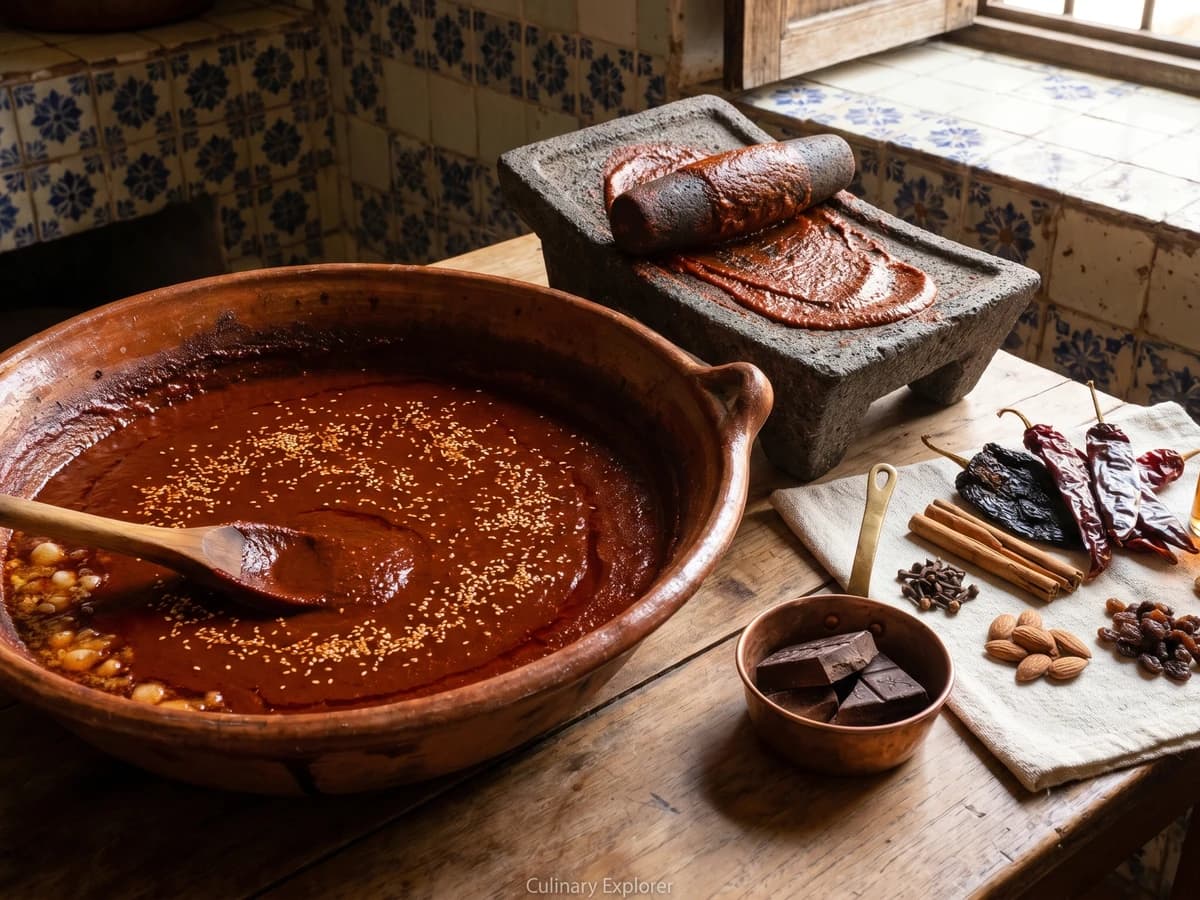
Zacatecas' wedding-table adobo, built from toasted guajillo and ancho, piloncillo, sour orange, chocolate, canela, clavo, almonds, sesame, and lard.

Chef Lupita
Puebla's convent kitchens built this adobo with ancho, guajillo, jerez, almonds, raisins, clove, and lard, a baroque marinade that stains pork loin and finishes as the sauce.