
Chef Lupita
Aceite de Chiltepin Bajacaliforniano
Baja California's wild chiltepin steeped in olive oil with garlic, orejon, and lime peel, until the oil turns ruby-amber and carries the slow, sneaky burn of the desert coast.
A cooking platform built around craft, culture, and the stories behind what we eat.

Created by
Central Veracruz's brown salsa for picadas, built from toasted chile comapeno, roasted garlic, salt, and hot lard, a dry Gulf chile paste that clings to pinched masa.
Veracruz, especially the central Gulf stretch from Xalapa and Coatepec down toward the port, is where this salsa lives. It belongs on picadas: thick little masa rounds pinched at the edge, cooked on a comal, brushed with fat, and crowned with something direct. Not tomato salsa. Not a blended table sauce. Salsa de chile seco.
The chile is the dish. In the markets of Veracruz, ask for chile comapeno, the small dried chile from Comapa that shows up in table salsas, salsa macha, and the dry brown pastes that make picadas taste like Veracruz instead of anywhere else. You toast it quickly, grind it with roasted garlic and coarse salt, then loosen it with hot manteca de cerdo. No water. Water turns this into a sauce from somewhere else.
I learned this version from a señora near the Xalapa market who made picadas faster than most people can count change. Her molcajete was black from years of chile, and she did not measure. She toasted, ground, tasted, and corrected with salt. That is the school. Preguntale a las señoras del mercado. They will tell you the same thing: the chile must be toasted, the garlic must be roasted, and the salsa must grab the masa.
Cada estado, su propia cocina. Veracruz gives you the Gulf, the corn, the chile comapeno, the lard, the queso, the white onion, and the clay bowl on the table. Respect the order and the picada will taste like it has a place.
Picadas are part of Veracruz's Gulf Coast antojito tradition, built on nixtamalized corn masa and named for the pinched edge that holds salsa and fat on the surface. Dry chile grinding in a molcajete predates the conquest, while the use of manteca de cerdo entered Veracruz kitchens after Spanish pigs arrived in the 16th century. Chile comapeno, associated with Comapa in central Veracruz, became one of the state's defining dried chiles for table salsas and later for salsa macha.
Quantity
1 ounce
stemmed
Quantity
3
unpeeled
Quantity
1 teaspoon, plus more to taste
Quantity
3 tablespoons
Quantity
16
warm
Quantity
1/2 cup
Quantity
1/3 cup
| Ingredient | Quantity |
|---|---|
| dried chile comapenostemmed | 1 ounce |
| large garlic clovesunpeeled | 3 |
| coarse sea salt | 1 teaspoon, plus more to taste |
| manteca de cerdo (pork lard) | 3 tablespoons |
| Veracruz-style picadas (optional)warm | 16 |
| crumbled queso fresco or queso de rancho (optional) | 1/2 cup |
| finely diced white onion (optional) | 1/3 cup |
Pull the stems from the chile comapeno. Leave most of the seeds unless you truly need less heat. This salsa is used in a thin smear over masa, not eaten by the spoonful. The seeds give it the rough Veracruz bite that belongs on picadas.
Heat a dry comal over medium-low heat. Toast the chiles in small batches, turning constantly, 10 to 15 seconds total per batch. They should darken to brown-red and smell nutty, never black. Toast the unpeeled garlic on the same comal until the skins blister and the cloves soften, about 6 to 8 minutes.
Peel the toasted garlic. Put the salt in a molcajete, add the garlic, and grind until you have a rough paste. The salt is not just seasoning here. It gives the stone something to bite against and helps break the garlic down properly.
Add the toasted chiles a handful at a time and grind them into the garlic paste. Work patiently. You want a coarse mahogany powder that turns into a dry paste as the chile oils release. Do not add tomato. Do not add water. The dryness is the point. No me vengas con atajos.
Warm the manteca de cerdo in a small skillet just until fluid. Drizzle it into the molcajete while grinding, one tablespoon at a time, until the salsa becomes glossy and spoonable but still grainy. La manteca es el sabor. Oil makes it slick. Lard makes it taste like the picadas from a Veracruz breakfast counter.
Spread a thin layer of the salsa over hot picadas while the masa is still soft at the center and crisp at the edges. Finish with crumbled queso fresco or queso de rancho and finely diced white onion. The salsa should stain the masa brown-red and cling to the pinched rim. Asi se hace y punto.
1 serving (about 70g)
Culinary guides, cultural storytelling, and the editorial depth that makes cooking meaningful.
Discover Culinary ExplorerChef Lupita
Baja California's wild chiltepin steeped in olive oil with garlic, orejon, and lime peel, until the oil turns ruby-amber and carries the slow, sneaky burn of the desert coast.

Chef Lupita
Puebla's Lenten convent adobo, a brick-red vinegar chile paste of ancho, guajillo, garlic, oregano, and comino made to dress fish for the meatless calendar.
Chef Lupita
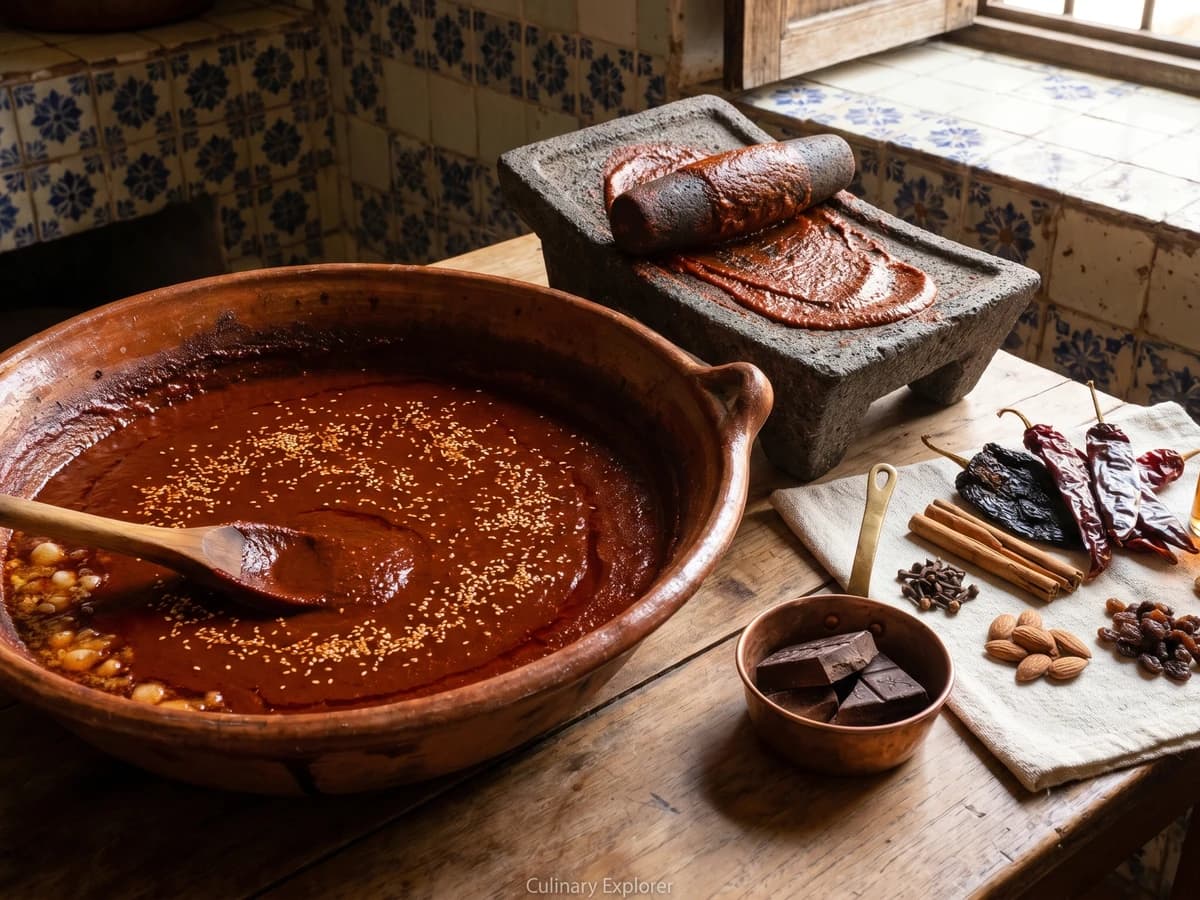
Zacatecas' wedding-table adobo, built from toasted guajillo and ancho, piloncillo, sour orange, chocolate, canela, clavo, almonds, sesame, and lard.

Chef Lupita
Puebla's convent kitchens built this adobo with ancho, guajillo, jerez, almonds, raisins, clove, and lard, a baroque marinade that stains pork loin and finishes as the sauce.