
Chef Lesia
Buzhenyna (буженина, garlic-studded roast pork)
A whole pork neck takes garlic into little knife pockets, roasts until the crust goes dark and fragrant, then rests overnight so every cold slice tastes better than shop ham.
A cooking platform built around craft, culture, and the stories behind what we eat.

Created by
The filling can be sweet or salty, but the seam has no patience for wet cheese. Drain the syr hard and the dumpling stays tender, plump, and honest.
The filling can be sweet or salty, but the seam has no patience for wet cheese. That is the whole lesson. Syr, our curd cheese, must be drained until it holds together in soft clumps, not slumps through your fingers, because once it weeps inside the dough the edge turns slippery and the dumpling starts telling on you.
These are the varenyky every Ukrainian child seems to meet first: pale half-moons or triangles, depending whose hands taught you, pinched at the table while flour gathers on your elbows and somebody puts another pot of water on because the first batch vanished. Salty ones get dill, black pepper, and smetana. Sweet ones take sugar and egg yolk, then butter in the bowl, sometimes sour cream, sometimes a spoon of jam if the day is feeling kind.
My hands remember the triangular fold from grandmother Vira, but don't let that bully you. A half-moon seals just as honestly. What matters is the dough rolled thin enough to show the shadow of your fingers, the filling kept dry, and the water held at a lively murmur, until the varenyky rise and the sound changes from heavy knocking to soft tapping against the pot.
Varenyky are one of Ukraine's defining home dishes, with regional fillings following the pantry: curd cheese and potato across central Ukraine, sour cherries in summer, buckwheat and mushrooms in forested regions, cabbage where winter storage ruled the table. In older village practice, varenyky also carried ritual weight at Christmas Eve and family gatherings, not as ceremony on a pedestal, but as the food made when many hands could sit together and fold. The curd version shows the dairy side of Ukrainian cooking, where fresh syr, smetana, butter, and fermented milk products were everyday preservation as much as pleasure.
Quantity
500g
plus more for dusting
Quantity
1 teaspoon
Quantity
250ml
Quantity
1
Quantity
1 tablespoon
Quantity
600g
Quantity
1
Quantity
1 tablespoon
only if the cheese is very dry
Quantity
1/2 teaspoon
Quantity
2 tablespoons
finely chopped, for the salty filling
Quantity
to taste
for the salty filling
Quantity
2 tablespoons
for the sweet filling
Quantity
1 teaspoon
for the sweet filling
Quantity
60g
for serving
Quantity
to serve
Quantity
extra
chopped, for serving with salty varenyky
| Ingredient | Quantity |
|---|---|
| plain flourplus more for dusting | 500g |
| fine sea salt | 1 teaspoon |
| warm water | 250ml |
| egg | 1 |
| neutral oil or melted butter | 1 tablespoon |
| well-drained syr, tvorog, farmer cheese, or dry cottage cheese | 600g |
| egg yolk | 1 |
| smetana or sour cream (optional)only if the cheese is very dry | 1 tablespoon |
| fine sea salt | 1/2 teaspoon |
| dillfinely chopped, for the salty filling | 2 tablespoons |
| black pepperfor the salty filling | to taste |
| sugarfor the sweet filling | 2 tablespoons |
| vanilla sugar or lemon zest (optional)for the sweet filling | 1 teaspoon |
| butterfor serving | 60g |
| smetana or sour cream | to serve |
| dill (optional)chopped, for serving with salty varenyky | extra |
Put the syr in a sieve lined with clean cloth and set it over a bowl until it stops dripping. If it still looks loose, gather the cloth and squeeze gently. You want soft curds that hold their shape when pressed, not a wet paste. This is the step that decides the dish.
Mix the flour and salt in a wide bowl. Beat the warm water with the egg and oil, pour it in, and stir until shaggy. Knead until the dough turns smooth and elastic under your palms, adding only enough flour to stop it sticking. It should feel soft, warm, and alive, not tight.
Cover the dough and let it rest until it relaxes. Press it with one finger; if it springs back sharply, it needs more time. If the dent returns slowly, it's ready to roll. The rest is not decorative, it lets the dough stretch thin without snapping back at you.
For salty varenyky, mash the drained syr with egg yolk, salt, dill, and black pepper. For sweet varenyky, mash it with egg yolk, sugar, and vanilla sugar or lemon zest if you like. Add the spoon of smetana only if the cheese is dry and crumbly. The filling should mound on a spoon and stay there.
Cut the dough in half and keep one piece covered. Roll the other piece thin enough that you can see the shadow of your fingers through it, then cut rounds with a glass or cutter. Gather scraps once, maybe twice, but don't keep bullying them; tough dough remembers.
Put a small spoonful of filling in the centre of each round. Fold into a half-moon, or a triangle if your hands know that road, and pinch from the middle outward so the air escapes before the edge closes. Set each one on a floured tray, not touching, while you finish the rest.
Bring a wide pot of salted water to a lively simmer, then lower in the varenyky in batches. Stir once so they don't catch on the bottom. When they rise, listen: the heavy knock of raw dough becomes a softer tapping as they finish. Give them a little longer after floating, then lift them out with a slotted spoon.
Drop the hot varenyky into a big bowl with butter and turn them gently until they shine. Serve salty ones with smetana and dill, sweet ones with smetana and a little extra butter or jam. Make more than you think. These disappear while people are still finding their chairs.
1 serving (about 270g)
Culinary guides, cultural storytelling, and the editorial depth that makes cooking meaningful.
Discover Culinary ExplorerChef Lesia
A whole pork neck takes garlic into little knife pockets, roasts until the crust goes dark and fragrant, then rests overnight so every cold slice tastes better than shop ham.
Chef Lesia
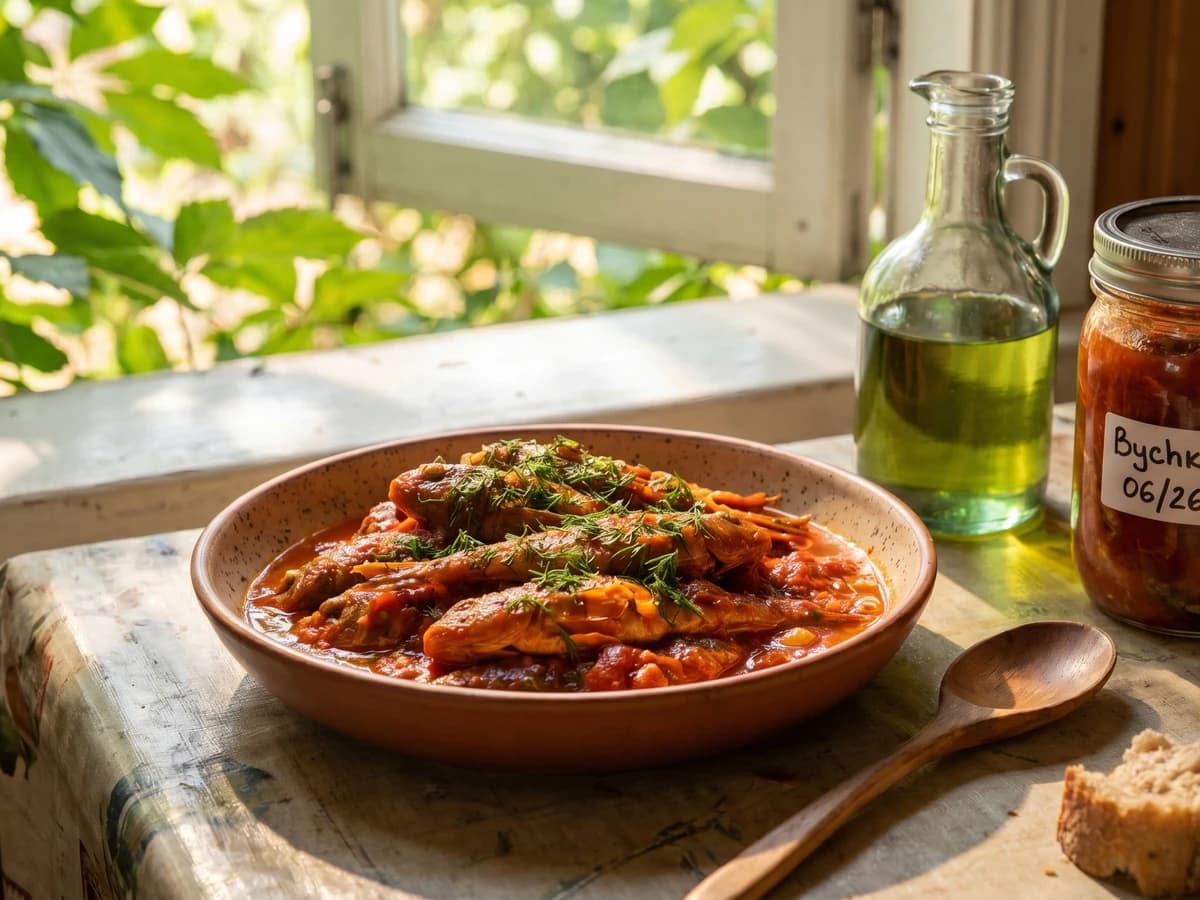
Small Azov gobies go into tomato bright as market cloth and come out soft enough that the bones give up. This is Mariupol food: cheap, red, generous, and better tomorrow.

Chef Lesia
The first sound is the meat against the board: flat, sharp, changing as the fibres loosen. Fry the cutlets fast, then let onion gravy do the soft finishing.

Chef Lesia
A heap of tiny silver fish becomes supper by the oldest Odesa trick: clean them, press them together, fry until the edges crackle, and let lemon and dill do the talking.