
Chef Lesia
Holubtsi (голубці, stuffed cabbage rolls)
The oldest holubtsi start with a whole fermented cabbage leaf, sour from the barrel, wrapped around rice and fried onion, then stewed until tomato, leaf, and filling become one soft thing.
A cooking platform built around craft, culture, and the stories behind what we eat.
Created by
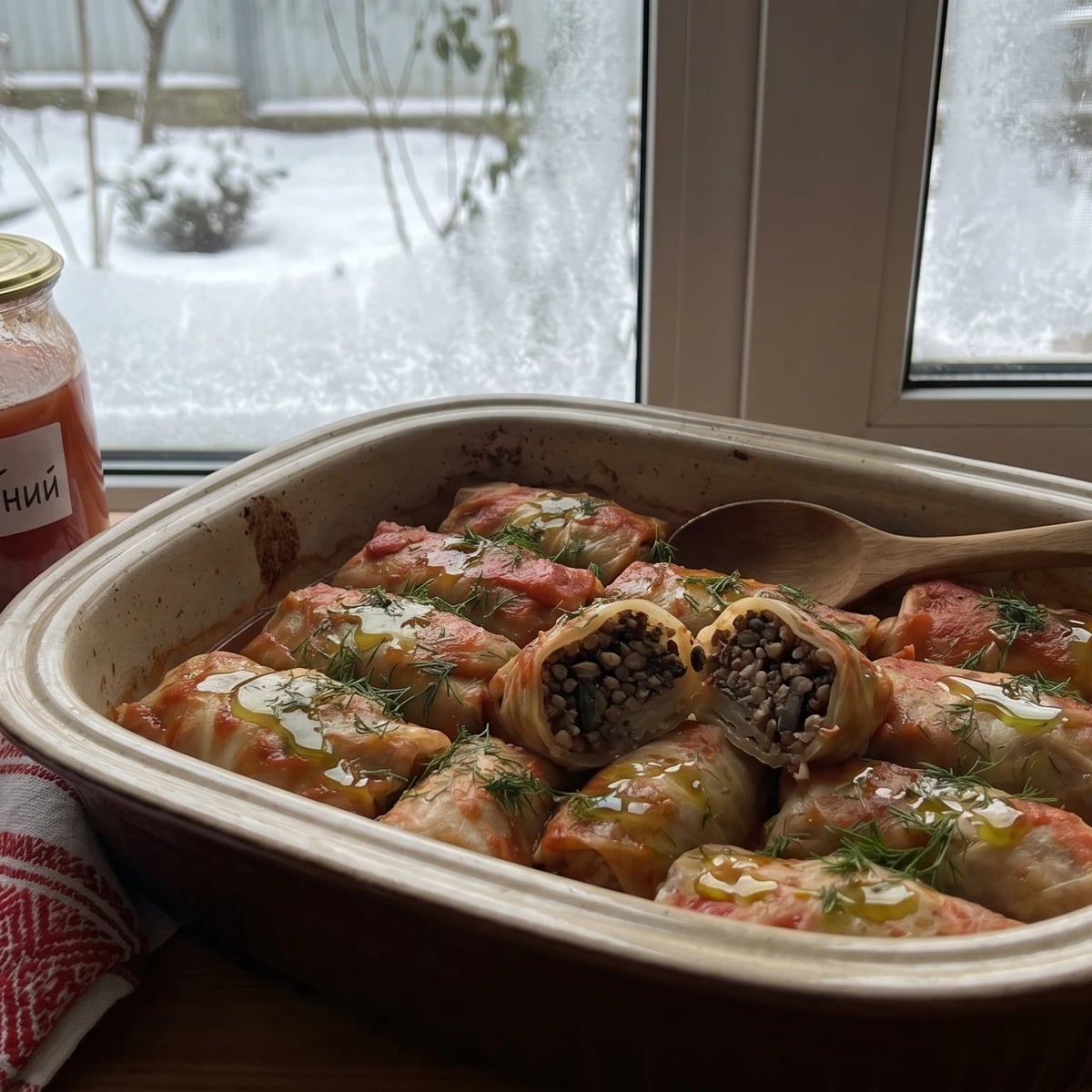
Buckwheat makes these Poltava cabbage rolls smell like a toasted field after rain: nutty groats, sweet cabbage, and a tomato braise brightened at the end with slow onion and carrot.
Toast buckwheat in a dry pan and the whole room changes: nut shells, warm field, rain on black soil. Rice is quiet. Hrechka talks back. In these Poltava holubtsi it carries the dish from inside the cabbage leaf, soaking up onion, mushroom, tomato, and the sweet green-gold shine of sunflower oil until the rolls taste deeper than their shopping list.
These are the cabbage rolls I make when the week has been expensive and the table still needs to feel full. One pot, enough for eight guests or one hungry Ukrainian, and the rolls only get better after a night in their sauce. If you have barrel-fermented cabbage leaves, use them; that sourness is the older path. Fresh cabbage works beautifully too, especially with a splash of sauerkraut brine or fermented tomato mors to wake it up.
The one thing that decides the dish is the zasmazhka, the slow-sweated onion and carrot. Half of it goes through the buckwheat so the filling is not dry; the rest waits until the cabbage has softened, then goes into the tomato braise at the end so its sweetness sits brightly on top instead of disappearing. Aunt Nadia would write, "until it sounds right," which meant the pot had stopped rattling and started giving that soft, wet tuck-tuck under the lid. Listen for that. Your hands will learn.
Poltava sits in Ukraine's forest-steppe, a region where buckwheat, hrechka, became an everyday grain long before rice was cheap enough to fill cabbage rolls. Older Ukrainian holubtsi often used groats, millet, barley, or buckwheat, with meat as an addition rather than the rule; Soviet-era canteens helped make the rice-and-mince version the public default. Lean buckwheat holubtsi stayed especially at home in central Ukrainian kitchens and on fasting tables, where mushrooms, onion, and sour cabbage carried the richness without needing meat.
Quantity
1 large (1.5 to 1.8 kg)
or 20 to 24 fermented cabbage leaves
Quantity
300g
rinsed and drained
Quantity
750ml
divided, plus more if needed
Quantity
5 tablespoons
plus more to serve
Quantity
3 large
finely diced
Quantity
2 large
coarsely grated
Quantity
400g
finely chopped
Quantity
20g
soaked in 250ml hot water
Quantity
3 cloves
finely grated
Quantity
500ml
Quantity
150ml
Quantity
1 tablespoon
Quantity
2
Quantity
1 1/2 teaspoons
plus more to taste
Quantity
1 teaspoon
plus more to taste
Quantity
1 small bunch
chopped, plus more to serve
Quantity
to serve
| Ingredient | Quantity |
|---|---|
| white cabbageor 20 to 24 fermented cabbage leaves | 1 large (1.5 to 1.8 kg) |
| roasted buckwheat groats (hrechka)rinsed and drained | 300g |
| vegetable stock or waterdivided, plus more if needed | 750ml |
| unrefined sunflower oilplus more to serve | 5 tablespoons |
| onionsfinely diced | 3 large |
| carrotscoarsely grated | 2 large |
| chestnut or field mushroomsfinely chopped | 400g |
| dried porcini (optional)soaked in 250ml hot water | 20g |
| garlicfinely grated | 3 cloves |
| tomato passata or crushed tomatoes | 500ml |
| fermented tomato mors or sauerkraut brine (optional) | 150ml |
| tomato paste | 1 tablespoon |
| bay leaves | 2 |
| sea saltplus more to taste | 1 1/2 teaspoons |
| black pepperplus more to taste | 1 teaspoon |
| dillchopped, plus more to serve | 1 small bunch |
| smetana (sour cream) (optional) | to serve |
Cut deeply around the cabbage core and lower the head into a wide pot of salted simmering water. As the outer leaves turn glossy and flexible, lift them away with tongs and keep going until you have enough for the rolls. Shave the thick rib from each leaf so it bends without cracking. If you're using fermented leaves, separate them and taste one; rinse only if the salt is shouting.
Warm the rinsed buckwheat in a dry pot until its nutty smell opens, then add 450ml of the stock or water and a pinch of salt. Cover and cook gently until little craters appear on top and the grains have taken in most of the liquid, but still keep a small bite. Spread it out to cool. Stop before it goes soft; the leaf will finish the work.
Warm the sunflower oil in a wide pan and add the onions with a pinch of salt. Let them soften slowly until translucent and sweet-smelling, then add the carrot and cook until the carrot slumps and the oil turns orange. Scoop half into a bowl for later. Add the mushrooms to the pan, plus the chopped soaked porcini if you're using them, and cook until their liquid has gone and the pan smells roasted rather than raw. Stir in the garlic, buckwheat, most of the dill, black pepper, and enough salt to make the filling taste full.
Lay a cabbage leaf cupped side up, with the stem end closest to you. Add a generous spoonful of buckwheat filling, fold the bottom over it, tuck in the sides, and roll away from yourself. Keep the roll snug but not tight; buckwheat swells and needs a little room. Line a heavy pot with the saved cabbage pieces and pack the rolls seam-side down, shoulder to shoulder.
Stir together the passata, tomato paste, 300ml stock or water, the porcini soaking liquid if you have it, the fermented tomato mors or sauerkraut brine if using, bay leaves, salt, and pepper. Pour it around the rolls, not hard over the top, until the liquid comes about two-thirds of the way up. Cover with a few spare cabbage leaves, then a lid, and set over a low flame. You want a soft tuck-tuck under the lid, not an angry clatter. Cook until the cabbage yields easily to a spoon and the whole pot smells sweet.
Spoon the reserved zasmazhka over the top and nudge some of it into the tomato braise. Add the last dill, cover again, and let the pot sit off the heat so the sauce settles into the rolls. Serve with more dill and a thin gloss of sunflower oil. Add smetana at the table if you're not keeping the meal vegan.
1 serving (about 390g)
Culinary guides, cultural storytelling, and the editorial depth that makes cooking meaningful.
Discover Culinary Explorer
Chef Lesia
The oldest holubtsi start with a whole fermented cabbage leaf, sour from the barrel, wrapped around rice and fried onion, then stewed until tomato, leaf, and filling become one soft thing.

Chef Lesia
Grape leaves turn holubtsi into summer food: small, tart, and green at the edges, with rice and dill tucked inside and a late zasmazhka brightening the pot.

Chef Lesia
Raw potato goes into the cabbage leaf pale and loose, then comes out set like a soft dumpling, scented with onion, dill, and the sour warmth of smetana.

Chef Lesia
Before rice reached many village cupboards, millet was already swelling in cabbage leaves, drinking tomato and sunflower oil until each roll turned soft, golden, and serious enough for Sunday.