
Chef Lesia
Buzhenyna (буженина, garlic-studded roast pork)
A whole pork neck takes garlic into little knife pockets, roasts until the crust goes dark and fragrant, then rests overnight so every cold slice tastes better than shop ham.
A cooking platform built around craft, culture, and the stories behind what we eat.

Created by
Before rice reached many village cupboards, millet was already swelling in cabbage leaves, drinking tomato and sunflower oil until each roll turned soft, golden, and serious enough for Sunday.
Before rice became the easy filling, pshono, millet, was already there: tiny gold beads swelling inside cabbage leaves, drinking tomato, onion, carrot, and unrefined sunflower oil until the whole pot smells round and sweet. The rolls look quiet at first. Then you cut one open and the grain spills out yellow, peppery, soft but still itself.
The old non-fasting pot could smell of lard, yes, but this one is built for a vegetarian and vegan table with sunflower oil. That is not an apology. It is the south too, Ukraine in a bottle of oil. Aunt Nadia would have written "until it sounds right" and left me to guess the rest; with millet that means damp and separate, not soup, not dry sand.
The one thing that decides the dish is the finishing zasmazhka, the slow-sweated onion and carrot. It waits until the cabbage and millet have done their quiet work, then goes in near the end so its sweetness sits brightly on the tomato broth instead of flattening into the stock.
Make a big pot. There is no tradition of a small one, and holubtsi are better tomorrow, when the cabbage has given up its sweetness and the millet has learned the sauce by heart. Enough for eight guests or one hungry Ukrainian.
Millet, pshono, was a common grain in Ukrainian village cooking for centuries before rice became ordinary in many cupboards, so older fasting and budget holubtsi often used it with onion, oil, mushrooms, or lard when the calendar allowed. Fresh cabbage leaves are the everyday wrapper now, but many village cooks used whole soured cabbage leaves from barrels kept in the litnya kuhnia, the summer kitchen, giving the rolls a tartness tomato later came to provide. Soviet-era canteens helped standardize meat-and-rice versions, while regional home pots kept the lean millet rolls alive.
Quantity
1 large head, about 1.4 kg, or 16 leaves
cored if fresh
Quantity
250g
rinsed well
Quantity
500ml
for the millet
Quantity
5 tablespoons
divided
Quantity
3 medium
finely diced, divided
Quantity
2 large
coarsely grated, divided
Quantity
250g
finely chopped
Quantity
3 cloves
finely grated or crushed
Quantity
1 small bunch
finely chopped, divided
Quantity
1 1/2 teaspoons, plus more
for seasoning and cabbage water
Quantity
1 teaspoon
freshly ground
Quantity
700ml
Quantity
300ml, plus more as needed
Quantity
2 tablespoons
Quantity
2
Quantity
2 tablespoons
Quantity
to serve
| Ingredient | Quantity |
|---|---|
| white cabbage or fermented cabbage leavescored if fresh | 1 large head, about 1.4 kg, or 16 leaves |
| millet (pshono)rinsed well | 250g |
| vegetable stock or waterfor the millet | 500ml |
| unrefined sunflower oildivided | 5 tablespoons |
| onionsfinely diced, divided | 3 medium |
| carrotscoarsely grated, divided | 2 large |
| mushrooms (optional)finely chopped | 250g |
| garlicfinely grated or crushed | 3 cloves |
| dillfinely chopped, divided | 1 small bunch |
| fine sea saltfor seasoning and cabbage water | 1 1/2 teaspoons, plus more |
| black pepperfreshly ground | 1 teaspoon |
| tomato passata or crushed tomatoes | 700ml |
| cabbage blanching water or vegetable stock | 300ml, plus more as needed |
| tomato paste | 2 tablespoons |
| bay leaves | 2 |
| fermented tomato brine or sauerkraut brine (optional) | 2 tablespoons |
| smetana or plant-based sour cream (optional) | to serve |
Bring a big pot of salted water to a lively boil. Lower in the cored cabbage, let the outside leaves relax, then lift them off with tongs as they loosen. Keep going until you have 16 good leaves, plus a few torn ones for patching and lining the pot. Shave the thick ribs so the leaves fold without cracking. If you have fermented cabbage leaves, rinse only if they taste too sharp and skip the boiling.
Rinse the millet in several changes of water until the dusty smell is gone. Put it in a pan with the 500ml stock or water and a pinch of salt, bring it to a quiet simmer, and cook until the grains are swollen but still separate, with a tiny bite left in the middle. If there is extra liquid, drain it. Spread the millet on a plate so it cools instead of turning into porridge.
Warm 2 tablespoons of sunflower oil in a wide pan. Add 1 diced onion and cook until translucent and sweet-smelling, then add 1 grated carrot. If using mushrooms, add them now and cook until their liquid disappears and the pan sounds softer, less wet. Stir in half the garlic, the millet, half the dill, black pepper, and enough salt that the filling tastes lively; cabbage will quiet it down.
Lay a cabbage leaf rib-side down. Spoon a generous tablespoon or two of millet filling near the base, fold the sides over, then roll it away from you into a snug parcel. Not tight like a clenched fist, just firm enough to hold. If a leaf tears, patch it with a scrap and keep moving. My hands remember varenyky folds better than cabbage rolls, and still the pot forgives me.
Line the bottom of a heavy pot with torn cabbage leaves so nothing catches. Pack the holubtsi seam-side down in close layers, shoulder to shoulder. Stir the passata, tomato paste, 300ml cabbage water or stock, bay leaves, and a pinch of salt together, then pour it over the rolls. The liquid should come almost to the top layer, not drown it. Cover and simmer very gently, or bake covered at 180C, until the cabbage yields under a spoon and the pot gives slow, lazy blips.
While the rolls soften, warm the remaining 3 tablespoons sunflower oil in a wide pan. Add the remaining 2 onions and cook low and slow until glossy and sweet, then add the remaining carrot and cook until the oil turns orange and the raw carrot smell changes into something rounder. Stir in the remaining garlic for the last minute. Spoon this zasmazhka over the holubtsi near the end of cooking so the sweetness stays bright on the sauce.
Taste the sauce. If it needs lift, add the fermented tomato brine or sauerkraut brine a spoon at a time. Scatter over the remaining dill, cover the pot, and let it rest off the heat until the rolls settle and the sauce clings instead of running. Serve with smetana or plant-based sour cream if you like, and keep the leftovers for tomorrow because tomorrow is better.
1 serving (about 375g)
Culinary guides, cultural storytelling, and the editorial depth that makes cooking meaningful.
Discover Culinary ExplorerChef Lesia
A whole pork neck takes garlic into little knife pockets, roasts until the crust goes dark and fragrant, then rests overnight so every cold slice tastes better than shop ham.
Chef Lesia
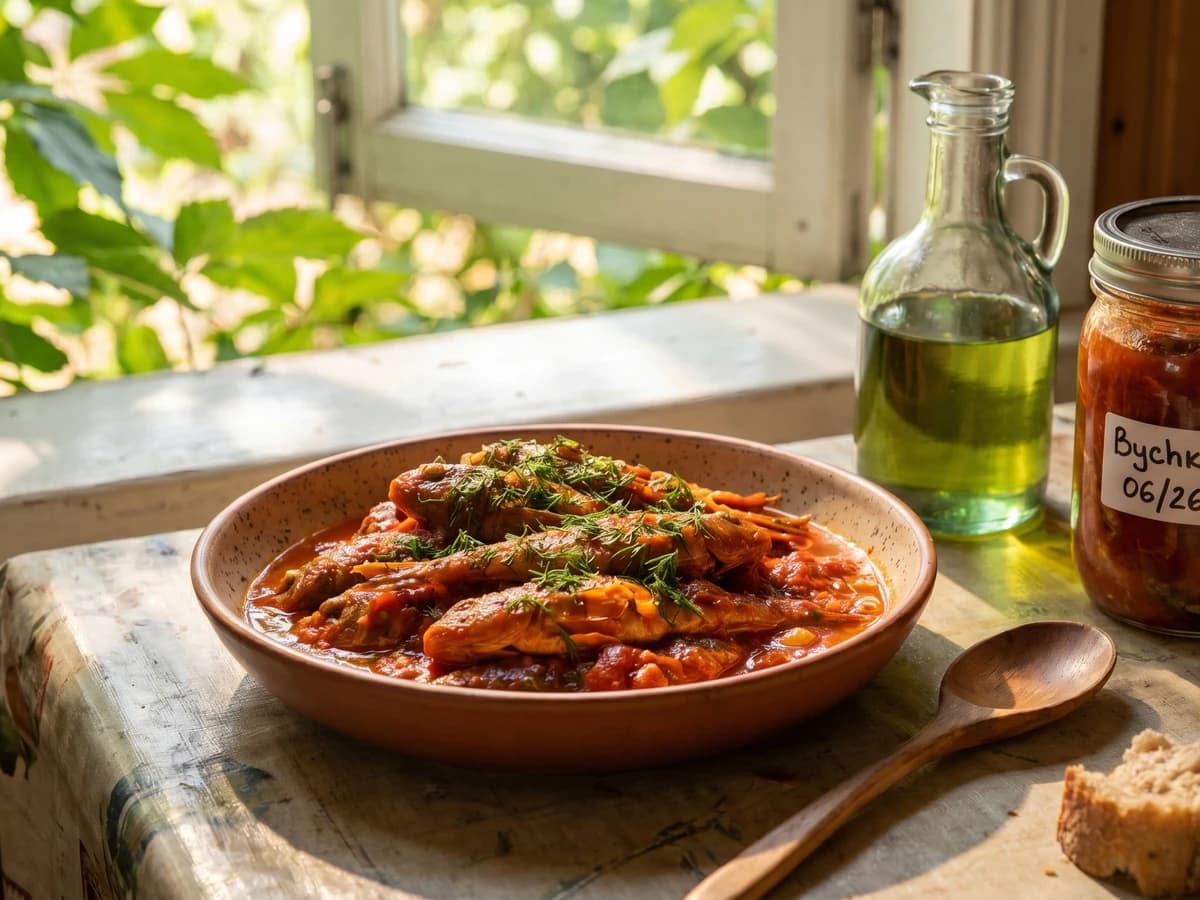
Small Azov gobies go into tomato bright as market cloth and come out soft enough that the bones give up. This is Mariupol food: cheap, red, generous, and better tomorrow.

Chef Lesia
The first sound is the meat against the board: flat, sharp, changing as the fibres loosen. Fry the cutlets fast, then let onion gravy do the soft finishing.

Chef Lesia
A heap of tiny silver fish becomes supper by the oldest Odesa trick: clean them, press them together, fry until the edges crackle, and let lemon and dill do the talking.