
Chef Lesia
Buzhenyna (буженина, garlic-studded roast pork)
A whole pork neck takes garlic into little knife pockets, roasts until the crust goes dark and fragrant, then rests overnight so every cold slice tastes better than shop ham.
A cooking platform built around craft, culture, and the stories behind what we eat.

Created by
Grape leaves turn holubtsi into summer food: small, tart, and green at the edges, with rice and dill tucked inside and a late zasmazhka brightening the pot.
The leaf bites back. A grape leaf is not cabbage pretending to be delicate; it is thin, tart, and green, and it turns holubtsi into summer food. In Bessarabia, where vines climb faster than cabbages can settle their heads, these little rolls belong under the trellis, near the litnya kuhnia, the summer kitchen, with tomato-orange oil shining on top.
The filling is rice, onion, carrot, dill, and whatever southern herb is loud in your hand that day: mint, purple basil, a little more dill if that's what you have. You roll them small because the rice swells and the leaf must still have a voice. Aunt Nadia's note for the leaf ones said only, 'one spoon, not two,' which sounds useless until the first overfilled roll bursts and teaches you manners.
The one thing I won't rush is the late zasmazhka, the slow-sweated onion and carrot with tomato. It goes over the pot near the end so its sweetness sits brightly against the sour leaf instead of flattening into the cooking liquid. When the pot changes from clattering to that soft little blip under the plate, you are close.
Make a big pot. There is no tradition of a small one, and tomorrow's holubtsi, cold from the fridge or warmed gently in their own sauce, may be the reason you cooked at all.
Grape-leaf holubtsi belong especially to Ukrainian Bessarabia, the Budjak corner of Odesa region between the Dniester and the Danube, where vineyard villages made vine leaves the summer wrapper while cabbage kept its winter authority. The Turkish word sarma simply means wrapped, and the Black Sea and Danube routes carried these little rolls through Moldovan, Bulgarian, Gagauz, Jewish, Tatar, and Ukrainian kitchens. Soviet-era cookbooks tended to print cabbage holubtsi as the national default, so grape-leaf versions lived more stubbornly in family notebooks, market stalls, and litnya kuhnia tables.
Quantity
70 to 80
rinsed, soaked if very salty, stems trimmed
Quantity
350g
rinsed until the water nearly clears
Quantity
3 large
finely diced, divided
Quantity
3 medium
coarsely grated, divided
Quantity
7 tablespoons, divided, plus more for finishing
Quantity
4 cloves
finely grated or smashed
Quantity
1 large bunch
stems reserved, fronds finely chopped
Quantity
2 tablespoons
finely chopped
Quantity
1 teaspoon
Quantity
2 teaspoons, plus more to taste
Quantity
1 teaspoon
Quantity
3 tablespoons
Quantity
400ml passata or 4 tomatoes
tomatoes grated if using fresh
Quantity
700ml
Quantity
2 tablespoons
Quantity
to serve
Quantity
to serve
| Ingredient | Quantity |
|---|---|
| brined grape leavesrinsed, soaked if very salty, stems trimmed | 70 to 80 |
| short-grain ricerinsed until the water nearly clears | 350g |
| onionsfinely diced, divided | 3 large |
| carrotscoarsely grated, divided | 3 medium |
| unrefined sunflower oil | 7 tablespoons, divided, plus more for finishing |
| garlicfinely grated or smashed | 4 cloves |
| dillstems reserved, fronds finely chopped | 1 large bunch |
| fresh mint or purple basil (optional)finely chopped | 2 tablespoons |
| sweet paprika | 1 teaspoon |
| sea salt | 2 teaspoons, plus more to taste |
| freshly ground black pepper | 1 teaspoon |
| tomato paste | 3 tablespoons |
| tomato passata or ripe tomatoestomatoes grated if using fresh | 400ml passata or 4 tomatoes |
| vegetable stock or water | 700ml |
| grape-leaf brine or fermented tomato brine (optional) | 2 tablespoons |
| fresh dill and unrefined sunflower oil (optional) | to serve |
| smetana (optional) | to serve |
Pull the grape leaves from the jar and rinse them under cool water. Taste one corner. If it makes your mouth pucker too hard, soak the leaves in fresh water while you prepare the filling, then drain and pat them dry. Trim the stems and keep any torn leaves for lining the pot.
Put the rinsed rice in a bowl and cover it with boiling water from the kettle. Leave it while you cut the vegetables, then drain well. The grains should look a little swollen at the edges but still firm in the middle; they will finish inside the leaves.
Warm 3 tablespoons of sunflower oil in a wide pan and soften 2 diced onions with 1 grated carrot until the onion turns clear and the carrot smells sweet, not browned. Scrape this into the drained rice with the garlic, most of the dill, the mint or basil if using, paprika, salt, pepper, and 3 tablespoons of the passata. Stir until the grains shine with oil. The filling should be loose, green-flecked, and a little under-seasoned from the rice; the leaf and sauce will bring salt and sourness.
Lay a grape leaf vein side up, stem end facing you. Put a teaspoon of filling near the base, fold the bottom over it, fold in the sides, then roll forward into a tight little parcel, no bigger than a finger if the leaf allows. Do not overfill. Rice grows like gossip, Aunt Nadia used to write, and she was right. Set each roll seam side down.
Line the base of a wide heavy pot with the reserved dill stems and torn grape leaves so the bottom layer cannot catch. Pack the rolls seam side down in snug circles, one layer on top of another. Whisk the remaining passata with the stock or water and the grape-leaf brine if you want more sourness, then pour it in until the liquid sits just below the top layer. Set a small plate over the rolls to hold them in place.
Bring the pot slowly to a simmer, then lower the heat until the plate trembles gently and the sound underneath is a private blip, not a boil. Cook until the leaves relax around the filling and a cut roll shows tender rice, usually 50 to 70 minutes depending on the leaves. If the pot looks dry at the edges, add a splash of hot water.
While the rolls are nearly tender, warm the remaining 4 tablespoons of sunflower oil in the pan. Add the last onion and 2 grated carrots, then sweat them slowly until the carrot softens, the oil turns orange, and the smell changes from raw roots to sweetness. Stir in the tomato paste and a ladle of cooking liquid, then spoon this zasmazhka, the slow-sweated onion-carrot flavour base, over the top of the rolls and let the pot murmur a little longer.
Turn off the heat and let the pot sit covered for at least 20 minutes. This rest matters: the rice settles, the rolls firm up, and the tomato-orange oil finds its way between the leaves. Serve big spoonfuls with fresh dill and a thin gloss of unrefined sunflower oil. Smetana can sit on the side for a vegetarian table, but the pot is already vegan without apology.
1 serving (about 315g)
Culinary guides, cultural storytelling, and the editorial depth that makes cooking meaningful.
Discover Culinary ExplorerChef Lesia
A whole pork neck takes garlic into little knife pockets, roasts until the crust goes dark and fragrant, then rests overnight so every cold slice tastes better than shop ham.
Chef Lesia
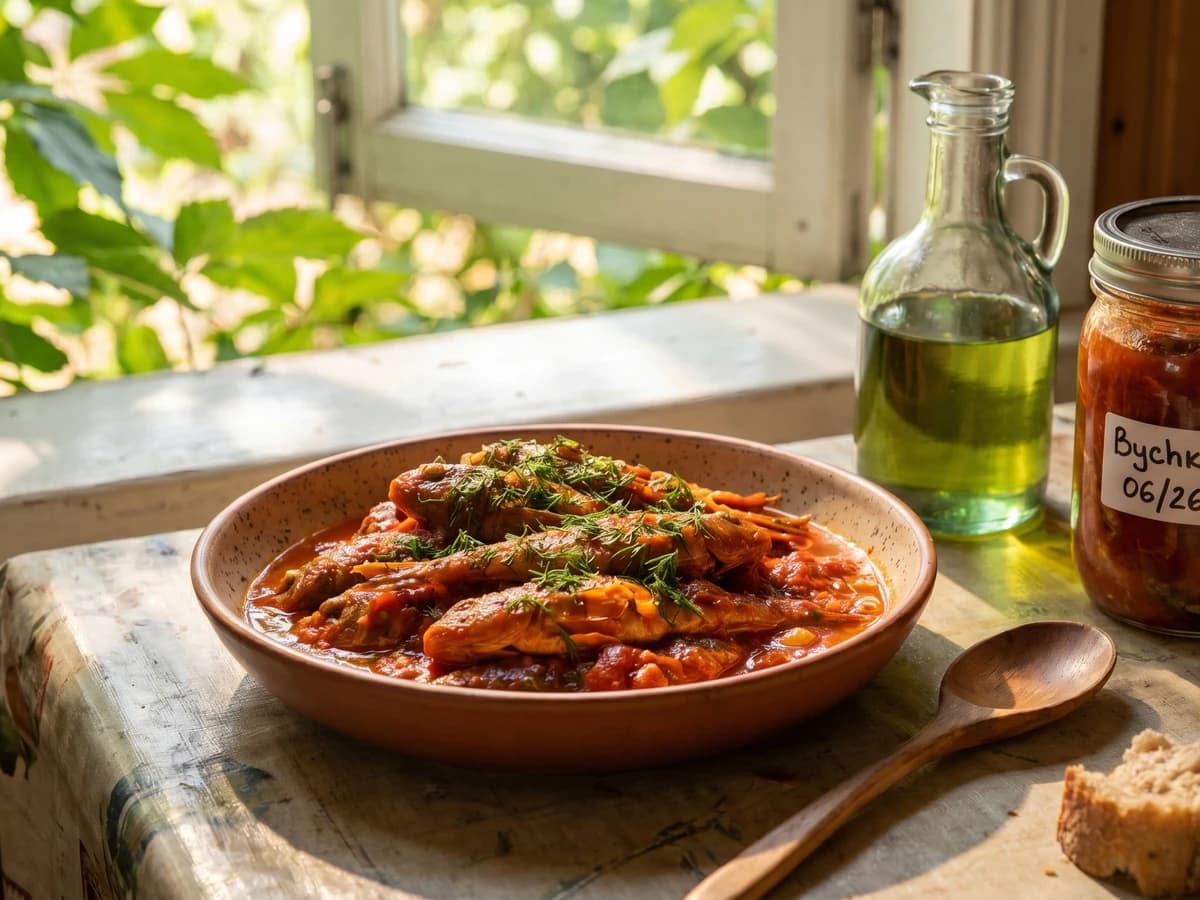
Small Azov gobies go into tomato bright as market cloth and come out soft enough that the bones give up. This is Mariupol food: cheap, red, generous, and better tomorrow.

Chef Lesia
The first sound is the meat against the board: flat, sharp, changing as the fibres loosen. Fry the cutlets fast, then let onion gravy do the soft finishing.

Chef Lesia
A heap of tiny silver fish becomes supper by the oldest Odesa trick: clean them, press them together, fry until the edges crackle, and let lemon and dill do the talking.