
Chef Lesia
Buzhenyna (буженина, garlic-studded roast pork)
A whole pork neck takes garlic into little knife pockets, roasts until the crust goes dark and fragrant, then rests overnight so every cold slice tastes better than shop ham.
A cooking platform built around craft, culture, and the stories behind what we eat.

Created by
The oldest holubtsi start with a whole fermented cabbage leaf, sour from the barrel, wrapped around rice and fried onion, then stewed until tomato, leaf, and filling become one soft thing.
The oldest cabbage leaf for this dish is not green and squeaky. It is sour, yellow-edged, soft from months in the barrel, and it carries winter in its folds before you put a spoonful of rice inside. Fresh cabbage is a bit more modern, and it will feed you beautifully, but if you ever find fermented leaves, use them once and you'll understand why Aunt Nadia wrote only, "sour leaf if you have it," as if that settled the matter.
What makes the pot work is not fussing over perfect little parcels. It is the low tomato braise, quiet enough that you hear only the lazy blip at the edge, while the rice swells and the leaf gives itself up. Roll them close, seam side down, but don't strangle them. Rice needs room to breathe.
Then comes the zasmazhka, the slow-sweated flavour base of onion and carrot. I add it near the end, when the cabbage has softened, because its green-gold oil and sweetness sit brightly on the tomato instead of disappearing into the long braise. Make a big pot. Holubtsi are not shy food, and the next day they taste as if the table waited for them.
Holubtsi sit in Ukraine's old winter kitchen of cabbage and grain: early twentieth-century Ukrainian cookbooks record fasting versions with kasha and mushrooms alongside richer everyday versions, while village cooks kept their own ratios. In many homes the older wrapper was a whole fermented cabbage leaf, soured for months in barrels in the litnya kuhnia, which gave the roll its tartness before tomato sauce became the common city habit. Soviet-era canteens narrowed the dish into one meat-and-rice model, but western buckwheat rolls, southern tomato pots, and meatless Sviat Vechir versions still show the range.
Quantity
1 large head, about 1.5kg, or 18 to 20 leaves
Quantity
250g
rinsed
Quantity
3 large
finely diced, divided
Quantity
450g
finely chopped
Quantity
2 medium
coarsely grated
Quantity
6 tablespoons
divided
Quantity
3 cloves
finely grated
Quantity
1 large bunch
finely chopped, divided
Quantity
700ml
Quantity
300ml
Quantity
2 tablespoons
Quantity
2
Quantity
1 teaspoon, plus more to taste
Quantity
1/2 teaspoon
Quantity
1 teaspoon
only if the tomatoes taste sharp
Quantity
to serve
| Ingredient | Quantity |
|---|---|
| white cabbage or fermented cabbage leaves | 1 large head, about 1.5kg, or 18 to 20 leaves |
| short-grain ricerinsed | 250g |
| onionsfinely diced, divided | 3 large |
| mushroomsfinely chopped | 450g |
| carrotscoarsely grated | 2 medium |
| unrefined sunflower oildivided | 6 tablespoons |
| garlicfinely grated | 3 cloves |
| dillfinely chopped, divided | 1 large bunch |
| tomato passata or crushed tomatoes | 700ml |
| vegetable or mushroom stock | 300ml |
| fermented tomato brine or sauerkraut brine (optional) | 2 tablespoons |
| bay leaves | 2 |
| fine sea salt | 1 teaspoon, plus more to taste |
| black pepper | 1/2 teaspoon |
| sugar (optional)only if the tomatoes taste sharp | 1 teaspoon |
| smetana or thick oat cream (optional) | to serve |
If you're using fermented cabbage leaves, separate them gently, trim the thick rib flat, and rinse only if they taste fiercely salty. If you're using fresh cabbage, cut a cone around the core and lower the whole head into a big pot of salted boiling water. Peel the leaves away as they soften, one by one, until you have 18 to 20 good wrappers. Keep the torn leaves and trimmings; they line the pot and stop the rolls catching.
Tip the rinsed rice into salted boiling water and cook until the outside of each grain has swollen but the centre still feels firm when you bite it. Drain well. Don't take it to softness here; it finishes inside the cabbage, drinking tomato and onion as it goes.
Warm 3 tablespoons of sunflower oil in a wide pan and add about two onions with a pinch of salt. Let them go glossy and sweet, then add the mushrooms. At first the pan will look too wet. Keep going until the liquid cooks off, the mushrooms darken, and the smell changes from damp to nutty. Stir in the garlic, rice, half the dill, black pepper, and enough salt that the filling tastes slightly bolder than you think it should.
Lay a cabbage leaf rib side down, with the trimmed thick end closest to you. Add a spoonful or two of filling, fold the sides in, and roll it up snugly but not tight. Rice breathes. If a leaf tears, patch it with a scrap and keep moving; the pot is kind to imperfect hands.
Line a wide heavy pot with cabbage trimmings, then pack the rolls seam side down in close layers. Tuck in the bay leaves. Stir the tomato passata with the stock, the fermented brine if you're using it, and the sugar if the tomatoes taste sharp, then pour it over the rolls. The liquid should come almost to the top layer, not drown it.
Bring the pot just to a simmer, cover, and lower the heat until the sauce only murmurs at the edges. You want a soft plip, not a hard boil that knocks the rolls about. Cook until the cabbage cuts with a spoon, the rice is tender, and the kitchen smells sweet-sour instead of raw and cabbagy. Add a splash of stock if the sauce gets too thick before the leaves surrender.
When the rolls are nearly soft, make the zasmazhka. Warm the remaining 3 tablespoons of sunflower oil in a pan, add the last onion and the grated carrots, and sweat them slowly with a pinch of salt until the carrot slumps and the oil turns orange. Spoon this over the holubtsi, rock the pot gently so the sauce settles around the rolls, and let it cook quietly a little longer until the tomato tastes round.
Turn off the heat and let the pot sit covered before serving. Holubtsi should slump a little when lifted, glossy with brick-red sauce, not stand stiff on the plate. Scatter with the remaining dill and serve with smetana or thick oat cream if you like. Tomorrow they will be even better.
1 serving (about 430g)
Culinary guides, cultural storytelling, and the editorial depth that makes cooking meaningful.
Discover Culinary ExplorerChef Lesia
A whole pork neck takes garlic into little knife pockets, roasts until the crust goes dark and fragrant, then rests overnight so every cold slice tastes better than shop ham.
Chef Lesia
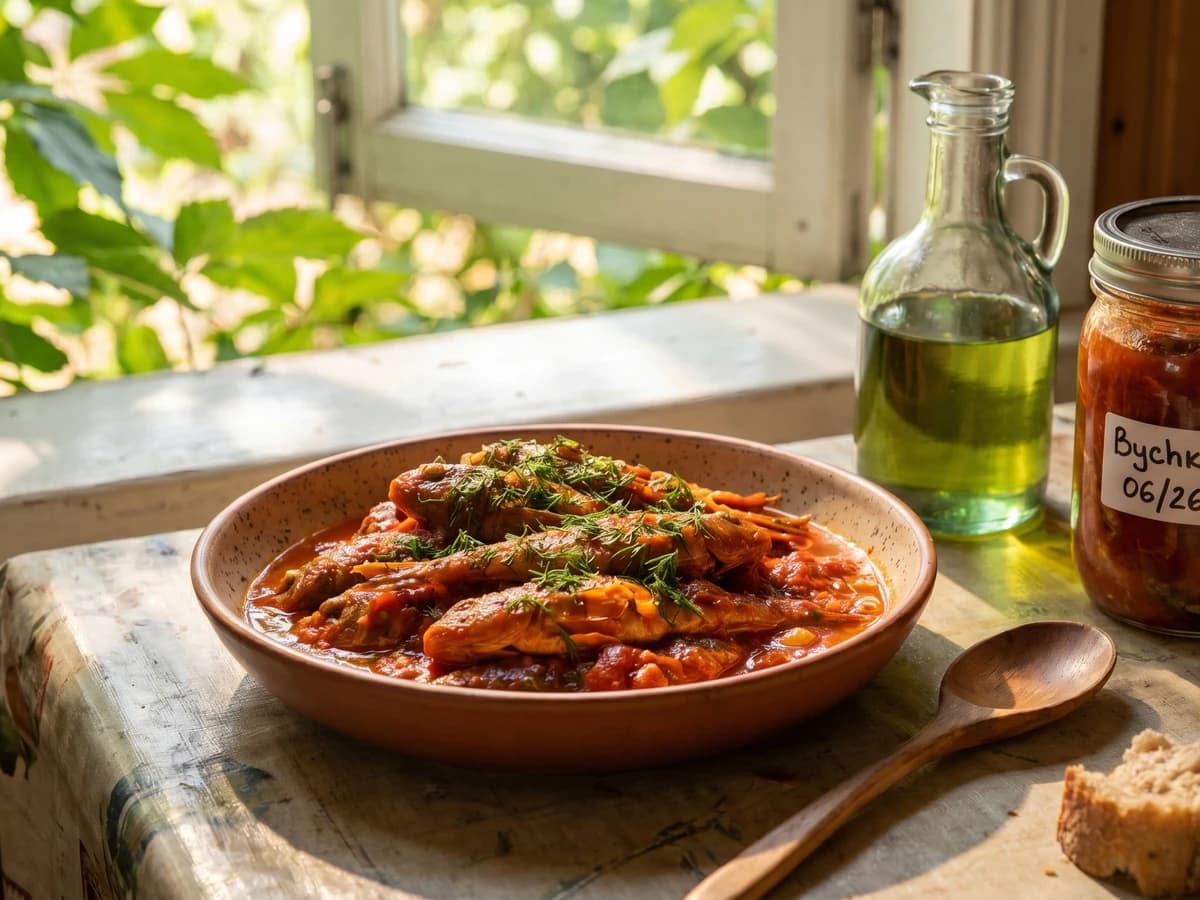
Small Azov gobies go into tomato bright as market cloth and come out soft enough that the bones give up. This is Mariupol food: cheap, red, generous, and better tomorrow.

Chef Lesia
The first sound is the meat against the board: flat, sharp, changing as the fibres loosen. Fry the cutlets fast, then let onion gravy do the soft finishing.

Chef Lesia
A heap of tiny silver fish becomes supper by the oldest Odesa trick: clean them, press them together, fry until the edges crackle, and let lemon and dill do the talking.