
Chef Lesia
Buzhenyna (буженина, garlic-studded roast pork)
A whole pork neck takes garlic into little knife pockets, roasts until the crust goes dark and fragrant, then rests overnight so every cold slice tastes better than shop ham.
A cooking platform built around craft, culture, and the stories behind what we eat.

Created by
The filling is called sand: flour toasted in sunflower oil until golden, crumbly, sweet-smelling, and tender enough to make poverty taste like someone loved you properly.
The filling is called sand, and nobody at the table flinches. Flour goes into hot sunflower oil pale and ordinary, then turns golden, nutty, and loose-grained, like warm beach sand if the beach had been raised by Ukrainian grandmothers and fed you on a bad month. It sounds strange until the first dumpling opens under your fork and the filling falls apart in soft crumbs, sweet-edged, oily in the best way, completely its own thing.
These are varenyky for the southern steppe, where a sack of flour, a bottle of green sunflower oil, and a patient hand could still make a table feel full. They are budget food, yes, but don't say that like an insult. Some dishes remember lean times without tasting mean. Aunt Nadia's note on this one was useless in the familiar way: "toast it until it smells done." She was right. The smell changes from raw cupboard flour to roasted seed and warm biscuit, and then you stop.
The one thing that decides the dish is the toasting. If the flour is pale, it turns gluey inside the dough; if it gets too dark, it bites back bitter. Take it to deep gold, let each grain drink the oil, and the filling stays crumbly instead of pasty. The dough forgives you. The sand does not.
Varenyky z piskom belong to the southern Ukrainian poor-table repertoire, especially the steppe belt of Kherson, Mykolaiv, and Odesa, where wheat flour and sunflower oil were more dependable than meat or cheese. The name piskom means "with sand," a kitchen joke about the filling's texture, not an oddity from a cookbook. Soviet-era public cooking favored standardized potato, cabbage, and curd fillings, but village kitchens kept these flour-filled varenyky alive because hunger remembers useful recipes.
Quantity
500g
plus extra for dusting
Quantity
250ml
Quantity
2 tablespoons
for the dough
Quantity
1 teaspoon
Quantity
220g
for the toasted filling
Quantity
120ml
for the filling, plus more if needed
Quantity
1/2 teaspoon
Quantity
1 tablespoon
Quantity
2 large
finely diced
Quantity
3 tablespoons
for the onions
Quantity
to taste
Quantity
small handful
chopped, to serve
Quantity
to serve
| Ingredient | Quantity |
|---|---|
| plain flourplus extra for dusting | 500g |
| warm water | 250ml |
| unrefined sunflower oilfor the dough | 2 tablespoons |
| fine sea salt | 1 teaspoon |
| plain flourfor the toasted filling | 220g |
| unrefined sunflower oilfor the filling, plus more if needed | 120ml |
| fine sea salt | 1/2 teaspoon |
| sugar (optional) | 1 tablespoon |
| onionsfinely diced | 2 large |
| unrefined sunflower oilfor the onions | 3 tablespoons |
| black pepper | to taste |
| dillchopped, to serve | small handful |
| smetana (sour cream) (optional) | to serve |
Put the flour and salt in a wide bowl, make a hollow, then pour in the warm water and sunflower oil. Mix until shaggy, then knead until the dough turns smooth and stops grabbing at your fingers. It should feel like an earlobe, soft but not slack. Cover it and let it rest while you make the sand.
Warm the sunflower oil in a wide heavy pan, then stir in the flour for the filling. Keep the heat gentle and stir with a wooden spoon, scraping the corners, until the flour turns deep gold and smells nutty, like roasted sunflower seeds and warm biscuit. It should move in loose crumbs, not paste. Add the salt and sugar if using, then tip it onto a plate to cool.
Cook the diced onions in sunflower oil over a low flame until soft, glossy, and amber at the edges. You're not frying them crisp. You want sweetness and oil, enough to dress the boiled varenyky so they don't cling to each other in the bowl.
Dust the table lightly and roll the rested dough thin enough that you can see the shadow of your fingers through it. Cut rounds with a glass or cutter, about 8cm wide. Keep the scraps covered, then reroll once; after that they get sulky.
Put a teaspoon or so of cooled toasted flour in the center of each round. Fold over and pinch firmly from the middle to the edges, pushing out trapped air as you go. If the filling tries to spill, use less. My hands remember a triangular fold, but a half-moon seals honestly and feeds people just as well.
Bring a big pot of salted water to a lively boil, then lower in the varenyky in batches. Stir once from the bottom so they don't stick. When they float and the dough looks swollen and silky, give them a little longer until the seam looks cooked through and the water sounds soft around them.
Lift the varenyky with a slotted spoon straight into the pan of sweet onions and oil, turning them gently until glossy. Pile them into a deep bowl, scatter with dill, grind over black pepper, and put smetana on the table if you like that cool sour edge. Enough for six guests or one hungry Ukrainian with feelings.
1 serving (about 290g)
Culinary guides, cultural storytelling, and the editorial depth that makes cooking meaningful.
Discover Culinary ExplorerChef Lesia
A whole pork neck takes garlic into little knife pockets, roasts until the crust goes dark and fragrant, then rests overnight so every cold slice tastes better than shop ham.
Chef Lesia
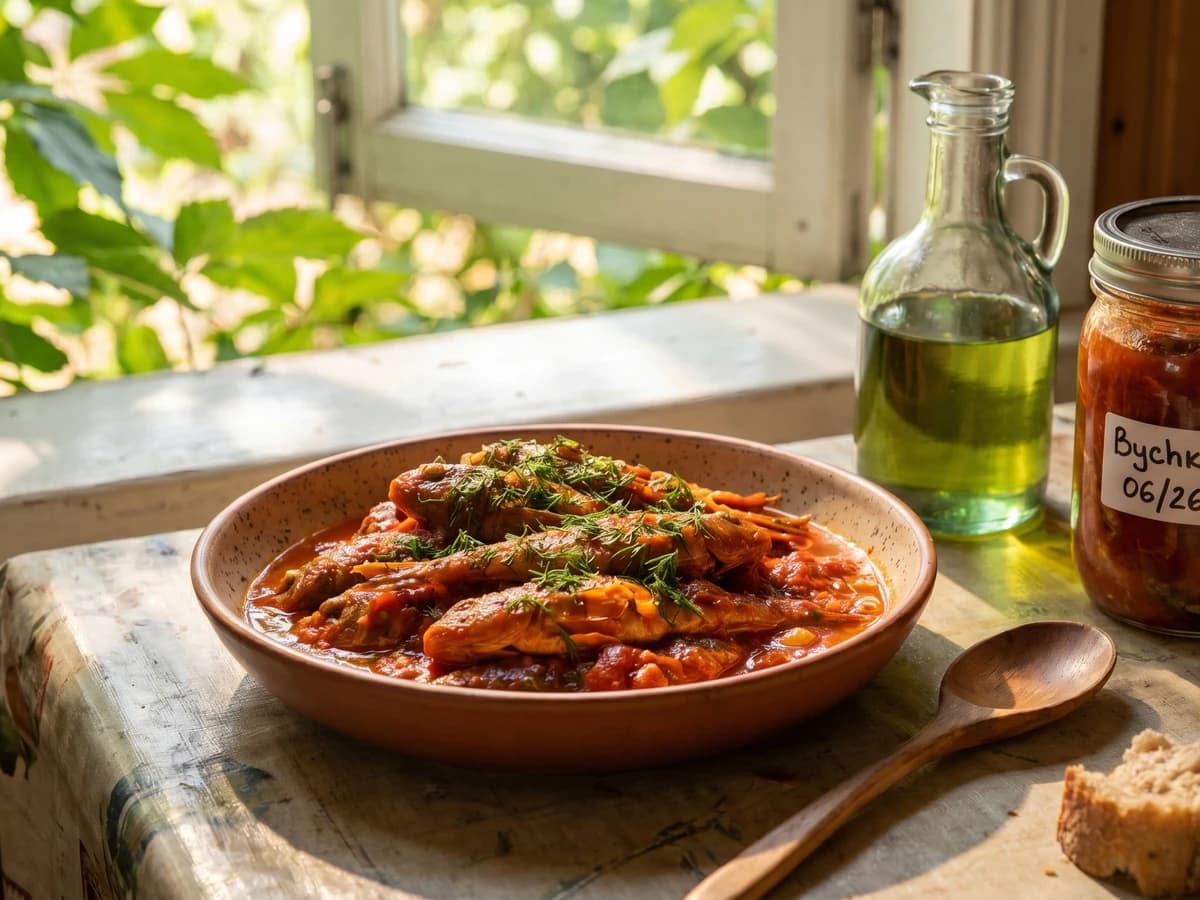
Small Azov gobies go into tomato bright as market cloth and come out soft enough that the bones give up. This is Mariupol food: cheap, red, generous, and better tomorrow.

Chef Lesia
The first sound is the meat against the board: flat, sharp, changing as the fibres loosen. Fry the cutlets fast, then let onion gravy do the soft finishing.

Chef Lesia
A heap of tiny silver fish becomes supper by the oldest Odesa trick: clean them, press them together, fry until the edges crackle, and let lemon and dill do the talking.