
Chef Lesia
Buzhenyna (буженина, garlic-studded roast pork)
A whole pork neck takes garlic into little knife pockets, roasts until the crust goes dark and fragrant, then rests overnight so every cold slice tastes better than shop ham.
A cooking platform built around craft, culture, and the stories behind what we eat.
Created by
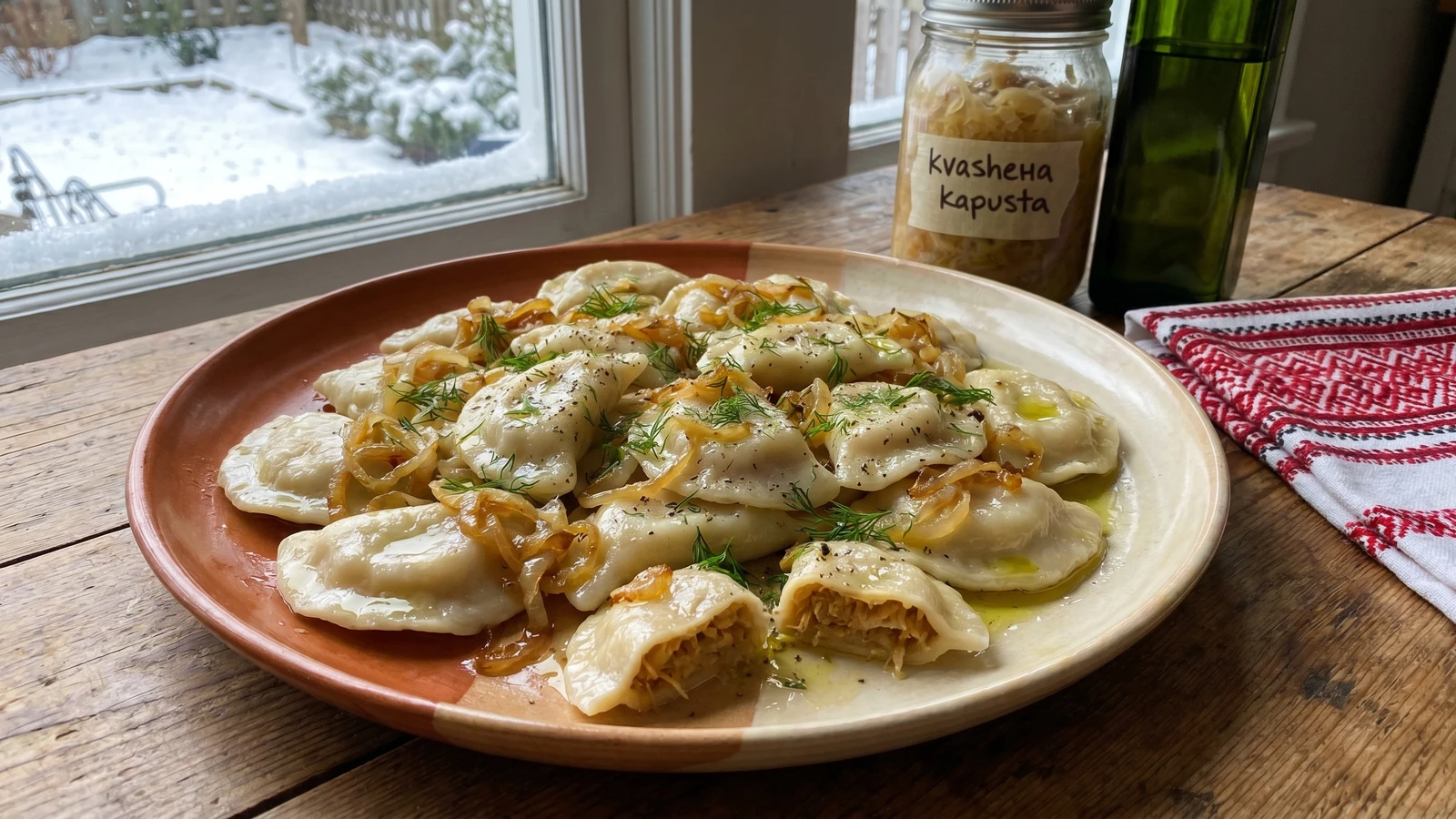
Sharp sauerkraut goes into the pan loud and wet, then onion oil tames it into a deep winter filling, tucked into tender varenyky for Christmas Eve or any cold table.
The filling begins sharp enough to wake the whole room, then you cook it until it goes quiet. Kvashena kapusta, fermented cabbage, is not meant to taste polite straight from the jar. It needs onion, sunflower oil, and time in the pan until the raw brine smell softens into something deep and wintery, sour still, but no longer shouting.
That is the whole dish. Squeeze the cabbage hard, stew it slowly, and let the wet hiss in the pan turn into a softer frying sound. Aunt Nadia would have written only "until it sounds right," the sort of instruction that makes you curse once and understand forever after. If the filling goes into the dough wet or hot, it will punish you by opening the seams. Cool and dry is the rule here.
These are varenyky for Sviata Vecheria, the Christmas Eve holy supper, when the table is lean and still generous. No egg in the dough, no butter on top, just onion oil shining over the dumplings and dill if you have it. On an ordinary winter day you can put smetana beside them, cold and white, and nobody sensible will object.
I fold mine the way my hands remember, tight little half-moons with a crimp along the edge. Make a tray, then another. Varenyky never look like enough until they are all boiled and glossy in the bowl, enough for eight guests or one hungry Ukrainian.
By the nineteenth century, Ukrainian ethnographers were recording varenyky as festive food, with fillings changing by season: sour cherries in July, curd cheese on dairy days, cabbage and mushrooms through the winter fast. Sauerkraut varenyky belong to Sviata Vecheria, the Christmas Eve supper of twelve Lenten dishes in many Ukrainian households, though the exact twelve shift by region and family. Soviet canteens flattened varenyky into standard boiled dumplings, but home kitchens kept the sharper winter fillings alive in jars, pans, and holiday memory.
Quantity
500g
plus extra for dusting
Quantity
1 teaspoon
Quantity
250ml
Quantity
2 tablespoons
for the dough, plus extra for the tray
Quantity
700g
drained and squeezed hard, brine reserved
Quantity
3 large
2 finely diced, 1 thinly sliced for serving
Quantity
5 tablespoons
divided, for filling and serving
Quantity
30g
soaked and finely chopped
Quantity
1 teaspoon
plus more to serve
Quantity
1/2 teaspoon
only if the sauerkraut is very sharp
Quantity
to taste
Quantity
small bunch
chopped, to serve
Quantity
to serve
for non-Lenten days
| Ingredient | Quantity |
|---|---|
| plain flourplus extra for dusting | 500g |
| fine sea salt | 1 teaspoon |
| just-boiled water | 250ml |
| unrefined sunflower oilfor the dough, plus extra for the tray | 2 tablespoons |
| kvashena kapusta (sauerkraut)drained and squeezed hard, brine reserved | 700g |
| onions2 finely diced, 1 thinly sliced for serving | 3 large |
| unrefined sunflower oildivided, for filling and serving | 5 tablespoons |
| dried porcini or other dried mushrooms (optional)soaked and finely chopped | 30g |
| black pepperplus more to serve | 1 teaspoon |
| sugar (optional)only if the sauerkraut is very sharp | 1/2 teaspoon |
| fine sea salt | to taste |
| dillchopped, to serve | small bunch |
| smetana (sour cream) (optional)for non-Lenten days | to serve |
Put the sauerkraut in your hands and squeeze it hard over a bowl, harder than feels polite. Keep the brine. Taste the cabbage: if it is fiercely salty or sour, rinse it quickly under cold water and squeeze again, but don't wash all the life out of it. Chop any long strands so the filling will sit neatly inside the dough.
Warm 3 tablespoons sunflower oil in a wide pan and soften the two diced onions over a low flame until they turn sweet and translucent. Add the squeezed cabbage, the chopped soaked mushrooms if using, black pepper, and the sugar only if the cabbage is biting too hard. Cook slowly, stirring often, until the pan stops sounding wet and starts to fry softly, and the smell changes from raw brine to sweet onion and deep sour cabbage. Taste for salt, then spread the filling on a plate to cool completely.
Stir the flour and salt in a large bowl. Pour in the just-boiled water and 2 tablespoons sunflower oil, mixing first with a spoon because the dough will be hot. When it is cool enough to touch, knead it on the table until smooth, elastic, and soft under your palms. Cover it with an upturned bowl and let it rest for about 30 minutes, until it relaxes and rolls without springing back.
Cut the dough in half and keep one piece covered while you work with the other. Roll it thin, not transparent but close, and cut rounds with a glass or cutter about 8cm wide. Put a teaspoon of cooled cabbage filling in the centre of each round, fold into a half-moon, and pinch the edge firmly from one end to the other. If your family has a crimp, use it. If not, a plain tight seal is honest.
Bring a big pot of salted water to a lively simmer, not a violent boil. Lower in the varenyky in batches and stir once so they don't catch on the bottom. When they float, give them a little longer, until the dough looks plump and tender rather than chalky at the seam. Lift them out with a slotted spoon onto an oiled platter.
While the varenyky boil, cook the sliced onion in the remaining 2 tablespoons sunflower oil until soft, amber at the edges, and sweet enough that you keep stealing pieces from the pan. Spoon the onion oil over the hot varenyky and turn them gently so every dumpling shines. Scatter with dill and black pepper. Serve with smetana only if it is not a Lenten table.
1 serving (about 245g)
Culinary guides, cultural storytelling, and the editorial depth that makes cooking meaningful.
Discover Culinary ExplorerChef Lesia
A whole pork neck takes garlic into little knife pockets, roasts until the crust goes dark and fragrant, then rests overnight so every cold slice tastes better than shop ham.
Chef Lesia
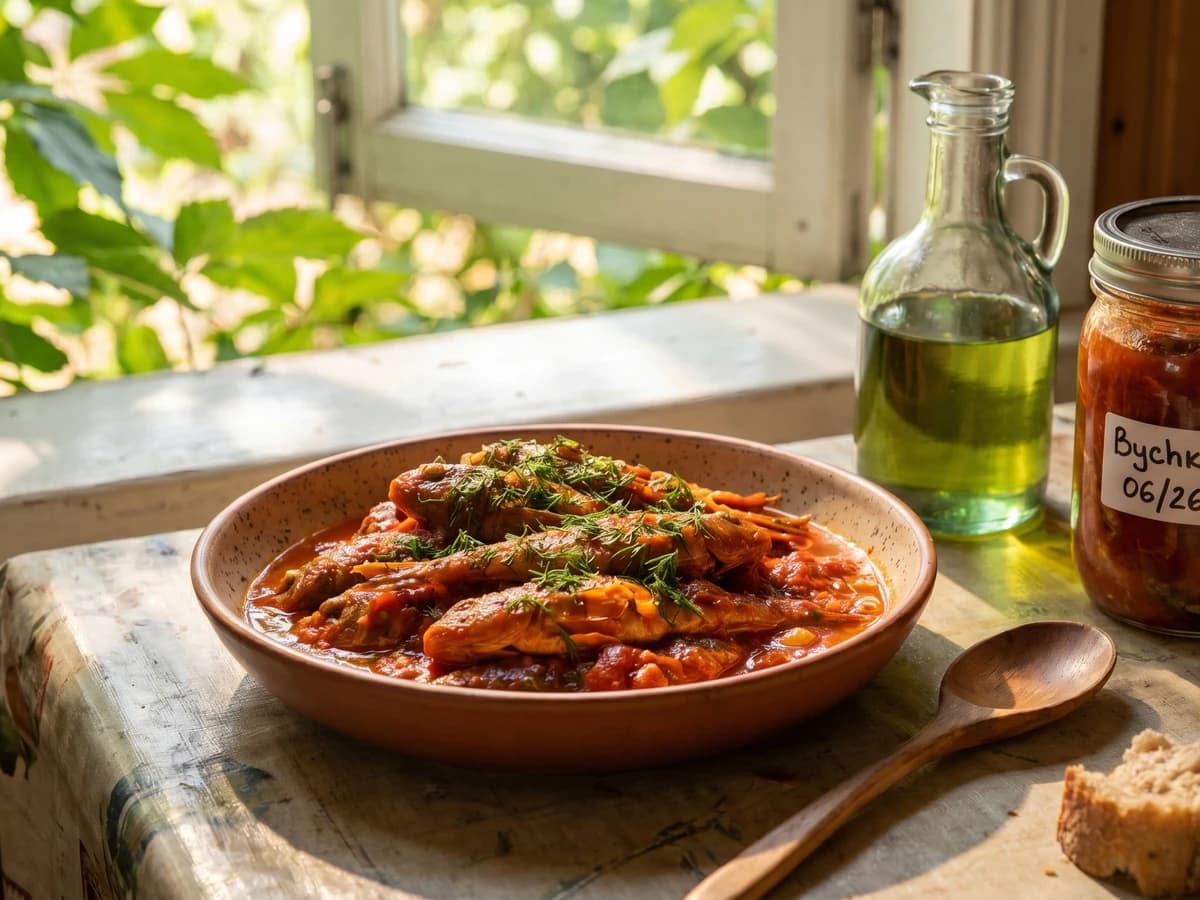
Small Azov gobies go into tomato bright as market cloth and come out soft enough that the bones give up. This is Mariupol food: cheap, red, generous, and better tomorrow.

Chef Lesia
The first sound is the meat against the board: flat, sharp, changing as the fibres loosen. Fry the cutlets fast, then let onion gravy do the soft finishing.

Chef Lesia
A heap of tiny silver fish becomes supper by the oldest Odesa trick: clean them, press them together, fry until the edges crackle, and let lemon and dill do the talking.