
Chef Lesia
Buzhenyna (буженина, garlic-studded roast pork)
A whole pork neck takes garlic into little knife pockets, roasts until the crust goes dark and fragrant, then rests overnight so every cold slice tastes better than shop ham.
A cooking platform built around craft, culture, and the stories behind what we eat.
Created by
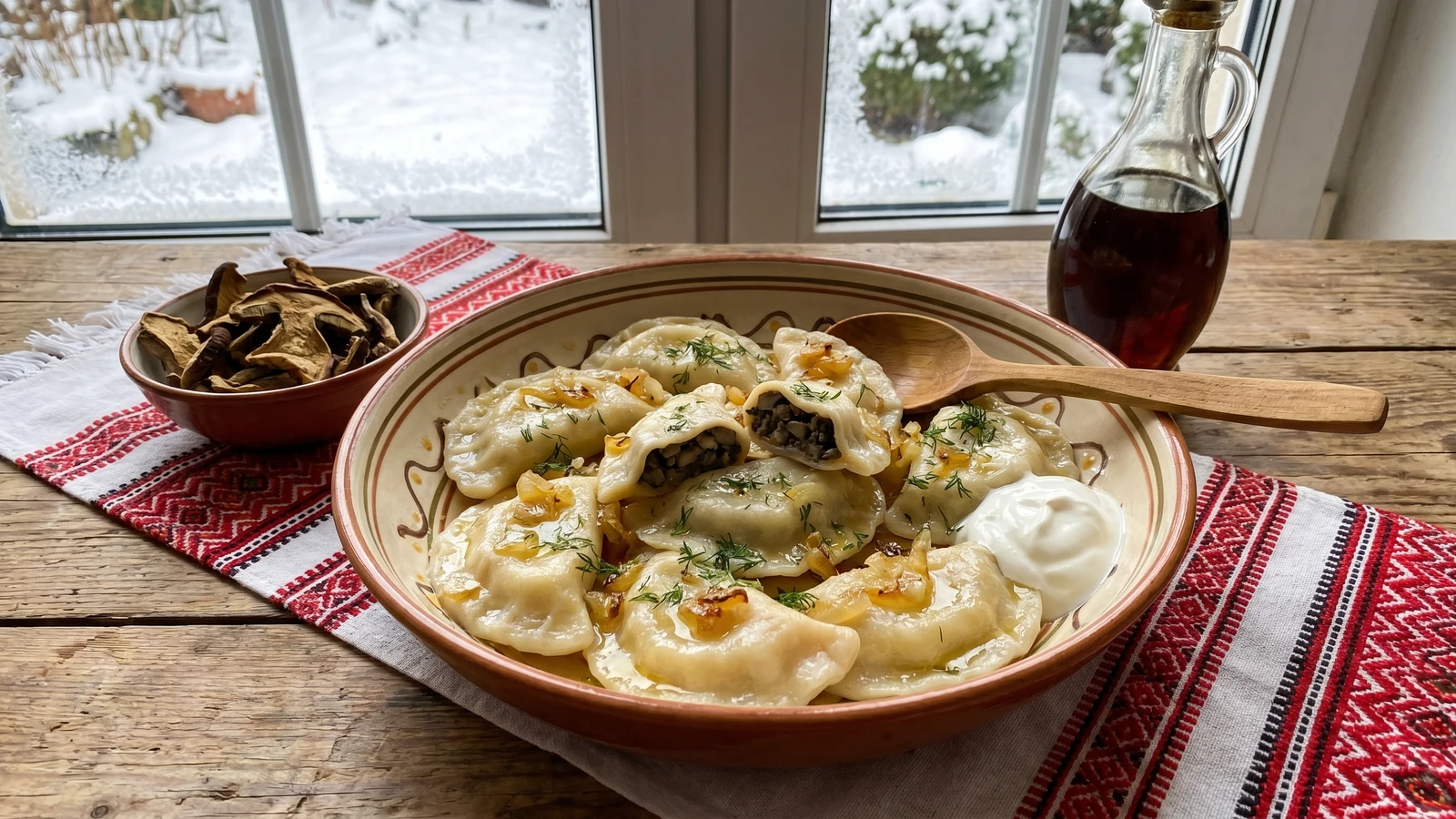
Dried porcini wake in hot water like a forest after rain, then disappear into soft dumpling dough with sweet onion, black pepper, and enough buttered shine for the whole table.
The first thing these dumplings give you is not their shape. It is the smell: dried porcini waking in hot water, dark and woodland, almost smoky, filling the kitchen before you have even touched the dough. That smell is the promise of Sviata Vecheria, the Christmas Eve meatless feast, but it also belongs to any cold evening when the table needs comfort and the pantry has more sense than the season.
The filling must be dark, but it must not be wet. This is the one why that decides the dish. Mushrooms carry water like secrets, and if you trap that water inside the dough the varenyky burst open in the pot and sulk at the bottom. Cook the fresh mushrooms until they stop sighing, reduce the porcini soaking liquor until it smells deep enough to lean on, then fold everything through slow onion until the filling holds together on a spoon.
My grandmother Vira taught me one dough fold, a triangle, and my hands remember it even when I tell them to behave. You can fold half-moons. You can crimp with a fork. The tradition survives because working kitchens keep making it work, not because every dumpling looks like mine.
Serve them glossy with onion oil, dill, and a cold spoon of smetana if your table allows dairy. Make more than you think. Varenyky disappear quietly, then somebody asks if there are any left, and that is when you learn you did not make enough.
Mushroom varenyky are especially tied to Ukrainian meatless feasts, including Sviata Vecheria, where forest mushrooms bring depth without meat or dairy when the strict fast is observed. In Polissia and the Carpathian regions, dried mushrooms, especially porcini, have long been winter currency, gathered in season and stored for soups, fillings, and holiday dishes. Soviet standardization flattened many regional dumpling fillings into a few canteen versions, but village kitchens kept the mushroom ones alive because a jar of dried hryby could feed a family through the cold months.
Quantity
500g
plus more for rolling
Quantity
1 teaspoon
for the dough
Quantity
280ml
Quantity
2 tablespoons
plus more for tossing
Quantity
40g
Quantity
350ml
for soaking mushrooms
Quantity
500g
finely chopped
Quantity
2 large
finely diced
Quantity
4 tablespoons
divided
Quantity
2 cloves
finely grated
Quantity
1 teaspoon
for the filling, plus more for cooking water
Quantity
1/2 teaspoon
Quantity
1 small bunch
finely chopped
Quantity
to serve
Quantity
to serve
| Ingredient | Quantity |
|---|---|
| plain flourplus more for rolling | 500g |
| fine sea saltfor the dough | 1 teaspoon |
| very warm water | 280ml |
| unrefined sunflower oilplus more for tossing | 2 tablespoons |
| dried porcini or mixed dried forest mushrooms | 40g |
| boiling waterfor soaking mushrooms | 350ml |
| fresh mushroomsfinely chopped | 500g |
| onionsfinely diced | 2 large |
| unrefined sunflower oil or butterdivided | 4 tablespoons |
| garlicfinely grated | 2 cloves |
| fine sea saltfor the filling, plus more for cooking water | 1 teaspoon |
| black pepper | 1/2 teaspoon |
| dillfinely chopped | 1 small bunch |
| smetana (sour cream) (optional) | to serve |
| extra fried onion (optional) | to serve |
Put the dried porcini in a bowl and cover with the boiling water. Let them sit until they soften and the water turns tea-dark and smells like wet woods. Lift the mushrooms out with your fingers so the grit stays behind, then chop them fine. Strain the soaking liquid through a fine sieve or cloth and keep it.
Mix the flour and salt in a wide bowl. Stir in the warm water and sunflower oil, then bring it together with your hand until no dry flour hides at the bottom. Knead until the dough turns smooth and elastic, soft as an earlobe and no longer tearing when you stretch a corner. Cover it and let it rest while the filling cools.
Warm 2 tablespoons of the oil or butter in a wide pan and add the diced onions with a pinch of salt. Let them soften slowly until they go golden at the edges and smell sweet, not sharp. You're not racing to brown them. You are building the sweetness that keeps the mushroom filling from tasting flat.
Add the fresh mushrooms to the onion and cook, stirring, until they release their water, sigh loudly in the pan, then quiet down again. Add the chopped soaked mushrooms, garlic, black pepper, and the strained soaking liquid. Keep cooking until the liquid has reduced away and the mixture is dark, glossy, and thick enough to mound on a spoon without weeping.
Taste the filling while it is warm enough to smell properly. It should be a little saltier than you think, because the dough will calm it down. Stir in half the dill, then spread the filling on a plate to cool completely. Warm filling makes soft dough sweaty, and sweaty dough is comedy until it is dinner.
Dust the table lightly with flour and roll the dough thin enough that you can see the shadow of your fingers through it. Cut circles with a glass or cutter, about 8cm wide. Keep the scraps covered while you work so they do not dry into leather.
Put a teaspoonful of mushroom filling in the center of each circle. Fold into half-moons, or into triangles if your hands remember that fold, and press the edges firmly so no filling sits in the seam. Lay the varenyky on a floured tray in a single layer, shoulder to shoulder but not touching.
Bring a big pot of salted water to a lively boil, then lower it a little so the dumplings roll without being beaten. Slip in the varenyky in batches and stir once so they do not catch. When they float and the dough looks silky rather than chalky, give them a short moment more, then lift them out with a slotted spoon.
Warm the remaining oil or butter in a pan with extra fried onion if you like, then toss the cooked varenyky through until they shine. Scatter with the rest of the dill and serve with cold smetana on the side, unless you are keeping the feast fully lean. Eat them while the edges are tender and the mushroom smell is still in the room.
1 serving (about 205g)
Culinary guides, cultural storytelling, and the editorial depth that makes cooking meaningful.
Discover Culinary ExplorerChef Lesia
A whole pork neck takes garlic into little knife pockets, roasts until the crust goes dark and fragrant, then rests overnight so every cold slice tastes better than shop ham.
Chef Lesia
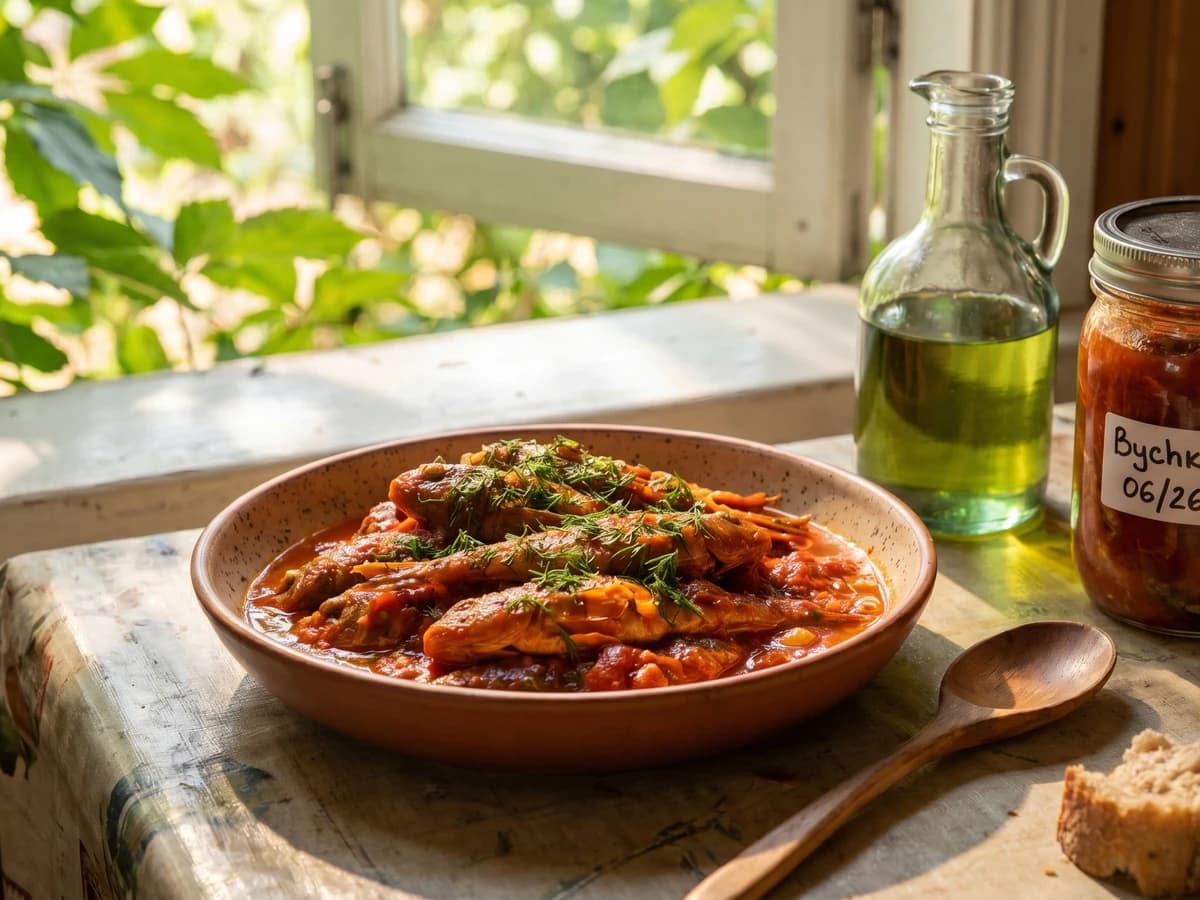
Small Azov gobies go into tomato bright as market cloth and come out soft enough that the bones give up. This is Mariupol food: cheap, red, generous, and better tomorrow.

Chef Lesia
The first sound is the meat against the board: flat, sharp, changing as the fibres loosen. Fry the cutlets fast, then let onion gravy do the soft finishing.

Chef Lesia
A heap of tiny silver fish becomes supper by the oldest Odesa trick: clean them, press them together, fry until the edges crackle, and let lemon and dill do the talking.