
Chef Lesia
Buzhenyna (буженина, garlic-studded roast pork)
A whole pork neck takes garlic into little knife pockets, roasts until the crust goes dark and fragrant, then rests overnight so every cold slice tastes better than shop ham.
A cooking platform built around craft, culture, and the stories behind what we eat.

Created by
Buckwheat is not soft background here. Each grain sits inside the dumpling like a small brown bead, nutty, separate, and sweetened by onion.
Buckwheat is brown, plain, and badly underestimated until it meets hot onion oil. Then the grains open, the nutty smell rises, and suddenly this is not a filler at all but the whole reason for the dumpling. Each grain should stay itself. That is the one thing that decides the dish.
These are Poltava varenyky, from a central Ukrainian kitchen where wheat dough and hrechka, buckwheat kasha, have sat together for a long time without asking for permission from meat. The filling is cheap, yes, but never small. Slow-fried onion sweetens it, dill wakes it up, black pepper keeps it from behaving too politely, and the dough holds it like a pocket of warm field earth after rain.
Cook the hrechka loose, not creamy. If it goes soft, the filling becomes paste and the dumpling loses its little bite. Aunt Nadia never gave me a number for this, only 'until the smell changes,' which was annoying until I understood: raw buckwheat smells green and dusty, cooked buckwheat smells toasted and round. Your nose will get there.
Make a trayful, freeze half, feed whoever is nearest. Varenyky are not delicate food, though the folding can feel tender in your hands. A recipe only lives while somebody cooks it, and this one has survived because it feeds people well when the purse is thin and the table still needs to feel generous.
Buckwheat, hrechka, has been grown and eaten across Ukrainian lands for centuries, especially in central and northern regions where it became everyday kasha, filling, and flour rather than a luxury grain. Poltava is strongly associated with varenyky in Ukrainian food memory, and buckwheat fillings show how the dish could be meatless, filling, and regionally distinct without being plain. Soviet canteens flattened varenyky into a narrow list of potato, cabbage, or curd cheese versions, but village kitchens kept quieter fillings like hrechka with onion alive.
Quantity
500g
plus more for dusting
Quantity
250ml
Quantity
2 tablespoons
for the dough, plus more for tossing
Quantity
1 teaspoon
Quantity
200g
Quantity
400ml
for cooking the buckwheat
Quantity
1 teaspoon
for the buckwheat
Quantity
3 large
finely diced
Quantity
4 tablespoons
for frying the onions
Quantity
1 small bunch
finely chopped
Quantity
to taste
freshly ground
Quantity
to serve
Quantity
to serve
| Ingredient | Quantity |
|---|---|
| plain flourplus more for dusting | 500g |
| warm water | 250ml |
| unrefined sunflower oilfor the dough, plus more for tossing | 2 tablespoons |
| fine sea salt | 1 teaspoon |
| toasted buckwheat groats | 200g |
| waterfor cooking the buckwheat | 400ml |
| sea saltfor the buckwheat | 1 teaspoon |
| onionsfinely diced | 3 large |
| unrefined sunflower oilfor frying the onions | 4 tablespoons |
| dillfinely chopped | 1 small bunch |
| black pepperfreshly ground | to taste |
| smetana (sour cream) (optional) | to serve |
| extra fried onion oil | to serve |
Rinse the buckwheat briefly, then put it in a small pan with the water and salt. Bring it to a quiet boil, cover, and cook until the water has disappeared and the grains smell nutty, not grassy. Take it off the heat and leave it covered until the grains swell and settle. You want hrechka, buckwheat kasha, loose enough that each grain stays itself inside the dumpling.
Warm the sunflower oil in a wide pan and add the diced onions with a pinch of salt. Let them soften slowly until they turn gold at the edges and the kitchen smells sweet, deep, and a little toasted. Don't burn them. This onion oil is the flavor base, the poor woman's feast, and it carries the buckwheat.
Stir two thirds of the fried onions and their oil through the buckwheat. Add black pepper and most of the dill, then taste. It should be savory enough to eat from the spoon because dough will quiet it down. Let the filling cool completely before you shape; hot filling makes the dough sweat and the seams sulk.
Put the flour and salt in a bowl, pour in the warm water and sunflower oil, and mix until a rough dough forms. Knead until it turns smooth and elastic under your hands, adding only enough flour to stop it sticking. Cover it and let it rest until it relaxes. Aunt Nadia would write, 'until it sounds right,' and this is what she meant: when you pat it, the dough answers softly, not like wet clay.
Roll half the dough thin enough to see the shadow of your fingers through it. Cut rounds about 8cm wide, spoon a little buckwheat into the centre, and seal each one firmly, pressing out trapped air as you go. A half-moon is honest. I fold mine with the old triangular habit because my hands remember, but the table cares more about a good seal than a family shape.
Bring a wide pot of salted water to a lively boil, then lower the heat so the water rolls without throwing the dumplings around. Cook the varenyky in batches. When they float, give them a little longer until the dough looks silky and slightly swollen. Lift them with a slotted spoon, never a colander, and toss with sunflower oil or the remaining fried onion oil so they don't cling together.
Pile the varenyky into a deep bowl with the rest of the fried onions, a scatter of dill, and smetana if you're using it. For a vegan table, leave the smetana aside and let the onion oil shine. Serve enough for eight guests or one hungry Ukrainian.
1 serving (about 240g)
Culinary guides, cultural storytelling, and the editorial depth that makes cooking meaningful.
Discover Culinary ExplorerChef Lesia
A whole pork neck takes garlic into little knife pockets, roasts until the crust goes dark and fragrant, then rests overnight so every cold slice tastes better than shop ham.
Chef Lesia
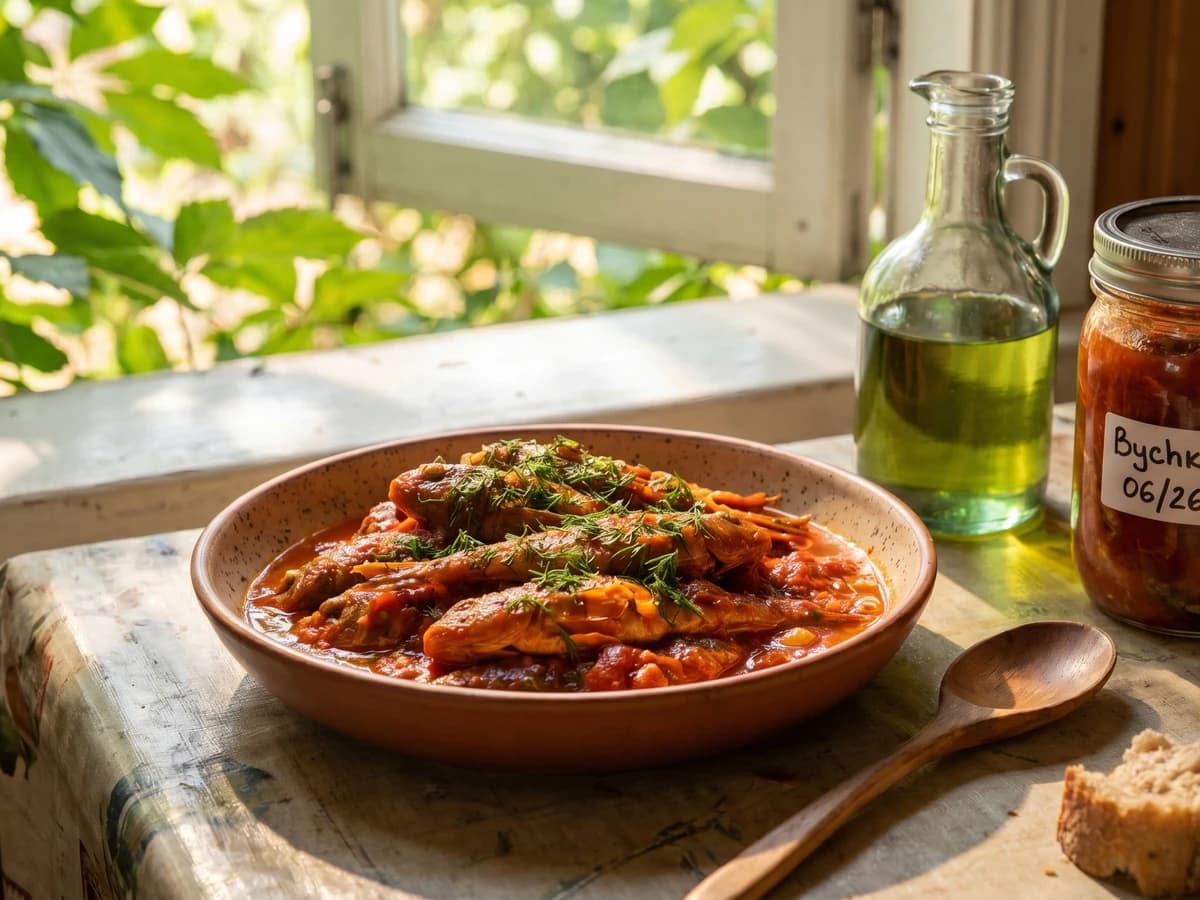
Small Azov gobies go into tomato bright as market cloth and come out soft enough that the bones give up. This is Mariupol food: cheap, red, generous, and better tomorrow.

Chef Lesia
The first sound is the meat against the board: flat, sharp, changing as the fibres loosen. Fry the cutlets fast, then let onion gravy do the soft finishing.

Chef Lesia
A heap of tiny silver fish becomes supper by the oldest Odesa trick: clean them, press them together, fry until the edges crackle, and let lemon and dill do the talking.