
Chef Lesia
Buzhenyna (буженина, garlic-studded roast pork)
A whole pork neck takes garlic into little knife pockets, roasts until the crust goes dark and fragrant, then rests overnight so every cold slice tastes better than shop ham.
A cooking platform built around craft, culture, and the stories behind what we eat.
Created by
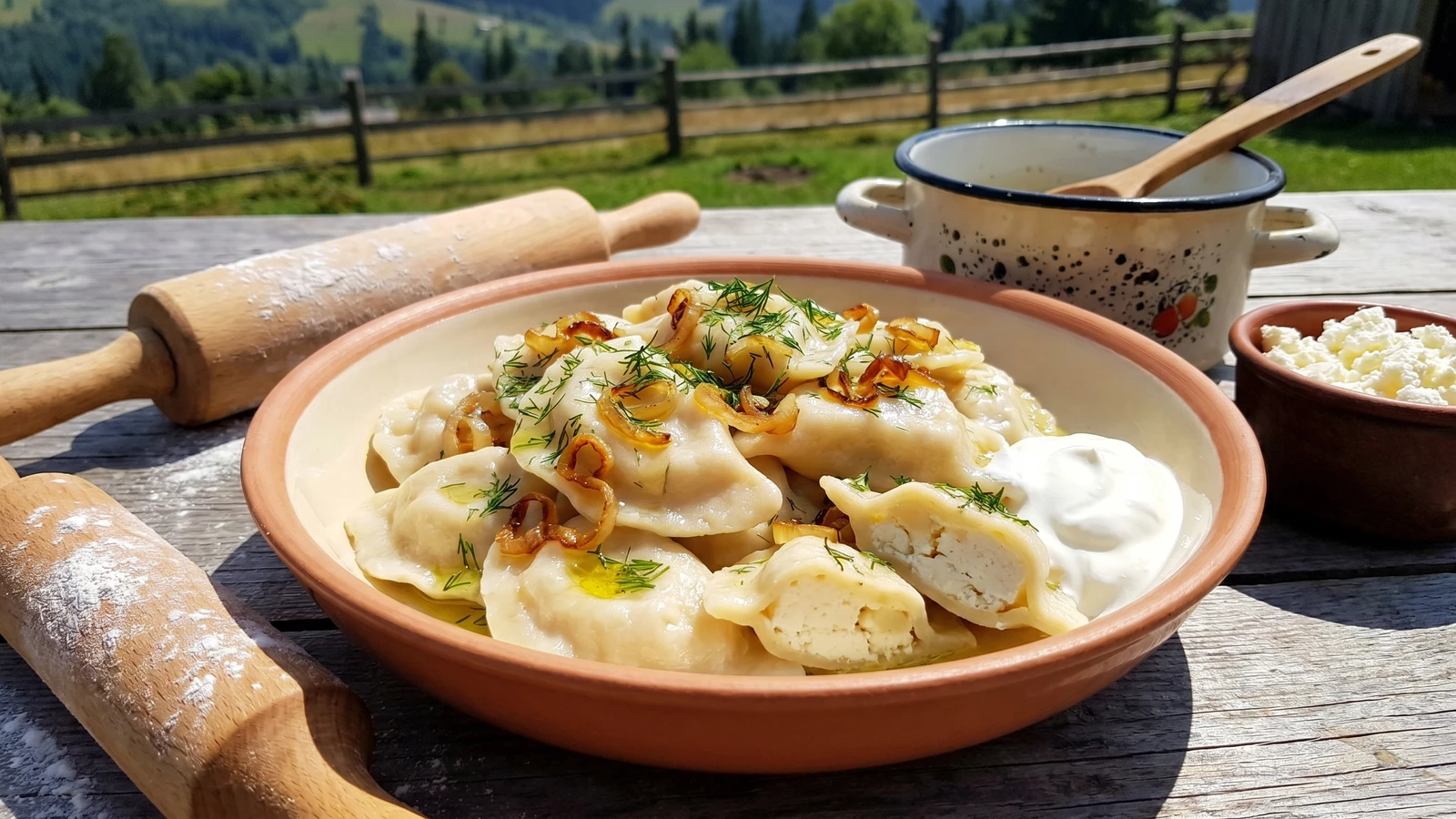
Salty sheep brynza does half the cooking before your pot is even on, sharp from the Carpathian high pastures and tucked into soft dough with just enough potato to steady it.
Brynza bites first. Not politely, not creamy like a young cheese trying to please, but salty and sheepy from the Carpathian high pastures, the kind of cheese that makes you reach for hot dough, cold smetana, and another forkful before you've finished the first.
This is not my southern steppe dish by birth; I came to it with respect, the way you enter someone else's kitchen and wait to be shown where the knives live. In the Carpathians, dairy speaks loudly: brynza from sheep milk, potatoes from cool soil, onions sweetened in butter. My Aunt Nadia's kind of instruction would have been "don't drown the cheese," and she would be right.
The potato is not filler. It catches the brine, steadies the cheese, and keeps the varenyky from leaking while the brynza still stays sharp enough to announce the mountains. Roll the dough thin, seal out the air, and boil only until they float and look plump. Then into onion butter. Enough for six hungry people, or one Ukrainian pretending to make them ahead.
Brynza, often named bryndza or bryndzia in the highlands, belongs to the Ukrainian Carpathian polonyny, the summer sheep pastures where Hutsul shepherds make and salt cheese during the grazing season. In 2019 Hutsul sheep bryndzia became Ukraine's first registered geographical indication, tying the cheese to place, milk, and mountain method. Varenyky filled with it show a western Ukrainian kitchen shaped by pasture and brine, very different from my southern steppe of tomatoes, aubergines, and sunflower oil.
Quantity
500g
plus more for dusting
Quantity
1 teaspoon
for the dough, plus more for cooking water
Quantity
300ml
cooled for 1 minute
Quantity
2 tablespoons
plus a little for the tray
Quantity
350g
peeled and cut into chunks
Quantity
400g
preferably sheep milk, drained and crumbled
Quantity
1 small handful
finely chopped, plus more to serve
Quantity
1/2 teaspoon
Quantity
1 tablespoon
only if the filling feels dry
Quantity
2 large
thinly sliced
Quantity
60g
Quantity
2 tablespoons
for the onions
Quantity
to serve
| Ingredient | Quantity |
|---|---|
| plain flourplus more for dusting | 500g |
| fine sea saltfor the dough, plus more for cooking water | 1 teaspoon |
| just-boiled watercooled for 1 minute | 300ml |
| unrefined sunflower oilplus a little for the tray | 2 tablespoons |
| floury potatoespeeled and cut into chunks | 350g |
| brynzapreferably sheep milk, drained and crumbled | 400g |
| dillfinely chopped, plus more to serve | 1 small handful |
| black pepper | 1/2 teaspoon |
| smetana (optional)only if the filling feels dry | 1 tablespoon |
| onionsthinly sliced | 2 large |
| unsalted butter | 60g |
| unrefined sunflower oilfor the onions | 2 tablespoons |
| smetana (optional) | to serve |
Tip the flour and salt into a wide bowl. Pour in the hot water and sunflower oil, then stir with a wooden spoon until the dough looks shaggy and too hot for your hands. When it has cooled to warm, knead until smooth and soft, with a slow spring under your palm. Cover and rest until it rolls without fighting you.
Simmer the potato chunks in salted water until a knife slides through without pressure. Drain them well, return them to the warm pot, and shake until the outside looks floury and dry. Mash smooth, then spread the mash on a plate to cool. Wet potato makes the filling weep.
Crumble the brynza into the cooled potato, add the dill and black pepper, and work it together with a fork until it holds in soft clumps. Taste before you even think about salt; good brynza has already done that job. If the filling cracks apart and refuses to mound, add the spoon of smetana, but keep it firm.
Lightly flour the table and divide the dough in two. Keep one half covered while you roll the other thin enough to see the shadow of your fingers through it. Cut circles about 8cm wide with a cutter or a drinking glass. Let the scraps rest before rolling them again; tired dough behaves better after a little silence.
Put a rounded teaspoon of filling in the centre of each circle, fold into a half-moon, and press from the centre outward so the air escapes before you pinch the edge shut. If the edge has picked up too much flour, touch it with a damp finger. Lay the varenyky on a lightly oiled or floured tray, not touching. My hands remember triangles from grandmother Vira, but for this mountain filling half-moons are easy and generous.
Melt the butter with the sunflower oil in a wide pan, then add the onions and a small pinch of salt. Cook low and unhurried until the onions slump, shine, and smell sweet instead of raw, with gold at the edges. The oil keeps the butter from catching; the onion sweetness rounds the brynza's salt.
Bring a wide pot of salted water to a boil, then lower it to a lively simmer. Slide in the varenyky in batches and stir once so none settle on the bottom. When they float and the dough looks plump and smooth, let them bob for one quiet minute, then lift them straight into the onion butter. Toss gently until glossy. Serve with smetana and more dill.
1 serving (about 320g)
Culinary guides, cultural storytelling, and the editorial depth that makes cooking meaningful.
Discover Culinary ExplorerChef Lesia
A whole pork neck takes garlic into little knife pockets, roasts until the crust goes dark and fragrant, then rests overnight so every cold slice tastes better than shop ham.
Chef Lesia
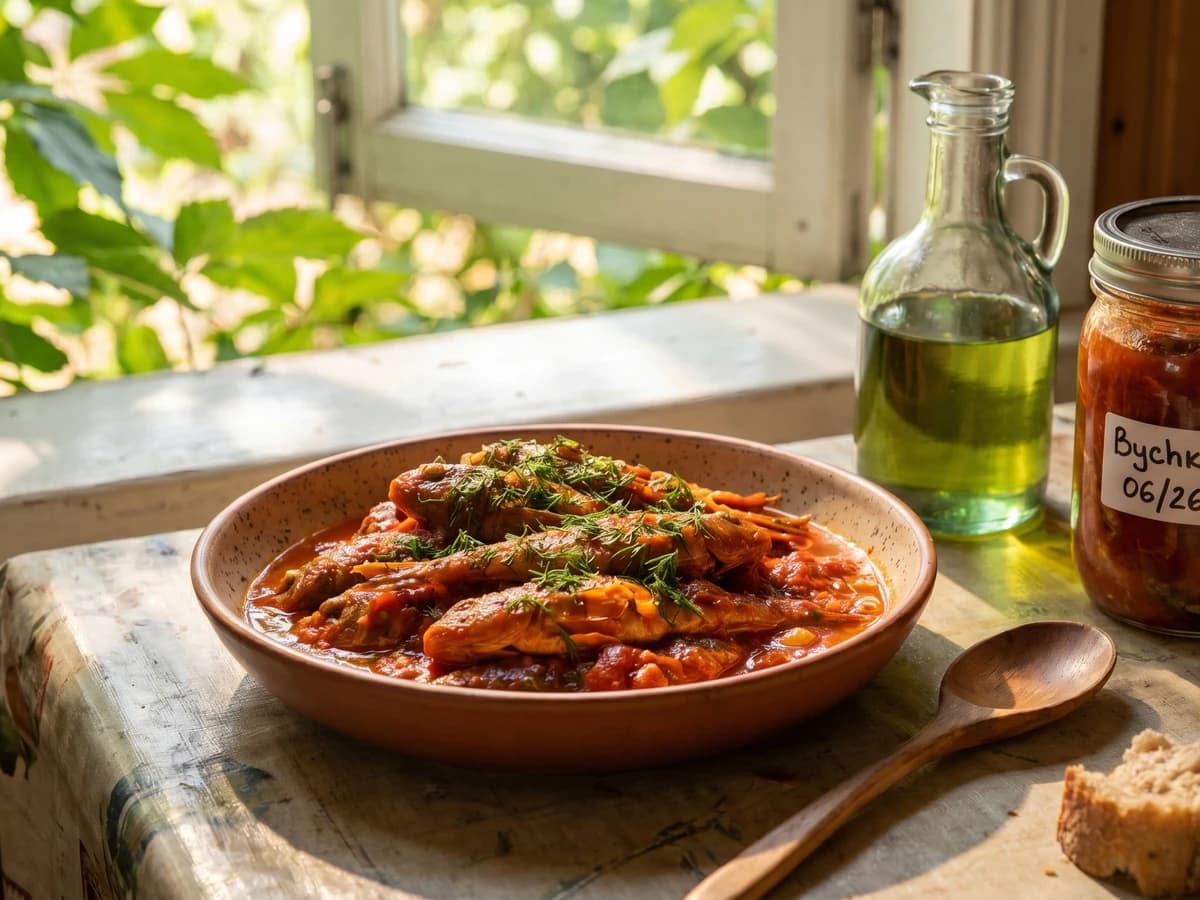
Small Azov gobies go into tomato bright as market cloth and come out soft enough that the bones give up. This is Mariupol food: cheap, red, generous, and better tomorrow.

Chef Lesia
The first sound is the meat against the board: flat, sharp, changing as the fibres loosen. Fry the cutlets fast, then let onion gravy do the soft finishing.

Chef Lesia
A heap of tiny silver fish becomes supper by the oldest Odesa trick: clean them, press them together, fry until the edges crackle, and let lemon and dill do the talking.