Culinary Explorer

A cooking platform built around craft, culture, and the stories behind what we eat.
Discover Culinary Explorer
Vaisalo (Sāmoan Young Coconut and Tapioca Porridge)

Vaisalo (Sāmoan Young Coconut and Tapioca Porridge)

Created by

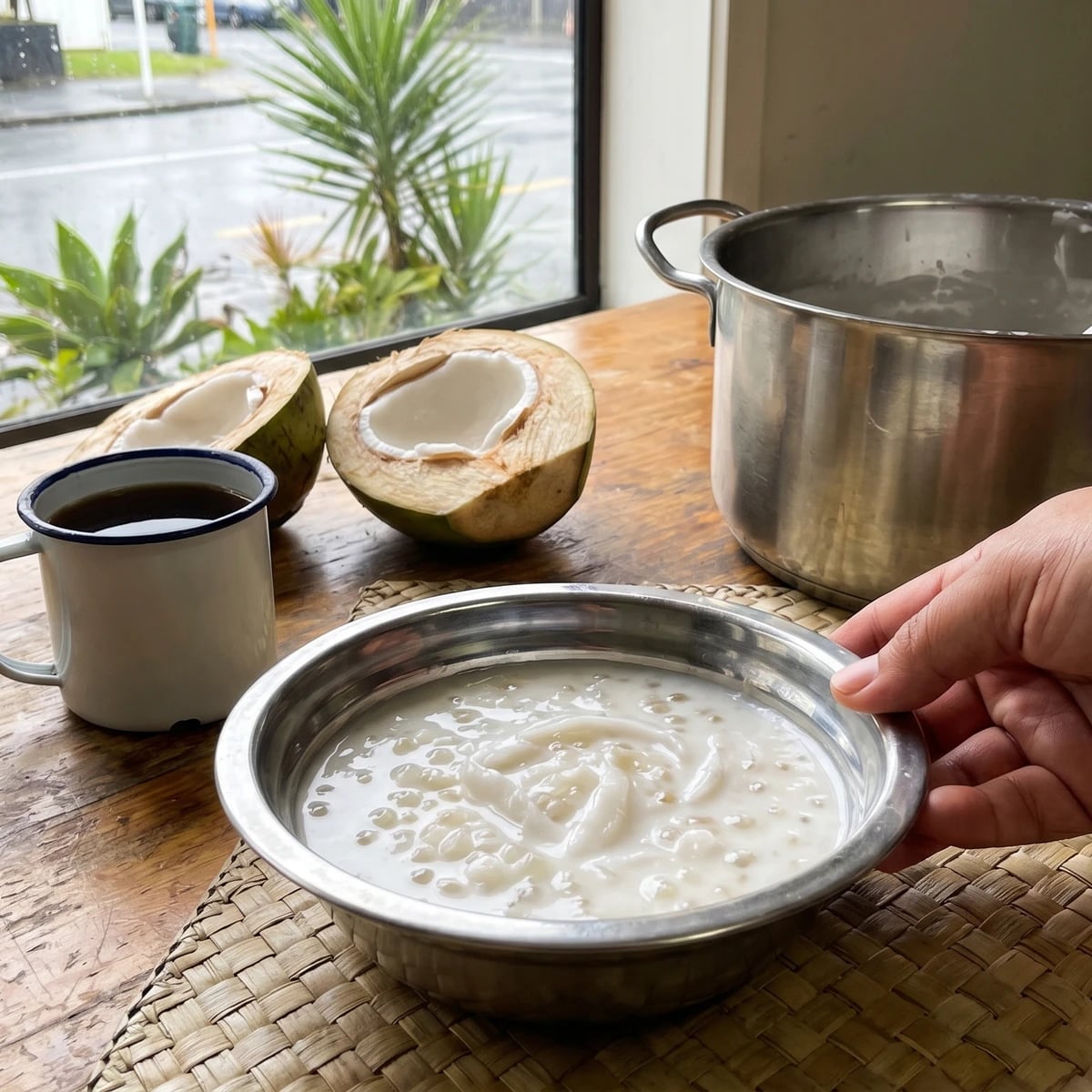
A warm Sāmoan bowl of young niu, sweet coconut water, soft coconut meat, and sago cooked until glossy and gentle, the kind of building-up food the aiga feeds you when you need strength back.

Breakfast & Brunch
Polynesian, Samoan
Comfort Food
Make Ahead
Budget Friendly
20 min
Active Time
25 min cook45 min total
Yield6 servings

The Sāmoan aunties taught me this kind of bowl before they taught me the measurements. Not with a speech, yeah. With a ladle. Vaisalo belongs to Sāmoa: young niu, coconut, its sweet water and soft flesh, cooked with sago until it becomes a warm, gentle porridge for the aiga, the family, especially the sick, the elderly, new mothers, and children who need building up.

Back home in Hawaiʻi, when we talk about kinship, my hand goes first to kalo and poi. In Sāmoa, the coconut stands right there too, feeding the body from water to cream to flesh to oil. Same ocean, different bowl. Tahiti has its coconut milk and fruit bowls, the Cook Islands have their soft starches and coconut, Tonga feeds its own recovering people with the foods its aunties know. One ocean, one canoe, one root, and many hands.

The why is simple: don't make it fancy. Let the sago swell slow so it turns clear and soft, not gluey. Let the niu water stay bright. Add the peʻepeʻe, the coconut cream, near the end so it keeps its sweetness and body. This is comfort food, budget food, sickbed food, morning food, real food. It doesn't need to perform for anybody.

This is my cousins' dish, not mine to claim. I cook it open-handed, and for the deep Sāmoan language around care, feeding, and the feast, I send you to a Sāmoan matai or auntie who carries it. They should tell their own story. I just keep the pot warm enough for one more bowl.

Vaisalo sits in the Sāmoan everyday kitchen, built from niu and sago, a later starch that settled into island pantries through trade while coconut remained one of the old central foods of the Pacific. Its role as a building-up food matters: Sāmoan families feed soft coconut porridges and drinks to children, elders, new mothers, and people recovering, because they are easy to swallow, rich, and gentle. That is the living line between deep food and modern pantry food in Sāmoa, the coconut still carrying the old relationship while sago, tins, church kitchens, and Auckland tables show how the food kept moving.

The technique, the tradition, and the story behind every dish.

Discover Culinary Explorer

Ingredients

young coconuts (niu)

Quantity

3

water reserved, soft meat scraped into thin ribbons

water

Quantity

4 cups

plus more as needed

small tapioca pearls or sago

Quantity

3/4 cup

fresh coconut cream (peʻepeʻe)

Quantity

1 1/2 cups

or 1 can (about 13 oz) thick coconut cream

sugar

Quantity

1/3 to 1/2 cup

to taste

fine sea salt

Quantity

1/2 teaspoon

Equipment Needed

  • Heavy 4-quart saucepan
  • Fine-mesh strainer for coconut water
  • Sturdy wooden spoon or silicone spatula
  • Coconut opener or cleaver used with care

Instructions

  1. 1

    Open the niu

    Open the young coconuts, the niu, and pour the sweet water through a fine strainer into a bowl. Scrape the soft meat into thin ribbons or small spoonfuls. This is the heart of Sāmoan vaisalo, not a garnish, so keep the water and the flesh together like they came from the shell.

    If fresh young coconut is hard to find, use bottled young coconut water with no flavoring and frozen young coconut meat. Eat what you have. Just don't use toasted dry coconut here, it belongs to another job.
  2. 2

    Start the sago

    Bring 4 cups water to a steady simmer in a heavy pot. Stir in the sago or small tapioca pearls and keep stirring for the first minute so they don't settle and stick. Cook 12 to 15 minutes, until most pearls turn clear with only a tiny white eye left in the center.

  3. 3

    Add coconut water

    Pour in the strained coconut water and stir slowly. The pot will loosen first, then come back together as the pearls keep giving body. Keep the heat gentle. You want a soft, glossy porridge, not a tight pudding.

  4. 4

    Sweeten and soften

    Add the sugar, salt, and scraped young coconut meat. Simmer 5 to 8 minutes, stirring often, until the coconut meat warms through and the pearls are fully clear. Taste it now. It should be sweet, yes, but still taste like niu before it tastes like sugar.

  5. 5

    Finish with peʻepeʻe

    Lower the heat and stir in the peʻepeʻe, the coconut cream. Let it move through the pot for 2 or 3 minutes, just until the porridge turns creamy and white with a soft sheen. Do not boil hard after the cream goes in, or the bowl gets heavy and oily.

  6. 6

    Rest and serve

    Take the pot off the heat and let it sit 5 minutes. Vaisalo thickens as it rests, so loosen it with a splash of water or coconut water if it tightens too much. Serve warm in bowls, gentle and full, the way you feed somebody who's coming back to themselves.

Chef Tips

  • Fresh niu gives the cleanest bowl. The water should taste sweet and alive, and the young meat should be soft enough to scoop with a spoon.
  • Fresh peʻepeʻe is the soul of much Sāmoan cooking. A thick can does the weeknight job, no shame, but shake or stir it smooth before it goes in.
  • If the vaisalo gets too thick after resting, loosen it with warm water or coconut water. No blame the sago. It keeps drinking after the fire is off.
  • For someone recovering, keep the sugar lighter and the texture looser. Food should meet the person in front of you, not somebody's idea of the perfect bowl.

Advance Preparation

  • Scrape the young coconut meat and strain the coconut water up to 1 day ahead; keep them covered and cold.
  • Vaisalo keeps 3 days in the refrigerator. Rewarm gently with water or coconut water, stirring until it loosens back into a soft porridge.
  • Do not add extra coconut cream until reheating if you want the freshest finish; a small spoonful stirred in at the end brings the sheen back.

Frequently Asked Questions

Nutrition Information

1 serving (about 390g)

Calories
405 calories
Total Fat
26 g
Saturated Fat
23 g
Trans Fat
0 g
Unsaturated Fat
3 g
Cholesterol
0 mg
Sodium
260 mg
Total Carbohydrates
45 g
Dietary Fiber
4 g
Sugars
24 g
Protein
4 g

Note: Chef personas and recipes are created with AI assistance. Cook with care: follow safe food-handling practices, check doneness with a thermometer when needed, and adapt for allergies and your kitchen.

Where cooking meets culture.

Culinary guides, cultural storytelling, and the editorial depth that makes cooking meaningful.

Discover Culinary Explorer

More from Sāmoan Soups & Breakfast

Browse the full collection