Culinary Explorer

A cooking platform built around craft, culture, and the stories behind what we eat.
Discover Culinary Explorer
Koko Esi (Sāmoan Cacao-Papaya Soup)

Koko Esi (Sāmoan Cacao-Papaya Soup)

Created by

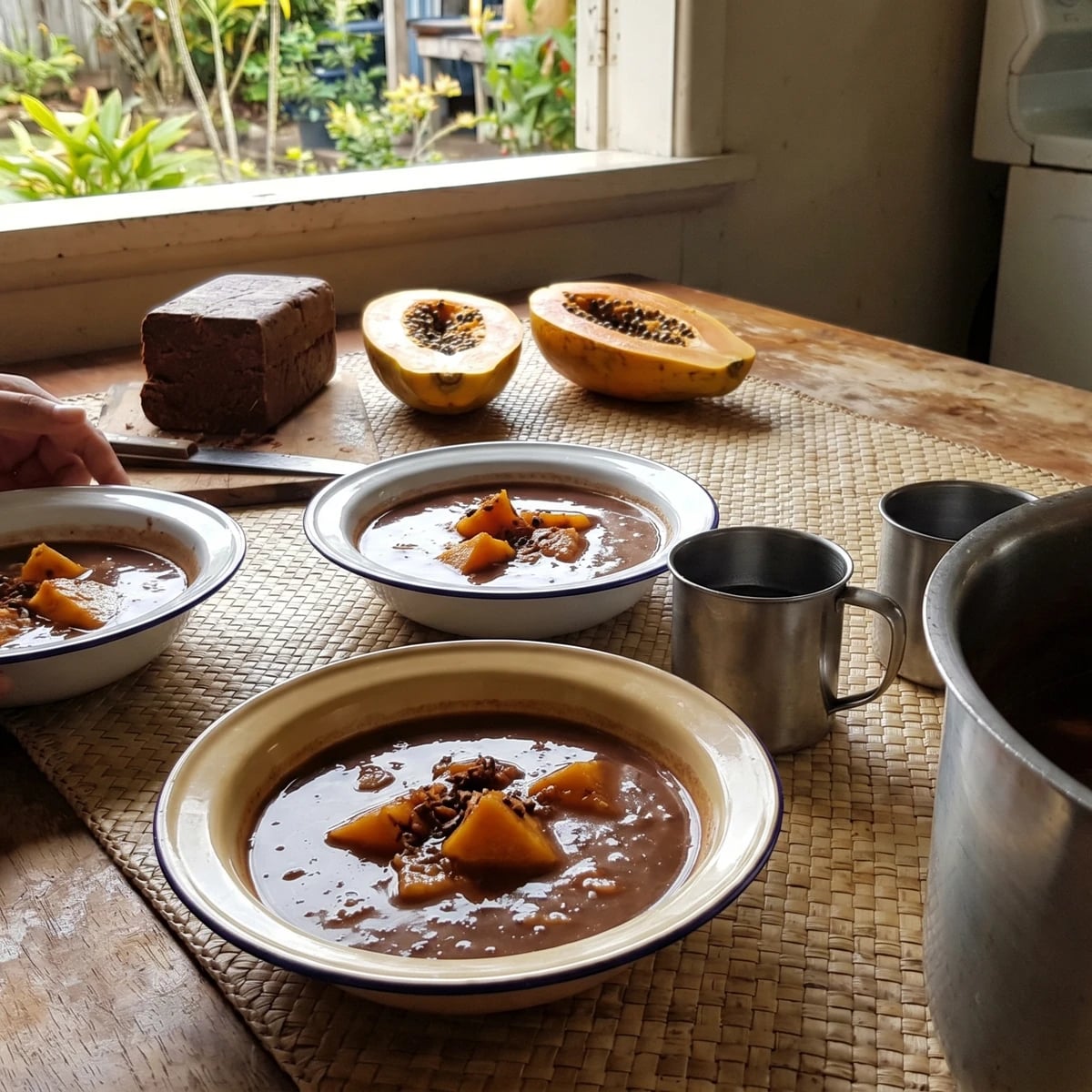
A Sāmoan building-up bowl of ripe esi simmered with roasted Koko Sāmoa, softened with fresh peʻepeʻe, and served warm for elders, children, new mothers, and anybody who needs steady care.

Soups & Stews
Polynesian, Samoan
Comfort Food
Make Ahead
Special Occasion
20 min
Active Time
25 min cook45 min total
Yield6 servings

The old people teach plenty from the quiet table, not only from the feast. In a Sāmoan kitchen, koko esi is that kind of food: esi, ripe papaya, softened in the dark roasted bitterness of Koko Sāmoa, then rounded with peʻepeʻe, fresh coconut cream. The ʻaiga, the family, feeds bowls like this to children, elders, new mothers, and anybody who needs building back up. No fanfare. Just care in a pot.

I know this one from the cousin's side, so I hold it carefully. Back home in Hawaiʻi my hands know kalo and poi, Hāloa our elder brother. Sāmoa gives this bowl from its fanua, the land, with koko trees, coconut, and papaya folded into everyday life. Its closest Sāmoan cousins are koko araisa, cacao rice, vaisalo, a coconut-starch soup, and suafaʻi, banana simmered with coconut. Out across the Triangle it sits near Tahitian poʻe, a baked fruit pudding, Cook Islands poke, the fruit pudding and not my Hawaiian raw fish, and Hawaiian poi as soft foods that steady the body. Same comfort law, different island names.

Use real Koko Sāmoa. That's the hand of this dish. It carries roasted bean, cacao fat, and a little grain, and cocoa powder cannot carry the same weight. Simmer gently, mash some of the esi so the bowl gets body, then finish with peʻepeʻe off the hard heat. You want dark and sweet, but not candy. The bitter edge is what makes it grown.

For the deeper parts of faʻafā Sāmoa, the Sāmoan way, and the customs around feeding a new mother, a sick elder, or the Sunday table, go sit with a Sāmoan matai or auntie who carries that house. They should tell their own story. I can show you the pot, open-handed, and keep the table wide.

Unlike talo, taro, ʻulu, breadfruit, and niu, coconut, papaya and cacao were not canoe plants; both came into the Pacific after contact and became Sāmoan through growing, roasting, and feeding in the fanua, the land. Cacao took strong root in Sāmoa in the early 1900s during German colonial plantation agriculture, then local families made Koko Sāmoa their own by roasting whole beans and setting the ground cacao in blocks or cups for drinks, koko araisa, and soups like koko esi. That is the deep-food and mission-food doorway in one bowl: not ancient in the canoe, still kept by the ʻaiga, the family, because Sāmoans fed it where care was needed.

The technique, the tradition, and the story behind every dish.

Discover Culinary Explorer

Ingredients

ripe papaya (esi)

Quantity

4 cups

peeled, seeded, and cut into 1-inch chunks, about 2 large papayas

water

Quantity

3 cups

Koko Sāmoa

Quantity

3 ounces

finely grated or shaved from the block

raw sugar

Quantity

1/3 cup

plus more to taste

sea salt

Quantity

1/4 teaspoon

fresh coconut cream (peʻepeʻe)

Quantity

1 cup

squeezed from mature coconut, or thick canned coconut cream

fresh coconut cream (peʻepeʻe) (optional)

Quantity

2 tablespoons

for finishing

Equipment Needed

  • Heavy 3-quart saucepan
  • Box grater or microplane for shaving Koko Sāmoa
  • Wooden spoon or potato masher
  • Fine cloth for squeezing fresh peʻepeʻe, if making coconut cream

Instructions

  1. 1

    Ready the esi

    Peel, seed, and cut the esi, the Sāmoan papaya, into generous chunks. You want fruit that smells sweet and gives a little under your thumb, not hard and green, not gone sour. Spotted skin is no problem. Eat what you have, and no throw away good food because it looks tired.

  2. 2

    Melt the koko

    Put the water in a heavy saucepan over medium heat, then whisk in the grated Koko Sāmoa, sugar, and salt. Let it come up slowly until the water turns dark brown and the roasted cacao smell fills the pot. Koko Sāmoa is whole roasted cacao, so it won't go perfectly smooth like powder. That little grain at the bottom is part of the bowl.

    Use real Koko Sāmoa if the dish carries that name. If you can't get it, unsweetened cacao paste with a spoon of roasted cacao nibs gets closer than cocoa powder. Call that the pantry version, no shame.
  3. 3

    Simmer the fruit

    Add the papaya to the dark koko and lower the heat to a gentle simmer. Cook 15 to 20 minutes, stirring now and then, until the edges of the fruit soften and the spoon can press into a piece without a fight. The soup should look mahogany-brown with amber-orange papaya still showing through.

  4. 4

    Mash for body

    Press about a third of the papaya against the side of the pot with a wooden spoon or masher, leaving the rest in soft chunks. This is where the soup thickens without getting fussy. Thick enough to coat the spoon, loose enough to drink from a tin bowl, that's the place.

  5. 5

    Finish with peʻepeʻe

    Turn the heat low and stir in the peʻepeʻe, the fresh coconut cream. Keep it gentle so the cream stays round and sweet instead of splitting. Taste for sugar and salt. The finished bowl should be dark, sweet, a little bitter from the koko, and soft with coconut.

  6. 6

    Rest and serve

    Let the pot sit 10 minutes before serving so the fruit, koko, and coconut settle into each other. Spoon it warm or room temperature into enamel cups, tin bowls, or a wooden kumete, and finish with a thin spoonful of fresh peʻepeʻe if you like. This is not precious food. This is care food. Put it where hands can reach.

Chef Tips

  • Koko Sāmoa is the backbone here. Look for a rough block or cup of roasted ground cacao from a Sāmoan or Pacific market; it should smell roasted, earthy, and strong, not sugary.
  • Fresh peʻepeʻe is the soul when you can do it. Squeeze grated mature coconut with warm water and press it through cloth. A thick can is fine on a weeknight, but stir it well before it goes into the pot.
  • This is building-up food, not medicine. Feed the person, sit with them, and still listen to the doctor when sickness is serious. A bowl can carry love, but it doesn't replace care.
  • If your papaya is very sweet, start with less sugar. If it's only just ripe, simmer it a little longer and let the koko do the teaching. No blame the fruit.
  • Leftovers thicken as the cacao and papaya settle. Loosen with a splash of water or coconut cream and warm it gently.

Advance Preparation

  • Grate the Koko Sāmoa up to 2 days ahead and keep it covered and dry.
  • Cut the papaya up to 8 hours ahead and refrigerate it covered.
  • Fresh peʻepeʻe is best squeezed the morning you cook; it separates and sours if held too long.
  • Koko esi keeps 3 days in the refrigerator. Reheat low and slow, stirring often, and add a splash of water or coconut cream if it has thickened.

Frequently Asked Questions

Nutrition Information

1 serving (about 270g)

Calories
325 calories
Total Fat
24 g
Saturated Fat
19 g
Trans Fat
0 g
Unsaturated Fat
5 g
Cholesterol
0 mg
Sodium
110 mg
Total Carbohydrates
29 g
Dietary Fiber
5 g
Sugars
20 g
Protein
4 g

Note: Chef personas and recipes are created with AI assistance. Cook with care: follow safe food-handling practices, check doneness with a thermometer when needed, and adapt for allergies and your kitchen.

Where cooking meets culture.

Culinary guides, cultural storytelling, and the editorial depth that makes cooking meaningful.

Discover Culinary Explorer

More from Sāmoan Soups & Breakfast

Browse the full collection