
Chef Makoa
ʻAva (Sāmoan Kava Ceremony Drink)
Sāmoa's ʻava is kava root worked in cool water, strained clear-brown into the tānoa, and passed in chiefly order. This is welcome, rank, and quiet, not a party drink.
A cooking platform built around craft, culture, and the stories behind what we eat.
Created by
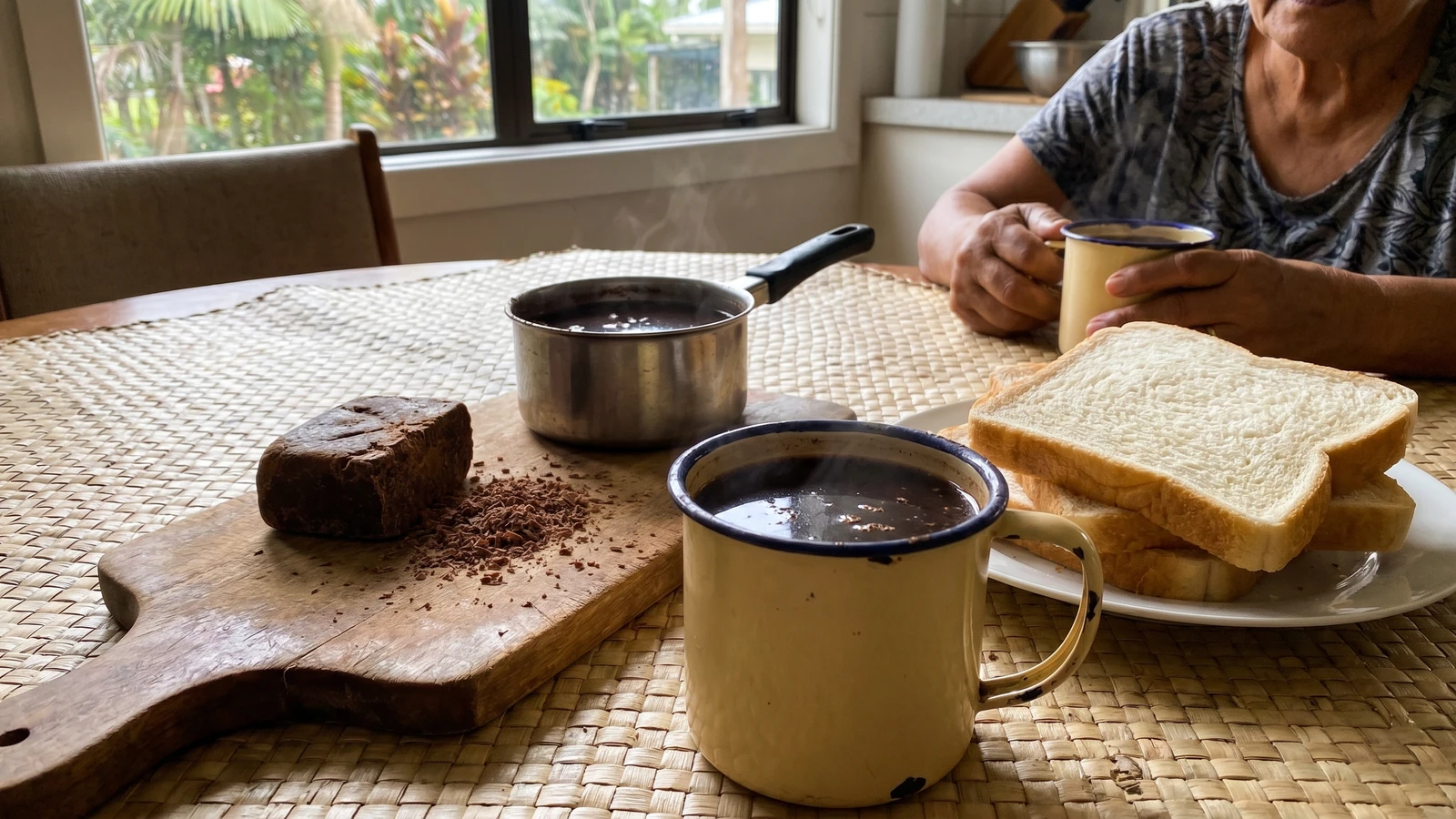
Sāmoa's morning koko, brewed from roasted island cacao until dark and glossy, sweetened only as much as your cup asks, and poured beside white bread for the aiga.
The first time a Sāmoan auntie put koko in my hand, she laughed because I held it too carefully, like I was afraid of breaking somebody's treasure. Just grate it, uso, she told me, uso meaning brother. This is Sāmoa's morning cup, Koko Sāmoa, dark roasted cacao the aiga, the family, brews for children before school, for elders who need a soft start, for new mothers and sick relatives when the house is trying to build them back up.
This isn't a canoe crop like talo, kalo, or ʻulu, and I won't pretend it is. Cacao came later. But Sāmoa took that tree into its own soil and its own hands, roasted the beans dark, pounded them into blocks, and gave them a place beside palusami, sapasui, corned beef and rice, and the rest of the real table. One ocean, one canoe, one root also teaches us to be honest about what came in the canoe and what came after.
Its closest cousin is koko alaisa, Sāmoa's cocoa rice, the bowl named for this same drink. Across the Triangle, the building-up kindness has its own hands: Hawaiian poi thinned soft for keiki, Cook Islands poke made from banana and arrowroot, Tongan faikakai sweet dumplings with coconut syrup. Not the same dish. Same care.
So cook it without fuss. Shave the block, simmer it until the water goes almost black and the cacao fat shines around the edge, then sweeten by the cup. Some houses strain it, some leave the fine koko bits. Eat what you have, but use real Koko Sāmoa for this one, because the dish is named for the land's own koko, not a scoop of plain cocoa powder.
Cacao is not a Polynesian canoe plant; it came into Sāmoa through nineteenth-century colonial trade and expanded under German Samoa after 1900, then Sāmoan families made the roasted bean their own as koko, pounded into blocks and brewed at home. The same koko names koko alaisa, cocoa rice, a post-contact comfort food fed to children, elders, new mothers, and anyone needing building back up. It sits honestly beside talo, breadfruit, palusami, and the umu: not older than the canoe, but carried now by Sāmoan hands.
Quantity
2 1/2 ounces, about 1/2 cup
grated or finely chopped
Quantity
4 cups
Quantity
3 to 5 tablespoons
to taste
Quantity
1 small pinch
Quantity
1/4 to 1/2 cup
for a softer cup
Quantity
for serving
| Ingredient | Quantity |
|---|---|
| real Koko Sāmoa blockgrated or finely chopped | 2 1/2 ounces, about 1/2 cup |
| water | 4 cups |
| sugarto taste | 3 to 5 tablespoons |
| sea salt (optional) | 1 small pinch |
| evaporated milk, whole milk, or coconut milk (optional)for a softer cup | 1/4 to 1/2 cup |
| soft white bread or buttered toast (optional) | for serving |
Set the Koko Sāmoa block on a towel and grate it on the large holes of a box grater, or shave it fine with a knife. It should crumble a little oily, with dark flecks and small roasted bits. That's the block telling you it came from beans, not powder.
Bring the water to a lively simmer in a medium saucepan. Whisk in the grated koko slowly. At first it will float and clump, then the water starts taking the color, brown to deep brown to nearly black. No panic. Let it come around.
Lower the heat and simmer 10 to 12 minutes, stirring often and scraping the sides of the pot. You want the smell bitter and roasted, the surface dark and glossy, with a little cacao-fat shine around the edge. If you want it stronger, give it another spoonful of grated koko or another few minutes, not just more sugar.
Take the pot off the heat and let it sit 2 minutes so the heavier koko bits settle. Some Sāmoan houses pour it as it is, little roasted grit and all. Some strain it smooth, especially for children, elders, or somebody recovering. Both hands are real hands. Choose the cup your table needs.
Stir in 3 tablespoons sugar and the tiny pinch of salt, then taste. Add more sugar only until the bitterness eases and the cacao still speaks. If you want a softer cup, stir in the evaporated milk, whole milk, or coconut milk and warm it gently, without letting the pot boil hard.
Stir once more before pouring, because koko settles like it has its own mind. Ladle into enamel mugs and serve with soft white bread or toast for dipping. This is morning food, sickbed food, church-hall kitchen food, the kind of cup that says somebody in this house is watching over you.
1 serving (about 270g)
Culinary guides, cultural storytelling, and the editorial depth that makes cooking meaningful.
Discover Culinary ExplorerChef Makoa
Sāmoa's ʻava is kava root worked in cool water, strained clear-brown into the tānoa, and passed in chiefly order. This is welcome, rank, and quiet, not a party drink.
Chef Makoa
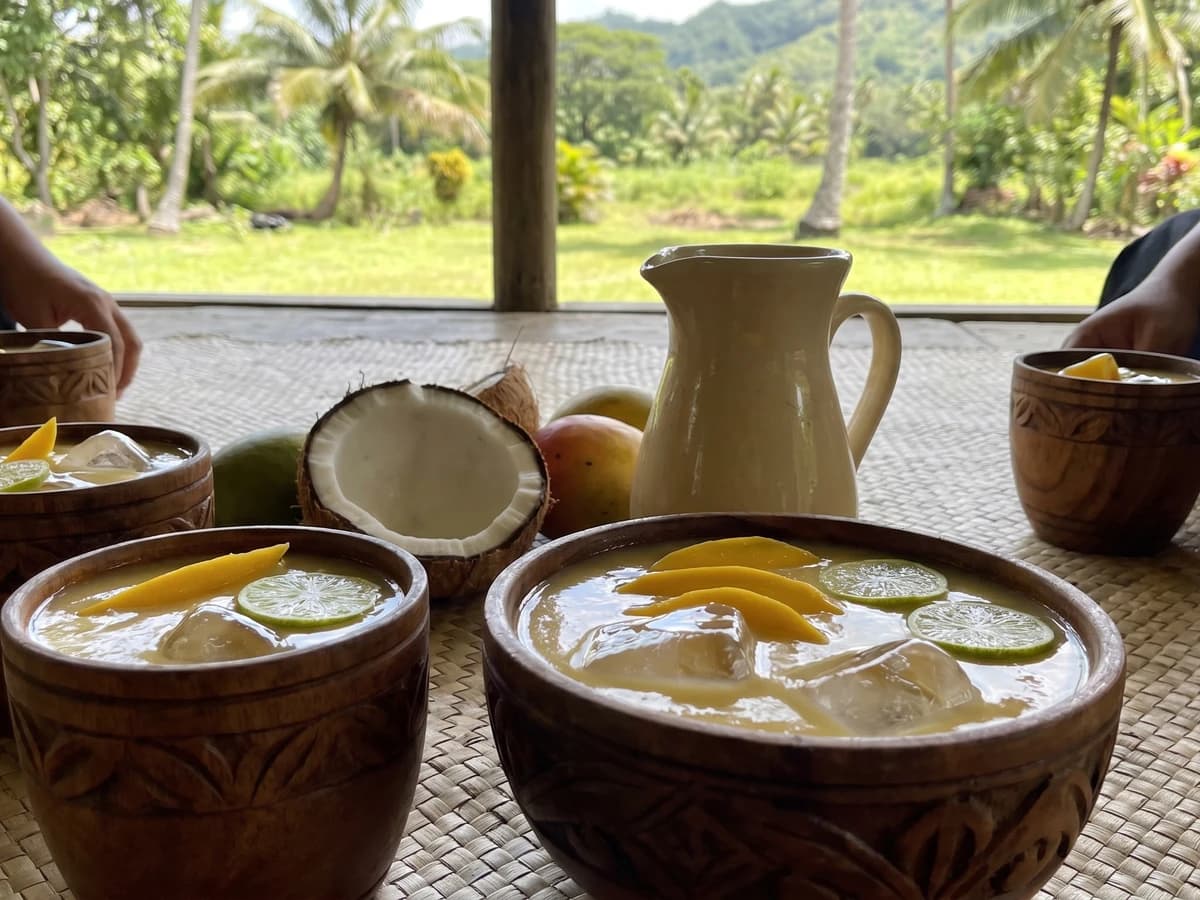
Sāmoa's vai mago is a cold mango drink, thick with ripe fruit and coconut cream, poured for the whole aiga beside its pineapple cousin, vaifala.
Chef Makoa
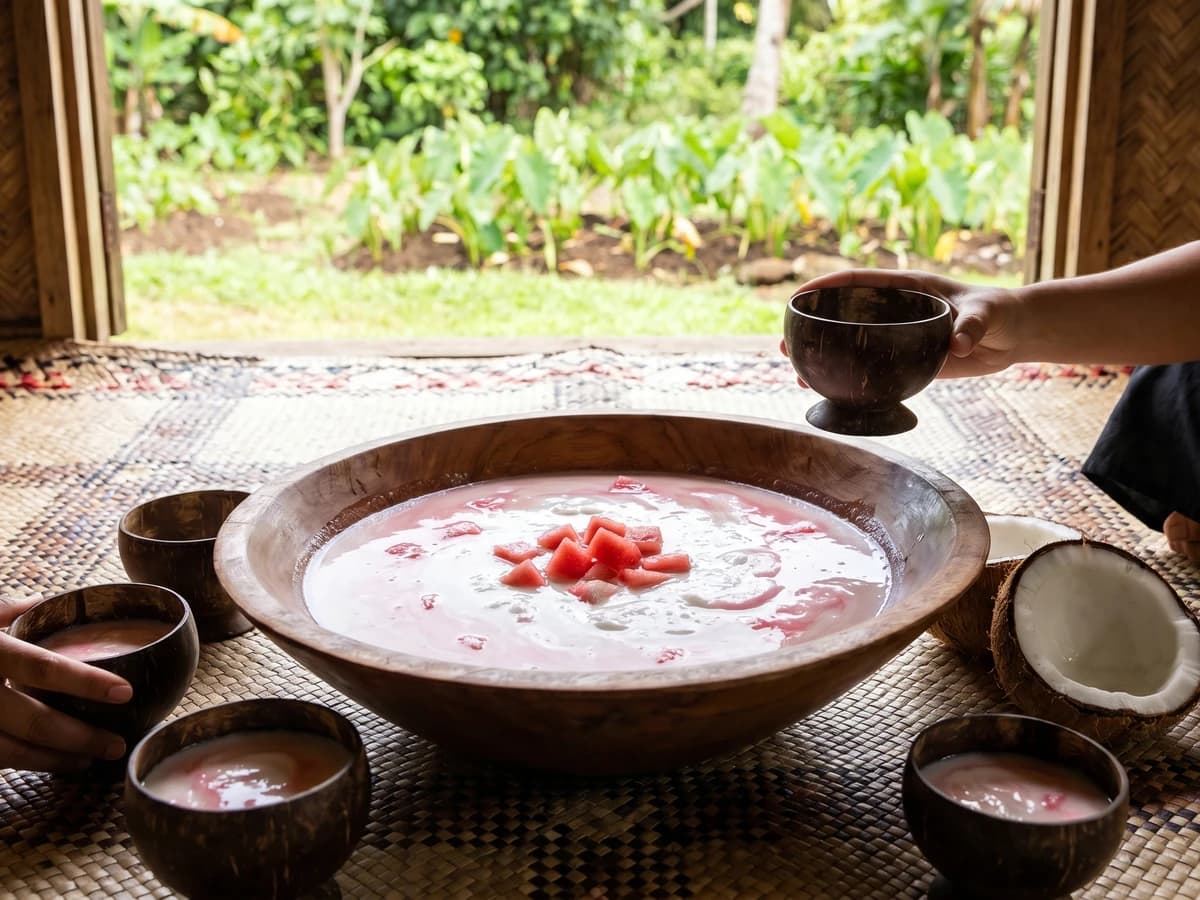
Cold Sāmoan vai meleni, grated watermelon stirred with fresh coconut cream, sugar, and lime, the everyday fruit water you pour beside sapasui, grilled fish, or a toʻonaʻi spread.

Chef Makoa
Grated pineapple, cold water, sugar, and fresh coconut cream stirred into Sāmoa's everyday vaifala, bright over ice and close to Tonga's ʻotai, but carrying its own Sāmoan hand.