Chef Makoa
Alaisa Faʻapopo (Sāmoan Coconut Rice)
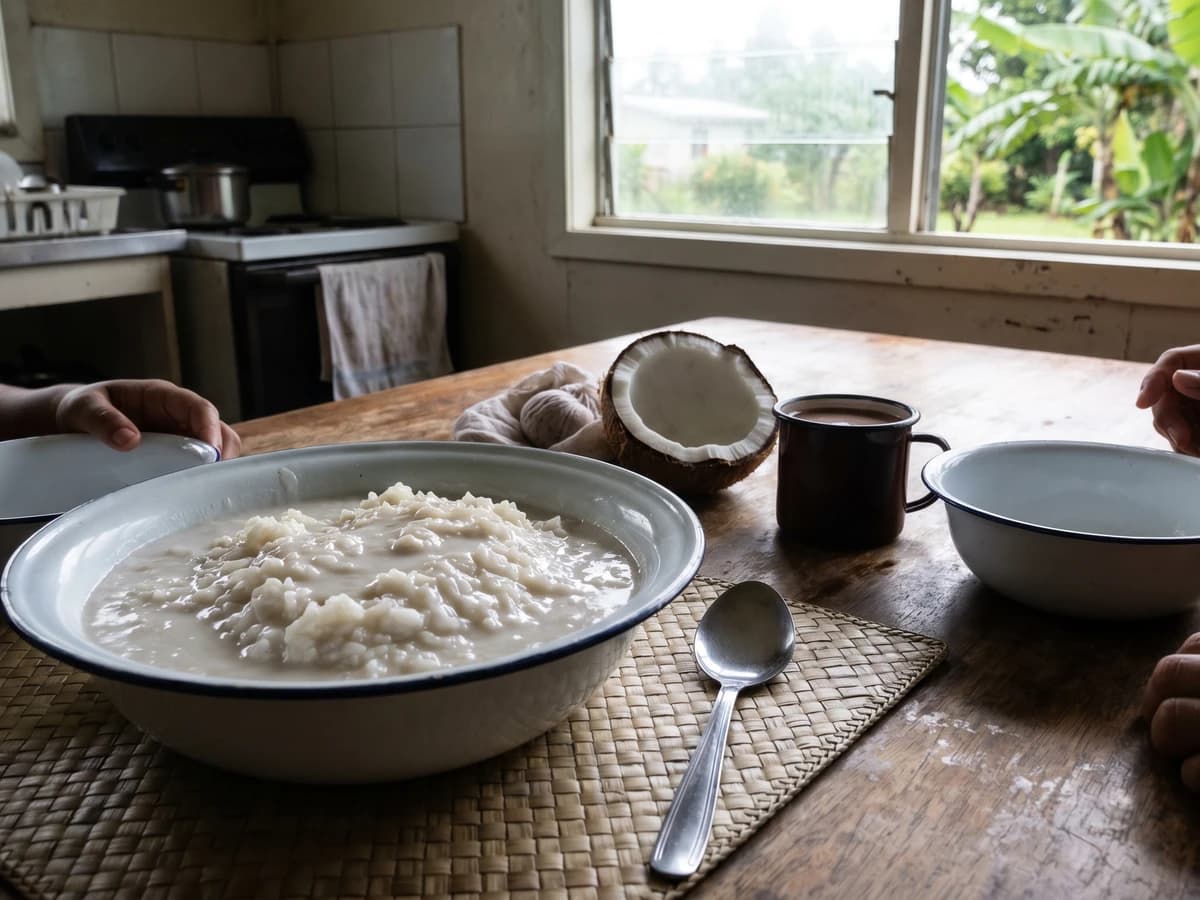
Sāmoa's morning coconut rice, salted and soft, with fresh peʻepeʻe folded through until every grain shines, served beside Koko Sāmoa for children, elders, new mothers, and anyone needing building up.
A cooking platform built around craft, culture, and the stories behind what we eat.
Created by
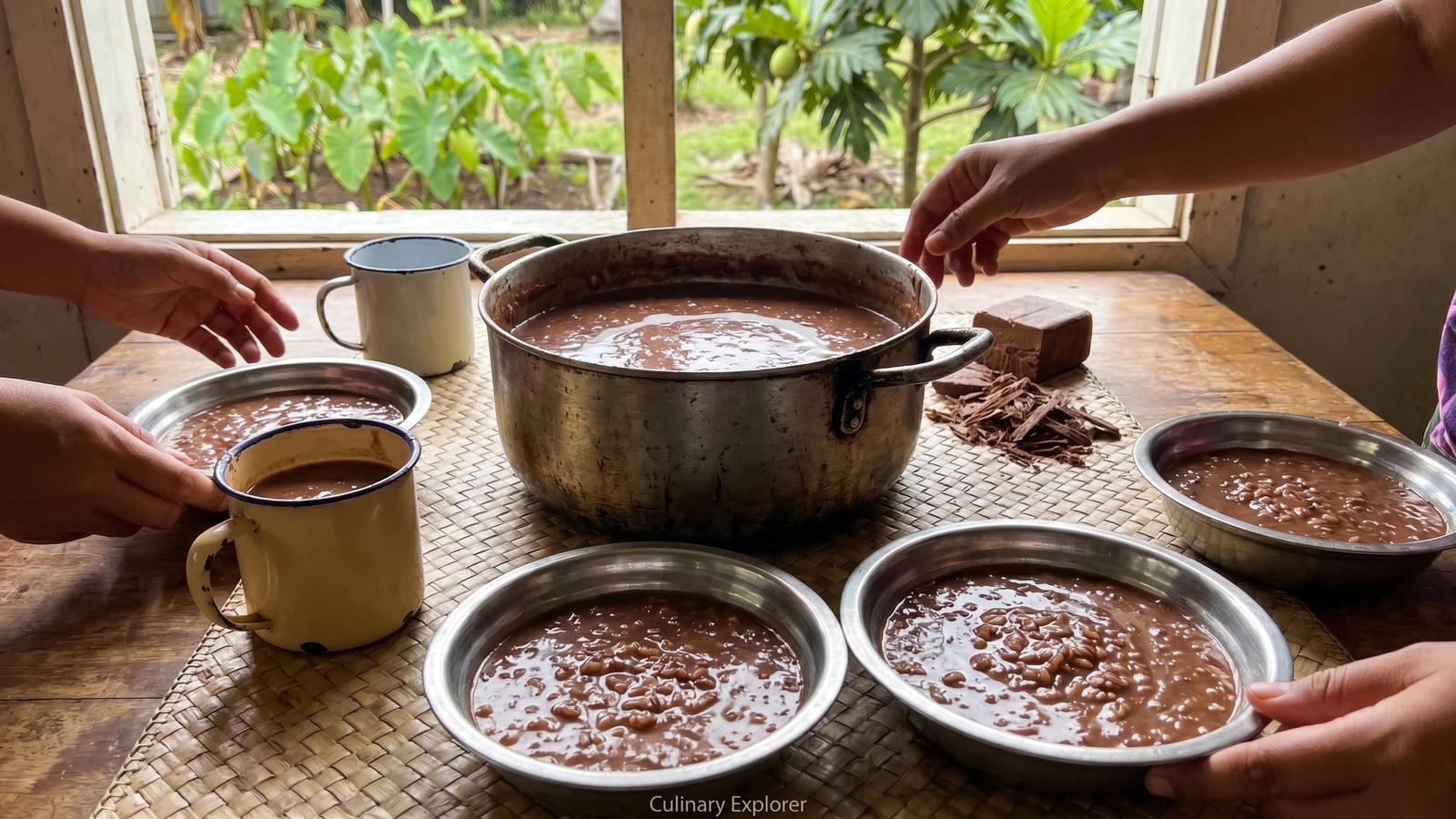
Sāmoan koko alaisa is rice cooked soft with coconut cream and the land's own roasted cacao, a building-up breakfast for children, elders, new mothers, and anybody needing comfort.
ASāmoan auntie will feed you before she explains you, and that's the right order. Koko alaisa, cocoa rice, belongs to Sāmoa, to the aiga, the family, and to the morning table where a pot can stretch for everybody who wakes up hungry. This is not a fancy bowl. It is building-up food.
The heart is Koko Sāmoa, the roasted cacao grown and worked on Sāmoan land, shaved from its block into the pot until the rice turns brown and glossy. You simmer it slow so the grains give up their starch, the coconut cream, peʻepeʻe, softens the edges, and the cacao carries that deep roasted bitterness under the sweetness. No rush it. Rice can look done before it's tender enough for the sickbed, the child, the elder, the new mother.
Across the Triangle the morning starch changes by island and hand: Hawaiian poi or paʻiʻai from kalo, Cook Islands poʻe from fruit or starch, Tahitian poʻe baked soft, Tongan and Sāmoan porridges rich with coconut. One ocean, one canoe, one root, but this bowl is Sāmoa's. Use real Koko Sāmoa if you can. If you only have cocoa powder, eat what you have, but know the named dish is speaking from that Sāmoan cacao.
Cacao came into Sāmoa through the nineteenth-century plantation world, then Sāmoan families made Koko Sāmoa their own by roasting, pounding, and setting the cacao into rough blocks for everyday drinking and cooking. Koko alaisa joins that post-contact crop to older Polynesian food grammar: coconut cream, communal pots, and soft starches used to build strength in children, elders, the sick, and new mothers. It sits honestly beside the deep canoe foods, not replacing talo, ʻulu, or the umu, but showing how Sāmoa kept feeding itself with what history placed in its hands.
Quantity
1 cup
rinsed until the water runs mostly clear
Quantity
5 cups
plus more as needed
Quantity
3 ounces
finely shaved or grated
Quantity
1 cup
or thick canned coconut cream
Quantity
1/3 cup
plus more to taste
Quantity
1/2 teaspoon
Quantity
1 teaspoon
| Ingredient | Quantity |
|---|---|
| medium-grain white ricerinsed until the water runs mostly clear | 1 cup |
| waterplus more as needed | 5 cups |
| Koko Sāmoafinely shaved or grated | 3 ounces |
| fresh coconut cream (peʻepeʻe)or thick canned coconut cream | 1 cup |
| sugarplus more to taste | 1/3 cup |
| fine sea salt | 1/2 teaspoon |
| vanilla extract (optional) | 1 teaspoon |
Rinse the rice in a bowl, changing the water until it runs mostly clear. You are not washing the life out of it, just taking off the loose starch so the pot turns creamy without going gluey. Drain it well.
Put the rice, 5 cups water, and salt into a heavy pot. Bring it to a gentle boil, then lower the heat and cook uncovered, stirring often, until the grains swell and begin to break at the edges, about 18 to 22 minutes.
Stir in the shaved Koko Sāmoa and keep the pot low. The cacao will speckle first, then melt through the rice and turn the whole pot brown and fragrant, with that roasted edge only real Koko Sāmoa gives.
Add the coconut cream and sugar, then stir slow until the porridge thickens and shines, 8 to 10 minutes more. The texture should be soft enough to drink from a mug or spoon from a bowl. Add water if it tightens too much.
Taste for sugar and salt. Add the vanilla if you use it, then turn off the heat and let the koko alaisa sit 5 minutes. The grains keep softening as they rest, and the cacao settles deeper into the coconut.
Ladle into enamel mugs or tin bowls, glossy on top and generous, with more coconut cream if the table wants it. Feed the elders first, then the children, then everybody else. That order teaches plenty without a speech.
1 serving (about 320g)
Culinary guides, cultural storytelling, and the editorial depth that makes cooking meaningful.
Discover Culinary ExplorerChef Makoa
Sāmoa's morning coconut rice, salted and soft, with fresh peʻepeʻe folded through until every grain shines, served beside Koko Sāmoa for children, elders, new mothers, and anyone needing building up.
Chef Makoa
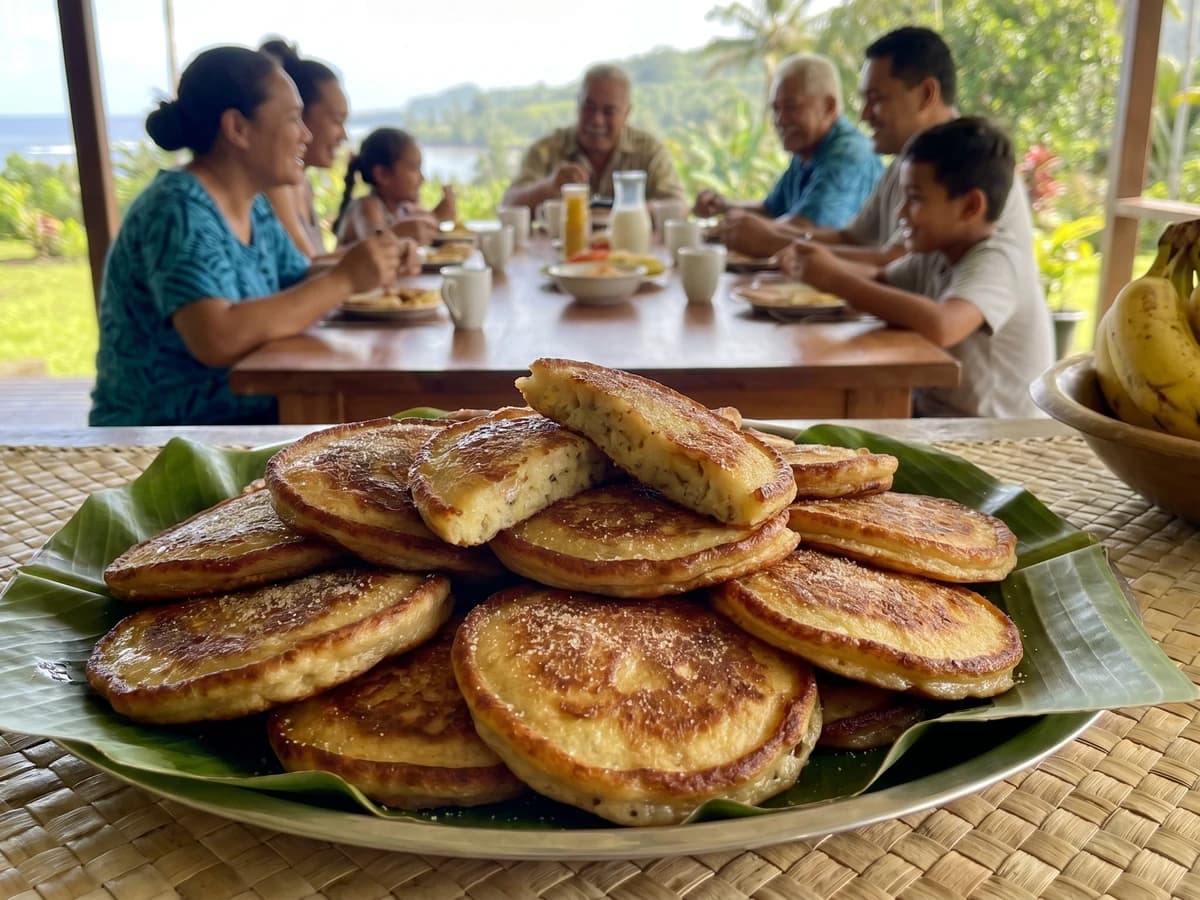
Sāmoa's panikeke faʻi, ripe banana folded into a simple batter and fried until the outside is golden and the inside stays soft, sweet, and ready for a crowd.
Chef Makoa
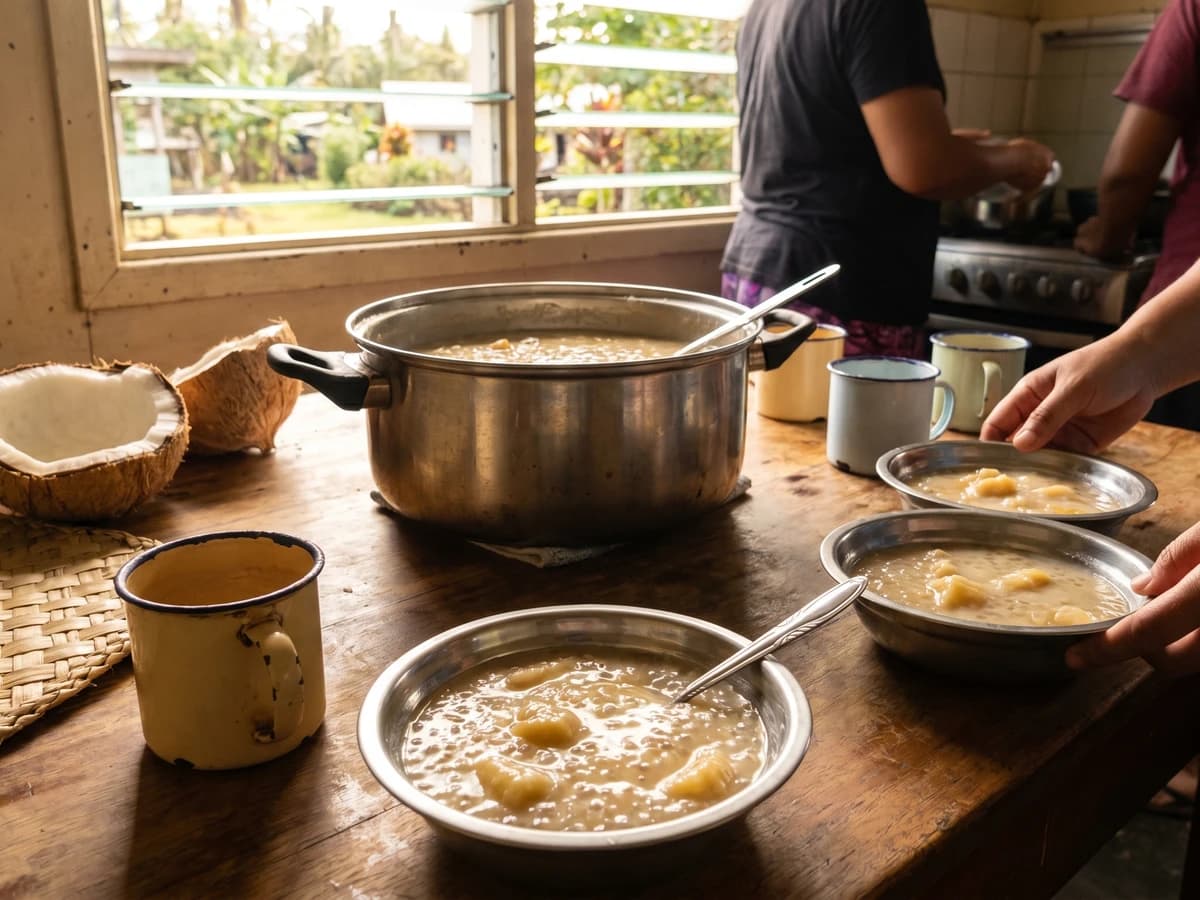
Sāmoa's gentle banana porridge, ripe faʻi mashed soft with sago and peʻepeʻe, coconut cream, the kind of warm food the aiga feeds you when you need building back up.
Chef Makoa
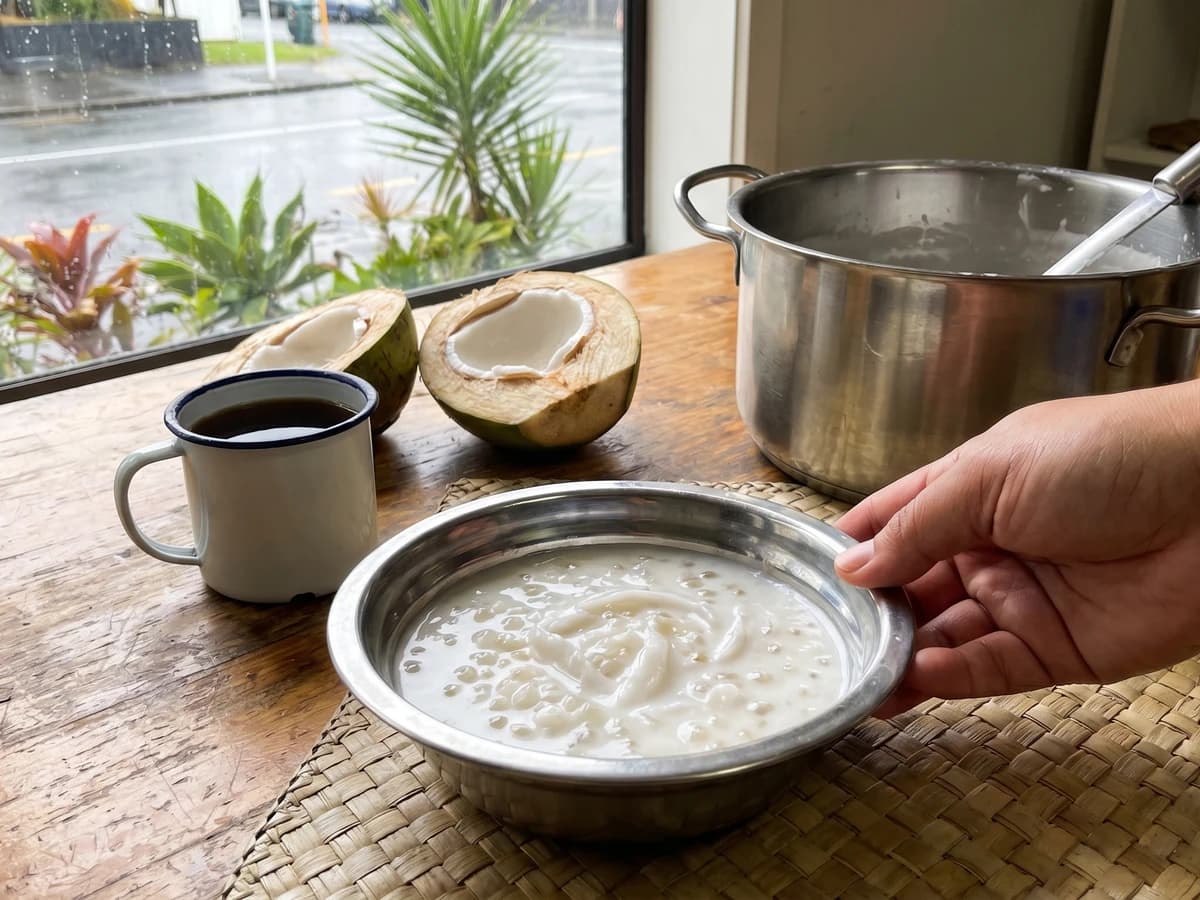
A warm Sāmoan bowl of young niu, sweet coconut water, soft coconut meat, and sago cooked until glossy and gentle, the kind of building-up food the aiga feeds you when you need strength back.