Chef Makoa
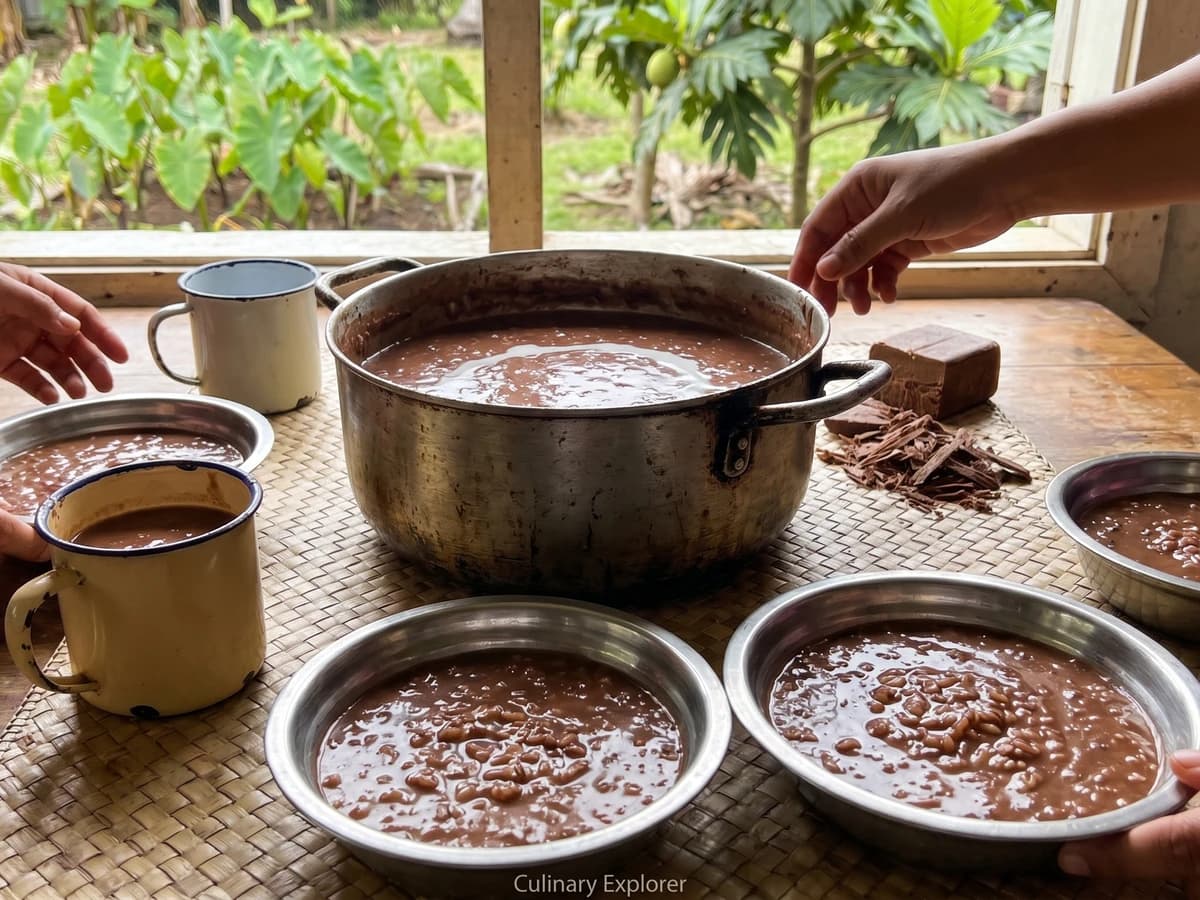
Koko Alaisa (Sāmoan Cocoa Rice)
Sāmoan koko alaisa is rice cooked soft with coconut cream and the land's own roasted cacao, a building-up breakfast for children, elders, new mothers, and anybody needing comfort.
A cooking platform built around craft, culture, and the stories behind what we eat.
Created by
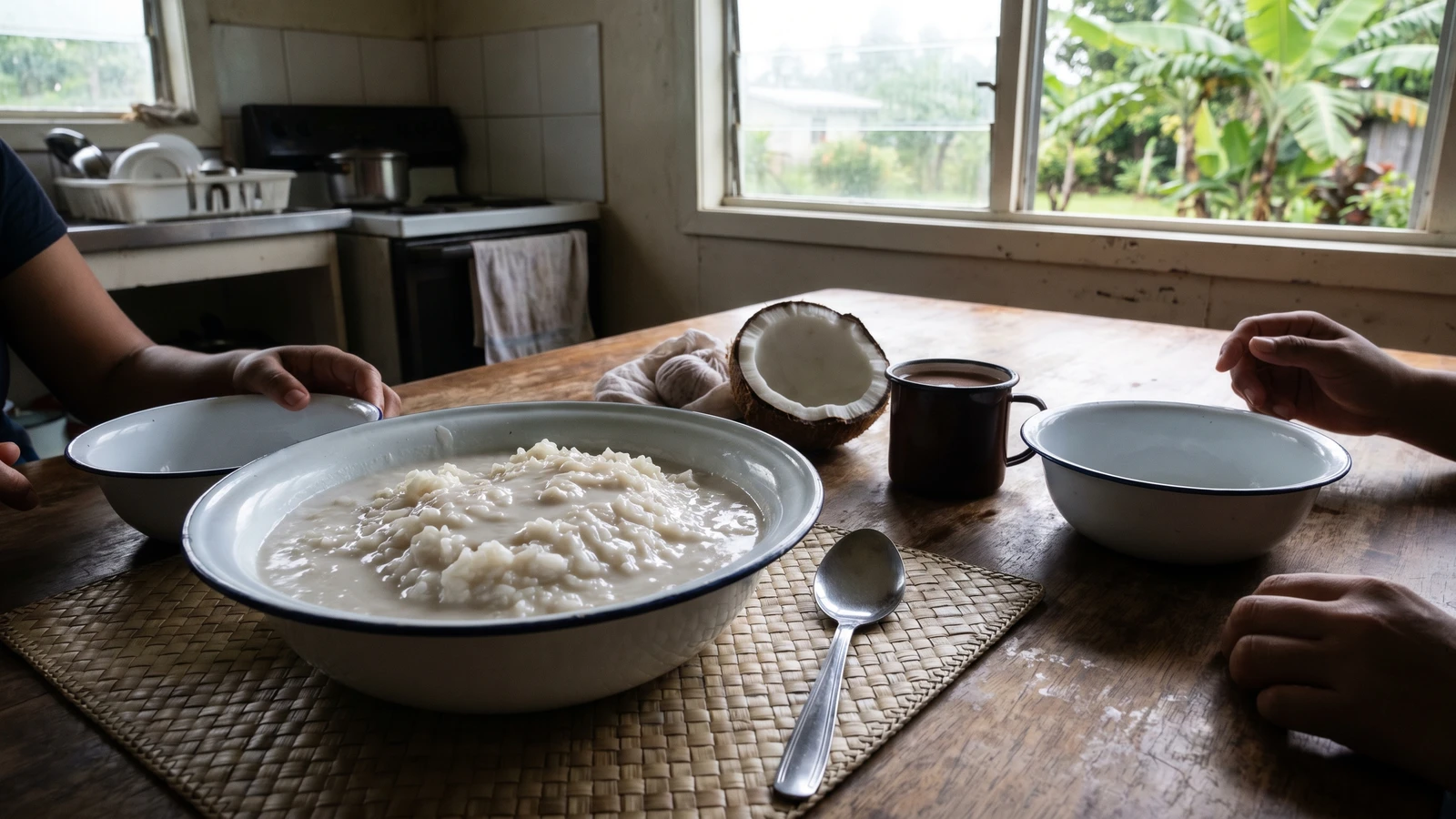
Sāmoa's morning coconut rice, salted and soft, with fresh peʻepeʻe folded through until every grain shines, served beside Koko Sāmoa for children, elders, new mothers, and anyone needing building up.
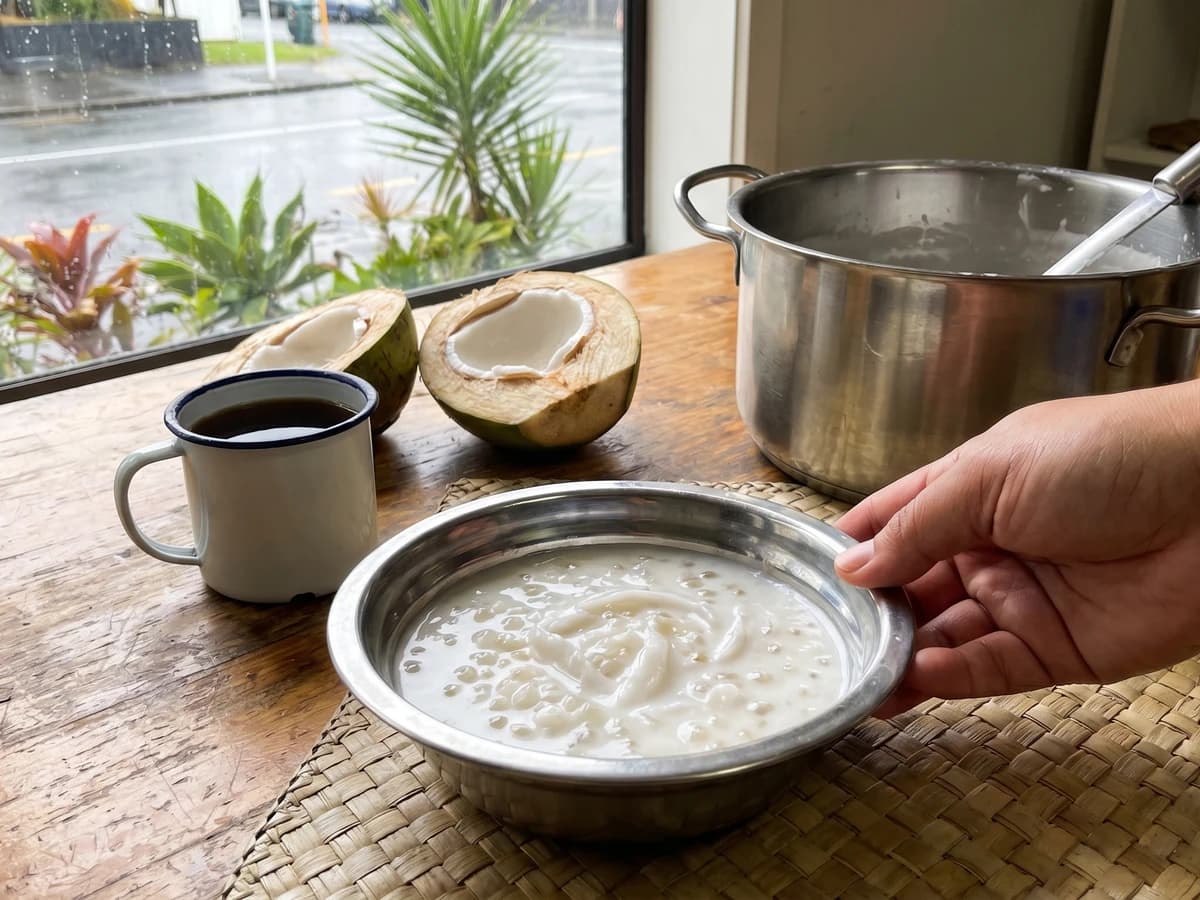
An auntie in Sāmoa once put a tin bowl in my hands before she gave me any story. Eat first, talk after. That bowl was alaisa faʻapopo, alaisa meaning rice and faʻapopo carrying the coconut, hot salted rice softened with peʻepeʻe, fresh coconut cream, until it fed like comfort and medicine both.
Rice was not one of Sāmoa's canoe crops; the older starch table was talo, ʻulu (breadfruit), faʻi (banana), and niu (coconut), carried and tended through fanua (land) and aiga (family). Alaisa, from English 'rice,' entered through mission, trade, and colonial-era store food, but alaisa faʻapopo shows how Sāmoan cooks made a later grain answer to Sāmoan taste by finishing it with fresh peʻepeʻe and salt. The cup beside it often carries Koko Sāmoa, cacao grown in Sāmoa since the late 1800s plantation period and now roasted, pounded, and poured as one of the morning tastes many families know as home.
Quantity
2 cups
rinsed
Quantity
4 cups, plus 1/2 to 1 cup
extra water kept hot for loosening
Quantity
1 1/4 teaspoons
plus more to taste
Quantity
2 cups
squeezed from grated mature coconut, or thick canned coconut cream
Quantity
1 to 2 tablespoons
Quantity
for serving
brewed hot
| Ingredient | Quantity |
|---|---|
| medium-grain or long-grain white rice (alaisa)rinsed | 2 cups |
| waterextra water kept hot for loosening | 4 cups, plus 1/2 to 1 cup |
| fine sea saltplus more to taste | 1 1/4 teaspoons |
| fresh coconut cream (peʻepeʻe)squeezed from grated mature coconut, or thick canned coconut cream | 2 cups |
| sugar (optional) | 1 to 2 tablespoons |
| real Koko Sāmoa (optional)brewed hot | for serving |
If you have grated mature coconut, squeeze it with warm water through a clean cloth until the cream runs thick and white. That is peʻepeʻe, coconut cream, and in the western islands this is the part you don't skip when you can help it. If you're using a can, choose thick coconut cream, stir it smooth, and don't apologize for feeding people on a weeknight.
Put the rinsed rice, 4 cups water, and salt in a heavy pot. Bring it to a steady simmer, stir once so the bottom doesn't catch, then cover and lower the heat. Cook about 18 minutes, until the grains are swollen and mostly tender.
Open the pot and taste a grain. It should be softer and wetter than supper rice, almost ready to give way under the spoon. If the center still has a hard bite, add 1/2 cup hot water, cover, and cook 5 to 8 minutes more. No blame the rice. Different bags drink different.
Lower the heat small and pour in 1 1/2 cups of the peʻepeʻe. Stir and press it through the rice with a wooden spoon until every grain turns glossy and the pot smells round with coconut. Keep it gentle, 5 to 7 minutes. A hard boil can split the cream oily, and that is you rushing, not the coconut failing.
Taste for salt. Add the sugar only if your aiga, your family, takes it that way. Fold in the remaining peʻepeʻe if you want it richer, or a splash of hot water if it has tightened too much. Cover off the heat for 5 minutes so the rice settles into the cream.
Spoon it into tin bowls while it is glossy and soft, with a dark mug of real Koko Sāmoa beside it if you have it. This is building-up food, the kind an aiga gives to the sick, the elderly, the new mothers, and the children. Cool leftovers quickly and refrigerate within 2 hours.
1 serving (about 275g)
Culinary guides, cultural storytelling, and the editorial depth that makes cooking meaningful.
Discover Culinary ExplorerChef Makoa
Sāmoan koko alaisa is rice cooked soft with coconut cream and the land's own roasted cacao, a building-up breakfast for children, elders, new mothers, and anybody needing comfort.
Chef Makoa
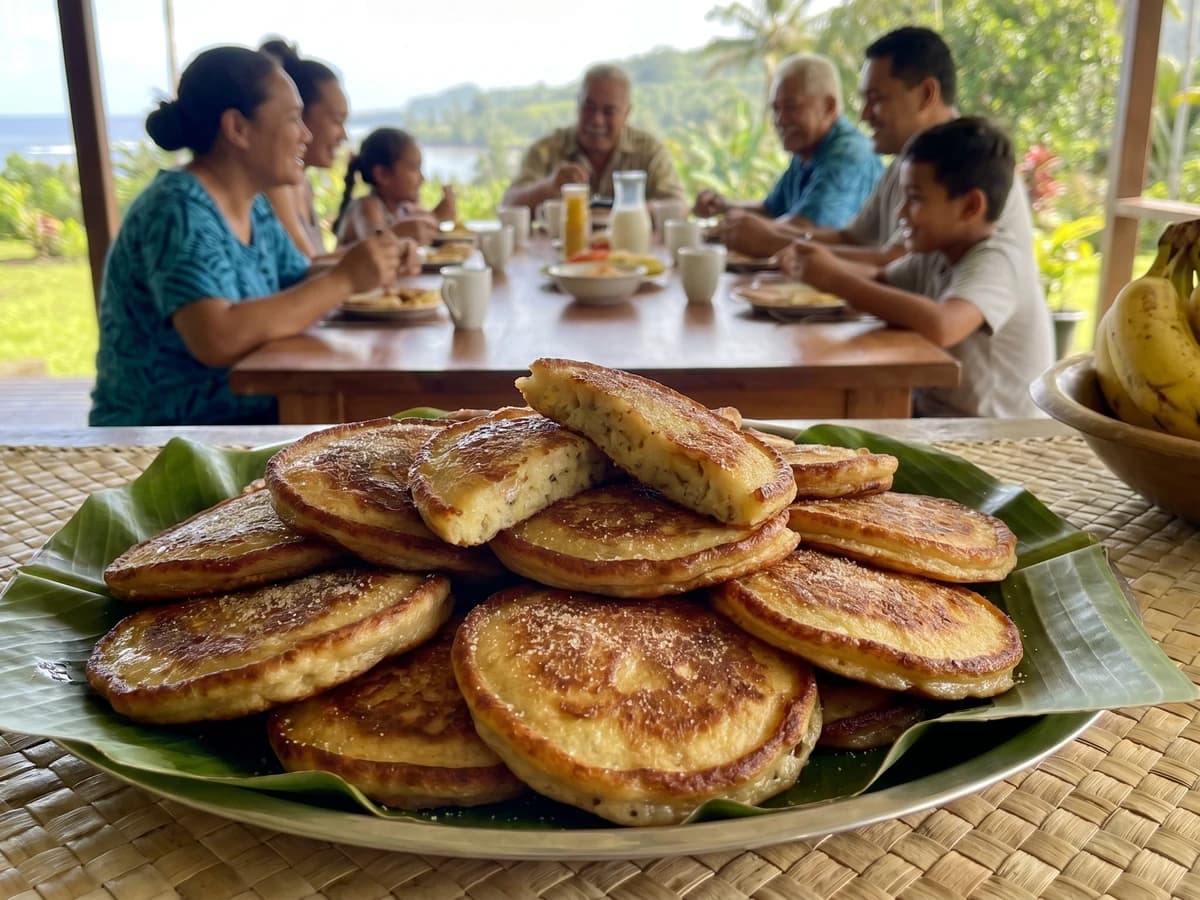
Sāmoa's panikeke faʻi, ripe banana folded into a simple batter and fried until the outside is golden and the inside stays soft, sweet, and ready for a crowd.
Chef Makoa
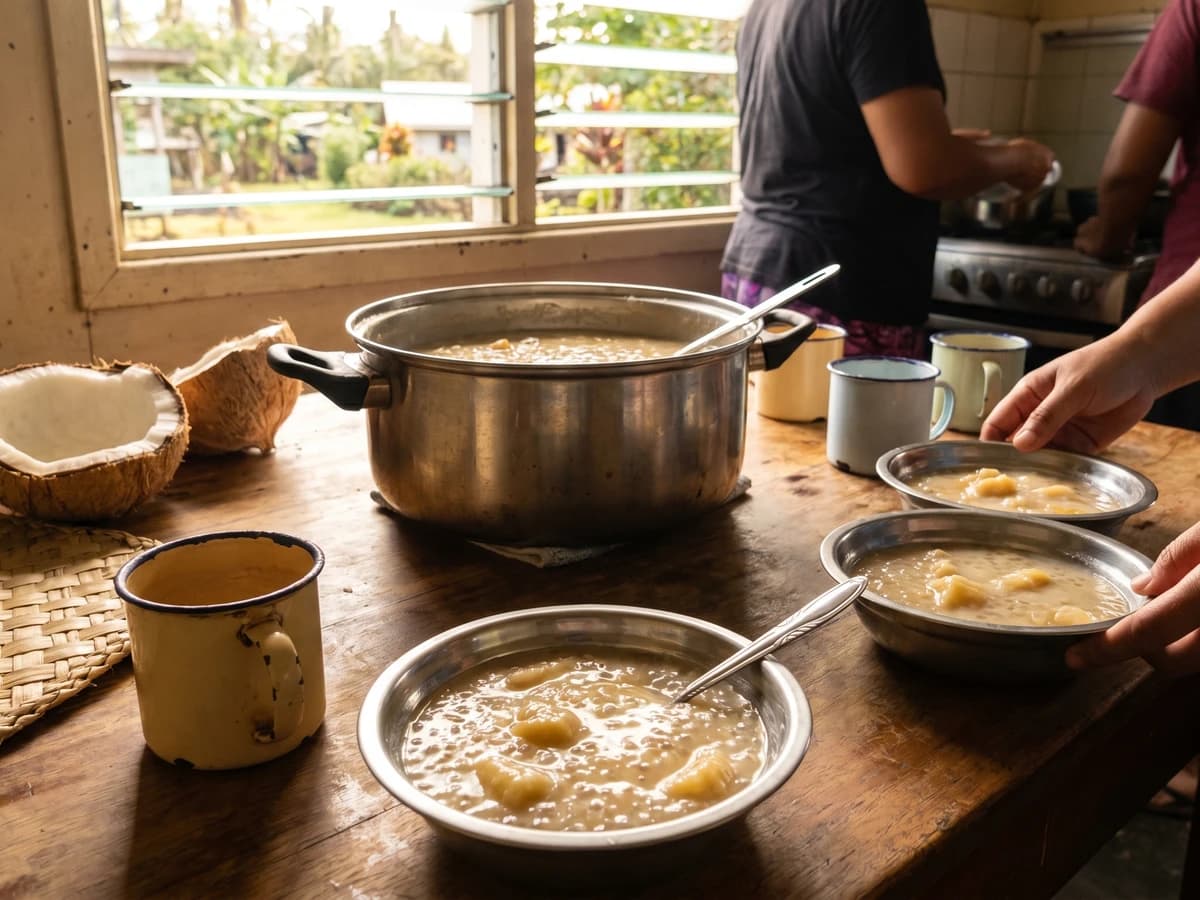
Sāmoa's gentle banana porridge, ripe faʻi mashed soft with sago and peʻepeʻe, coconut cream, the kind of warm food the aiga feeds you when you need building back up.
Chef Makoa
A warm Sāmoan bowl of young niu, sweet coconut water, soft coconut meat, and sago cooked until glossy and gentle, the kind of building-up food the aiga feeds you when you need strength back.