Culinary Explorer

A cooking platform built around craft, culture, and the stories behind what we eat.
Discover Culinary Explorer
Uova Strapazzate con Pomodoro Fresco

Uova Strapazzate con Pomodoro Fresco

Created by

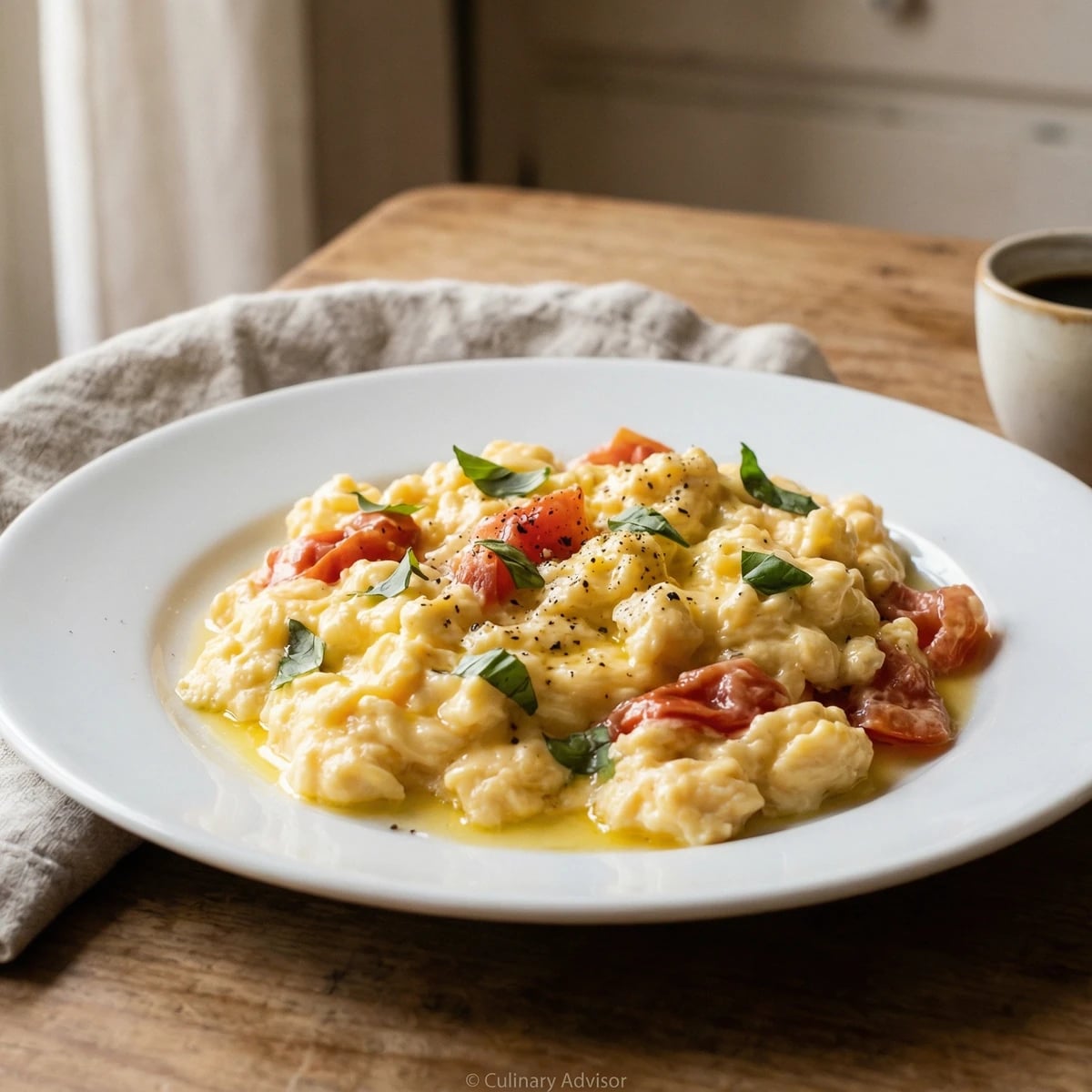
The Italian way with eggs and tomato: no cream, no fuss, just ripe fruit releasing its juices into soft curds that set gently in butter. This is what breakfast tastes like when you trust your ingredients.

Breakfast & Brunch
Italian
Weeknight
Quick Meal
5 min
Active Time
8 min cook13 min total
Yield2 servings

Americans add cream to scrambled eggs and wonder why they taste heavy. Italians add nothing because the eggs themselves, from chickens that eat what chickens should eat, need no help. When you introduce a ripe tomato to the pan, you discover what moisture truly does for scrambled eggs: the juice releases slowly as the tomato softens, creating curds so silky they barely hold together on the fork.

This is not a recipe that tolerates winter tomatoes. The mealy, refrigerated specimens sold in January have no juice worth releasing, no sweetness to balance the richness of the yolk. Wait for summer. Wait for tomatoes warm from the vine, the kind that smell like tomatoes before you even cut them. Then you will understand why this dish needs nothing else.

The technique is gentle. You stir constantly over low heat, never letting the eggs set into rubbery lumps. The moment they begin to hold together, pull the pan from the heat. They continue cooking from residual warmth. What you want are curds that glisten, that flow slightly when you tilt the plate. Overcooked scrambled eggs are not a tragedy, but they are a missed opportunity.

Eggs have anchored the Italian colazione since Roman times, though the elaborate American breakfast is foreign to Italian tables. In the south, where tomatoes grow abundantly and mornings are warm, cooks discovered that adding fresh pomodoro to uova strapazzate created something greater than either ingredient alone. The dish remains a home cook's secret, rarely appearing on restaurant menus because it cannot wait.

The technique, the tradition, and the story behind every dish.

Discover Culinary Explorer

Ingredients

large eggs

Quantity

4

at room temperature

ripe tomato

Quantity

1 large (about 8 ounces)

unsalted butter

Quantity

2 tablespoons

kosher salt

Quantity

to taste

black pepper

Quantity

to taste

freshly ground

fresh basil leaves (optional)

Quantity

4-5

Equipment Needed

  • 10-inch nonstick or well-seasoned skillet
  • Flexible spatula
  • Fork for beating eggs

Instructions

  1. 1

    Prepare the tomato

    Cut the tomato in half horizontally. Squeeze gently over a bowl to remove most seeds, then dice into pieces roughly the size of your thumbnail. Do not peel. The skin softens during cooking and adds texture. The tomato must be at room temperature, never cold from the refrigerator.

    A truly ripe tomato will feel heavy for its size and yield slightly when pressed. It should smell distinctly of tomato at the stem end. No fragrance means no flavor.
  2. 2

    Beat the eggs

    Crack the eggs into a bowl. Add a generous pinch of salt. Beat with a fork until the whites and yolks are completely combined, about 30 seconds. You should see no streaks of white. Do not overbeat into foam.

  3. 3

    Soften the tomato

    Melt the butter in a nonstick or well-seasoned skillet over medium-low heat. When the foam subsides, add the diced tomato. Cook, stirring occasionally, until the tomato softens and releases its juice, about 3 minutes. The butter and tomato juice will combine into a loose, pink sauce. This is your foundation.

  4. 4

    Add the eggs

    Pour the beaten eggs over the tomato. Reduce heat to low. Let the eggs sit undisturbed for 20 seconds, until you see the edges begin to set. Then stir gently with a spatula, pushing the cooked portions toward the center and letting the uncooked egg flow to the edges.

    Low heat is not a suggestion. High heat creates tough, rubbery curds. The eggs should set slowly, almost lazily. If they are cooking too fast, lift the pan from the heat entirely while you stir.
  5. 5

    Cook to soft curds

    Continue stirring gently, scraping the bottom of the pan, for 2 to 3 minutes. The eggs should form soft, creamy curds interspersed with the softened tomato. When the eggs are mostly set but still look slightly wet on top, remove the pan from the heat immediately. They will continue cooking from residual warmth.

  6. 6

    Finish and serve

    Season with black pepper. Tear the basil leaves and scatter them over the eggs if using. Transfer immediately to warm plates. Once the eggs are done, serve them promptly. They wait for no one. Overcooked scrambled eggs cannot be rescued.

Chef Tips

  • Cold eggs from the refrigerator lower the pan temperature and cook unevenly. Remove them 30 minutes before cooking, or place them in warm water for 5 minutes.
  • No cream. No milk. No cheese. The tomato provides all the moisture these eggs need. Adding dairy would mask the clean flavor of the egg and the brightness of the tomato.
  • If your tomatoes are not in season, do not make this dish. Make plain scrambled eggs instead, and wait for July.
  • The basil is traditional but not required. If you use it, add it only at the end. Cooked basil turns black and loses its perfume.

Advance Preparation

  • This dish cannot be made ahead. Scrambled eggs must be served the moment they leave the pan.
  • You may dice the tomato up to one hour in advance. Keep it at room temperature, not refrigerated.

Frequently Asked Questions

Nutrition Information

1 serving (about 225g)

Calories
265 calories
Total Fat
22 g
Saturated Fat
11 g
Trans Fat
0 g
Unsaturated Fat
10 g
Cholesterol
405 mg
Sodium
350 mg
Total Carbohydrates
5 g
Dietary Fiber
1 g
Sugars
3 g
Protein
13 g

Note: Chef personas and recipes are created with AI assistance. Cook with care: follow safe food-handling practices, check doneness with a thermometer when needed, and adapt for allergies and your kitchen.

Where cooking meets culture.

Culinary guides, cultural storytelling, and the editorial depth that makes cooking meaningful.

Discover Culinary Explorer

More from Chef Graziella's Breakfast and Brunch

Browse the full collection